Film making around Oxford

All over central Oxford are vans, guards, and heaps of lighting equipment. They are working on the film adaptation of Philip Pullman’s The Golden Compass. As a great appreciator of the book, I am rather nervous about the film. So much of what makes the book special turns around how the characters are presented, and there is the danger that an actor’s interpretation will overwrite whatever conception you had developed on your own. That said, it will probably feature some stunning cinematography from around Oxford. They have been cutting bicycles off fences and railings in places like Radcliffe Square for several days now.

It’s weird how the film adaptation has Daniel Craig as Lord Asriel and Eva Green as Serafina Pekkala. People might find themselves making strange associations with Casino Royale.

James Burke’s Connections

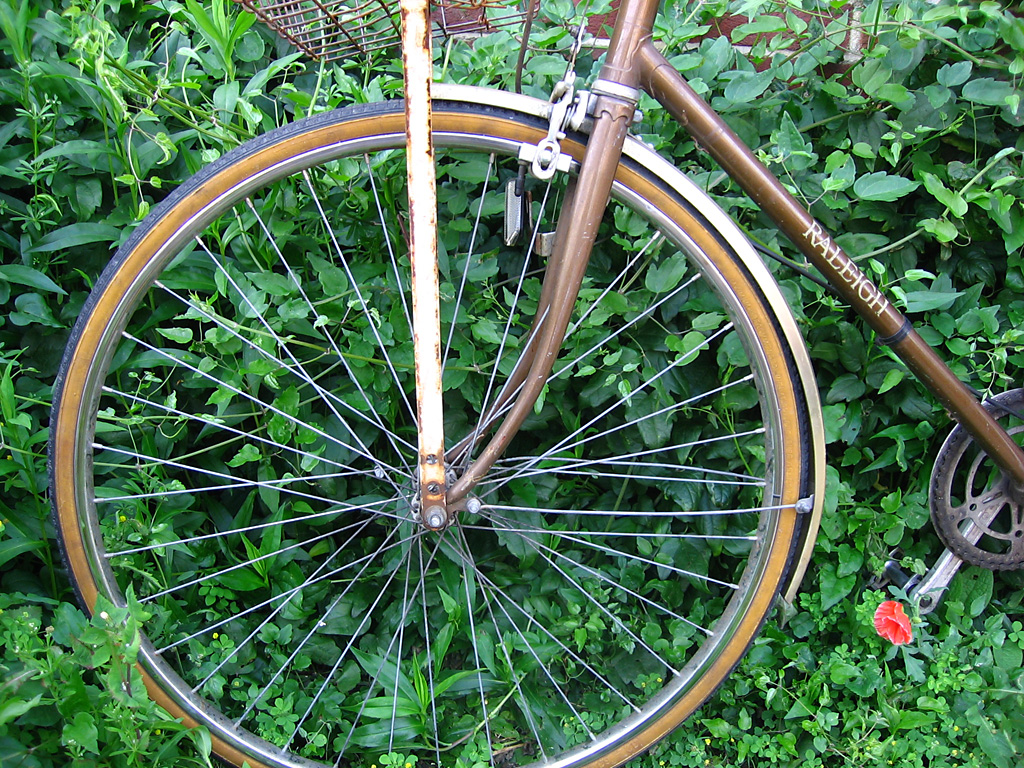
Bike wheel

I have mentioned it before, and may well mention it again. James Burke’s Connections is a television series worth seeing. Each episode wanders through history from one invention to another, with fascinating asides along the way.

As of this evening, someone put a stack of them on YouTube. The series was made at taxpayer expense by the BBC, so there is really no reason for which it shouldn’t already be available online for free. Watch a few episodes and you will learn a wealth of interesting (though often very esoteric) facts to break out at dinner parties.

As is generally the case when I am busy and need to come up with a blog post idea in a hurry, this was yanked from MetaFilter.

PS. By the end of each exam, I was coughing my lungs out. Now, I am taking little sips from my bottle of nasty tasting (and ineffective) cough syrup every three hours or so. Now, I feel like I have an especially nasty cold, with all the ill effects involved therein.

How risky is climate change?

Milan’s watch and iBook

On his blog, Lee Jones posted a link to this book review. Basically, the argument is that people are (a) exaggerating the dangers of climate change and (b) using climate change as an excuse to pursue other ends. I would not deny either claim. The Intuitor review of The Day After Tomorrow is evidence of the first, and more can be found in many places. Of course, their review of An Inconvenient Truth suggests that not everyone is guilty of misrepresentation. As for smuggling your own agenda into discussions about climate change, I suspect that is equally inevitable. The question of how to behave justly in response to climate change is fundamentally connected to the history of economic development.

In an unprecedented move, I feel compelled to quote my own thesis:

While the IPCC has generated some highly educated guesses, the ultimate scale of the climate change problem remains unknown. On account of the singular nature of the earth, it is also somewhat unknowable. Even with improvements to science, the full character of alternative historical progressions remains outside the possible boundaries of knowledge. As such, in a century or so humanity will find itself in one of the following situations:

  1. Knowing that climate change was a severe problem, about which we have done too little
  2. Believing that climate change was a potentially severe problem, about which we seem to have done enough
  3. Believing that climate change was a fairly modest problem, to which we probably responded overly aggressively
  4. Observing that, having done very little about climate change, we have nonetheless suffered no serious consequences.

Without assigning probabilities to these outcomes, we can nonetheless rank them by desirability. A plausible sequence would be 4 (gamble and win), 2 (caution rewarded), and then 1 and 3 (each a variety of gamble and lose). Naturally, given the probable variation in experiences with climate change in different states, differing conclusions may well be reached by different groups.

As such, what it means to make informed choices about climate change has as much to do with our patterns of risk assessment as it does with the quality of our science. Exactly how it will all be hashed out is one of the great contemporary problems of global politics.

Multilayer booms

Of late, I have been watching Yes, Prime Minister between bouts of revision. In one sense, it is quite disorienting. As someone who has lived beside a clock tower for more than a year, having a series of booms now and then is not at all unexpected. The series, however, uses similar sounding booms as a frequent sonic backdrop. As such, one gets the awkward sense that time is racing forward: hardly an effective way to control stress in the lead-up to exams.

Little Miss Sunshine

As dysfunctional family films go, this is a clever and artistic one. Tolstoy was right to say that the genre is infinite. This film has strong hints of The Royal Tenenbaums: over-the-top characters, bearded men trying to commit suicide, and a similar tendency towards set-piece funny lines. At times, it is very funny indeed.

The first time I watched the film, it was unfortunately interrupted about ten minutes before the end. Only tonight did I finally get to see the conclusion, based on my flatmate Kai’s enviable collection of DVDs.

Little Miss Sunshine is recommended to those who like humour based on bizarre characterization and a have a reasonable tolerance for social criticism and absurdity. While the film is sometimes a bit on the disturbing side, it never comes close to the unwholesomeness of child beauty contests themselves.

PS. This is what my father and I intended to go see, only to find ourselves watching The Devil Wears Prada.

The Lives of Others

The Lives of Others (Leben der Anderen, Das) is a potent and pertinent film: a reminder of recent history that speaks to ongoing questions about surveillance, as well as the human and inhuman aspects of state security organizations. The film is especially impressive because of the subtlety with which the topic is approached, and the space for contemplation it affords to the viewer.

The cinematography of the film is elegant to the extent that one is in danger of missing subtitles on account of preferring to keep one’s eyes where the film-makers wanted them. The only minor lapse in good judgment is in a few scenes where the use of very wide-angle lenses produces an unwelcome and disconcerting effect. The set designs, costumes, and performs are all extremely well chosen, really managing to convey a certain vision of life under the GDR.

The film struck me as a kind of inversion of Good Morning, Night (Buongiorno, notte) which I saw back in November of last year. One explores the moral dilemma of a member of Stasi, the infamous East German secret police, while the other is about a member of the Red Brigades, an Italian terrorist movement in the 1970s. In a way, both films are comments on how people can and do deal with the structures in which they find themselves. In particular, how exposure to the humanity and vulnerability of others affects one’s pre-existing convictions.

People in Oxford may find it useful to know that it is playing at the Phoenix Cinema on Walton Street until Wednesday May 9th.

Microbiology on display

This is too cool not to link: The Inner Life of the Cell

This short video shows animations of some of the chemical processes that occur inside living cells. I only recognized a handful, but they are all beautiful and surreal. The focus is on the behaviour of lymphocytes in the presence of inflammation.

[Update: 13 December 2007] The links above had become outdated. As of today, they are repaired.

“No, Donny, these men are nihilists, there’s nothing to be afraid of.”

During post-submission decompression, I have been reminded of what a brilliant film The Big Lebowski is. I have certainly seen it a dozen times, and will quite probably see it a dozen more times. Some of the lines in the film are priceless. Altogether, it is simply great storytelling, and a film I recommend to anyone with a sense of humour.

Looking at the Oxford experience of stress over time, it looks a great deal like an f(x)=tan(x) graph, if you disregard the portions in which the Y-axis is negative.