The Aragorn Fallacy

Stencil chicken

Watching films, I find myself very frequently annoyed with what I shall call The Aragorn Fallacy. The essence of the fallacy is to equate importance with invulnerability, especially in the face of random events.

Consider a battle that employs swords, spears, and bows and arrows. To some extent, your skill reduces the likelihood of getting killed with a sword (unless you are among the unfortunate individuals who find their line pressed into a line of swordsmen). No conceivable battlefield skill makes you less vulnerable to arrows (or bullets) once you are in the field of fire. As such, mighty King Aragorn is just as likely to be shot and killed as some forcibly drafted peasant hefting a spear for the first time. Sensible military leaders realize that their role is not to serve as cannon fodder, and that they needlessly waste their own lives and those of their men by putting themselves in such positions.

Of course, people will object, there have been military leaders who ‘led from the front,’ put themselves at points of great danger, and went on to high achievement. The problem with this view is that it completely ignores all the young would-be Rommels and Nelsons and Pattons who got felled as young captains or lieutenants by a stray bit of shrapnel or gangrene in a wound produced by a stray bit of barbed wire. With a sufficiently large starting population, you will always end up with examples of people who were reckless but nonetheless survived and thrived. The foolish conclusion to draw from this is that recklessness is either justified or likely to produce success.

Clearly, storytelling and life are different things. We admire superhuman heroes who shake off bullets and arrows like awkward drops of water. We may rationally accept that nonsense like throwing all your best commanders into the front line of a battle is strictly for the movies. The fallacy here is less that we believe these things to be true, and more that we feel them to be excellent. The grim fact that war is a brutal and largely random business sits poorly with our general affection for the things.

Keyboards and hot coffee

Unfortunately, the blog will be sans photos for a while. The other night, I managed to spill coffee all over my desk, iBook, and walls. Now, the iBook’s keyboard has a number of severe faults.

Indeed, just being able to login to make a backup was quite a feat. Three keys did not work at all, and one key fired continuously on bootup but never after. Several other keys randomly insert other letters along with the right one, and the space and enter keys are non-functional. Thankfully, I had one account that could still be logged into, through a multi-step process akin to the logical games in those dreadful MENSA books.

In short, the computer is kaput for the time being. I need to decide whether to (a) shell out the dough for a replacement iBook keyboard (b) buy a cheaper external keyboard, stripping the machine of laptopness or (c) just wait a few more weeks and buy the replacement system I have been pondering. I would be much more likely to do the last if Apple hadn’t significantly worsened the screens on the 20″ iMacs.

[Update: 22 April 2008] Things are now even worse, since I forgot my cell phone charger in Toronto. I am now essentially unreachable when not at work, since my broken keyboard will not allow me to access my email.

The seductiveness of the bell curve

Cat vandalism

Among the statistically inclined, there are few more elegant bits of mathematics than the bell curve or ‘normal’ distribution. At the centre, you have the most predictable outcome for any variable: say, the amount of food you eat on the average day. Higher and lower numbers close to the mean are still quite probable, but each possibility gets less and less likely as you move farther out. While you probably vary your food intake by hundreds of grams a day, it is rarer to vary by kilograms and quite rare to vary by tens of kilograms.

The reason the bell curve in particular is so charming is that it gives us the opportunity to assign probabilities to things. For instance, we can take the mean weight of airplane passengers, the standard distribution in the population (a measure of how much variation there is), and come up with a statement like: “99.9% of the time, this plane will be able to seat 400 people and have sufficient power to take off.”

That being said, there are big problems with assuming that things are like bell curves. For one, they might not be ‘unimodal.’ We can imagine a bell curve as being like a mountain of probability, where the peak is the mean and the slopes on either side represent less probable outcomes. Some distribution ‘mountains’ have more than one peak, however. A distribution of the heights of humans, for instance, has a male and female peak. If we took the male peak as the mean and tried to predict heights based on the standard deviation for the whole sample, we would find that there are a lot of unexpectedly short people in the sample (women).

Another big problem is that the peak might not be symmetrical. Consider something like the amount of money earned in an hour by a reckless gambler or stock broker. On one side of his average earnings are all the below-average instances, which are probably many. On the other side, the slope may taper off. On a few extremely lucky hours, they might earn dramatically more than is the norm, and do so in a way not mirrored in the shape of the distribution on the other side. Assuming that the distribution is like a bell curve will make us assign too low a probability to these outcomes.

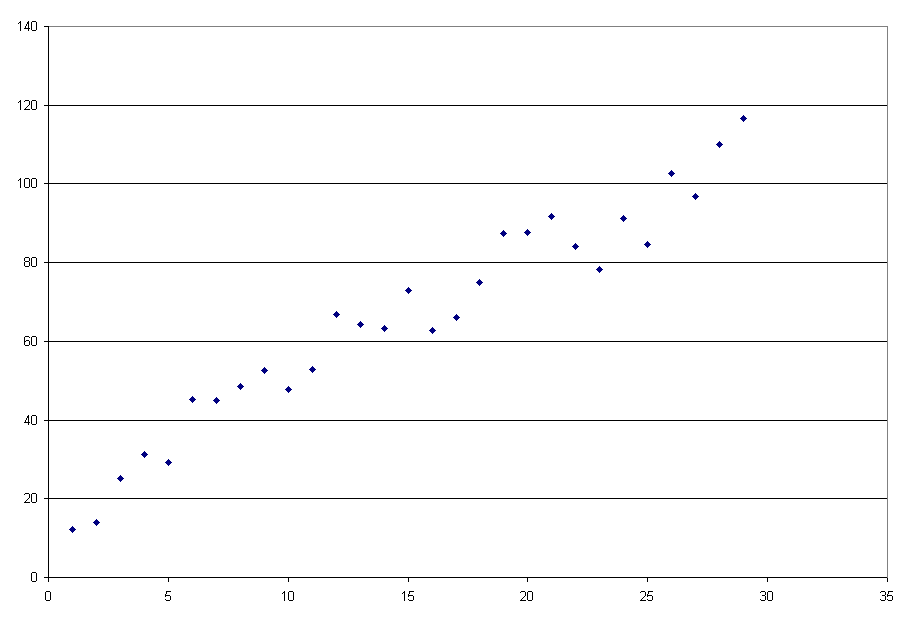
The last problem I am going to talk about now is a venerable one, commonly associated with Bertrand Russell. Imagine you see a trend line that jitters around a bit, but always moves upwards. Asked what is likely to happen next, you would probably suggest a jump comparable to the mean increase between past intervals. Too bad the data series is grams of food being eaten by a turkey per day, and tomorrow is Thanksgiving. You might have a beautiful bell curve showing the mean food consumed by the turkey per day, but it might all fall apart because something that undergirded the distribution changed. Those whose pensions were heavily based on Enron stock have an acute understanding of this.

When their use is justified, bell curves are exceptionally useful. At the same time, using them in inappropriate circumstances is terrifically dangerous. Just because a stockmarket fall of X points is five standard deviations greater than the mean does not imply that it will happen 0.00005733% of the time, despite what bell curve equations and relatively soft-headed statistics instructors might tell you.

Drugs for mental enhancement

Rusty bridge and steam pipes

A recent informal survey, conducted by Nature, suggests that large numbers of scientists are ‘doping’ with drugs that enhance their wakefulness and concentration. While the old joke holds that “a mathematician is a device for converting coffee into theorems,” drugs of choice have expanded to include Modafinil (Provigil) and Methylphenidate (Ritalin).

One in five respondents said they had used drugs for non-medical reasons to stimulate their focus, concentration or memory…

For those who choose to use, methylphenidate was the most popular: 62% of users reported taking it. 44% reported taking modafinil, and 15% said they had taken beta blockers such as propanolol, revealing an overlap between drugs. 80 respondents specified other drugs that they were taking. The most common of these was adderall, an amphetamine similar to methylphenidate.

I do not find this surprising. At a conference once, I met a young woman who pays her tuition by selling drugs usually prescribed for attention deficit disorder to fellow students at her Ivy League school.

It is not clear what kind of response is justified in the face of such anecdotal evidence. It is not obvious, prima facie, that the use of drugs is an inappropriate way to improve one’s mental function or academic output. People use all sorts of mechanisms – from physical activities to dietary modifications – to try to achieve the same end. Prescription drugs are thoroughly vetted for safety, though it is also fair to say that people self-prescribing are likely to make mistakes in terms of dosages and interactions with other substances. People make all kinds of sacrifices for success and it isn’t clear why it is obviously inappropriate for them to run the risks associated with altering their biochemistry. Given the degree to which success is related to self-esteem and contentedness, as well as the degree to which perceptions of failure associate with depression, it could arguably be better for one’s mental health to use whatever aids to success are available.

One legitimate concern is about a spiral effect. If honour roll students and leading researchers start becoming dependent on drugs to improve their focus, it might become difficult for anyone not doping to keep up. That could lead to situations in which people feel strongly pressured to do drugs as well. Of course, that strong pressure already exists in competitive academic environments. Still, there is reason to be especially wary when it is combined with psychoactive chemicals.

The questions suggested by the survey cannot be adequately addressed in a short blog post, but it does seem likely that they will be the subject of greater amounts of attention in the future. The competitive nature of the world, and the need to achieve things ever more rapidly, ensures that a market will exist for products that help people cope with both of those things. As with other unauthorized uses of drugs, the policies adopted by governments will affect things like price, availability, safety, and access to information and advice. Getting the balance right will be tricky.

Surveying the US and UK

This survey, comparing American and British attitudes on various subjects, contains some interesting bits of information. For instance, 2% of British people would be “angry” if their leader was an atheist, while 21% of Americans say they would be. Both sets of respondents are similarly negative when asked about a Muslim leader: 35% of Americans would be angry, compared to 34% of British people. Only 16% of Britains who believe in god also believe in hell, compared with 54% of Americans.

55% of Brits believe in anthropogenic climate change, compared to 49% of Americans, but neither country has citizens too keen on doing much about it. 79% of Yanks and 76% of Brits oppose higher gas taxes; half those polled in the UK oppose increased airline fares, compared with 67% of Americans. Opinions about nuclear are very similar in both states, with about 45% of people in favour of more stations and 30% opposed.

Asked to choose a new leader, the British respondents chose the following listing based on set options: Margaret Thatcher, Bill Clinton, Tony Blair, Ronald Reagan. Americans preferred Reagan and Clinton, with Thatcher and Blair as a near-tie. Americans are much keener on character than experience (ranked higher by 63% compared to 28%), while British respondents preferred experience by 50% to 39%. Americans are much more likely to distrust university professors (17% of respondents compared to 2% in the UK), while Brits are much keener on free trade (52% generally in favour, compared to 31% of Americans).

Both sets of respondents also seem to have a similar overall view of the future, with about 40% expecting the next generation to be worse off than they are, 27% expecting them to be better off, and 18% expecting things to remain about the same.

Thoroughly impressed by TED

Steel girders and sky

Initially drawn in by the Al Gore video, I have been watching lots of the films from the TED conference, and being impressed by many of them. I am more impressed than ever by cephalopods, and some of my idle curiosity about how ants decide what to do has been satisfied. I also learned about some new reasons for which we should be wary about the long-term use of antidepressant drugs.

Putting these short lectures online is an excellent way of demonstrating the power of the internet to distribute ideas. Even for those of us who would balk at flying to California to attend some very neat talks, fiber optic links provide a low-carbon alternative.

Thermonuclear weapon design

A common misunderstanding about thermonuclear weapons (those that employ tritium-deuterium fusion as well as the fission of uranium or plutonium) is that most of the extra energy produced comes from fusion. In fact, the great majority comes from additional fission encouraged by neutrons produced by the fusion reaction. Each atom that undergoes fission generates 180 million electron volts (MeV) of energy, equivalent to 74 terajoules per kilogram. Tritium-deuterium fusion produces only 17.6 MeV per incident, though the materials that undergo fusion are far less massive than those that undergo fission.

The general functioning of a modern thermonuclear bomb (Teller-Ulam configuration) is something like the following:

  1. A neutron generator bombards the plutonium pit of the primary (fission device).
  2. Exploding-bridgewire or slapper detonators initiate the high explosive shell around the pit.
  3. The pit is compressed to a supercritical density.
  4. The pit undergoes nuclear fission, aided by the neutron reflecting properties of a shell made of beryllium, or a material with similar neutron-reflection properties.
  5. The fission process in the primary is ‘boosted’ by the fusion of tritium-deuterium gas contained in a hollow chamber within the plutonium.
  6. The x-rays produced by the primary are directed toward the secondary through an interphase material.
  7. Within the secondary, heat and compression from the primary induce the production of tritium from lithium deuteride.
  8. Tritium and deuterium fuse, producing energy and high-energy neutrons.
  9. Those neutrons help induce fusion within a uranium-235 pit within the secondary (called the spark plug). Layers of uranium-235 may alternate with layers of lithium deuteride, and the whole secondary may be encased in a sphere of uranium-235 or 238. This tamper holds the secondary together during fission and fusion. Uranium-235 or 238 will also undergo fission in the presence of neutrons from fusion.

Throughout this process, the whole device is held together by a uranium-238 (depleted uranium) case. This is to ensure that the reactions proceed as far as possible before the whole physics package is blasted apart.

One important security feature can be built into the detonators that set off the explosive shell around the primary. By giving each detonator a fuse with a precisely set random delay, it is possible to ensure that only those who know the timing of each detonator can cause the bomb to explode as designed. If the detonators do not fire in a very precisely coordinated way, the result is likely to be the liquefaction of the plutonium core, followed by it being forced out of the casing as a fountain of liquid metal. Nasty as that would be, it is better than the unauthorized detonation of the weapon.

The detonators are also an important safety feature since their ability to cause very stable explosives to detonate means that the high explosive shell can be made of something that doesn’t detonate easily when exposed to shock or heat. That is an especially valuable feature in a world where bombs are sometimes held inside crashing planes, and where fires on submarines can prove impossible to control.

Google transit in Vancouver

Google Transit has now been rolled out for a few Canadian cities: namely, Vancouver, Montreal, and Fredericton. I tried asking it about a dozen or so common transit trips in Vancouver and it seemed to be both fast and accurate. For example, here is how to get from Edgemont Village, in North Vancouver, to the Tsawwassen Ferry terminal. Here is how to get from White Rock to Horseshoe Bay. It also knows about the Skytrain.

It is also much less bothersome than the proprietary transit webpages built by people like Translink and STM. I hope it gets rolled out for Ottawa and Toronto soon.

The Japanese version is especially impressive. It includes buses, trains, ferries, and domestic air travel.

A Madman Dreams of Turing Machines

Branches over Dow\'s Lake, Ottawa

Janna Levin’s book is an odd one: written about two mathematicians, focused on mathematical ideas, but with virtually no specific mathematical discussion. The book dances elegantly around the real meat of the lives of Alan Turing and Kurt Godel, but shows it all from the perspective of an outsider focused on emotions. This is freely admitted in the concluding notes:

The depth and magnitude of both Turing and Godel’s ideas are only barely touched upon here.

While this is a novel and not a reference work, one nonetheless feels that Godel and Turing would think it captures mostly what was not essential about their lives.

Putting words and thoughts into fictitious forms of historical figures is always a dangerous business, because it carries with it the false precision of reasoned invention. The danger that the speculation could be wrong is constant, so the book takes on the feeling of a friend-of-a-friend story, while maintaining the trappings of an omniscient direct account. The book also fixates far too much on apples, in an attempt to set up the story of Turing’s suicide.

The book’s strength lies in conveying the tragedy and isolation that seems to be the burden of most of the greatest mathematicians. The contrast between being able to perform mental feats beyond the capacity of almost everyone, while being largely unable to perform the basic actions of a normal life, has long been rich material for writers. In this sense, Turing comes off much stronger; by the end, the account of Godel’s life is both pathetic and pitiable. At least Turing is driven to suicide by the homophobic cruelty of others – Godel just stumbles into it through deepening paranoia.

While the book made for satisfying reading, I much prefer the math-related non-fiction works of Simon Singh. His Code Book includes an admirable description of the breaking of Enigma. In Fermat’s Last Theorem Singh also does a good job of telling about the lives of mathematicians, without ignoring the math. Something comparable on Godel’s incompleteness theorem would make more satisfying reading than this novel.

Climate change and the gom jabbar

Artistic bar lights

In Frank Herbert’s Dune, the protagonist is tested using a machine that “only kills animals.” His hand is placed in a box that simulates the appearance and sensation of having it horribly burned. He is told that he will be killed if he pulls the hand out. The test is to see whether he can overcome his primal reaction: whether he can exercise will over instinct and live. At least according to those who administer it, this is what distinguishes ‘humans’ from ‘animals.’

In some ways, climate change is like a Gom jabbar for all humanity. We are now aware of the needle threatening our collective lives. We know that continuing to act on the basis of instinct will lead to our doom. The question is whether we possess the fortitude to endure what is difficult, in order to avoid what is lethal.