Increasingly clever machines

It seems my mountain climbing, robot-building friend Mark has a relatively new blog. He works with autonomous robots of the kind that competed in the recent DARPA Urban Challenge.

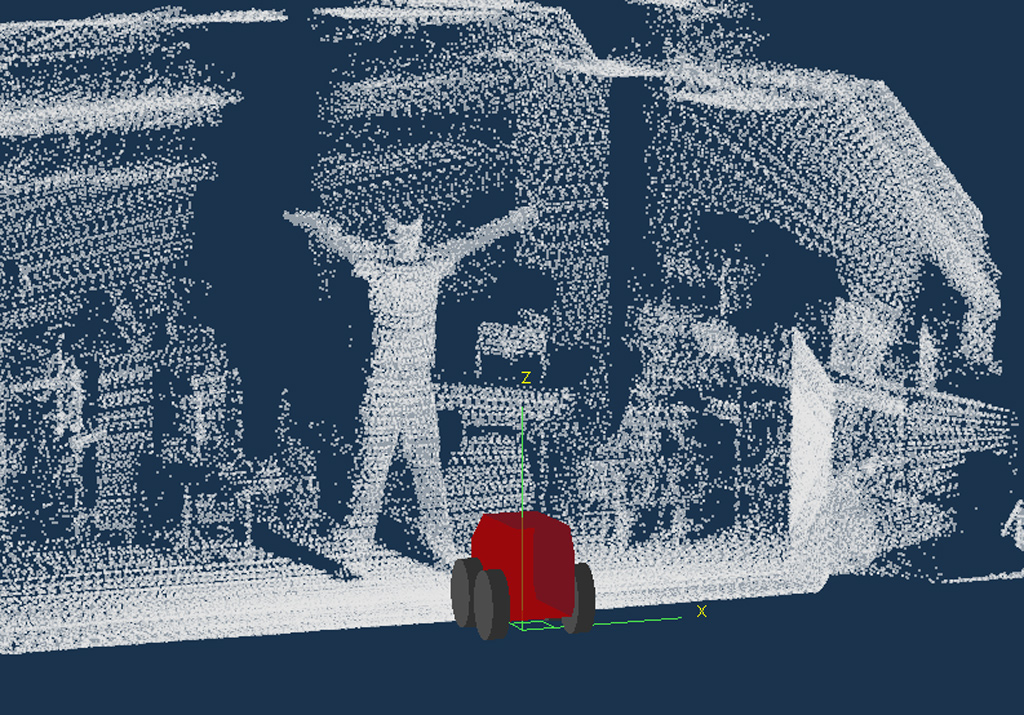
Here is one way in which such robots see the world: as a set of laser determined ranges.

Previous robot-related posts:

Death, drugs, and rock and roll

A recent study in the Journal of Epidemiology and Community Health confirms the hazards of musical stardom. The study examined the lives of 1,064 successful musicians in the rock, punk, rap, R&B, electronica, and new age genres. All became famous between 1956 and 1999 and all had records that were included in a ‘Top 1000 records of all time’ list from 2000.

It found that the median age of death for North American celebrities was an unimpressive 41.78. Europeans do even worse, at just 35.18. All told, successful musicians are nearly twice as likely to die early as members of the normal population.

The regional breakdown by cause of death is also interesting:

Cause – % in the US – % in Europe
Suicide – 2.8% – 3.6%
Drug or alcohol overdose – 15.3% – 28.6%
Chronic drug or alcohol disorder – 9.7% – 3.6%
Drug or alcohol related accident – 2.8% – 7.1%
Cancer – 19.4% – 21.4%
Heart disease – 18.0% – 3.6%
Accidents – 13.9% – 21.4%
Violence – 6.9% – 3.6%
Other – 11.1% – 7.1%

The largest single discrepancy is the probability of dying of a drug overdose, but lots of other significant differences exist. Neither regional profile suggests that music is a healthy profession: at least for those at the top.

Source:

Political markets

Ottawa River sunset

One interesting way to try to predict political outcomes is to allow people to bet on who will win and look at the odds that emerge. A number of sites are allowing people to do this for the 2008 American presidential election, with interesting results. Such sites include InTrade, Iowa Electronic Markets, and Casual Observer.

One option is to buy the right to $100 if a particular candidate wins the presidency. The cost of such a contract is reflective of the market’s presumed probability of that candidate winning. Here are some of the most recent prices:

Hillary Clinton: $46.70
Rudy Giuliani: $17.00
Mitt Romney: $9.50
Al Gore: $7.00
Barack Obama: $6.70
John McCain: $3.50

Newt Gingrich: $0.10

The people betting on Al Gore are probably wasting their money, given his repeated assertions that he will not be running. It will be interesting to see how the figures change when more candidates drop out, people choose running mates, and the two parties finally decide upon their nominations.

It is also possible to bet on which party will win the presidential vote. Bets on the Democrats are selling for $63.00. The Republicans only cost $36.40, reflecting much lower expectations about their probable electoral success.

Index of climate posts

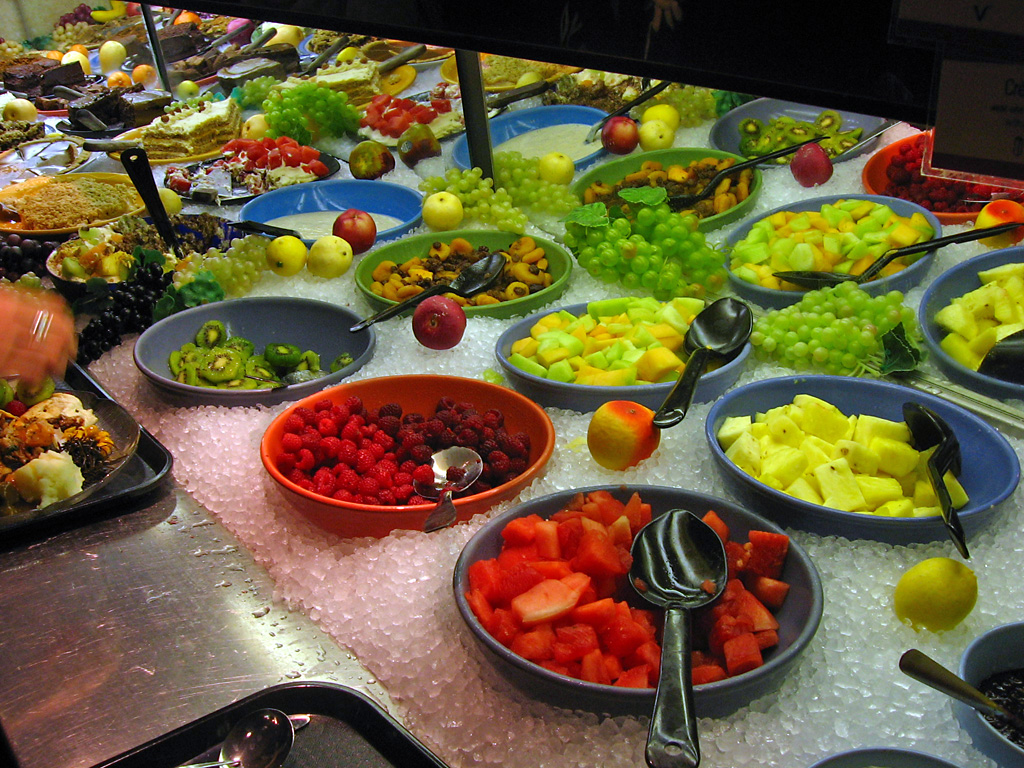
Fruit bar

For the last while, my aim on this blog has been both to entertain readers and to provide some discussion of all important aspects of the climate change problem. To facilitate the latter aim, I have established an index of posts on major climate change issues. Registered users of my blog can help to update it. Alternatively, people can use comments here to suggest sections that should be added or other changes.

The index currently contains all posts since I arrived in Ottawa. I should soon expand it to cover the entire span for which this blog has existed.

Mechanism design theory

Window and shadows in Montreal

The 2001 Nobel Prize in Economics was awarded to George Akerlof, Michael Spence, and Joseph Stiglitz for their work on asymmetric information. One standard assumption in neoclassical economic models is that all participants in a transaction have ‘perfect information’ about the goods or services being exchanged. The field of behavioural economics is now seeking to deepen such models, so that they can better reflect the kind of dynamics that exist in real markets.

Asymmetric information is a key factor in the functioning of real markets. When you buy a used car, the person at the lot probably knows more about it than you do. The salesperson knows more about used cars in general, may have spoken with the original seller, and may have investigated this specific car. Conversely, you know more about your health risks than your health insurer (provided you live somewhere where health insurance is private). You might know, for instance, that all your relatives die of heart attacks on their 35th birthdays and that you personally drink 3L of whisky per day.

This year’s Nobel Prize in Economics was awarded to Leonid Hurwicz, Eric S. Maskin, and Roger B. Myerson for their work on mechanism design theory. The basic purpose of the theory is to deal with problems like those of assymetric information: take a situation where people would normally have an incentive to behave badly (lie, cheat, etc) and establish rules to make it no longer in their interest to do so. We might, for instance, require used car salespeople to provide some sort of guarantee, or we might allow health insurers to void the policies of individuals who lie about their health when premiums are being set.

Reading about mechanism design feels a bit like watching engineers try to create religious commandments. This section from the Wikipedia entry illustrates what I mean.

Mechanism designers commonly try to achieve the following basic outcomes: truthfulness, individual rationality, budget balance, and social welfare. However, it is impossible to guarantee optimal results for all four outcomes simultaneously in many situations.

While it does seem a bit counterintuitive to try to achieve these things through economic means, it is probably more durable than simply drilling axioms into people’s heads. That is especially true when the counterparty they are dealing with is some distant corporation; people who would never cheat someone standing right in front of them are much more willing to deceive or exploit such a distant and amorphous entity.

Problems with fusion ITER means to solve

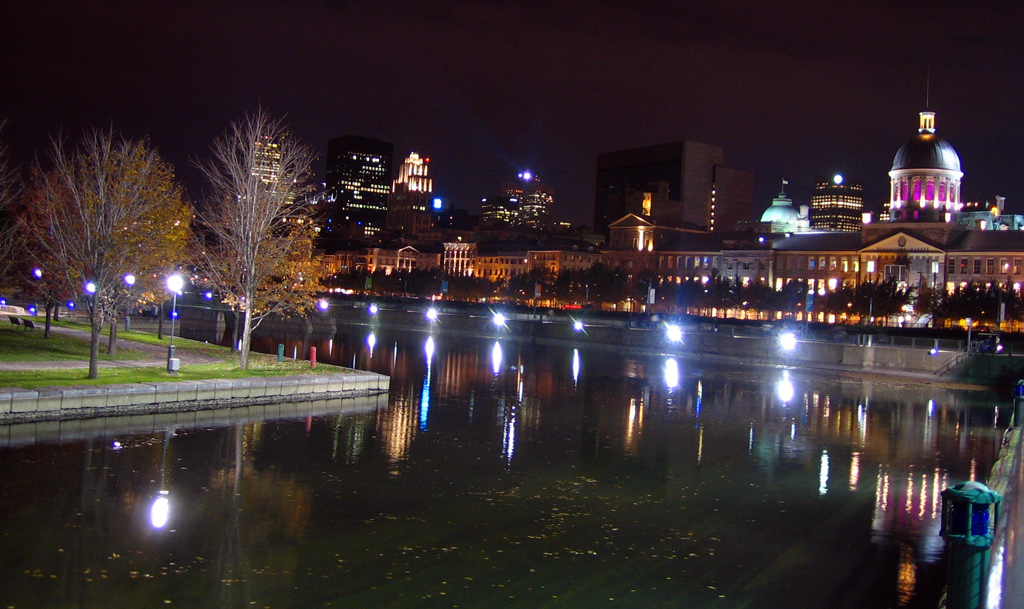
Building in Old Montreal

The fundamental problem with nuclear fusion as a mode of energy production is establishing a system that produces more power than it consumes. Heating and containing large volumes of tritium-deuterium plasma is an energy intensive business. As such, the sheer size of the planned International Thermonuclear Experimental Reactor is a big advantage. Just like it is easier to keep a huge cooler full of drinks cold than to keep a single can that way, a larger volume of plasma has less surface area relative to its total energy. As such, bigger reactors have a better chance of producing net power.

The other big problems that scientists and engineers anticipate are as follows:

  1. No previous reactor has sustained fusion for very long. The JT-60 reactors in Japan holds the record, at 24 seconds. Because ITER is meant to operate for between 7 and fifteen minutes, it will produce a higher volume of very hot hydrogen (the product of the tritium-deuterium fusion). That hydrogen could interfere with the fusing plasma. As such, it needs to be removed from the reactor somehow. ITER plans to use a carbon-coated structure called a diverter, at the bottom of the reactor, to try to do this. It is not known how problematic the helium will be, nor how effective the diverter will prove.
  2. Both the diverter and the blanket that surrounds the reactor will need to be able to resist temperatures of 100 million degrees centigrade. They will also need to be able to survive the presence of large amount of radiation. It is uncertain whether the planned beryllium coatings will be adequate to deal with the latter. Prior to ITER’s construction, there are plans to test the planned materials using a specially built particle accelerator at a new facility, probably to be built in Japan. THis test facility could cost about $2.6 billion – one quarter of the total planned cost of ITER itself.
  3. Probably the least significant problem is converting the heat energy from the fusion reaction into electrical power. This is presumably just a matter of putting pipes carrying a fluid into the blanket, then using the expansion of that fluid to drive turbines. While this should be a relatively basic change, it is worth noting that ITER will have no capacity to generate power, and will thus need to dissipate its planned output of about 500 megawatts by other means.

None of these issues undermine the case for building ITER. Indeed, they are the primary justification for building the facility. If we already knew how to deal with these problems, we could proceed directly to building DEMO: the planned electricity-generating demonstration plant that is intended to be ITER’s successor.

The foolishness of the International Space Station

Montreal courthouse

On Tuesday, the space shuttle launched once again on a mission to add another piece to the International Space Station (ISS). As I have said before, it is a needlessly dangerous, unjustifiably expensive, and rather pointless venture. The science could be equally well done by robots, without risking human lives, and without spending about $1.3 billion per launch (plus emitting all the greenhouse gasses from the solid rocket boosters and related activities).

More and more, the ISS looks like a hopeless boondoggle. The lifetime cost is being estimated at $130 billion, all to serve a self-fulfilling mandate: we need to put people into space to scientifically assess what happens when we put people into space. Furthermore, the window between the completion of the ISS in about 2012 and the potential abandonment of the station as soon as 2016 is quite narrow. Robert Park may have summed up the whole enterprise best when he remarked that:

“NASA must complete the ISS so it can be dropped into the ocean on schedule in finished form.”

Normally, I am a big supporter of science. I think funding the International Thermonuclear Experimental Reactor and Large Hadron Collider is wise; these machines will perform valuable scientific research. Likewise, I support the robotic work NASA does – especially when it comes to scientists looking down on Earth from orbit and providing valuable research and services. I support the James Webb telescope. I also support the idea that NASA should have some decent plans for dealing with an anticipated asteroid or comet impact. The ISS, by contrast, is a combination between technical fascination lacking strategic purpose and pointless subsidies to aerospace contractors.

Of course, the Bush plan to send people to Mars is an even worse idea with higher costs, more risk, and even less value.

Securing against the wrong risk

This week’s Economist includes an unusually poor article on security. It explains that the upcoming Swiss election will be using quantum cryptography to transmit the results from polling stations to central tabulation centres. It alleges that this makes the whole electoral process more secure. This is wrong.

What this is essentially saying is that there would otherwise be a risk of manipulation of this data in transit. The chief polling officer at one station might send a set of figures that get altered by a malicious agent en route to the tabulation centre. Having an encrypted link prevents this man-in-the-middle attack. It does not prevent the polling officer from lying, or the person at the tabulation centre from manipulating the results they input into the counting machines. It doesn’t prevent ballot-stuffing, vote buying, or the compromise of computer systems used to collect or tally votes. In short, it provides no security for the parts of the electoral process that are actually vulnerable to attack. In the absence of good security at the more vulnerable points in the electoral process, using quantum cryptography is like putting a padlock on a paper bag.

Hopefully, they will print my brief letter taking them to task for allowing themselves to be seduced by technology, rather than think sensibly about security.

[Update: 29 October 2007] Bruce Schneier has written about this. Unsurprisingly, he agrees that using quantum cryptography does not increase the security of the Swiss election.

Unicity distance

Sky, moon, and wires

In order to be able to decipher a secret message through cryptanalysis, you need to have a sufficient quantity of data to evaluate whether it has been done properly. If all a cryptoanalyst has to work with is enciphered text (say, in the form of an intercepted message) the attempt to decipher it is called a ciphertext-only attack. For a variety of reasons, these are very tricky things to accomplish. The element described below is one of the most basic.

In order to understand why a message of sufficient length is important, consider a message that consists only of a single enciphered phone number: “724-826-5363.” These numbers could have been modified in any of a great number of ways: for instance, adding or subtracting a certain amount from each digit (or alternating between adding and subtracting). Without knowing more, or being willing to test lots of candidate phone numbers, we have no way of learning whether we have deciphered the message properly. On the basis of the ciphertext alone, 835-937-6474 is just as plausible as 502-604-3141.

Obviously, this is only a significant problem for short messages. One could imagine ways in which BHJG could mean ‘HIDE’ or ‘TREE’ or ‘TRAP.’ The use of different keys with the same algorithm could generate any four letter word from that ciphertext. Once we have a long enough enciphered message, however, it becomes a lot more obvious when we have deciphered it properly. If I know that the ciphertext:

UUEBJQPWZAYIVMNAZSUQPYJVOMDGZIQHWZCX

has been produced using the Vigenere cipher, and I find that it deciphers to:

IAMTHEVERYMODELOFAMODERNMAJORGENERAL

when I use the keyword MUSIC, it is highly likely that I have found both the key and the unenciphered text.

This concept is formalized in the idea of unicity distance: invented by Claude Shannon in the 1940s. Unicity distance describes the amount of ciphertext that we must have in order to be confident that we have found the right plaintext. This is a function of two things: the entropy of the plaintext message (something written in proper English is far less random than a phone number) and the length of the key being used for encryption.

To calculate the unicity distance for a mesage written in English, divide the length of the key in bits (say, 128 bits) by 6.8 (which is a measure of the level of redundancy in English). With about eighteen characters of ciphertext, we can be confident that we have found the correct message and not simply one of a number of possibilities, as in the phone number example. By definition, compressed files have redundancy removed; as such, you may want to divide the key length by about 2.5 to get their unicity distance. For truly random data, the level of redundancy is zero therefore the unicity distance is infinite. If I encipher a random number and send it to you, a person who intercepts it will never be able to determine – on the basis of the ciphertext alone – whether they have deciphered it properly.

For many types of data files, the unicity distance is comparable to that in normal English text. This holds for word processor files, spreadsheets, and many databases. Actually, many types of computer files have significantly smaller unicity distances because they have standardized beginnings. If I know that a file sent each morning begins with: “The following the the weather report for…” I can determine very quickly if I have deciphered it correctly.

Actually, the last example is particularly noteworthy. When cryptoanalysts are presented with a piece of ciphertext using a known cipher (say Enigma) and which is known to include a particular string of text (such as the weather report introduction), it can become enormously easier to determine the encryption key being used. These bits of probable texts are called ‘cribs‘ and they played an important role in Allied codebreaking efforts during the Second World War. The use of the German word ‘wetter’ at the same point in messages sent at the same time each day was quite useful for determining what that day’s key was.