
How to shift the US Congress?

Writing for Grist, Randy Rieland has come up with a summary of arguments about why cap-and-trade is dead in the United States for now. He is right to say that the blame lies primarily with Congress, rather than with the Obama administration. Congress is the most powerful branch of government, and has been highly effective at blocking environmental legislation in the past. While the Democratic leadership in Congress is theoretically allied with the administration in the White House, even the two together clearly haven’t been able to overcome the wall of opposition to meaningful climate policies that has been constructed by Republicans, or the cowardice of moderate Democrats who are unwilling to fight to address this key problem.

The stragic question now becomes how to change Congressional behaviour, and do so before climate-related disasters become so frequent as to finally discredit climate change deniers completely. We cannot afford to wait that long, both because of the physical lags in the Earth’s climate system and the lags in our own infrastructure deployment. By the time the full danger of climate change is unambiguously on display, it will be too late to avoid some terrible effects. It will also be too late for the relatively unintrusive policies being proposed today to work. Sterner stuff will be required.

Costing legislation

In the United States, the Congressional Budget Office has a mandate to provide non-partisan advice on the economic and budgetary decisions on the wide array of programs covered by the federal budget. They have a staff of 235, and a budget of $44 million per year.

By contrast, Canada’s Parliamentary Budget Officer (PBO) has a staff of 11, and can only undertake analyses on a selected subset of bills. This is problematic for a few reasons. For one, it gives the impression of some level of partisanship, when the PBO can choose which bills to study and when to release results. For another, it leaves Members of Parliament ill informed about what the costs associated with legislation will be. They really ought to have an accurate non-partisan analysis before the second reading vote.

Perhaps it would make sense if Canada enlarged the role of the PBO, to include a mandatory analysis on any piece of legislation likely to cost over a certain amount, such as $500 million. By making the selection of projects for analysis largely automatic, the PBO would be made to seem non-partisan. The quality of the data that drives Parliamentary decisions would also likely be improved.

Legalize, regulate, provide treatment

Just as XUP is pointing out how it makes sense to legalize and regulate prostitution, The Economist is making that case for gambling. Of course, the argument works for drugs too – better to have their production and distribution legal and regulated by the state than criminalized, marginalized, and ultimately more harmful. All of these activities will inevitably cause some level of suffering, but their treatment as criminal offences simply serves to increase how much of that arises. This is unescapable, since those involved in criminal activities have no recourse to police protection and assistance, safety and quality control will always be poor, and criminalizing ‘vices’ puts an unsustainable and inappropriate burden on the justice system.

One further measure I would suggest is that producers of drugs – and purveyers of sex and gambling – should have to pay taxes on their revenues that are devoted specifically to helping people who are addicted to their wares. The treatment options provided should be based on the best available medical evidence, and be run by organizations at arms length from both the companies and the government (to avoid the kind of political bickering threatening Vancouver’s InSite harm reduction project). The taxes should be set at a level that ensures that anybody who wants to get treatment is able to do so for as long as they need it.

Humans have many weaknesses, with addictions among the most serious. By legalizing and regulating drugs, gambling, and prostitution, the harm associated with these activities can be minimized. At the same time, the reality that many people cannot overcome addictions on their own must be recognized through the provision of effective and accessible treatment.

Climate change and capitalism

A number of times, discussions on this site have questioned how the reality of climate change should affect our political philosophy, when it comes to supporting or opposing capitalism. For both practical and theoretical reasons, I have been of the view that replacing capitalism is not a sensible goal, for those deeply concerned about climate change. Capitalism has virtues that may not be present in alternative systems – and what serious alternatives really exist at this point? – and there is no reason to be confident that an alternative system will be able to address climate change, even after we have put in all the time and effort that such a major societal reorganization would require.

Capitalism also includes powerful tools that could be applied to problems like tackling climate change. By establishing a carbon price, emissions reductions can be made to occur in the places where doing so is cheapest. That has benefits in terms of how quickly and cheaply emissions can be cut. It also has benefits for liberty, since it changes the incentives that people face, without forcing them to make one choice or another.

The urgency of climate change is another major reason to focus on the changes that are absolutely necessary, while leaving grand experiments for a more relaxed period in history. Preventing temperature increase of over 2°C above pre-industrial levels requires very aggressive cuts in global emissions. They need to peak as soon as possible (the sooner, the lower total costs will be) and fall to a dramatically lower level by 2050. Given that this is the lifetime of assets being constructed right now, from highways to buildings to power plants, the need to start changing incentives is urgent. It is much more plausible that this could be achieved by incorporating carbon pricing into our existing economic and political framework than it is to think we could launch a whole alternative structure quickly and effectively enough to achieve that result.

Must capitalism be discarded in order to address climate change, or is reform sufficient? Thinking strategically, what should those who are intensely concerned about climate change work to achieve, in terms of political and economic reforms? What real alternatives to capitalism as now practiced are there, and what would the likely benefits and problems associated with them be?

Liability caps

Often, states choose to cap the liabilities of companies operating dangerous facilities like oil rigs or nuclear power stations. They recognize that companies are hesitant to build or own such things, as long as they might be called upon to pay the full cost associated with any accidents.

Of course, providing these caps is a deeply anti-market thing to do. There are very good reasons to worry about oil spills and nuclear disasters, and heavy costs are borne by many people when they occur. Those risks should be foremost in the minds of people who choose to invest in these facilities.

When governments grant companies ‘protection’ against massive claims in the event of disasters, they are saying that building these facilities is so important that it should be done even if there may ultimately be serious uncompensated harm imposed on the general public. This takes the illusory profits associated with environmentally harmful economic activities to a new level, by saying that even in cases where companies can be proven to have directly caused harm to third parties, in the pursuit of their own profits, those profits will be protected by the wealth and authority of the states.

How cynical should Obama make us?

As the Bush administration was coming to a close, Barack Obama looked like an almost ideal leader for the United States: internationalist, concerned with the constitution and rule of law, apparently concerned about the environment, and so on.

Now, a year and a half after Obama was inaugurated, there are a lot of disappointments to deal with. Guantanamo Bay remains open, the United States maintains an active policy of assassinations in Pakistan, the war in Afghanistan has been a failure in relation to our original aims, and nothing significant has been done on climate change. Instead, the administration can point to its response to the economic crisis and health care as its accomplishments.

As I have said before, I think the credit crisis was a real waste of this administration. It seems like they could have devoted their energy in so much more productive ways, if the banks hadn’t terrified politicians into pulling out all the stops to save them. The unpopularity of doing so has revitalized the Republican Party and sapped public support for the Obama administration. Furthermore, very little has been done to prevent the occurrence of such crises in the future.

What should we take from all of this? Is Obama really as promising a figure as we thought, blocked in his efforts by the political system? Do we need to give the administration more time to effect its policies? Or was the kind of optimism that fueled the Obama campaign misplaced? Perhaps the world simply doesn’t permit the success of idealists.

In fairness, Obama did make an effort to stress how difficult real change would be, while he was campaigning and after he was elected. There is a huge amount of momentum bound up in the status quo, and changing the direction of things in meaningful ways is always difficult. Hopefully, there has been more happening in the background than has been immediately observable to outsiders and the years Obama has left will be filled with meaningful accomplishments.

How good is gas?

Per unit of electricity generated, natural gas is the lowest-carbon fossil fuel. Producing a kilowatt-hour (kWh) of electricity using oil, and especially coal, generates significantly more emissions. While bituminous coal produces about 370g of CO2 per kWh, oil produces about 260g, and natural gas produces about 230g.

A recent MIT report focuses on switching American electricity production to gas, as a way of reducing greenhouse gas emissions:

In the results of a two-year study, released today, the researchers said electric utilities and other sectors of the American economy will use more gas through 2050. Under a scenario that envisions a federal policy aimed at cutting greenhouse gas emissions to 50 percent below 2005 levels by 2050, researchers found a substantial role for natural gas.

“Because national energy use is substantially reduced, the share represented by gas is projected to rise from about 20 percent of the current national total to around 40 percent in 2040,” said the MIT researchers. When used to fire a power plant, gas emits about half of the carbon dioxide emissions as conventional coal plants.

They claim that nuclear power, renewable energy and carbon capture and sequestration are all more expensive than gas, and thus less viable as low-carbon alternatives. They also claim that by 2050, 15% of the U.S. vehicle fleet will be fueled with natural gas.

I have three big objections to all this:

First, an increasing share of natural gas is coming from unconventional sources, using techniques like hydraulic fracturing. This has associated environmental risks, such as the contamination of groundwater.

Secondly, the amount of climate change humanity will cause depends on the total amount of all fossil fuels burned before society becomes carbon neutral. Burning more gas obviously contributes to this cumulative total, changing the atmosphere and climate in ways that will endure for thousands of years. If humanity ever starts to burn the methane embedded in permafrost of methane clathrates, the total quantity of associated emissions could be very worrisome indeed.

Thirdly, building new gas-fired power plants perpetuates fossil fuel dependence. It keeps us wedded to fuels that are inevitably going to become ever more costly and destructive to access, and which can never form the basis for a truly sustainable society.

None of this is to say that gas has no role to play in dealing with climate change. In the short term, substituting gas for coal may be a promising way to reduce emissions during the transitional period before renewables become dominant. In the long run, however, there is no alternative to moving beyond fossil fuels.

Helpfully, the MIT report does not just take energy demand as constant, or ever-increasing. Rather, they model the economic effect of putting a price on greenhouse gas emissions, and find that doing so would keep demand flat in the next few decades. They project that carbon pricing would raise electricity prices by 30% by 2030 and 45% by 2050 – a small price to pay for reducing the extreme risks associated with climate change.

Open thread: campaign finance

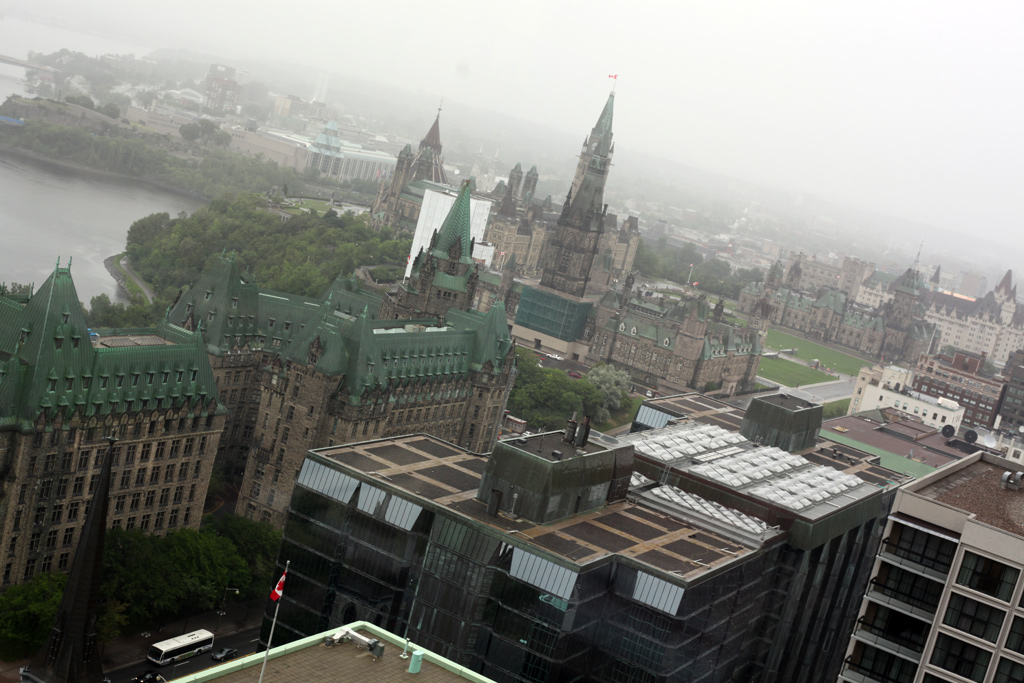
Writing for The American Prospect, Robert Reich describes the system of campaign contributions in the United States as “the biggest corruption of our political process,” defining corruption as “actions causing the public to lose confidence that politicians make decisions in the public’s interest rather than in the special interest of those who give them financial support.” He claims that the increasing size and importance of these political donations is primarily a reflection of changing economic circumstances:

Globalization, deregulation, and technological advances — especially computers and the Internet — have been the driving forces. They have shifted almost all industries in almost all rich economies from being organized around stable oligopolies, in which competitive advantage derived mostly from economies of scale, toward far more intense competition in which competitive advantage comes from innovation — and from favorable treatment by government.

He argues that the issues that now occupy the bulk of Congressional time are those that affect competition between firms within an industry, as well as those that affect competing industries.

Climatologist James Hansen also identifies campaign finance reform as one of the most necessary steps for producing effective climate change policies in the United States, by reducing the influence of status quo entities like big coal companies.

What do readers think about the claim that political advertising ought to be a form of protected free speech? How much does it matter whether it is funded by the candidate themselves, campaign donors, or some other mechanism? Would we be better off if all candidates got a set amount of free advertising, and were barred from using other means to promote themselves in mass media? Would such a policy just drive them to use different approaches to achieve the same end, such as cooking up forms of advertising that can be reported as news? Does the current situation in Canada differ in important ways from that in the United States?

Taking political positions in public

U.S. Supreme Court justice Antonin Scalia is not a man who I often find myself in agreement with. That said, I do think a recent comment of his was both true and important. Opponents of gay marriage in the United States are seeking to have their identities kept secret, because they fear that they will suffer for their views. In response, Scalia said that: “The fact is, running a democracy takes a certain amount of civic courage.” He also said that: “you can’t run a democracy this way, with everybody being afraid of having his political positions known.”

Certainly, it is grossly inappropriate for people to be threatening the personal security of those who oppose gay marriage. That being said, having an active and effective public debate over issues of policy and law does require people to openly and honestly express their views. Furthermore, in a free and democratic society, we retain the right to reach judgments about people on the basis of their views. It is perfectly legitimate for me to think that someone is bad at evaluating complex information, because they are a climate change denier. Similarly, it seems legitimate to say that those who do not support equal rights for gay couples don’t really take human rights or the concept of equal treatment under the law seriously.

Whether you agree or disagree with that specific perspective, I think Scalia’s argument that society benefits when people declare their positions honestly and publicly is a strong one. Serious politics, based around competing ideas, relies on that sort of open discussion and debate. The alternative is a shadowy political world in which people try to advance their preferences obliquely, using whatever underhanded techniques might be effective.

Climate change and individual ethics

During today’s earlier discussion of climate change and partisan politics, a distinction was eventually drawn between the key principles that underlie intergenerational justice, the ways in which those principles manifest themselves in individual morality, and the question of how to bring our politics more in line with what those principles demand.

The final question is the topic of the previous discussion, but it seems worth having another about the broad question of what the moral consequences of climate change are for human behaviour. Naturally, this has come up before with reference to specific behaviours (especially voluntary travel). It has also come up in broader discussions, such as on the relative importance of abstaining from emissions, compared with resisting societal structures that perpetuate climate change.

This discussion is meant to be broader than those: what are the moral consequences of climate change, when it comes to individuals?