The EPA endangerment finding on CO2

Wooden sculpture detail - Twist 1.5, Ottawa

Some very encouraging things are happening over at the United States Environmental Protection Agency (EPA). In response to a Supreme Court decision, they have issued an endangerment finding – paving the way to regulation. According to analysis on Grist, automobiles are likely to be the first sector targeted, though they represent only 20% of emissions. Later possible targets include coal power plants, which generate 40% of American greenhouse gasses.

In addition to prompting regulation, the finding may drive action in Congress, since legislators will likely prefer designing a greenhouse gas mitigation system themselves, rather than leaving it to the EPA. As such, this raises hopes of the United States passing a cap-and-trade bill sometime this year – the first absolute necessity in kicking off the transition to a low-carbon economy.

The Grist analysis above is well worth reading, as it is quite comprehensive. Along with Obama’s new commitment to high speed rail, this justifies considerable optimism about changes in American climate policy. That, in turn, might go a long way towards making the international negotiations in Copenhagen this December more successful.

UK libel laws and global free speech

Rust on white paint

As explained well in an article by Emily MacManus, I don’t think it’s an exaggeration to say that British laws on libel are a threat to free speech around the world. Because they permit frivolous cases that would be far too costly for most people to fight, they give a great deal of power to anyone who is annoyed enough and has the resources to pursue legal action there. Even the threat of such action may be sufficient to make individuals or publishing organizations censor themselves.

The linked article goes further into the peculiarities, which include the characteristics of ‘no-win-no-fee’ litigation and the broad understanding of who constitutes a ‘publisher.’ For instance, if you said something true but commercially harmful about a company on your website, they might go after you, your internet service provider, or the company that runs the server your site is on. Any of them might feel pressured into removing the statements, rather than face litigation. British law also holds that “every time the statement is downloaded or accessed it constitutes a fresh publication,” which could produce especially absurd outcomes for a popular website.

An important first step could be requiring the party bringing the suit to prove that the allegations are untrue, before the court accepts the case. For instance, if I said that Rio Tinto was polluting a river somewhere with mercury, or that Suncor is emitting huge amounts of greenhouse gasses, they would have to prove the opposite in some sort of pre-trial hearing, before they could come after me. It might also make sense to limit which courts can hear a particular case, so as to prevent people from shopping around in random legal jurisdictions to find the one that gives them the strongest hand.

The article suggests that ‘principled deep-pocketed litigants’ might be able to produce some useful new precedents, limiting the damage the existing rules on libel and defamation could have on honest and open public discourse. For now, however, it suggests that “the reaction to libel remains: take it down, take it down quickly, take it down again. And libel tourism means that this habit is likely to spread.”

One thing the article isn’t clear on is what could happen to you if a British court rules against you, in your absence, and you simply ignore them. Perhaps someone with more legal knowledge could explain whether there is any chance of them coming after assets held in another jurisdiction.

Gay marriage in Vermont

Brick building in Ottawa

It is encouraging to see that Vermont’s legislature has legalized gay marriage, overturning the veto of the Republican governor. That said, while this is good news for same-sex couples in the state, I do think it’s a bit awkward that the change happened due to legislation rather than litigation. As I see it, forbidding same-sex marriage is straightforward discrimination. As such, eliminating the discrimination is something that governments with constitutions that enshrine equality are both legally and morally bound to do. By doing so through legislation instead, they distort that position and suggest that same-sex marriage is a voluntary legal situation, rather than a natural consequence of interpreting the law on all marriage in a non-discriminatory way.

While ‘activist judges’ are a hot-button political issue, I do think it’s important to identify and recognize when decisions emerge inevitably from our existing laws and values, rather than pretending that they require some secondary approval in order to be valid.

On a tactical level, the consequences of this approach are less clear. On the one hand, it might serve as a mechanism to counter accusations that gay marriages are anti-democratic or the work of the aforementioned ‘activist’ judges. On the other hand, it may isolate the specific matter of gay marriage from the broader issue of equality under the law. Whereas a finding that any state permitting heterosexual marriage must permit homosexual marriage can be naturally extended to matters like health care and pension law, the narrower scope of enabling legislation seems like a less useful precedent.

Deep packet inspection in Canada

The Office of the Privacy Commissioner has created a new website. In addition to the commissioner’s blog, there is now a website devoted to deep packet inspection, announced here.

Deep packet inspection is quite a profound modification of how the internet works. All information passed across the web goes through a number of machines. In the classic version of this arrangement, they just forward the information to the next link without giving it any consideration. With packet inspection, the datastream can be monitored by those intermediate machines, including the ones at a user’s internet service provider (ISP) between their computer and the rest of the internet. Given that the computers of your ISP see all your traffic, having them implement deep packet inspection raises some especially serious questions. That is especially true given that they may be vulnerable to attack by malicious actors, and may be willing to cooperate with requests from governments, even if those requests are illegal.

The technology could have good uses, like stopping viruses and worms. It could also have many malicious ones. Companies could use it to block competition, by making the internet discriminate against their existing rivals and new startups. It could also be used for data mining, eavesdropping, and censorship. Personally, I would prefer an internet without it, and I am glad to see that it’s something Canada’s official privacy official has been devoting a fair bit of attention towards.

On the complexity level of climate policies

Knot in wood

When it comes to policies for regulating greenhouse gas emissions, complexity can conceivably serve three purposes. Two of them have some justification, while the third is largely reprehensible but entirely obvious and largely unavoidable. Unfortunately, it is the two dodgier options that are overwhelmingly more likely to emerge.

The first purpose is environmental effectiveness. For instance, we might add complexity to a pure carbon tax by also banning the construction of new coal-fired power plants. Doing so is likely to reduce emissions somewhat further, especially given that once a coal power plant is built, it takes a brave politician to refuse to grant an exception that will stop a carbon tax from bankrupting it, tossing out those who work there, and nullifying the investments of the financial backers.

The second purpose is economic efficiency. In some cases, it may be that a more complicated policy can achieve the same level of emissions reduction at a lower cost than a simpler one. It may also be that other economic objectives need to be sought in concert with greenhouse gas mitigation. For instance, we might want to increase the total portion of our energy use that comes from domestic sources.

The third purpose is being able to grant hidden favours to friends and contributors. As soon as you start giving away ‘grandfathered’ permits, creating tax exemptions, and the like you, open the door to both soft and hard forms of corruption. The more complex the set of regulations, the easier it is to conceal this. Once you start stacking on special rules for new facilities, different modes of compliance, and complex interactions between carbon policies and other forms of taxation and subsidy, you gain a dense canopy of rules, under which all sorts of shady business can be undertaken.

A government that realized the scope of the threat we face could put a simple policy in place in a matter of weeks or months. They could say:

“If we continue to emit at the level we are now doing, we will probably destroy the ability of the planet to sustain human civilization. This may well happen by the end of this century, especially if our emissions remain on an upward trajectory. To respond to this risk, we are implementing an economy-wide carbon tax. Every time fuel that generates greenhouse gasses is produced or imported, the producer or importer will pay the tax. The cost will then spread through the rest of the economy. This year, the tax will be $20 per tonne of CO2 equivalent. It will rise by $5 per year until at least 2030. We will use the revenues to provide financing for efficiency improvements in all sectors.”

Instead, we are likely to see governments that fail to appreciate the magnitude of the danger, but fully appreciate the opportunities new regulations provide for them to strengthen their electoral positions. As a consequence, there is a very strong possibility that we will fail to respond effectively to the threat of climate change before it becomes impossible to avoid catastrophic harm.


Crime fighting with DNA ‘family searches’

Ottawa River in pink and blue

Over at Slate, there is an interesting and somewhat frightening article about the use of DNA in law enforcement in the United States. As in the UK, the US is now collecting DNA from many people who have been arrested, and retaining the samples even from those never charged or convicted. The next step along this path of DNA surveillance seems to be ‘family searches.’ Here, police look for near matches between crime scene DNA and people in their database. When they find a near match, they investigate that person’s family members.

This is worrisome for many reasons. As the article explains, “courts could well be troubled by the open-ended idea that once you’re arrested and cleared, the state can subject you and future generations of your family members to permanent genetic surveillance.” It is quite shocking really. These days, people are getting arrested for such trivialities as taking photos of major landmarks. The idea that this would then subject their entire family to future police DNA surveillance seems deeply illiberal. The article also makes the point that the DNA kept on file may be re-examined later to test for other traits: for instance, if genes that predispose people to committing rape or murder are discovered. Finally, the article mentions some of the major racial implications of the policy: given the high rates of arrest and incarceration in the African American community, members of that ethnic group are unusually likely to be subject to police surveillance via family searches.

Maintaining a functioning justice system in an era of rapidly changing technologies is a huge challenge. Arguably, search and surveillance are the most worrisome new issues. The automation of both means that huge databases can be maintained tracking emails, cell phone locations, DNA, and much else besides. These databases will inevitably be accidentally leaked and intentionally abused. Just another reason why governments are far more dangerous than terrorists.

Given the popularity of being ‘tough on crime,’ it is easy to see why many people favour a system that sacrifices privacy in exchange to a higher chance of catching criminals. There are certainly arguments on both sides. DNA can help to free the wrongfully convicted, as well as increase the conviction rate for crimes like rape, when the justice system generally does a rotten job of catching perpetrators. Arguably, the fairest system would be to put everyone’s DNA on file. At least that way people would be receiving equal treatment. Of course, that requires putting even more trust and power in the hands of governments and security services that have too often abused it in the past.

Institutionalizing concern for future generations

Within political and bureaucratic processes, nobody really speaks for future generations. In the area of the environment, there may be some voters, politicians, environmental non-governmental organizations (eNGOs), and bureaucrats who are concerned about the effects of current policies and behaviours on future generations. What is lacking is an organized mechanism through which those concerns can be made influential. At present, near-term concerns have an overwhelming grip on political influence. This is because of election cycles, as well as the willingness of almost everybody to delay pain and difficult decisions.

The question, then, is whether any political or bureaucratic mechanism could help shift the balance of influence towards those who are not yet here to express their preferences. Most depressingly, we could conclude that only extreme prosperity puts people in a position where they are willing to make small sacrifices for the benefit of future others. Arguably, Norway’s stabilization fund is an example of this. Most optimistically, it could be argued that all that is necessary is to provide clear information on the future consequences of present actions, and people will make changes voluntarily. Between those views is a perspective that focuses on building institutions that think for the long term. Doing so is certainly challenging, since such organizations must be shielded from year-to-year demands in order to function. That challenge is made even more acute by the necessity that, if any such organization is to be effective, some organization that currently exists and operates will need to cede some power to the new body.

Wood stoves, air pollution, and climate

Mehrzad and his brother

Yesterday, Stella reminded me of one of the many trade-offs associated with climate change and environmental policies, generally. Montreal is considering a ban on new wood-burning appliances, on account of the local air pollution they cause. Wood certainly isn’t the cleanest burning stuff, especially when it is used in stoves that fail to achieve an ideal temperature and fuel-air mixture. That being said, burning sustainably harvested wood does not add greenhouse gasses to the atmosphere. This is because the trees being grown to supply the wood absorb as much carbon as the stoves are emitting.

In the long run, only biomass and renewables offer the prospect of unending energy. Encouraging the development of both is thus critical to making the transition to a zero-carbon global society. At the same time, other drawbacks do need to be considered: whether it’s the land and water use associated with biofuel production, the air pollution from biomass burning, or the damage caused by dams. These trade-offs illustrate how technology is never really a self-sufficient answer to environmental problems.

There are also further complexities on the climate side. What is the source of the wood? Is logging altering the albedo of the area, leading to greater or lesser absorption of solar radiation? Are the trees being felled absorbing atmospheric carbon at the same rate as the trees that will replace them? What are the climatic impacts of the physical cutting and transportation of the wood? What effect will the aerosols from the wood burning have on climate?

In the specific case of Montreal’s wood-burning stoves, I don’t know enough about the trade-offs involved to make a sensible suggestion. Perhaps it would be better to mandate that any wood-burning appliances meet emissions standards, rather than banning them completely, or perhaps that is infeasible for some reason and only a ban will work. For instance, it might just be too costly and impractical to create and enforce emissions standards for wood-fired devices. In the end, the business of living together in a finite world is inevitably one of compromise and politics.

Environmental assessments in Canada

Milan Ilnyckyj in the spring

Reading about the plans of Canada’s federal government to limit environmental assessments, I was left wondering whether the term ‘environment’ is itself somewhat marginalizing. These days, people seem to generally accept the idea that ‘environment’ and ‘economy’ are competing interests and, by extension, that the former should sometimes be sacrificed for the latter. I wonder, then, what would change if part of the environmental assessment was split off and called a ‘human health assessment.’ People seem much less willing to accept a trade-off between money and health.

If there was a separate study on things like lung diseases, cancers, and human toxic exposure likely to arise from a project, it might get a lot more attention. That being said, there does seem to be a risk that once you isolate human health from the rest of the environmental assessment, nobody will care about the nature portion. I mean, who really cares about birds, fish, or polar bears anyhow?

Legalizing drugs

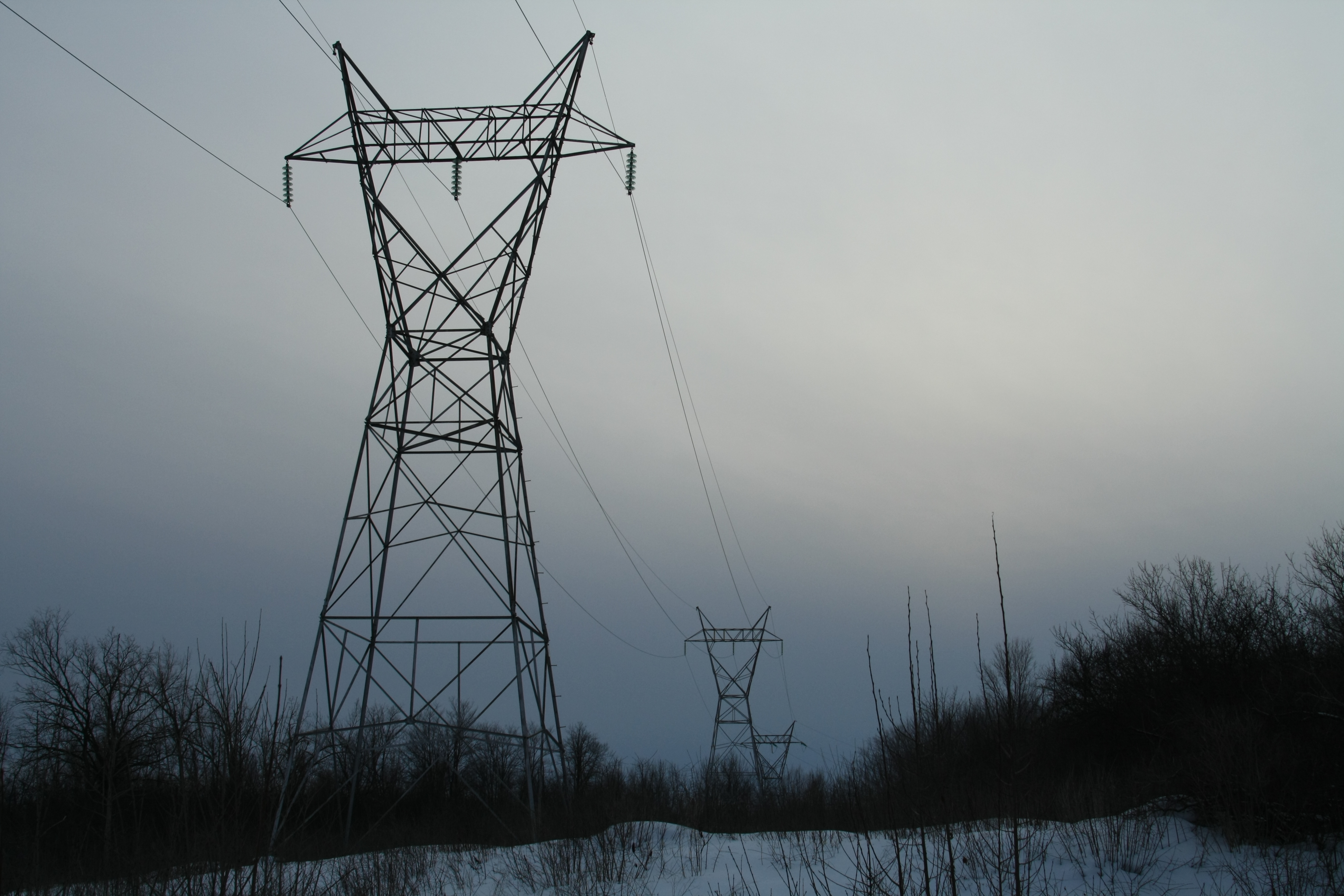
High voltage power lines

In a recent leader and briefing, The Economist has reiterated its support for worldwide drug legalization. They argue that, while legalization will certainly bring problems of its own, it is better than another century of failed attempts at prohibition. All told, the case is a very strong one. Legalization could bring with it government control: tax revenues, funds to treat addicts, quality control of products, and public information. Legalization would bring the problem into the open, as well as allow the billions of dollars spent on anti-drug policing and prisons to be put to better uses. In their leader, the magazine makes the surprising suggestion that the participation of legitimate drug companies in the development and improvement of recreational drugs could make them safer.

Legalization could also undercut organized crime, the body that probably benefits most from the current arrangement. That, in turn, would cut down on the crime associated with an illegal trade. Legalization would also suspend the situation in which governments criminalize large segments of their own population. The point is made that Barack Obama could easily have ended up in prison for his youthful experiments with cocaine. Certainly, prison sentences for drug use have the capacity to ruin what would otherwise be excellent lives by stigmatizing those who receive them and exposing them to one of the most intolerable social environments that exist within secure states.

An interesting rebuttal is offered to the idea that looser drug laws turn more people into drug users and addicts. Comparisons of otherwise similar states (harsh Sweden and laxer Norway, for instance) suggest that laws have little impact on the level of drug-taking in society. Under a legal regime, there would also be an opportunity to dispel misinformation about drugs. Certainly, the arguments that politicians have sometimes made about the ‘extreme’ danger of marijuana undermine their credibility when talking about substances that are genuinely far more dangerous.

In short, drug legalization does seem to offer the prospect of weakening the connections between many different harmful phenomenon: from the way in which poppy eradication is undermining peacemaking efforts in Afghanistan to the way in which the poor are more likely to go to jail for drug offences than their richer fellow citizens. While it would be asking too much for governments to take the plunge and legalize everything instantly, it may not be too much to hope for gradual progress in that direction, with a growing emphasis on harm prevention and a more evidence-based approach to policing, lawmaking, and judicial decisions.