
Dark days for climate change policy

Kitchen utensils

These are depressing times for those seized with the seriousness of the climate change problem. When it comes to legislation to reduce greenhouse gas emissions, the signs from around the world are not encouraging.

On Wednesday, the Australian Senate rejected the Labour government’s cap-and-trade plan: the legislative consequence of Kevin Rudd’s victory and ratification of the Kyoto Protocol. This is despite how the plan included significant giveaways of permits for heavily affected industries, primarily Australia’s massive coal sector. In three months, the government can try re-introducing the plan. If it fails again, they can request an election and seek a renewed mandate. As I noted before, Australia’s hugely high per-capita emissions, major coal exports, and lack of effective legislative action are especially startling when you realize that Australia is probably the rich country with the most to lose from climate change. Their agricultural system is under enough strain from water scarcity already, not to mention when climate change increases temperatures, changes patterns of precipitation, boosts evaporation rates, and depletes summer snowcap.

International efforts are also looking shaky. Game theorists and foreign affairs commenters are projecting failure. India continues to play an obstructionist role. While it’s not impossible that the UNFCCC negotiations will eventually produce an improved successor to the Kyoto Protocol, it seems less and less likely that they will be able to do so at this year’s negotiations in Copenhagen.

Of course, things remain stalled in North America. The compromise (some say compromised) Waxman-Markey bill faces a tough fight in the US Senate. If it makes it through at all, there is a good chance that it will be in an even more distorted and less effective form, with more goodies for destructive but influential industries like coal and corn ethanol. Meanwhile, Canada’s cap-and-trade regulations remain in limbo, with details unannounced. Even if they do get announced and implemented, the plan is so weak and offers so many avenues for avoiding emission reductions that it is unlikely to have a significant effect for at least a few years. By allowing firms to invest in a technology fund (which gets recycled back to them) rather than reduce emissions or buy permits from those who do, the system strips a lot of the effectiveness out of a carbon price. Given the heavy slant of the technology fund towards carbon capture and storage (CCS) technology, this represents yet another big gamble that such systems will prove cheap, safe, and effective. If not, a lot of time will have been lost for implementing safer strategies like improving energy efficiency and deploying renewables.

Even with significant improvements over present efforts, the world is not on track to avoid catastrophic climate change. As Stephen Chu and others have highlighted, there are powerful positive feedback effects that will kick in after some degree of human-induced warming. If that happens, it will be too late to prevent further warming by reducing our emissions. To avoid such a catastrophic outcome, both strong domestic actions and international cooperation are required. So far, there is no sign that the world as a whole is taking the issue seriously enough for those to be plausible possibilities.
Consequences of fear and unchecked state power

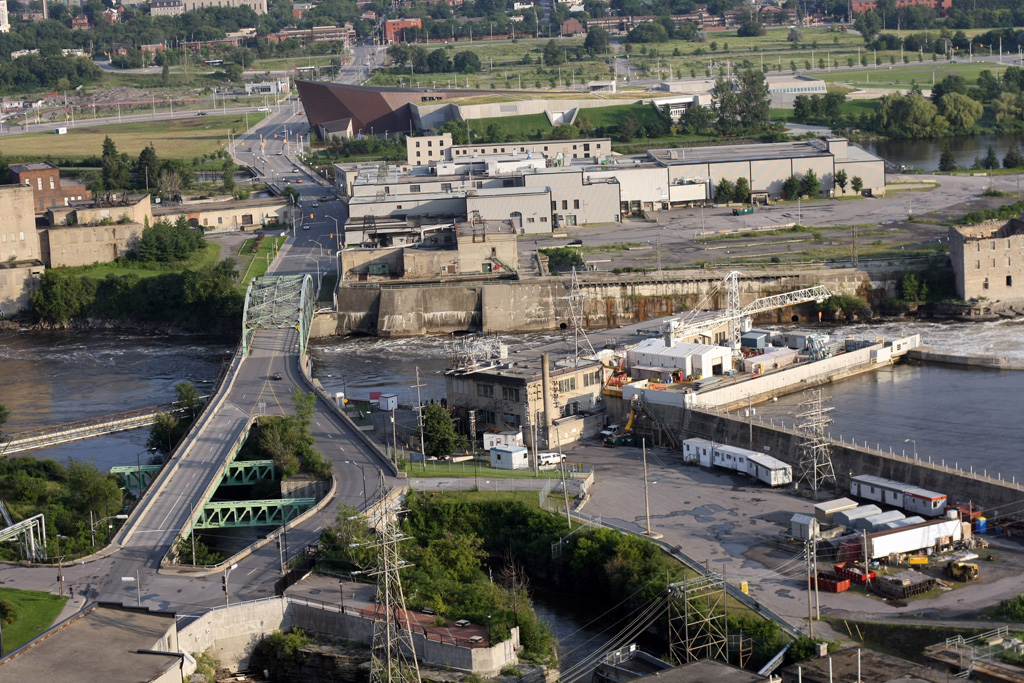
LeBreton Flats

A recent editorial on America’s sex crime laws is a nice demonstration of how the protection of the individual from the unjust application of power by the state is one of the most important kinds of human security. Pursuing criminal charges against teenagers who have sex with other teenagers – and even those who send explicit images of themselves to one another – is a lunatic way for the state to apply the law. Rather than protecting anyone, such a petty act of over-enforcement can seriously wreck the lives of those the law was intended to protect: especially when they end up on life-long public sex offender registries that do not specify what led to their initial arrest. All this becomes even more dangerous as the state gets more and more power to observe the lives of its citizens, shrinking the extent of formally private spheres (such as correspondence) where it would not previously have been watching.

It certainly bears remembering that the state is a beast that walks with a heavy, and sometimes clumsy, step. That’s something that must be borne in mind especially when the population is especially afraid of a nebulous threat, such as sex criminals or terrorists. Failing to appreciate that the application of state power can cause profound harm, as well as protection, to human security is what produces injustices like torture, Guantanamo Bay, the internment of those of Japanese descent during the Second World War, and so forth. When people are afraid, they care little about the rights of those they fear; equally damagingly, they show little appreciation for how harsh new approaches undermine the very systems they are established with the intention of protecting. Set upon the wrong course, the state is a far more dangerous entity than any terrorist organization.

Finally, there is the well-reasoned furour about the RCMP performing its own criminal investigations on officers. In any large organization, most people will act to preserve the interests of the group – even at the expense of committing injustices against outsiders. They will naturally give the benefit of the doubt to their colleagues, and they will also share loyalty with those risking their lives for the same purposes. To have any credibility, investigations into such organizations must be conducted by outsiders with independence and a strong mandate to investigate and expose wrongdoing.

Climate change art

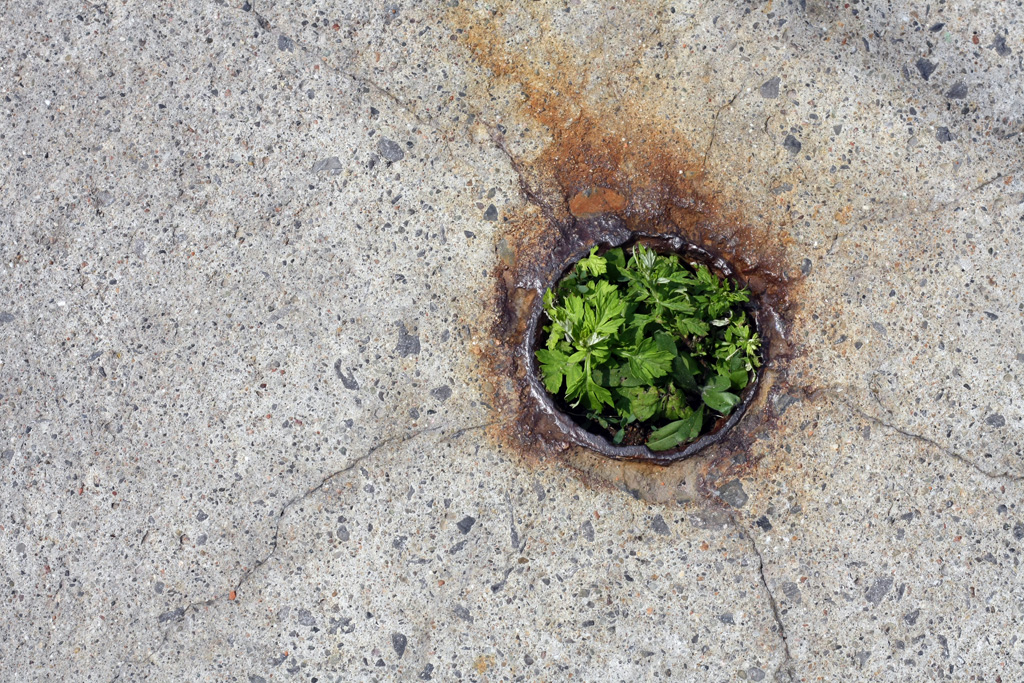
Plants, rust, concrete

Do we need climate change art?

I would say we do. Art inspires people to think beyond their experience and grasp the implications of trends. It also motivates people emotionally in a way that scientific analysis can be hard-pressed to do. (Indeed, does only by accident, since scientific reports are not written to evoke emotional responses.)

Has any important climate change art emerged? (Weird sculpture outside 111 Sussex aside) Is there a danger that art that plays upon the worst fears evoked by climate science will be counterproductive? Can art help us to really grasp the danger, without the need for costly disasters to prove the link from greenhouse gasses to climate change to danger to humanity?

Would god allow climate change?

Woman at Raw Sugar

Giving testimony before a Congressional committee, former House Majority Leader Dick Armey argued that climate change cannot be a threat because god would not allow human beings to destroy the Earth:

Let me say I take it as an article of faith if the lord God almighty made the heavens and the Earth, and he made them to his satisfaction and it is quite pretentious of we little weaklings here on earth to think that we are going to destroy God’s creation.

By comparison, some religious individuals and organizations (including the Vatican and Archbishop of Canterbury) have argued that dealing with climate change is a religious duty.

Ignoring for the moment the question of whether any kind of supernatural beings exist, it does seem plausible to me that a fair number of people have a deep psychological assumption that something inherent to the universe would prevent the wholesale transformation of the Earth by human beings, at least if that transformation was a highly destructive one. For some, the balancing mechanism is a deity, for others ‘laws’ of technology or economics, and for others the (flawed) notion that natural systems are self-correcting. I recall a short story in which a man had the false belief that the fact that trains passing each other are drawn closer by the low pressure zone between them. He believed that the same phenomenon would help him stick to the train as he advanced up the outside of it. When it comes to environmental thinking, many people might be falsely comforted by similar misconceptions.

Dealing with climate change probably requires us to collectively appreciate that we have the power to totally unbalance the natural world, to an extent that our ecological niche could be threatened. Furthermore, we are actually actively doing so. As the proverb says, if we don’t change course, we might end up where we’re headed.

Incidentally, if there were an omnipotent, omniscient, benevolent god, it would be rather difficult to understand what it could have had in mind in setting up the relationship between fossil fuels, greenhouse gasses, and climate change. It’s a bit like leaving poisoned cupcakes out where your children will find them. Providing such a potent and easily accessible form of energy, but with dire long-term consequences that people took a while to figure out, seems like cruel game-playing. Of course, it is very hard to look at what happens in the world and believe that there is an omnipotent being out there looking out for us.

Funds for nuclear plant decommissioning depleted

Apparently, the variability of the stock market is having an impact on the dismantling of American nuclear power plants, by driving down the value of the investments set aside to pay for it:

During the past two years, estimates of dismantling costs have soared by more than $4.6 billion because rising energy and labor costs, while the investment funds that are supposed to pay for shutting plants down have lost $4.4 billion in the battered stock market.

The process of decommissioning involves moving millions of pounds of radioactive waste, much of it concrete. Maine Yankee, a plant that is currently being decommissioned, has over 100,000 tonnes of material being carted off one trainload at a time. The American Nuclear Regulatory Commission has polled 18 nuclear power plants on how the downturn is affecting their decommissioning plans. In some cases, plans for decommissioning are being delayed for as long as sixty years: during which time, the plants are simply expected to sit idle.

Having inadequate private funds for decommissioning is a major cause of environmental problems, for instance with facilities like mines. They also cause situations in which profits accrue to investors and costs are shunted off onto future taxpayers. The possibility is one that deserves to be borne in mind when developing national energy policies.

Problems with revocable media

Dock and boats

One of the biggest problems with the way information is now distributed is the increasing limitations on how you can use it. With physical media like books and CDs, you had quite a few rights and a lot of security. You could lend the media to friends, use it in any number of ways, and be confident that it would still work decades later. There is much less confidence to be found with new media like music and movies with DRM, games that require a connection to the server to work, mobile phone applications, Kindle books, etc. Companies have shown a disappointing willingness to cripple functionality, or even eliminate it outright, for instance with Amazon deleting books off Kindles. Steven Metalitz, a lawyer representing the RIAA, has stated explicitly that people buying digital media should not expect it to work indefinitely: “We reject the view that copyright owners and their licensees are required to provide consumers with perpetual access to creative works.” Of course, the same people argue that they should be able to maintain their copyrights forever.

The solution to this, I think, is to make it legal for people to break whatever forms of copy protection companies put on their products, as long as the purpose for which they are being broken is fair use. It also wouldn’t hurt to clarify the ownership of such materials in favour of users. A Kindle book should be like a physical book – property of the person that bought it, and not subject to arbitrary modification or revocation by the seller.

Of course, politicians are under more effective pressure from media companies than from ordinary consumers. Perhaps a strong Canadian Pirate Party, asserting the rights of content users over content owners, would be a good thing. Of course, stronger support from mainstream parties that actually hold power would be of much more practical use.

Wind farm and Kenya’s electrical supply

This article on a 300 megawatt (MW) windfarm in Kenya caught my eye, less because of the size of the wind farm and more because of the statement that it would “supply a quarter of Kenya’s current installed power.” Kenya has a population of about 38 million, so it is startling to see it suggested that their entire electrical supply could be as small as 1,200 MW. That’s about 1/3 of the energy produced by Ontario’s Darlington Nuclear Generating Station alone.

What this demonstrates is how absurdly wide a gap there is between energy availability in different states. With a per-capita GDP of $857 at market exchange rates ($1,713 at purchasing power parity), Kenya is a reminder of how energy, climate, and development policies interrelate in a very unequal world.

CCS plan subverted by local opposition

Two people at Raw Sugar, Ottawa

As mentioned before, the Swedish company Vattenfal has a carbon capture and storage (CCS) demonstration plant in Germany. The idea was to separate pure oxygen from air, burn coal in it, then ship the resulting carbon dioxide (CO2) to an injection facility 150 miles away by truck. The liquified CO2 was then to be injected 3,000 metres underground in a depleted gas field.

Now, due to local opposition, the CO2 is simply being vented into the atmosphere. The company has been unable to secure a permit to bury the carbon, so plans to begin doing to by March or April of this year have been scrapped.

It is hard not to be of two minds about this. On one hand, it is a justified blow against those who assume CCS will be a cheap and simple way to deal with climate change. There are big economic, safety, and effectiveness questions that need to be answered. At the same time, it will not be possible to answer those questions without the kind of demonstration plant Spremberg could be.

A world in which safe, effective, and affordable CCS technology exists is one where catastrophic and runaway climate change is less likely. This is true for both direct and indirect reasons. Directly, fossil-fuel fired plants with CCS would emit less than their non-CCS counterparts. Also, facilities that burned biomass and buried the carbon could actually be net-CO2-negative. Indirectly, making it possible to keep using fossil fuels a bit longer would lessen the level of opposition to the transition to a low carbon economy, particularly when it comes to poor, large, and rapidly developing states like India and China.

We will have to wait and see how other CCS pilot projects – in Europe and elsewhere – develop over the span of the next few years.

Mistaken assumption about the politics of scientists

An interesting study reveals a disjoint in the United States between how scientists rate their political views and what the general public expects them to be. Whereas 56% of scientists describe themselves as liberal, along with just 2% as conservative and 42% as ‘neither,’ members of the general public surveyed expected 64% of scientists to answer ‘neither,’ 20% to be liberal, and 9% to be conservative. The study also found that scientists are less skeptical of government and more critical of business than members of the population at large.

The blogger commenting on the study predicts that two things would happen if people learned the truth:

  1. “The public would consider scientists to be less authoritative as a neutral source on policy questions, and
  2. Since scientists are respected, the public would become less conservative and more liberal.”

This raises some interesting questions about the relationship between expertise and legitimacy, in relation to the roles of scientists in decision making – the central topic of my M.Phil thesis.

Short-term versus long-term resource economics

Pine needles

The Globe and Mail is reporting on a letter send by former Alaska Governor Sarah Palin to British Columbia Premier Gordon Campbell. It complains about acid mine drainage from the Tulsequah Chief Mine in northwest B.C. Similar problems with the long-term leaching of acid and heavy metal affect many mines in Canada and around the world, including the former copper mine at Britannia, between Vancouver and Whistler.

The general pattern here is one that Frederic Bastiat would have appreciated. People can readily see the apparent economic gains associated with an operating mine, in the form of tax revenues, jobs, foreign exchange earnings, etc. What cannot be clearly seen are the long-term costs associated with all the consequences of that mining. In some cases, these significantly exceed the short-term benefits, meaning the mine has actually been a net destroyer of wealth and human welfare. Jared Diamond’s Collapse also makes this point forcefully, with many examples. Quite possibly, this is the case with fossil fuel industries today, particularly those exploiting unconventional sources of hydrocarbons like the oil sands. By tapping into hydrocarbon reserves that would otherwise remain dormant, they increase the total quantity of greenhouse gasses humanity will add to the atmosphere, increasing the severity of climate change and the probability of abrupt, catastrophic, or runaway warming. Of course, there are also the toxic effects of pollution at the sites of fossil fuel production and use, as well as the destruction of habitat and any associated reclamation costs.

The problem is not one that can be easily solved. Politicians will always be more swayed by apparent and immediate gains and losses than by distant and concealed ones. That being said, we do have the opportunity to counter some of the flawed arguments used to justify harmful practices. Next time someone claims that exports from the oil sands are crucial to Canada’s economic development, consider raising the possibility that their exploitation probably destroys wealth in the bigger picture.