Group bike rides build community

I have been getting a lot of satisfaction lately from group bike rides. Community emerges naturally when people ride bikes in groups. The contrast underscores how automobile culture is a death cult: every driver gets their own sarcophagus for the living to move them through places while keeping the driver sealed apart. The driver is isolated from nature, from community, and from life at a human scale. They begin to live at a car scale where our instincts and experiences no longer bind us to our neighbours. The car is built to move at 60, 80, 100 km per hour, and to be indifferent to anything it might need to kill to do so.

Group bike rides provide a tangible vision for an idealized future without private cars. That’s a world where people who take the same routes and live in the same neighbourhoods know each other and talk: where they are neighbours. That’s a world with flower fairy girls on lavishly decorated cruiser bikes, and with guys in motorcycle helmets and body armour riding on zippy electric unicycles.

On a bike in the city, you live with the constant awareness of being killed. When riding alone, the great majority of my attention is always directed to nearby drivers and what abrupt, dangerous, or illegal thing they may do next. For drivers in the city, they may live with a mild awareness that their every careless action threatens to kill others, but they are distracted by bluetooth calls and streaming media, alienated from their fellow residents by socially atomized affluence, and shielded by public opinion and a legal system where killing someone with your car through simple carelessness is a minor and unimportant oversight which ought not to impede your happy motoring.

Lonely, frustrated, angry, and despairing

Lately, I have been feeling dejected and wildly alienated from the rest of humanity. It seems like basically nobody wants to avoid catastrophic climate change. Among those who purport to care, the superficiality the commitment is quickly revealed when they prioritize other objectives ahead of avoiding climate disaster. Government agencies work to defend the status quo: at best, they pretend to take action in order to avoid doing anything that would really make a difference. At worst, governments are the armed wing of the fossil fuel industry itself. Every country with fossil fuel reserves is rushing to develop more production. Even climate change activists care more, in practice, for imposing their social and economic preferences on society than about abolishing fossil fuels.

At times over the last 18 years, working on climate change has felt like a lonely journey but at least one where eventually the world will come around. As each year goes by now, it seems more that humanity is content to fly our plane straight into the ground, while the passengers cheer as they set ever-higher speed records and the captain assures everyone over the intercom that our present course ensures a happy arrival at a welcoming destination.

Everyone is still developing fossil fuels

As my recent blackboard talk emphasized, climate stability means fossil fuel abolition. Arguments to the contrary are cynical mechanisms to keep the petro profits coming, regardless of the consequences for the climate.

Unfortunately, despite endless talk about ‘net zero’ and ‘ensuring’ climate stability, essentially everybody is still chasing fossil fuels:

Remember: it takes decades for the full effects of our greenhouse gas pollution to be fully manifest. That means much worse is still to come, even if we start making the right choices, and a nightmare looms if we persist with our current approaches.

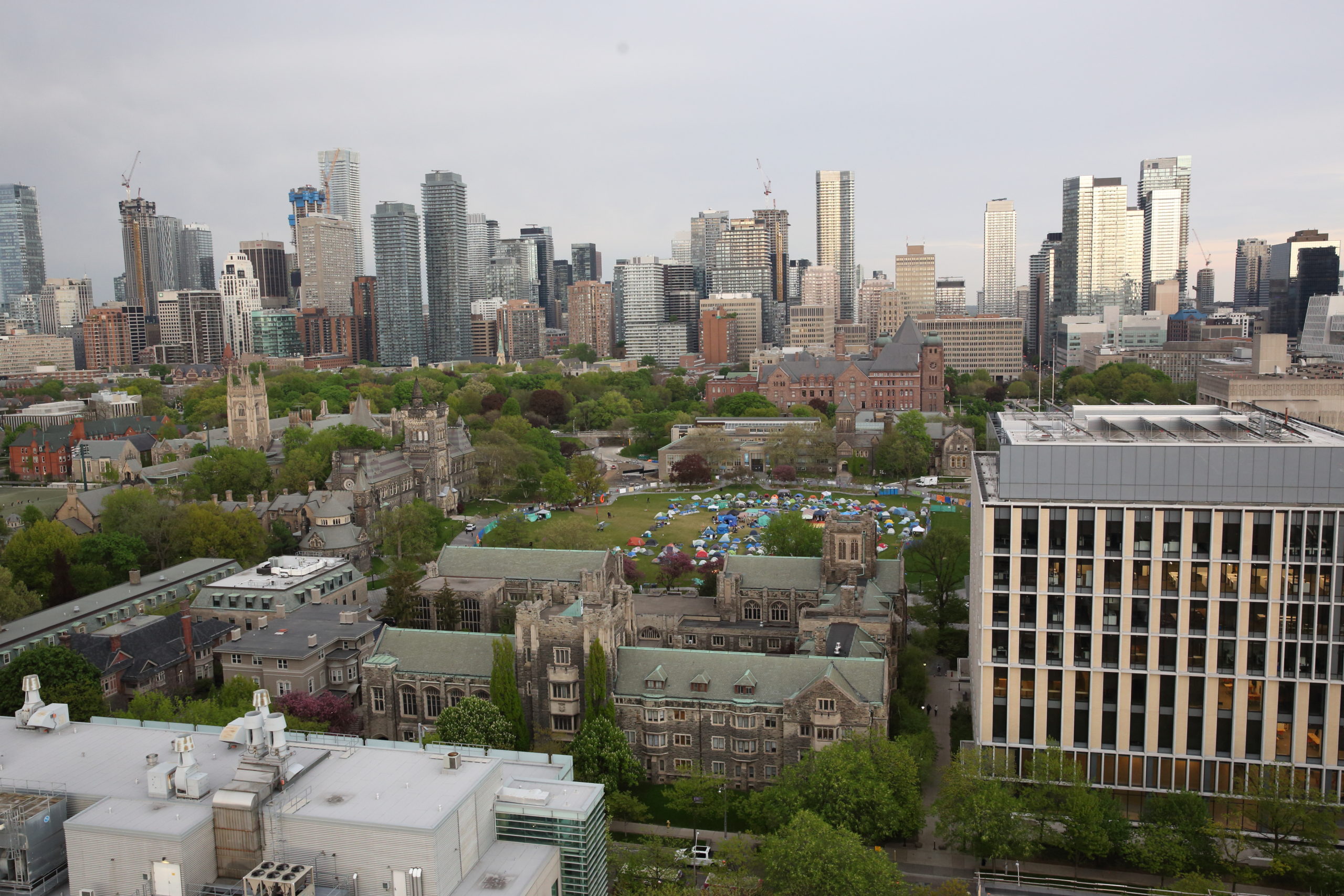
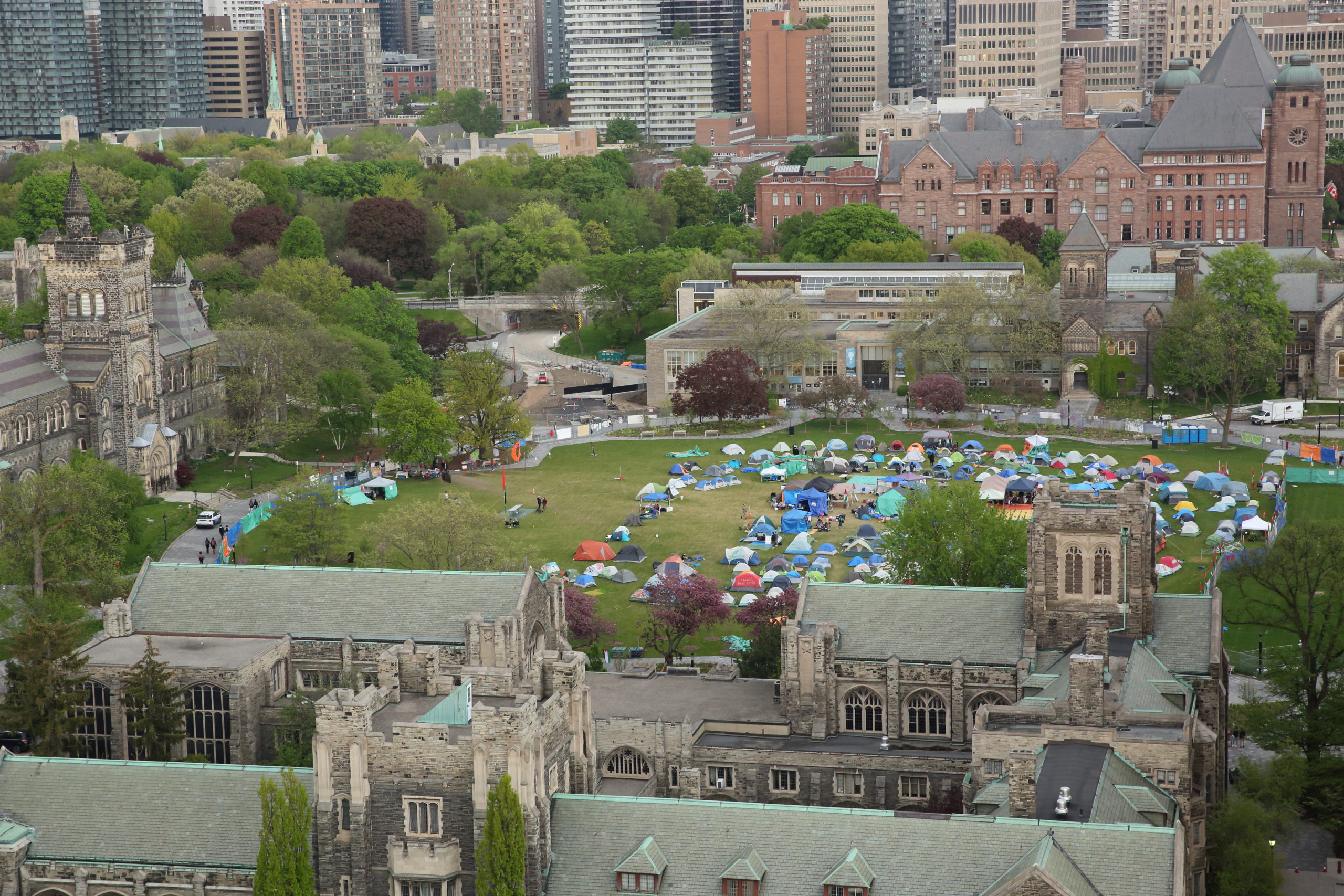
Mobilizing structures in the UBC pro-Palestine encampment

Interesting from a social movement perspective:

The UBC encampment for Palestine has been going strong since April 29. Working as a horizontal organizational structure, the encampment is a leaderless, non-hierarchical space where everyone is equal. We have groups in charge of different tents related to the daily operation of the camp, including food, safety, supply, medicine, art, and library. General meetings are held as frequently as possible and are the only platform to decide the goals of the encampment. It is a process of direct democracy where everyone’s voice is heard and considered, with final decisions being made based on majority votes.

Everyone who shows up to this camp is intelligent, kind, and capable of doing great things, however, we are humans, and deep down, we all seek a sense of belonging. This whole encampment is like a community, and within it, each tent is part of the group. However, it did not always feel like a cohesive community. Before the camp reached this structure, it was run by multiple “invisible” hierarchies.

Initially, there were instances where outgoing white, cisgender, and conventionally-attractive men were automatically assumed to be smart, reliable, and worthy to make decisions, while non-conforming and marginalized individuals had to work harder to be acknowledged. I don’t think this was done purposely, but can be attributed to the mixture of pressure at the encampment and the unconscious biases ingrained in colonial ideologies. The constant struggle to have all our voices heard caused tension in the supposedly democratic structure, as well as relationship mistrust in the camp. This was not what I and a lot of comrades expected from this space, where solidarity with Palestinians against colonization demands democratic practice and decentralized decision-making.

As a young, gender-non-conforming person of color, my voice was often overshadowed in favour of white, cisgender campers. We took time to acknowledge and address these biases and hierarchical structures and we came up with alternative ways to ensure every voice was heard. I believe our camp is being managed in a more inclusive way, moving toward good causes, rather than replicating oppressive systems.

Personally, I think the progressive obsession with the identities of their messengers is counterproductive to effective political organizing. A person’s ideas are good or bad based on their content, not the demographic characteristics or group identity of the speaker. Viewing people as legitimate or illegitimate participants because of arbitrary features of their identity turns them from active thinking agents to mere group representatives. Also, this sort of privileging and de-privileging puts feelings of purity and moral superiority ahead of the question of whether the activism is having any broader societal effect.

Hale on why climate stability advocates are often confounded

The combination of uncertainty and low salience, in turn, enables obstructionism, the ability of interests tied to the status quo to maintain their interests. Consider the hurdles of a policy entrepreneur would have to overcome to create and implement a policy addressing a problem with distant effects like climate change. First, that policy entrepreneur would have to herself see value in pursuing an obscure issue, one that is unlikely to garner her a quick win and the associated political benefits. Few will have incentives to pursue such causes. Second, she would have to mobilize a sufficient coalition of interests to be able to influence policy. This would require each of those interests choosing to focus on a distant topic over their more urgent priorities. Third, this interest coalition would need to force the issue onto the broader political agenda, competing for limited space with numerous immediate priorities. Fourth, the coalition would need to somehow overcome, compensate, or neutralize political opponents.

To the extent those opponents are worried about the short-term costs of action, everything that is hard for the long-sighted policy entrepreneur will be easy for them. Opposing long-sighted policy—that is, promoting short-term outcomes—will give them the opportunity for quick wins on issues that are relatively easy to mobilize interests around. And even if the long-term-oriented policy entrepreneur wins a battle, she must preserve and maintain those gains permanently, as opponents will seek to reverse any defeats they face. A one-off victory may be important, but long problems often require sustained policies over time, while it only takes one victory by opponents to block them. The longer a problem’s effects reach into the future, the more friction the policy entrepreneur will face at every stage, and, should she get a win, the more enduring her victories will need to be.

Hale, Thomas. Long Problems: Climate Change and the Challenge of Governing Across Time. Princeton University Press, 2024.

Related: