Nicholas Stern on climate change

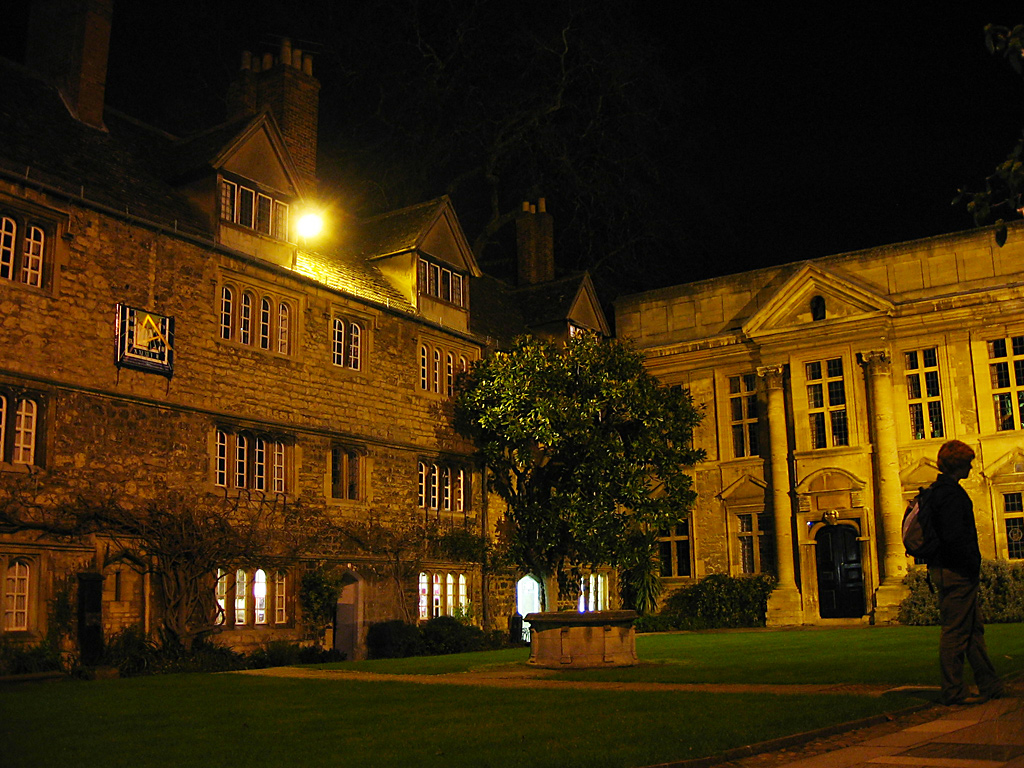
Saint Edmund’s Hall, Oxford

During the initial coverage of Nicholas Stern’s report on the economics of climate change, I wondered why the media was paying so much attention. After all, the man is an economist reporting on something that scores of scientists have addressed comprehensively through the IPCC process. Now that I have heard him lecture, and spoken briefly with him personally, I have a much better sense. The man is what Karen Litfin calls a ‘knowledge broker,’ translating scientific data into policy options.

His basic position is the realistic liberal optimist one:

  1. Climate change is real and potentially devastating
  2. It is essentially a massive economic externality
  3. Regulating greenhouse gas (GHG) emissions is the way to stop it
  4. This can be done at moderate cost (1% of GDP) and without a massive change in (a) the basis of economic activity within the developed world or (b) the way in which people choose to live their lives.

He acknowledges that the energy balance needs to shift dramatically. In order to be responsible, he says, we need to shift all electrical production in the rich world to carbon neutral forms (renewables, nuclear, and possibly hydrocarbons with sequestration) by 2050. By that time, land transport should also be based on power sources that do not emit GHGs, whether because they are using stored electricity, or because they use fuels that are GHG neutral. India and China need to be encouraged to sequester the CO2 emitted from their coal stations, probably at the expense of the rich world. All in all, rich states should bear 60-80% of the costs of mitigation.

He focused a great deal on atmospheric CO2 levels. His target is to stabilize between 450ppm and 550ppm. This would lead to a likely scenario where mean global temperature rises by about 2 degrees Celcius (though by much more at the poles, given the nature of the climatic system). On the basis of a ‘business as usual projection’ we will hit 450ppm in eight to ten years. To stabilize at 450ppm, we would need to slow the rate of growth in GHG emissions immediately, having it peak in 2010. Then, we would need to reduce at about 6-10% a year thereafter. If we delayed the peak to 2020, we would likely be at the 550ppm portion of the range: an area that the German head of climate change policy expressed grave concern about, during the question session. Stern himself said that 550ppm is the “absolute upper bound” which it would be “outrageous” to exceed.

As for his very controversial decision about discounting rates, I think he defended himself admirably. He broke it into two bits: the possibility there will be no future generations beyond date X (they ascribed a 0.1% chance a year to an event like a comet or gamma ray burst that would simply snuff humanity out) and the strong likelihood that people in the future will be richer. The latter means that it may be economically efficient to delay some of the costs of dealing with climate change, especially given the probability that new technology will emerge.

I need to move on to other work, though I could discuss his comments for many thousands of words. I will transfer my handwritten notes to the wiki later this evening and link them here: notes from Nicholas Stern’s 21 February 2007 address to Oxford University.

PS. A few weeks ago, my default thesis music was Jason Mraz‘s superb album “Live at Java Joe.” Now, I am listening to Enter The Haggis‘ frantic song “Lannigan’s Ball” from their album Aerials over and over again.

The road to Kyoto plus, lessons from ozone

A lot of people seem to despair about the possibility of effective regulation of greenhouse gas emissions around the world, but the more I read about the cases of persistent organic pollutants and CFCs, the more plausible it seems, given that a few specific and important progressions take place.

The first is the process of scaling upwards in policy levels, as seen very distinctly with CFCs. The Rowland and Molina paper that first suggested that CFCs cause stratospheric ozone degradation was published in 1974. By 1975, two US states had already banned their use as aerosol propellants (Oregon and New York). Hopefully, the progression from there to national and international regulation is one that can be emulated. Already, lots of American cities and states have signaled that they are serious about climate change, and willing to use regulation to combat it.

The second important dynamic has to do with industry expectations. Six years before CFCs became an issue in environmental regulation, DuPont – the largest manufacturer – canceled its program for developing alternatives. When it became clear that regulation was forthcoming, they were able to field some alternatives within six months, and a comprehensive range within a few years. Up to the point where regulation seemed inevitable, they continued to claim that alternatives could not be easily developed. The point here is twofold. First, it shows that the existence of solutions to environmental problems is not independent of regulation and industry expectations about future regulation. Secondly, industries that anticipate national legislation (as they began to in the US in the mid-1980s on the CFC issue) become a powerful lobby pushing government towards completing an international agreement. It is far worse for American industry to be at a loss because local rules are tougher than global ones than it is to simply deal with some new issues.

Thus, an American administration that takes up the baton from the many states that have initiated their own efforts to deal with climate change might be able to create the same kind of expectations in industry. Some are already asking for regulation to “guide the market,” specifically decisions about what technologies and forms of capital in which to invest. From there, it is at least possible that the US could play a key role in negotiating a successor treaty to Kyoto that begins the process of stabilizing and reducing greenhouse gas emissions.

A related point has to do with the extent to which environmental images are heavily influenced by images and symbols. According to Karen Litfin, the Antarctic ozone hole was one of the major factors that led to the Montreal Protocol. She calls it an ‘anomaly,’ unpredicted by the atmospheric science that had been done up to that point, and thus capable of making scientists and politicians more aware of the possibility of unancitipated risks.

At his talk yesterday, Henry Shue says he is hoping for some iconic moment in climate change, to play a similar galvanizing role (a bare-topped Kilimanjaro, the Larsen B collapse, drowning polar bears, and Hurricane Katrina don’t seem to have done it yet, though the connection between climate change and the last of those is not entirely established.) Some spectacular and distressing (but hopefully non-lethal) demonstration of the profound effects human greenhouse gas emissions are having may be necessary to generate an urgent and powerful drive towards effective responses.

Intelligence, effort, and success

A couple of articles I came across today may be of interest to fellow students. The first, from New York Magazine, discusses possible perverse effects upon learning that arise due to how people understand intelligence. Specifically, people who believe themselves to be intelligent are more likely to choose easy tasks and less likely to apply themselves. Another article, on the website of the Association for Psychological Science, discusses ‘The Myth of Prodigy.’ It is about Malcolm Gladwell, author of The Tipping Point.

While I cannot really comment on the validity of the experimental results posited, the general idea does have the ring of truth to it. Intelligence, I think, is generally more likely to be a source of insecurity than confidence. It can always be proven hollow, or outdone by someone else. What that seems to happen, the trend is likely to sustain itself. This I have seen in both friends and myself. It may have a lot to do with why I never learned to drive or dance, and am rather hesitant to display my ineptitude at either.

PS. As with so many other items of interest, I first found this on Metafilter. On one hand, I feel bad for just grabbing their content. On the other, I recognize that it is a very efficient way of finding interesting material. Furthermore, I am driving traffic in their direction.

Richard Branson’s $25M atmosphere challenge

Arches in brick wall

With Richard Branson offering US$25 million to someone who can come up with a system to remove greenhouse gases (most importantly, CO2) from the atmosphere, a lot of people are probably wondering whether it is a pipe dream. Aside from the obvious option of growing more plants, I would be inclined to think so. In order to separate CO2 from air, then sequester it somewhere, it seems likely that you would need a lot more capital and energy than would be required to simply switch away from fossil fuels. It’s like turning on your air conditioning because your oven is making the house too hot. I don’t doubt that it is possible, but I doubt that it is a sensible solution.

That said, finding a technical solution to the greenhouse gas problem would please a very great many people. Though less likely to actually mitigate climate change, the ‘separate and sequester’ plan seems a lot more sensible than the sulfate injection plan, discussed previously. While it may be unlikely that someone will actually claim his prize (and it might distract research attention from more promising options like making more efficient solar panels), that is not to say it would be a bad thing if someone did.

Richard Casement internship

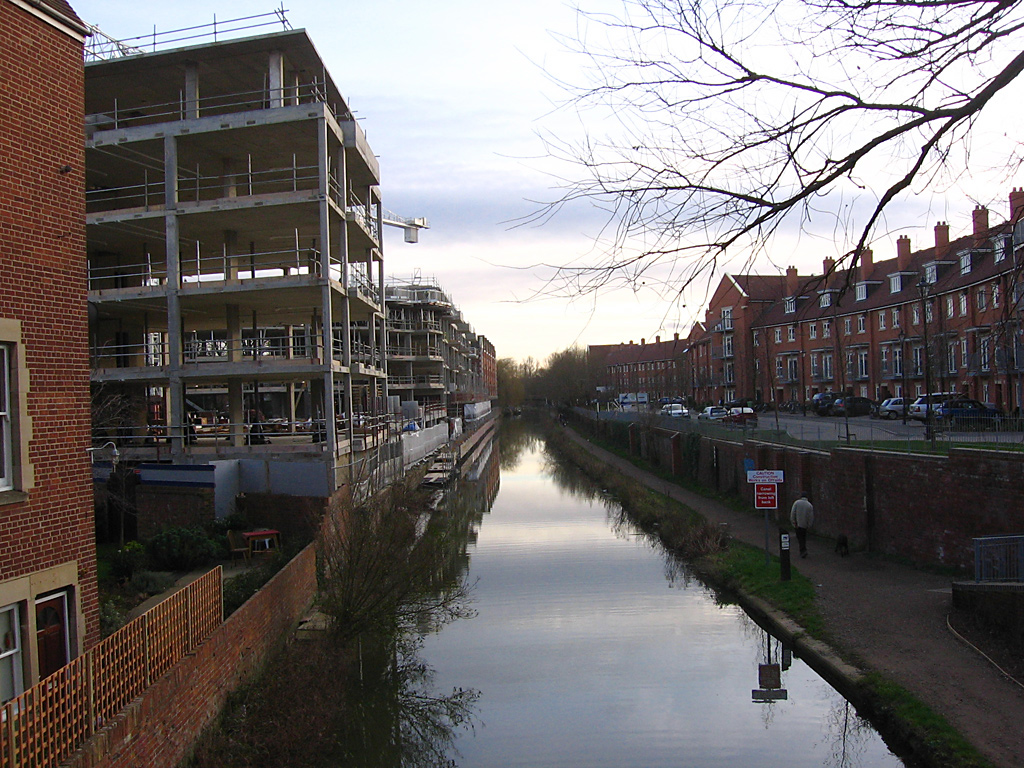
Canal in North Oxford

As one more project for the next couple of weeks, I am going to prepare a submission for the Richard Casement internship at The Economist. Since about ten people a day are finding my site by searching for that term, I am not going to give any hints about what I might write my 600 word article about. That said, I am told that such applications generally succeed through the combination of a good submission with a fortuitous personal connection with someone already inside the organization. Furthermore, their stated “aim is more to discover writing talent in a science student or scientist than scientific aptitude in a budding journalist” and I am neither of those things.

That said, I can hardly imagine a better way to spend the first three months after finishing here than writing about science in New York or London. Hopefully, my application this year will go better than the ones I submitted in past recruiting cycles.

The Resolution of Revolutions

Chapter XII of Kuhn’s Structure of Scientific Revolutions is a brilliant and highly convincing account of the historical nature of changed thinking in scientific communities, on matters fundamental enough to define paradigms. While he doesn’t use the analogy, it strikes me as being very similar to the processes of natural selection.

The first adopters of a new paradigm strike upon it for a complex combination of reasons. Included among them are vague aesthetic senses, personal prejudices, and the like. Because of the comprehensive nature of ‘normal’ scientific investigation within the existing paradigm, such meanderings are generally unlikely to be rewarded. That said, if they can win over a few people and develop to the point where they become evidently useful, they have the chance to win over the scientific community as a whole. Naturally, this is easiest to do in times of crisis: especially when the new paradigm seems to help resolve the questions that lie at the core. Kuhn rightly identifies how theories that do an especially good job of predicting effects unobserved until after predicted are unusually good at winning converts.

Consider the development of any novel biological phenomenon. The earliest creatures to undergo a significant mutation probably get eradicated as a result. Only once an alteration is at least benign and at best somewhat useful can we expect any number of beings to be found in the world with it. One can only imagine how many trillions of bacteria snuffed themselves out in the course of random variations that eventually led to things like more efficient cellular respiration, or the development of motion by flagella, or the existence of symbiotic modes of living.

Of course, I like the analogy because it serves my earlier arguments that it is practical usefulness that permits us to argue that one scientific perspective is better than another. Technology, in particular, lets us separate fruitless theory from the fruitful sort, as well as comprehend when seemingly incompatible views are just complex reflections of one another.

The current argumentation about whether string theory is ‘science’ or not strikes at this directly. String theory might be seen as the evolution of a new limb that hasn’t quite proved to be terribly useful yet. Driven by the kind of aesthetic sense that make Brian Greene call his book about it “The Elegant Universe” string theorists are engaged in the kind of development that might eventually lead to a resolution, as described by Kuhn.

PS. Part of the reason natural selection is so frequently useful for understanding what is going on in the world is because of how it is predicated upon an illuminating tautology: namely how arrangements that are stable in a particular environment will always perpetuate themselves, whereas those which are unstable will not. This applies to everything from virtual particle formation at the sub-atomic scale to the success and failure of businesses. That said, it should be noted that the ‘system’ in which businesses actually operate is distinctly different from the ideal form envisioned by the most vocal advocates of free markets. Crime, deceit, and exploitation may be important aspects of that system, in addition to innovation and individual acumen.

POPs and climate change as ‘anomalies’

Now nearly finished with Kuhn‘s Structure of Scientific Revolutions, I am pondering how to apply it to my thesis case studies. Basically, what Kuhn has done is sketch out a theory about how scientists interact with the world and each other, generating new scientific ways of understanding the world. You start with one paradigm (say, Newtonian physics). Then, scientists begin to notice anomalies – places where the theory cannot explain what they perceive to be going on. If such anomalies are of the right sort and sufficiently numerous, they may provoke a crisis within the paradigm. At that point, the scope of science broadens a bit, to examine bigger questions and alternative possibilities. In Kuhn’s terminology, the practice of ‘normal science‘ is interrupted. The crisis is resolved either through the modification of the previous paradigm or through the emergence of a new one, such as relativistic physics.

From the perspective of my thesis, the relevant discoveries are the rising global mean temperature and rising concentrations of POPs in the Arctic. Both were novel developments in our awareness and understanding of what is going on in the world, and both are the unintended products of modern economic activity. In the first case, the emission of greenhouse gases seems to be the primary cause of the change; in the second, pesticide use, industrial chemicals, and garbage burning seem to be the culprits. While scientists knew that these things were going on before the first research on POPs and climate change was done, these specific consequences were not anticipated. Their precise magnitude remains contested and uncertain.

While neither discovery induced a crisis in science (both are largely explicable using science that has existed for a long time), they did progress into general acceptance by following a pattern that is in some ways similar to that of paradigmatic development in the sciences. The researchers who first looked at POP concentrations in human blood and breast milk from the Arctic thought that the samples must have been contaminated, because they could imagine no reason for which people living in such an isolated environment would be so saturated with toxic chemicals. The establishment and operation of the Northern Contaminants Program thus involves both ‘normal science’ and the kind of thinking through which new paradigms are established. Because of such similarities, I am hoping that some of Kuhn’s insights into the ways scientists think, and especially the ways in which they make up their own minds and try to make up those of their colleagues, can be applied to the understanding of scientific perspectives on these particular environmental problems.

The biggest difference is probably how wider policy implications tend to arise from environmental discoveries in a way not parallel to the consequences of other sorts of discovery. Quantum mechanics may allow us to do new things, but it doesn’t really compel us to behave very differently. Learning about global warming, by contrast, interacts with our pre-existing notions about appropriate action by human beings in the world to suggest potentially radical changes in behaviour. While I am not saying that there is a direct or linear connection between scientific discoveries about the environment and specific policy choices, it seems valid to say that our understanding of the environment, informed by science, profoundly affects the ways in which we feel we can and should act in relation to the physical world.

On a related note, I would strongly suggest that any physicist working on string theory give Kuhn’s SoSR a careful read. The crisis in physics generated by apparent contradictions between relativity and quantum mechanics seems very much like those he describes, with similar implications in terms of how scientists are thinking and what they are doing.

Climate change all over the news

Jet contrail and pruned tree

Sorry to be less esoteric and entertaining in my writing recently, but I have been focused by necessity on issues pertinent to ongoing projects. The process distorts one’s perception of the world. I cannot really judge, for instance, the extent to which the apparent increase in coverage of climate change issues in the media is (a) the product of my increased focus on those stories, (b) the result of cyclical phenomena, like the release of IPCC reports, or (c) a demonstration of increased awareness – or at least increased newsworthiness – of the climate change situation. With that caveat stated, it certainly seems as though climate change related stories are getting top billing in the media to an increasing degree.

The front page of today’s Globe and Mail site features four articles on climate change. One is on climate change and Parliamentary politics, another deals with the proper role of scientists. There is a question and answer session, and finally an article on the impact of rising sea levels on Indonesia. Many organizations, including the BBC, now have dedicated portions on their websites to cover climate change news.

Even President Bush has acknowledged the need to take action. It’s enough to make one hope that a massive shift from talk to action might take place within the next few years, going beyond Kyoto and into the realm of mechanisms to substantially reduce greenhouse gas emissions and move into a post fossil fuel economy.

From the perspective of a concerned citizen, this all seems like good news. It is very important to reach as good an understanding about the likely costs and benefits of climate change as possible. Also essential is the development of political consensus to take action to prevent climate change and mitigate the impact. From the perspective of a graduate student working partially on climate change, it is all quite overwhelming. It makes one wonder how relevant one’s research will be in a year or two. Additionally, it makes it seem less likely that one can add anything new to the discussion. My hope is that by drawing together more types of information than most people will be examining, I will be able to develop some insights. The degree to which my thesis will be a real contribution to scholarship largely depends on it.

Excellent BBC nature series

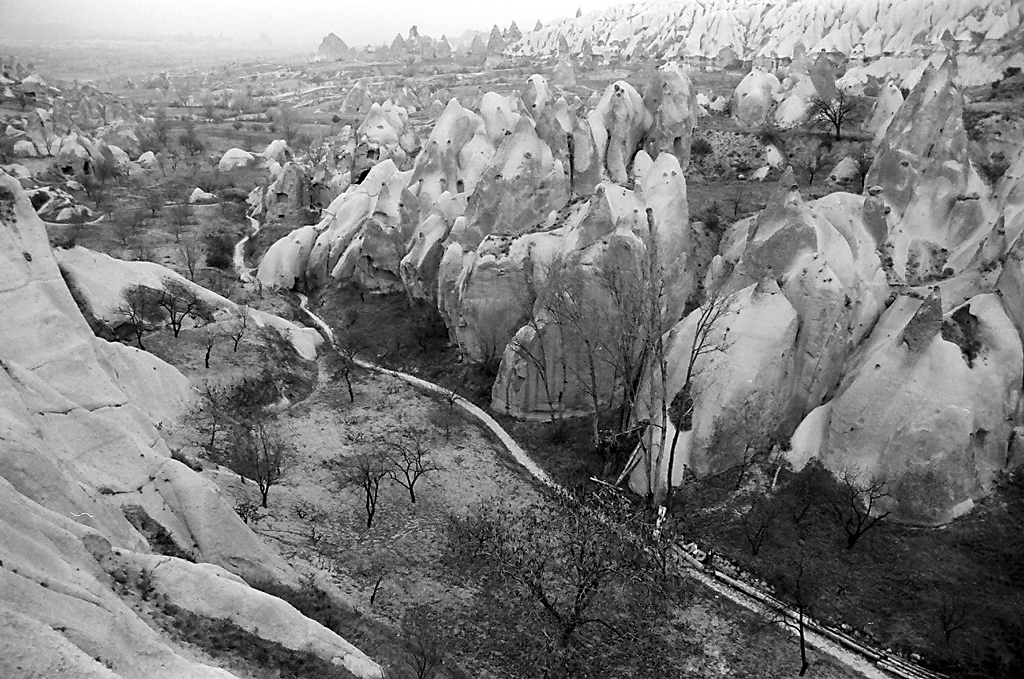
Landscape near Goreme, Turkey

Anyone interested in nature or geography should have a look at the spectacular television series “Planet Earth.” I watched a couple of episodes on Antonia’s very large television and was thoroughly impressed by the quality of the videography and the lengths they went to in order to get amazing imagery. I saw the episode featuring Lechuguilla Cave and another on mountains. Without a doubt, it is the best nature documentary series I have seen since The Blue Planet. Both were made by the BBC, and may constitute the strongest endorsement I have seen for that broadcaster.

I have been tempted many times to buy the DVD set of The Blue Planet, but don’t think it would be wise to buy the European version, which will not play on most North American devices. Both The Blue Planet and Planet Earth also have rather good websites. If you are in the UK, you can even download high resolution video clips. Unfortunately, they are only available as Windows-only DRM-protected Windows Media Player clips: hardly what you would want from a public broadcaster. Mac users will have to be satisfied with an excellent new background image.

International law and the environment

Morning walkers, South Parks Road

Next Wednesday, I have volunteered to give a presentation to my international law seminar on the following questions:

  1. Why has the regulation of CFCs been a success while the Kyoto Protocol has failed?
  2. Should the USA join the Kyoto Protocol, and if so, why?
  3. What roles have been played by Governments, NGOs and international organizations in the development of international environmental law? What is the basis of their authority in this field?

Substitute persistent organic pollutants (POPs) for Chlorofluorocarbons (CFCs), and it is a very good match for my thesis.

To give very short answers:

  1. Because there were substitutes readily available, the science was strong, and the cost of dealing with the problem reasonable, in the case of CFCs. Climate change is more difficult on all counts. (See the paper I wrote on the Stockholm Convention for my First Nations politics class in 4th year.)
  2. Yes, because it is a first step on the way to an agreement or collection of agreements that will stabilize GHG emissions, in the medium term. Ultimately, doing so will be much cheaper than suffering climate change, and will not carry the same terrible social and ecological costs.
  3. Their authority is based on expertise and legitimacy. See my thesis, in 88 days’ time for a more comprehensive answer.

Reading some more of the international law involved should be both interesting and useful. This is probably the first time the environment has been specifically addressed in any course that I have taken at Oxford.

PS. Much as I hate to reveal a fact that I might later win bets with friends about, I feel compelled to tell one that I learned earlier today from Kate. The polar bear (Ursus maritimus), has black skin: a feature that helps it to absorb energy from the sun, and thus keep the bear warm.