Theorems and conjectures

As strongly evidenced by how I finished it in a few sessions within a single 24-hour period, Simon Singh’s Fermat’s Last Theorem is an exciting book. When you are kept up for a good part of the night, reading a book about mathematics, you can generally tell that some very good writing has taken place. Alongside quick biographies of some of history’s greatest mathematicians – very odd characters, almost to a one – it includes a great deal of the kind of interesting historical and mathematical information that one might relate to an interested friend during a long walk.

xn + yn = zn

The idea that the above equation has no whole number solutions (ie. 1, 2, 3, 4, …) for x, y, and z when n is greater than two is the conjecture that Fermat’s Last Theorem supposedly proved. Of course, since Fermat didn’t actually include his reasoning in the brief marginal comment that made the ‘theorem’ famous, it could only be considered a conjecture until it was proven across the span of 100 pages by American mathematician Andrew Wiles in 1995.

While the above conjecture may not seem incredibly interesting or important on its own, it ties into whole branches of mathematics in ways that Singh describes in terms that even those lacking mathematical experience can appreciate. Even the more technical appendices should be accessible to anyone who has completed high school mathematics, not including calculus or any advanced statistics. A crucial point quite unknown to me before is that a proof of Fermat’s Last Theorem is also automatically a proof of the Taniyama-Shimura conjecture (now called a theorem, also). Since mathematicians had been assuming the latter to be true for decades, Wiles’ proof of both was a really important contribution to the further development of number theory and mathematics in general.

Despite Singh’s ability to convey the importance of math, one overriding lesson of the book is not to become a mathematician: if you manage to live beyond the age of thirty, which seems to be surprisingly rare among the great ones, you will probably do no important work beyond that point. Mathematics, it seems, is a discipline where experience counts for less than the kind of energy and insight that are the territory of the young.

A better idea, for the mathematically interested, might be to read this book.

On caffeine

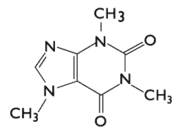
Caffeine moleculeCaffeine – a molecule I first discovered as an important and psychoactive component of Coca Cola – is a drug with which I’ve had a great deal of experience over the last twelve years or so. By 7th grade, the last year of elementary school, I had already started to enjoy mochas and chocolate covered coffee beans. When I was in 12th grade, the last year of high school, I began consuming large amounts of Earl Gray tea, in aid of paper writing and exam prep. During my first year at UBC, I started drinking coffee. At first, it was a matter of alternating between coffee itself and something sweet and delicious, like Ponderosa Cake. By my fourth year, I was drinking more than 1L a day of black coffee: passing from French press to mug to bloodstream in accompaniment to the reading of The Economist.

Unfortunately, coffee doesn’t seem to work quite right in Oxford. My theory is that it’s a function of the dissolved mineral content in the water, which is dramatically higher than that in Vancouver.

As I understand it, caffeine has a relatively straightforward method of operation. After entering the body through the stomach and small intestine, it enters the bloodstream and then binds to adenosine receptors on the surface of cells without activating them. This eventually induces higher levels of epinephrine release, and hence physiological effects such as increased alertness. Much more extensive information is on Wikipedia.

From delicious chocolate covered coffee beans used to aid wakefulness during the LIFEboat flotillas to dozens of iced cappuccinos at Tim Horton’s with Fernando while planning the NASCA trip, I’ve probably consumed nearly one kilogram of pure caffeine during the last decade or so. After the two remaining weeks of this term – and thus this academic year – have come to a close, my tight embrace with the molecule will probably loosen a bit.

Draft RDE complete

Two hours before my self-imposed deadline (to be brutally enforced by Claire), I finished a solid first draft of my research design essay, including two appendices. Weighing in at about 5000 words, sans appendices, it is right in the middle of the range from minimum to maximum length, leaving me some space to correct errors that my two much appreciated peer-editors point out before Sunday.

Many thanks to Meghan and Claire for throwing themselves in front of that bullet.

If you feel left out for not getting a copy, download one here (PDF). Please leave me comments ranging from “this word is spelled incorrectly” to “the entire methodological construction of this project is hopeless, for the following intelligent and well-articulated reasons.” The linked PDF doesn’t include the appendices because they are separate Word files and I don’t have software to merge PDF files with me. They really shouldn’t be necessary, anyhow.

[Update: 27 May 2006] I have a slightly revised version up, based on my own editing. Still waiting for comprehensive responses from external readers.

Unintentional auto-satire

For a while, I was planning to simply ignore these videos, produced by the ‘Competitive Enterprise Institute,’ but they have now been sent to me enough times to indicate that this hopelessly disingenuous message is getting out. Let’s go through them, one by one:

Energy

Nobody in their right mind denies that carbon dioxide is “essential to life” or that “we breathe it out.” What any competent scientist will tell you is that releasing masses of it affects the way in which the atmosphere deals with the radiant energy from the sun. Higher concentrations of gasses of certain kinds (CO2, methane, etc) in the atmosphere cause the planet to absorb and retain more solar energy. That raises the mean global temperature and reduces the ratio of frozen to liquid water on earth. CO2 isn’t a pollutant, in the toxic sense, but it does affect how the earth is affected by the sun.

Regarding the issue of whether fuels that emit CO2 have “freed us from a world of backbreaking labour,” they probably have. That said, that doesn’t mean they are the only way we can avoid such suffering, nor does it mean that such alleviation comes without a cost.

Glaciers

Producing two scientific papers that show that specific ice sheets are growing or increasing in density doesn’t mean that the world overall isn’t experiencing global warming. While there is plenty of dispute about how bad global warming would be and how much it would cost to stop, to deny that it is happening on the basis of such a flimsy argument is worse than irresponsible.

It’s almost astonishing that anyone would be driven to respond to such absolute malarky. Likewise, I can’t believe that anyone who participated in the creation of these videos did so with genuine intent. They are absurd at the level of the “Amendment Song” from The Simpsons or many Monty Python sketches. If such things actually have the power to shape public opinion, we are in even worse shape than I thought.

Do you think these people are on crack? Whether you do or don’t, send an email to Myron Ebell, their Director of Energy and Global Warming Policy. It seems that messages to him need to go through this email address.

Animal testing in Oxford

For about an hour today, I spoke with Lee Jones while he was handing out Pro-Test leaflets on Cornmarket Street. For those outside Oxford – or those who have spent the last few months in a local cave, with fingers in their ears – Pro-Test is a group which promotes the use of animal testing in medical research, in opposition to groups like SPEAK and the Animal Liberation Front who have been agitating against the animal lab that is under construction near Rhodes House. Along with legitimate protests and demonstrations, some anti-testing groups have threatened construction workers and members of the university, as part of their campaign to stop the lab from being built. Similar protests in Cambridge led to the cancellation of an animal lab project there.

I do believe that animals are morally considerable, to a certain extent. That’s part of why I refrain from eating them. I don’t think there’s a rational basis for a harsh divide between humans and other animals. That said, there is a balance of competing moral claims. We need new antibiotics to deal with resistant bacteria. We need vaccines for HIV/AIDS and malaria. Oxford is the only organization in the world presently conducting second stage clinical trials on vaccines both both malaria and HIV/AIDS, as well as new treatments for tuberculosis. We need new surgical procedures and drugs to limit the harm caused to people around the world by infectious disease: a far more lethal phenomenon than war and terrorism put together. Developing all of these things fundamentally requires limited usage of animal testing. No computer models are adequate for dealing with the sophistication of animal biochemistry; likewise, it is irresponsible to test drugs and procedures on human beings, even volunteers, before basic toxological and side effect screenings have been completed.

Protections for laboratory animals in the UK are already extremely strong: far, far more robust than sanitary and ethical guidelines in the factory farming industry (which should be the real target for those concerned about animal cruelty). While alternatives to animal testing should be investigated, and employed where appropriate, the moral imperative to lessen the suffering caused by disease requires the continued development and use of facilities such as that under construction at Oxford.

Those interested in hearing Pro-Tests side of the story should consider attending an open public meeting on Monday the 22nd. It is happening from 7:00 to 9:00pm at the Oxford town hall and will include presentations from scientists, a Member of Parliament, and members of Pro-Test. They are also holding a demonstration on Saturday, June 3rd – starting at 11:45am on Parks Road.

Draft research design paper introduction

Preamble

‘Policy making’ can be understood as the application of judgment to problems, on the part of those empowered to make choices that will affect the matters in question. Global environmental policy making, in particular, involves heightened difficulties related to the process of acting upon the world. Firstly, with regards to such large and complex matters as climate change and the management of ecosystems, our understanding of the objective nature of the world is uncertain. This applies both to the functioning of the natural world in the absence of specific human prompts and to the impact that choices made by human beings and organizations will have within the context of natural processes. On the one hand, for instance, we have an imperfect understanding of the functioning of food webs in the absence of human involvement. On the other, we have an incomplete understanding of the effects of pesticide use on those processes.

The major vehicle through which questions about the nature of the world and the consequences of human action are accessed is science. ‘Science’ exists as a collection of methodologies, epistemic communities, and ideals. While the role of science as an entity involved in policy making may seem initially straightforward, complexities arise rapidly. Crucially, these involve the balance between making judgments about ontological questions under circumstances of uncertainly and the balance of making judgments between alternative courses of action. On one hand, for example, scientists can assess the distribution of fallout from atmospheric nuclear tests conducted above islands in the Pacific; on the other, groups of concerned scientists can call for the discontinuation of such tests.

The perceived appropriateness of each of those roles, on the part of scientists, is reflective of the credibility of scientists as individuals and members of communities and organizations, as well as the political understandings that exist about the relationship between expert knowledge and power. All viable environmental policies must be created in light of existing and emerging expert knowledge, but the question of arbitration between descriptive and prescriptive claims is one that raises fundamental issues about how science and policy do, can, and should relate.

The question

This thesis will examine the relationship between science and global environmental policy making on two conceptually separable but intertwined levels. It will so so firstly on the practical level of how environmental science and scientists have been involved in the development of laws and institutions and secondly at the more theoretical level of the understood relationship between the actual communities and idealized roles of scientists and policy makers. While the general answers for each level will be generated through different methodological means, it can be hoped that the insights generated will be mutually reinforcing.

In order to engage with the practical questions of how science has affected policy making, this thesis will examine two case studies: the 2001 Stockholm Convention on Persistent Organic Pollutants and the 1997 Kyoto Protocol to the United Nations Framework Convention on Climate Change. The first can be seen as an example of a mechanism where a scientific understanding emerged of the issue in question and a reasonably effective legal regime for its mitigation emerged. The second example demonstrates a situation in which, for reasons which shall be examined, a similar progression from issue identification to effective policy action has not taken place. The contrast between the cases will hopefully allow for the isolation of important variables, on the basis of the comparative study of preparatory documentation and the first-hand impressions of the participants.

The theoretical component of this thesis will use the controversy surrounding the publication of Bjorn Lomborg’s The Skeptical Environmentalist in 2001 as a starting point for addressing the internal debate within the scientific and policy communities about the role that science and scientists should play in the making of decisions that entail both potentially enormous costs and equally serious risks. The theoretical discussion will also involve the examination of the secondary literature on the philosophy of science, as well as the relationship of science and policy in related fields: such as global health and development studies.

The thesis will consider the competing hypotheses that the general understanding of science as a descriptive adjunct to the prescriptive policy making process is broadly valid, that is is overly simplistic given the multifaceted nature of the epistemic communities involved, and that it might be a fundamentally inappropriate way of representing a corpus of thinking, institutions, and individuals which is actually incapable of operating without concealed normative maneuverings. These possibilities will be assessed through consideration of the examples listed above, as well as the analysis of primary and secondary documentation.

See also: Research design essay planning (15 May 2006)

Research design essay planning

Having seen the distinction-earning research design essay written by Lee Jones last year, I am now thoroughly fearful about the whole project. The extent of research he seems to have done, and the clarity with which he seems to have understood his question both stand in marked contrast to my present situation.

As such, it is perfectly clear that I really need to get cracking. The essay is due on May 29th.

Research Design Essay Planning

Continue reading “Research design essay planning”

Oxford Natural History and Pitt Rivers Museum

Deer skeleton

Happy birthday Jonathan Morissette 

Visiting the Oxford Natural History Museum with someone who shares an active interest in botany, archaeology, palaeontology, genetics, and geology is quite a fascinating experience. As such, doing so this morning with Antonia was both engaging and pleasant. Partly, the visit was motivated by the desire to see the Kakapo parrot but, since she went on a tour with one of the curators quite recently, she told me a lot more about the collection as well.

For the unfamiliar, the Natural History Museum is housed inside an attractive building on Parks Road, north of Wadham. The main hall is the kind of vaulted steel and glass structure that I associate with the great European exhibitions of the early 20th century: with crowds goggling over dinosaur skeletons. The collection is certainly quite good, spanning a respectable section of the animal and mineral variety of the planet. Especially worth seeing: elephant skeletons, some of the wide variety of stuffed raptors, the complete bluefin tuna skeleton, some of the large fossil and mineral samples, and the general architecture of the building itself. Note how every pillar in both the lower and upper galleries is made from a different stone, from a different part of the United Kingdom.

T-Rex foot

Behind the Natural History Museum, and presently under renovation, is the Pitt Rivers museum. A cynic might describe it as an exuberant assembly of the plunder of British aristocrats past. It includes a Haida totem poll, shrunken heads, and innumerable tools, weapons, religious artefacts, articles of clothing, and day-to-day objects from countries around the world. Unusually for a museum, objects are assembled by type, in cases spanning many times and cultures. That allows for an appreciation both of the variety of human creations, and the similar needs and products of diverse cultures. While not large, the place is literally packed, with narrow aisles between well-stuffed display cases. Antonia explained that both the Pitt Rivers and Natural History Museums have far too little space to display their full collections: a partial motivation for the ongoing renovation.

The general lesson – that museums are enormously better in the presence of interested others – is obvious enough. I am delighted that I had the chance to use that insight in practice.

Presentations on Africa and the environment

Row of houses

My mother kindly sent me another book today: Thomas Friedman’s The World is Flat: A Brief History of the Twenty-First Century. I’ve heard a bit about it before, but remember virtually nothing of what was said. As I recall, The Economist was quite critical, but they don’t seem to have a great deal of patience when it comes to a number of alternative views about globalization. Once I finish On the Road and The Skeptical Environmentalist, I look forward to going through it as the next object of discretionary reading.

Aspects of today’s Environment Centre colloquium were quite good. I enjoyed the Vancouverite atmosphere, as well as the presentation by Guardian columnist George Monbiot. Particularly impressive were his historical asides, though his main argument came off as a bit of an afterthought. Spending time with so many people doing environmental studies was a reminder of just how completely outside the discipline I really am. The contrast in the kind of discourse that took place there and the kind in our various seminars was considerable. I’ve never heard the term ‘environmentalisms’ so many times in one day. Some of the presentations struck me as interminably long, lacking in direction, and somewhat pointless: especially one in which the presenter literally skimmed through a 16 page Microsoft Word document he had on screen, correcting the spelling of words as he went, and making general comments about what was written.

The event at Rhodes House was informative but largely unsurprising – except where it was dramatically punctuated by the thunderstorm that materialized as it was ongoing. I had seen two of the speakers before, at a previous Global Environmental Governance seminar, and the presentations they gave were quite similar to those I saw before. I did enjoy the presentation on AIDS by Mandisa Mbali, a Rhodes scholar and organizer of the Stop AIDS Society at Oxford.


  • Meeting Taylor Owen, a fellow Oxford blogger, both at the Environment Centre event and, subsequently, after the Africa panel was good fun. Speaking with someone else who went to UBC – and who has a number of unexpected connections to Emily as well – is a reminder of how small a place Canada can be.
  • Likewise, I enjoyed Mandisa Mbali”s presentation on HIV/AIDS: delivered as part of the aforementioned Africa panel at Rhodes House. Tomorrow, I am going to an event being run by the Stop AIDS Society at 8:00pm tomorrow at Hollywell Manor, one of the buildings owned by Balliol College.

Events in Oxford, Wednesday

For people in Oxford, there are some interesting events this coming Wednesday (May 10th):

Oxford University Centre for the Environment Symposium:
“What Future for Environmentalism?”

10.00 Introduction

10.05 Noel Castree, Manchester University, “‘The Paradoxes of Environmental Politics”

10.45 David Pepper, Oxford Brookes University, “Ecotopianism: Transgressive or Regressive?”

11.25 Andrew Dobson, Keele University, “The Invisibility of the England and Wales Green Party – Why, and Does it Matter?”

12.05 General questions and discussion

12.30 Lunch

1.30 George Monbiot, journalist and writer, “Just Green”

2.10 Diana Liverman, Oxford University, “Environmentalisms and the Response to Neoliberalism in Latin America”

2.50 Joan Martinez Alier, Barcelona Autonomous University, “Social Metabolism and Ecological Distribution Conflicts”

3.30 – 4.00 Final discussion and close

As far as I can tell, all of these events are taking place in their building on South Parks Road.

Many thanks to Taylor Owen for forwarding me an email about it. Such is the decentralized nature of Oxford that, despite being on every mailing list I’ve come across, I hadn’t heard a word about it before. There is also a lecture that evening:

The Africa Society and Rhodes Scholar Southern Africa Forum Joint Panel Discussion Series:
Framing the Continent in 2005: Implications for the Future

Marked by the Make Poverty History Campaign, LiveAid, the G8 summit, and the Commission for Africa, 2005 was dubbed by many as the ‘Year of Africa.’ As we move into 2006 it is worth reflecting on the impacts-positive and negative-of these high profile initiatives and the subsequent media attention.

5:00pm to 7:00pm
Rhodes House: Jameson Room

I will be attending both.

PS. A compilation of Oxford Environment related information and events can be found here. The OUCE website is very counter-intuitive if you are trying to figure out what’s going on there. I couldn’t even find a page with information on this Wednesday’s event.