Temperature, humidity, and precipitation

The amount of water that can be dissolved in air changes as a function of the temperature. In general, this means that increasing the temperature of air by 1˚C increases how much water can be dissolved in it by 7%. The precise values for any temperature change can be calculated using the Clausius-Clapeyron equation.

This is relevant to climate change for two reasons. Firstly, water vapour is a powerful greenhouse gas. Higher temperatures cause more evaporation and allow air to be more water-saturated, thus permitting further warming. Secondly, increased temperatures affect precipitation patterns through changes in the water capacity of air. The general trend is towards more extreme precipitation, more drought, greater annually averaged precipitation in middle and high latitude locations, and decreased precipitation in the tropics.

Forget targets

The big picture on climate change is one of the composition of the atmosphere and the thermodynamic balance of the planet. It is a very complex and long-term story, some of which requires considerable scientific knowledge to grasp. The basics of it come out to this:

  • Humans are changing the climate.
  • Further change is profoundly threatening for humanity.
  • We need to stabilize how much greenhouse gas is in the atmosphere, and do so at a safe level.
  • This requires fast, deep cuts.

A lot of attention has rightly focused on emission targets and timelines: where we need to be by when to achieve the kind of outcomes we want. The trouble with this debate is that it is largely artificial. Candidate X might say: “Cut to 50% below 2000 levels by 2050” and Candidate Y might say: “Cut to 65% below 2000 levels by 2050.” The difference between the two outcomes would be important for the climate. At the same time, the difference between the candidates is actually much less about the targets and much more about the means of implementing them. Candidate Y might say: “Voluntary measures, technological progress, and magical future technologies will do the job” while Candidate X might say: “We will limit total emissions from our economy to 3% below this year’s level next year. We will charge firms for the right to emit this much. We will use that money to foster a transition towards a low-carbon economy.” Needless to say, the results of each plan will differ significantly by the time you get to 2050.

The critical thing right now is to bend the path of global emissions. Rather than moving ever-upward, it needs to turn downward and start the long decline towards a low-carbon economy. Achieving that is all about immediate measures, not about emission projections that delay most of the reductions for decades. While it is certainly cheaper to cut a notional tonne of emissions ten years out, it is also the case that starting the transition will be more difficult than maintaining it. As such, it would be good to see states and political parties competing over who will cut emissions more in the immediate future, rather than across timespans during which today’s leaders will be enjoying their retirements.

Of course, the political risks of cutting emissions now are comparatively large. When it becomes evident what that will involve, it might prove expensive and politically unpopular. Protecting the welfare of present and future generations might evoke the wrath of voters during the next election. Unfortunately but honestly, no politician can be expected to show such bravery. Even so, there is an opportunity to recast the narrative. Firstly, we need to stress that this transition simply needs to occur. The alternative to acting now is simply delaying to the point where the transition will cost more and the impacts of climate change will be more severe. Secondly, this is an epic opportunity for humanity and for individual states. We can finally move beyond a post-Industrial Revolution economy based on constantly borrowing from the welfare of future generations. We can create states and a global society than run on sustainably produced climate-neutral energy.

The action required to start doing so is needed immediately. Choose someone who promises to change something by next year, and turf them out if they don’t.

Comments? Counter-arguments?

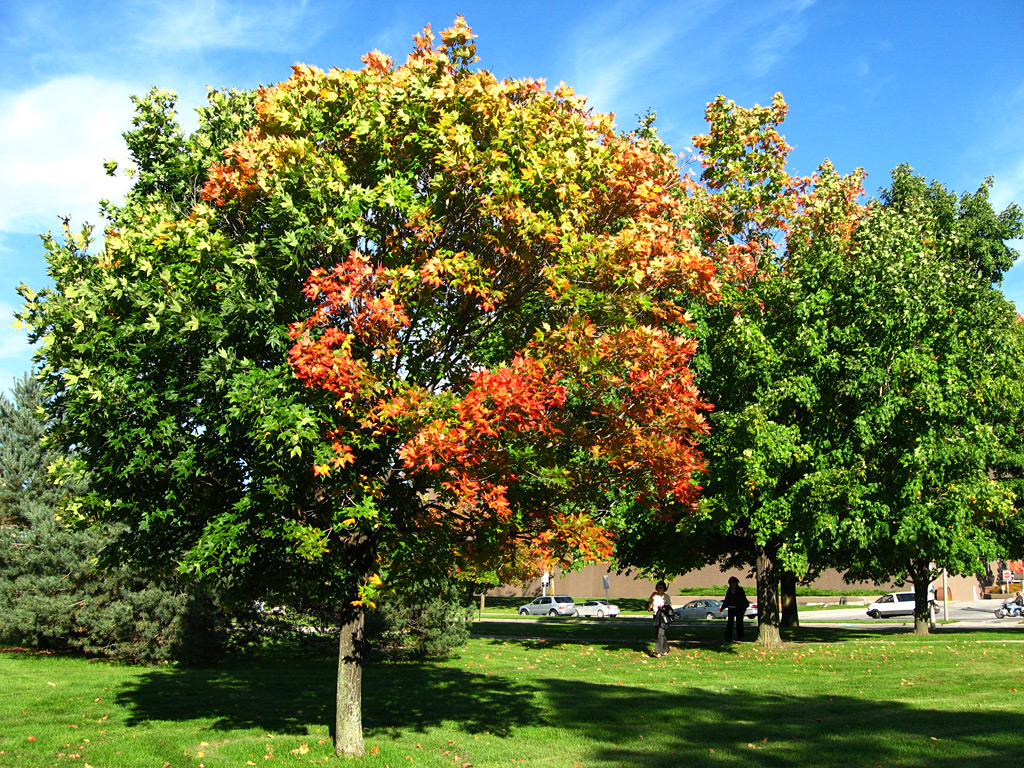
Summer has passed

Some facts for the autumnal equinox:

  • The Earth has seasons because it orbits the sun while tilted 23.44˚ off the vertical axis.
  • This tilt varies with time, following a 41,000 year cycle.
  • At the maximum, the tilt is 24.5˚. At the minimum, it is 22.1˚. When there is more tilt, the difference between summer and winter increases. When there is less tilt, the seasons are more similar.
  • Along with the changes in the shape of Earth’s orbit (eccentricity – 100,000 year cycle) and the way the planet wobbles around the pole (precession – 26,000 year cycle), axial tilt (obliquity) contributes to the Milankovitch cycles – one of the major long-term drivers of natural climate change.
  • To learn more, look up Dansgaard-Oeschger events and Heinrich events.

Disclaimer: Yes, orbital and solar variations affect the planet’s climate. That doesn’t mean human greenhouse gas emissions don’t, nor that they aren’t the primary cause of the climate change presently taking place!

Spremberg clean coal plant

In Germany, Vattenfall is in the process of constructing a 30 megawatt (MW) ‘clean coal’ power plant. The plant will separate pure oxygen from air, burn coal in it, then ship the resulting CO2 to an injection facility 150 miles away by truck. The liquified CO2 will then be injected 3,000 metres underground in a depleted gas field.

The best thing about this project is that it will provide some real data about the feasibility and costs of carbon capture and storage (CCS). A 30 megawatt plant is a pipsqueak compared to the 500 and 1,000 MW coal facilities that are operating and planned. Nonetheless, this smaller plant should provide some useful information about timelines and cost structures. It will also establish how much of the total energy produced by the plant will be needed to produce the oxygen stream, as well as liquify, transport, and bury the CO2.

Too often, governments and industry groups blithely assert that they will sequester 10% or 20% or 50% of emissions by year X. At present, that is a bit like the Wright Brothers describing the economics of a major airline. It is only with the successful deployment of pilot plants that we will discover if ‘clean coal’ is actually a viable low-carbon source of energy or (as I suspect) a high-cost distraction from superior alternative approaches focused on renewables, efficiency, and conservation.

Confused about climate

I have a Google Alert set up that forwards news stories including the terms “Canada” and “Climate Change.” Every day, it provides a few very misleading items, usually published on personal blogs or the canada.com network: a group of publications including the Vancouver Sun, Province, and Chilliwack Times. A piece in the latter caught my attention the other day, written by Jack Carradice. It seems worth examining in some detail. It reads like a grab-bag version of grist.org’s collection of invalid ‘sceptical’ arguments.

Complexity and uncertainty:

One aspect becoming very clear is that the science of climate change is much more complex than many seem to believe and much of the science involved is not well understood. In fact, it is beginning to appear that we know little if anything about some of the factors related to climate change.”

This is true but misleading. As discussed here before, the core facts about climate change are now beyond dispute. The biggest uncertainties have to do with feedback loops, the timing of impacts, and specific higher-order outcomes arising from human-induced temperature change.

Carbon dioxide not the cause:

The notion that man-caused carbon dioxide emissions are the sole cause of “global warming” and that man can control climate change in any meaningful way has pretty much been proven as nonsense.

While it is true that CO2 emissions are not the sole cause of climate change, this statement is simply false. The Fourth Assessment of the IPCC – the most authoritative scientific assessment of climate science – concludes that “Warming of the climate system is unequivocal.” It states further that “Most of the observed increase in global average temperatures since the mid-20th century is very likely due to the observed increase in anthropogenic greenhouse gas concentrations.” Non-CO2 factors that influence climate change include emissions of nitrous oxide and methane, as well as deforestation. The fact that there are non-CO2 contributions in no way diminishes our certainty that human carbon dioxide emissions cause the planet to warm.

The role of water vapour:

Some of the basic facts the public have not been made aware of are that water vapour is the primary greenhouse gas accounting for up to 90 per cent of the greenhouse effect.

Nobody denies that water vapour is the greenhouse gas with the largest effect. What one needs to remember is that the amount of water vapour in the atmosphere is determined by the temperature (just like how you can stir more sugar into hot water than cold). As such, water vapour magnifies the effect of CO2 emissions.

Natural emissions are larger:

Also that 90 per cent of annual carbon dioxide emissions come from natural sources and have nothing to do with the burning of fossil fuels.

Gross natural emissions are larger than human emissions, but they are balanced by natural absorption. Human beings add about 29 billion tonnes of carbon dioxide to the atmosphere every year through the burning of fossil fuels. Some gets absorbed into the deep oceans, but much endures in the atmosphere to cause warming.

Necessity of CO2:

It is not generally publicized that carbon dioxide is essential for plant life and without it we would all die of starvation.

Nobody denies this either, and you would need to be thick-headed to believe that climate scientists advocate the elimination of all CO2. As Carradice correctly points out, the natural greenhouse effect is essential for maintaining an appropriate temperature for life on earth. Of course, it is incorrect to say “Some CO2 is necessary, therefore the more of it around the better.” The lesson from one hundred years of ever-more-detailed climatic science is that there is good reason to fear the consequences of anthropogenic climate change.

Solar radiation changes:

The effects of changes in solar radiation also seem to be overlooked by many observers.

Not by the IPCC. The Fourth Assessment Report concludes that changes in solar irradiance produce 0.12 watts per cubic metre of radiative forcing. CO2 produces 1.66 watts per cubic metre, while methane, nitrous oxide, and halocarbons produce 0.48, 0.16, and 0.34 respectively.

Methane from Indian cows:

Methane is a much more powerful greenhouse gas than carbon dioxide… By some calculations if India reduced their population of sacred cows by 25 per cent it would reduce the amount of greenhouse gas going into the atmosphere by the same amount as taking every car and truck in Canada off the road.

These assertions oddly contradict others above. They acknowledge that both methane and CO2 are greenhouse gasses and that emitting them warms the planet. I couldn’t tell you off the top of my head whether livestock emissions in India are bigger than automotive emissions in Canada, but making the comparison requires accepting the basics of climate physics.

Climate has always been changing:

Forget the climate change hysteria. Climate has always been changing.

True. Indeed, if humans were suddenly dropped into many of the states the world has experienced, we would have a tough time surviving. There is every reason to think that long-term natural climate change might eventually produce conditions adverse for human beings. What anthropogenic greenhouse gas emissions are doing is accelerating those dangers enormously. Whereas the natural carbon cycle is largely a matter of geology, subduction, and volcanoes, we are liberating the carbon in fossil fuels at a break-neck pace.

In short, Jack Carradice’s piece is an orrery of errors: rife with every form of misunderstanding and misinformation. It is hard to imagine a ‘news’ story that would do a worse job of informing readers about the realities of climate and climate science. Some of the points are entirely valid, but they are woven into an incoherent tapestry alongside errors and distortions. The article says simultaneously that climate change isn’t caused by human activities and that it is, that more CO2 would be bad and that it would be good, that concern about climate change is misplaced and that it is valid.

Hopefully, readers of the Chilliwack Times will be discerning enough to reject Carradice’s muddled position and read something both accessible and accurate on climatic science, such as Andrew Weaver’s “Keeping Our Cool,” Richard Alley’s “The Two Mile Time Machine,” or Al Gore’s “An Inconvenient Truth.”

Plug-in hybrids, GM, and sunspots

The good news: General Motors is releasing a plug-in hybrid called the Volt. Plug-ins have the potential to seriously reduce emissions associated with urban transport.

The bad news: GM Vice Chairman Bob Lutz doesn’t believe carbon dioxide causes climate change. Apparently, is a fan of the utterly discredited “it’s caused by sunspots” theory of global warming.

Plug-in hybrids powered by renewable electricity are a green option, at least in comparison to conventional automobiles. It’s unfortunate that buying this one will help fund a company with a history of funding the bogus ‘debate’ about the causes of climate change.

Three debunkings of climate change ‘scepticism’

Reading Andrew Weaver’s new book on climate change, I came across three recommendations for journalistic sources that do a good job of examining the so-called ‘climate sceptic’ movement. Each is worth a look:

As discussed previously, there is nothing ‘sceptical’ about refusing to accept the overwhelming evidence that human beings are dangerously warming the planet. There is a universe of difference between the kind of vigorous and intellectually honest debate that refines theories and deepens understanding and the cynical and strategic efforts of those who oppose action on climate change to discredit real science and create the artificial impression that a debate about the fundamentals of climatic science continues to exist.

The book also cites two websites I frequent as good sources of information: RealClimate.org, written by five climate scientists, and DeSmogBlog.com, written by a a Canadian public relations professional.

Plants and carbon feedback cycles

This site has generally paid a fair bit of attention to positive feedback effects associated with climate change. These are akin to when a microphone gets too close to an amplified speaker to which it is connected: the sound gets louder and louder until the maximum possible output is reached. Climatic equivalents include how melted ice exposes more dark sea water which absorbs more sunlight which melts more ice, as well as how melting permafrost releases methane which causes more warming and thus more melting. Another kind of feedback worth considering is the negative sort: essentially phenomena that are self-limiting. A non-climate example is price and the quantity of something demanded in a properly functioning market; the feedback between rising prices and fewer buyers has a self-limiting effect, preventing prices from rising infinitely. A possible negative feedback associated with climate change is that rising concentrations of carbon dioxide (CO2) might spur additional growth of plants, which would incorporate the carbon into their own bodies, thus partially offsetting the rise of CO2 in the atmosphere.

A study published recently in Nature examined how 3 square metre chunks of grassland would respond to 4˚C of additional temperature, compared with a control group in otherwise identical circumstances. The grasses reduced the aperture of the stomata (pores on their leaves) to limit water loss. One result was 30% less CO2 absorption, both in the year where the heat was applied and in the year following. The editor’s summary concludes:

These findings suggest that more frequent anomalously warm years, a possible consequence of rising anthropogenic CO2 levels, could lead to a sustained decrease in CO2 uptake by terrestrial ecosystems.

Climate change will bring hotter and drier conditions in some parts of the world, making an understanding of what effect that will have on biomass rather important.

A French study of Europe’s 2003 heatwave – where temperatures sometimes reached 6˚C above normal in some areas – came to a similar conclusion about heat and dryness limiting CO2 uptake. Overall, they concluded that Europe’s plant matter went from being a net sink of CO2 (accumulating it in tissue) to a net emitter (yielding it back to the atmosphere). As such, there may well be general thresholds above which ecosystems switch from having a negative feedback effect on the climate to having a positive one.

In the end, the amount of climate change that will occur for any level of human emissions is determined by the direct effects, across several timescales, coupled with all relevant positive and negative feedbacks. Learning more about all elements of that system – through the investigation of ancient climates, experiments like this one, and careful observations – should allow for more robust and accurate climatic modeling.

Price stability and energy investments

It is frequently argued that ever-rising oil prices will encourage good climatic outcomes. They make people cut back on flying and buying SUVs, and thus reduce emissions through destroyed demand. One counter-argument highlights how consistently high prices encourage the use of fuels even filthier than oil: such as coal and hydrocarbons produced from the oil sands. Arguably, uncertainty and instability actually produce the best climatic outcomes, since they leave the profitability of huge hydrocarbon investments uncertain.

This piece in The Globe and Mail argues that the recent fall in oil prices, combined with constrained access to credit due to the financial turmoil in the United States, is threatening the development of the oil sands.

Of course, uncertainty about future energy prices and restricted access to capital are also likely to hurt the development of renewable sources of power, such as concentrating solar plants in the American southwest that retain enough thermal energy overnight to produce electricity continuously. The ideal option is a predictable, ever-increasing price for carbon emissions. That would give clean sources of energy the confidence to invest, while simultaneously discouraging the development of amply available yet climatically disastrous sources of energy – at least until such a time (if ever) when effective carbon sequestration emerges.

2008 Arctic sea ice minimum

It seems that the Arctic sea ice has reached its minimum area for the year. The record for reduction from last year has not been broken, but the situation is nonetheless disturbing. Whereas last year provided optimal conditions for melting, the unusually cold winter last year – arising from La Nina conditions – meant that this year’s melt should have been quite a bit less significant. As it happened, it was within 10% of last year’s record.

Walt Meier, a scientist at the American National Snow and Ice Data Center explained the situation:

I think this summer has been more remarkable than last year, in fact, because last year we had really optimal conditions to melt a lot of ice. We had clear skies with the Sun blazing down, we had warm temperatures, and winds that pushed the ice edge northwards. We didn’t have any of this this year, and yet we still came within 10% of the record; so people might be tempted to call it a recovery, but I don’t think that’s a good term, we’re still on a downwards trend towards ice-free Arctic summers.

In short, the Arctic ice is probably already locked into a death spiral. Here’s hoping that doesn’t lead to widespread melting of the permafrost, since the results of that would be catastrophic for humanity.