Managing peak power demand

111 Sussex, Ottawa

Readers may recall an earlier discussion about how moderating peak electricity demand serves climate change mitigation objectives. One mechanism presently operating towards this end is the PeakSAVER program, run by Toronto Hydro. According to WWF Canada:

Research commissioned by the Independent Electricity System Operator (IESO) in 2003 found that peak-shaving programs could reduce peak demand by ten per cent, equivalent to the output of three of Ontario’s four remaining coal plants, and that a mere one per cent reduction in peak demand would have saved Ontario consumers $170 million in the previous year.

The PeakSAVER program allows Toronto Hydro to remotely turn down thousands of air conditioners and water heaters across the city. This is done within set limits, preventing air from exceeding certain temperatures and hot water from falling below them.

Another upshot of such programs is that they could be used to help overcome the limitations of renewable power. At times when the sun is shining and the wind is blowing, electricity could flow unimpeded. At times where supply exceeds demand, non-essential usage could be throttled back, or variable pricing could be used to induce consumer action.

Films and fish stocks

According to Shifting Baselines, it seems that Charles Clover’s excellent book “The End of the Line” is being made into a documentary film.

That was the book that inspired me to go meet Dr. Daniel Pauly at the UBC Fisheries Centre, as well as go on to write the article that was recently published in the MIT International Review.

Hopefully, the release of the film will raise the profile of the issue a bit. As morally dubious as the factory farming of land animals is, it does not endanger the survival of these species. That is not true of the modern industrialized fishing industry. The collapse of fisheries in the Mediterranean and North Atlantic is just a sign of what is to come to all fisheries worldwide unless aggressive conservation measures are put in place and enforced.

The trouble with jets

Giant spider

Air travel is one of the trickiest ethical issues, when it comes to climate change. In most situations, the difference between a high carbon option and a zero carbon alternative is essentially a matter of cost. If we are willing to spend enough, we can replace all fossil fuel power with renewables. We can get electricity, heat, ground transport, and energy for industry from sources that do not contribute to climate change. Air travel is different. Even for one million dollars a ticket, there is no way to get someone from New York to London in about eight hours that does not release greenhouse gases. Likewise, there is no feasible way to capture those gases for later storage.

Let’s consider a series of propositions:

  1. Climatic science strongly suggests that allowing global greenhouse gas concentrations to rise beyond 500-550 ppm of carbon dioxide equivalent will have very adverse affects. These will be concentrated in the poorest states. It is highly likely that exceeding these limits will directly lead to large numbers of deaths, especially in the developing world. (See: these Stern notes)
  2. At present, per-capita emissions in developed states are far higher than those in developing states. Canada’s emissions per-capita are about twenty times those in India.
  3. Essential human activities, from heating to agriculture, produce greenhouse gasses.
  4. People have equivalent moral claims to the basic requirements of survival.

If we accept these claims, we find ourselves in a tricky spot. To stabilize the level of a stock, you need to reach the point where inflows are equal to outflows. Even if we ignore how global warming is reducing the ability of the forests and seas to absorb carbon dioxide, it is clear that such stabilization requires deep cuts in total emissions. At the same time, taking the last two points seriously means acknowledging that developing states do have the right to comparable per-capita emissions. As such, the only option that is fair and capable of stabilizing overall concentrations requires very deep cuts in developed states.

Aside from being inextricably linked to fossil fuels, modern air travel compounds the harm done by the burning of that kerosene. This is partly because of where in the atmosphere it is deposited. It also seems likely that jet aircraft affect clouds in ways that increase their impact on climate change.

Imagining a world stabilized at 500 ppm, with reasonably similar per-capita emissions for all states, it seems quite impossible that there can be air travel at anything like contemporary levels. It is possible that some miracle technology will allow high-speed flights to occur without significant greenhouse gas consequences, but no such technology is even within the realm of imagination today.

As someone who has long aspired to travel the world, this is a very difficult conclusion to reach. It now seems possible that air travel bears some moral similarities to slavery. Before people become overly agitated about the comparison, allow me to explain. Just as slavery was once a critical component of some economies, air travel is essential to the present world economy. Of course, economic dependency does not equate to moral acceptability. If our use of air travel imperils future generations – and we are capable of anticipating that harm – then flying falls into the general moral category of intentional harm directed against the defenceless. After all, future generations are the very definition of helplessness, in comparison to us. We can worsen their prospects by fouling the air and turning the seas to acid, but they will never be able to retaliate in any way. (See: these Shue notes)

While I personally fervently hope that some solution will be found that can make continued air travel compatible with the ethical treatment of the planet, nature, and future generations, I must also acknowledge the possibility that people in fifty or one hundred years will look upon us as sharing some moral similarities with plantation owners in the United States, prior to the civil war.


Al Gore in a nearby park

In a public park up the road from here, a public screening of An Inconvenient Truth is ongoing. It’s a bit amusing that this should occur tonight, which is far and away the coldest night I have experienced since arriving in Ottawa. Leaving the office at about 6:40pm tonight, it was the first time I have gone through that double set of doors to find the air outside cooler than the air inside our twenty-eight story tower.

You have to wonder what the wider significance of growing public awareness about the climate change issue is. If it will require massive sacrifice to deal with, there is a reasonable change that Monbiot’s assertion is correct:

We wish our governments to pretend to act. We get the moral satisfaction of saying what we know to be right, without the discomfort of doing it. My fear is that the political parties in most rich nations have already recognized this. They know that we want tough targets, but that we also want those targets to be missed. They know that we will grumble about their failure to curb climate change, but that we will not take to the streets. They know that nobody ever rioted for austerity.

Thankfully, it does seem likely that the early stages of mitigation will be relatively painless and will carry corresponding benefits in terms of reduced dependence on foreign oil and reduced air pollution. It is when things really start to bite that the resolution of voters and law-makers will really be tested.

Grist for the mill

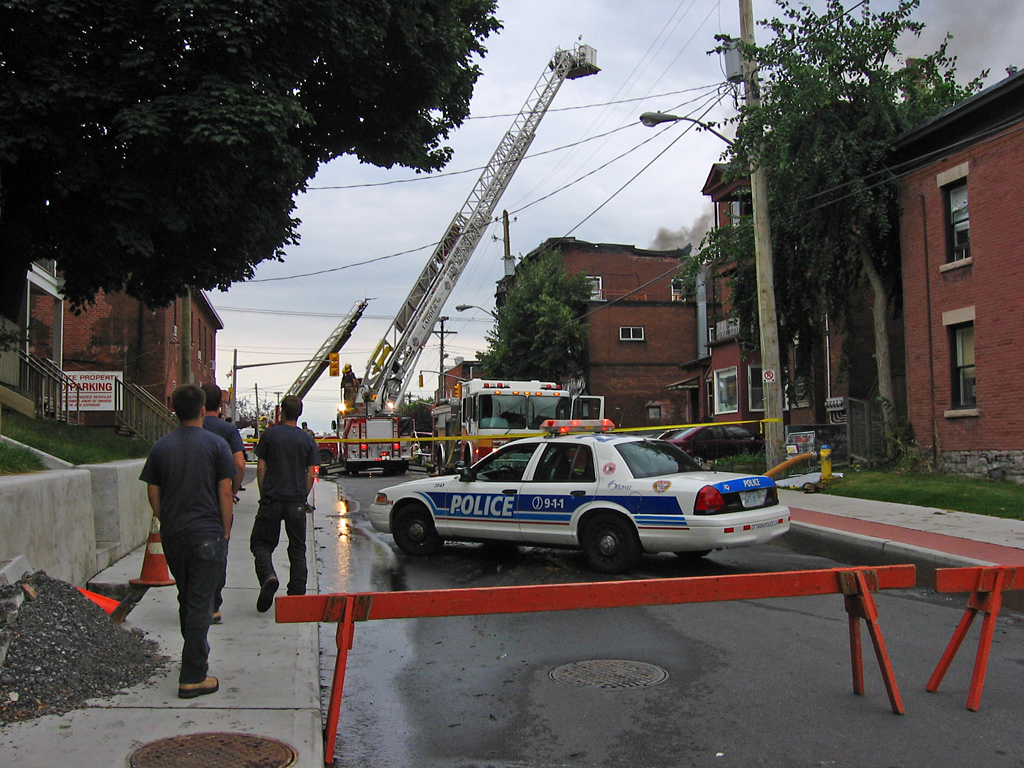
Fire at Booth, near Somerset

Here is an interesting article about the ongoing debates about ethical food and climate change: “The Eat-Local Backlash.” Such articles demonstrate how fiendishly complicated it can be to make personal environmental decisions. Questions about which of two options has the lesser environmental effect can rarely be definitively answered, not least because there are so many different types of environmental effects, ranging from air and water pollution to climate change and loss of biodiversity. This article is from a site called Grist, which has recently joined the ranks of those I consult most frequently and read most carefully. Their analysis isn’t always terrific, but the place has a lot of life.

Indeed, the site itself demonstrates the benefits of aggregation (one argument against local food). Rather than having the attention of a few hundred people spread between a few dozen environmental blogs, each getting a couple hundred hits a day, this provides a much more concentrated conversation. I encourage those interested in environmental issues to join and start commenting.

McIntyre and NASA data

SAW Gallery, Ottawa

There is a lot of talk in the media about how Steve McIntyre – an amateur scrutineer of climate statistics – found an error in data released by NASA. Specificically, it was mistankingly believed that data that had not been corrected for urban heat effects had been. This data pertains only to the United States and the correction implies that about 0.15 ºC of the observed warming there was just a statistical error. In itself, this would not get much attention. What does get attention is that this changes the rankings of the hottest recorded years in the United States. Rather than 1998 being the hottest recorded year in the United States, 1934 now wins. Many news sources are treating this data revision as though it demonstates a serious flaw in the overall quality of our climate understanding.

The Fourth Assessment Report of the Intergovernmenal Panel on climate change is based on a far broader collection of data than just NASA data pertaining to just the United States. As such, their overall conclusion that is barely affected by this change. Likewise, the worldwide figures for hottest years still cluster in the last decade. The report’s Summary for Policy Makers explains:

Eleven of the last twelve years (1995–2006) rank among the 12 warmest years in the instrumental record of global surface temperature (since 1850). The updated 100-year linear trend (1906 to 2005) of 0.74°C [0.56°C to 0.92°C] is therefore larger than the corresponding trend for 1901 to 2000 given in the TAR of 0.6°C [0.4°C to 0.8°C]. The linear warming trend over the last 50 years (0.13°C [0.10°C to 0.16°C] per decade) is nearly twice that for the last 100 years. The total temperature increase from 1850–1899 to 2001–2005 is 0.76°C [0.57°C to 0.95°C]. Urban heat island effects are real but local, and have a negligible influence (less than 0.006°C per decade over land and zero over the oceans) on these values.

This information is based on a broad collection of sources including satellites and ground stations around the world. It also incorporates evidence from ice cores and other historical indicators of temperature and greenhouse gas concentrations. What the McIntyre situation demonstrates is the degree to which perceived anomalies are seized on by people with pre-determined agendas to either support or refute the overall climate change consensus. While the data is not a statistical threat to that consensus, it does have the ability to foster doubt in the general public and among policy-makers, especially when presented out of context.

Having people out there scrutinizing the data is excellent, and a good check against the proliferation of misleading information. At the same time, it is necessary to be rigorous in our thinking about how one new piece of information affects the overall picture. Likewise, it is important to remain aware of the degree to which individual agendas influence how information is processed, and what responses it evokes.

Ravenous pine beetles

According to an interview with the CBC given by Allan Carroll at Natural Resources Canada, there is not much hope of British Columbia containing the mountain pine beetles (Dendroctonus ponderosae) that have already killed 9.2 million acres of forest. He said that “Our estimates are that by about 2013 to 2015, the beetle will have killed about as much as 80% of the mature pine in the province and I don’t think we can really affect that now.” As the supply of Lodgepole Pine becomes eliminated, the beetles sometimes move on to Spruce and other species. If the beetles begin to target the Jack Pine of the boreal forest, Carroll says that it “could wipe out billions of trees all the way to the East Coast.”

These insects were mentioned here before, in the context of the effect of changing minimum temperatures on species ranges. Apparently, once they have reached their maximum cold tolerance, these beetles can endure temperatures of -40°C. It is significant cold events in the early and late winter – before their chemical defences have fully come on stream – that can lead to “very large amounts of mortality in the [beetle] population.” A few very crisp fall days would do a lot for western Canada’s forests.

Cognitive dissonance

One of the odd things about reading The Economist recently is seeing the extent to which their commitment to reason and the impartial consideration of scientific facts is clashing with their long-held views about economic growth. So far, their considerations of how ecological issues – especially climate change – impact their core philosophy has been fleeting and confined to the margins. This article on air travel is a good example.

Imagine, however, that they played some of the ideas through. What would their next Survey on Business look like if they really accepted that mass air travel is climatologically and morally unacceptable?

The acid sea

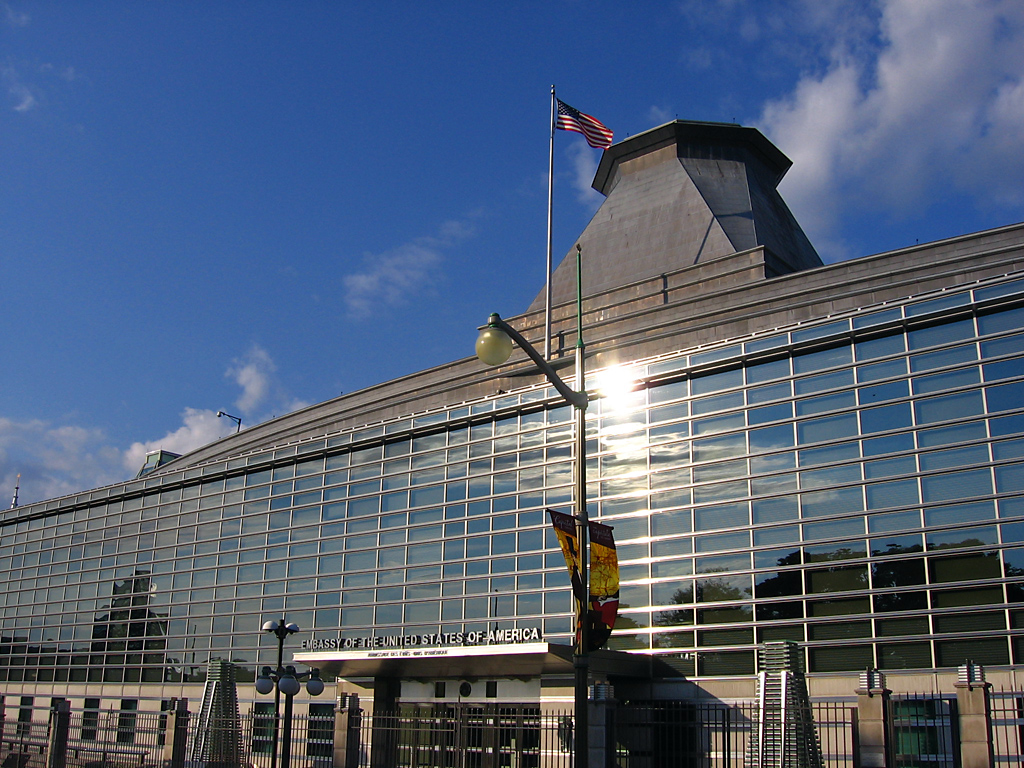
American embassy, Ottawa

One frequently neglected consequence of rising global concentrations of carbon dioxide is increasingly acidic oceans (though it has been mentioned here before). Since the Industrial Revolution, the world ocean has absorbed about 118 billion tons of anthropogenic CO2: half of total human emissions. Every day, another 20-25 million tonnes are being absorbed.

Before the Industrial Revolution, oceanic pH was about 8.179. Now, it is at 8.104. By 2100, it is projected to be 7.824. Because pH is a logarithmic scale, that is a bigger change than it seems to be. At the projected 2100 concentration, the shells and skeletons of corals, molluscs, and phytoplankton with aragonite shells begin to dissolve within 48 hours. James Orr et al, writing in Nature provide many more details:

In our projections, Southern Ocean surface waters will begin to become undersaturated with respect to aragonite, a metastable form of calcium carbonate, by the year 2050. By 2100, this undersaturation could extend throughout the entire Southern Ocean and into the subarctic Pacific Ocean. When live pteropods were exposed to our predicted level of undersaturation during a two-day shipboard experiment, their aragonite shells showed notable dissolution. Our findings indicate that conditions detrimental to high-latitude ecosystems could develop within decades, not centuries as suggested previously.

The effect of more acidic oceans on aragonite is part of why the Stern Review projects that coral reef ecosystems will be “extensively and eventually irreversibly damaged” at less than 450 ppm CO2 equivalent and less than 2°C of warming. Given how critical coral reefs are to overall oceanic ecosystems – including key commercial fish species – this should be of concern to everyone.

It is very hard to project what the consequences of all this will be. As with so many other climatic phenomena, the net impact for human beings probably has to do with the relative strength of positive and negative feedbacks and the corresponding resilience of ecosystems. What is certain is that the only way to prevent acidification is to signficantly cut CO2 emissions.

Freight shipping and greenhouse gases

Travelling 100km by car produces about 10.8kg per person of carbon dioxide (assuming an average of 1.5 passengers per car). Doing the same by bus produces about 1.3kg, while taking a modern electric train produces about 1.5kg (based on the energy balance in the UK). What is remarkable is that shipping freight by truck produces 180 grams of CO2 per kilometre, while doing so by train produces just 15. Clearly, switching freight transport modes offers considerable scope for emission reductions (as does reducing the total amount of freight shipped).

When you factor in how much damage heavy trucks do to roads – as well as the expense and carbon emissions involved in rebuilding them – it seems pretty clear that disincentives to ship freight by road make sense. Yet another externality that road pricing and carbon taxes could help address.