Heat: How to Stop the Planet from Burning

Ottawa wooden sculpture

During the past two years, I have been reading about climate change for several hours every day. During that span of time, I have read dozens of books and hundreds of articles. Quite possibly, none were as thought-provoking as George Monbiot’s Heat: How to Stop the Planet from Burning. If you are at all serious about understanding the issue of global warming, it is essential reading. He may not be right (indeed, it would be far preferable for him to be wrong) but he will definitely make you think.

His project is an ambitious one. Having decided that global temperatures must not be allowed to rise by more than 2°C on average, he works out what that would mean for Britain. Since British emissions per capita are way above the world average, a fair system would require much heavier cuts there than elsewhere. Canada’s per-capita emissions are even worse.

Here is a smattering of what he says will be required by 2030:

  • A power grid dominated by renewables and natural gas plants with carbon capture and storage.
  • Dramatically, dramatically tightened building regulations – making most houses either ‘passive’ in their non-use of heating or cooling or capable of producing their heat and power from piped-in hydrogen, possibly supplemented by solar.
  • Most private automobile travel replaced by a buses or non-motorized transport, both within and between cities.
  • An end to cheap air travel: no more low cost flights, with massive total cuts in the number of both short and long-haul flights.

The last is the result of a complete lack of alternative technologies that can deliver the kind of emission reductions required. Even if all other emissions were cut to zero, growth in air travel would make that one sector break his total limit by 2030.

Suffice it to say, Monbiot is not in the main stream of this debate. The Stern consensus is that climate change can be dealt with at moderate cost. Even if Monbiot’s ideas are entirely possible, in terms of engineering, one cannot help but doubt that any political party in a democratic state could successfully implement them. The impulse to defend the status quo may turn him into a Cassandra.

In fifty years, it is possible that people will look back at this book and laugh. Alternatively, It may be that they look back on Monbiot as one guy who had approximately the right idea while everyone else (Gore and company included) were in denial. The answer seems to depend upon (a) whether emissions need to be cut as much and as quickly as he thinks and (b) how bad it will actually be if they are not. It is pretty easy to do the math on the first of those, at least for any desired greenhouse gas concentration or temperature change. The latter is harder to assess. Regardless of which proves to be closer to the truth, this is a book I wholeheartedly endorse for anyone trying to keep abreast of the climate change issue.

Peak power, storage, and renewables

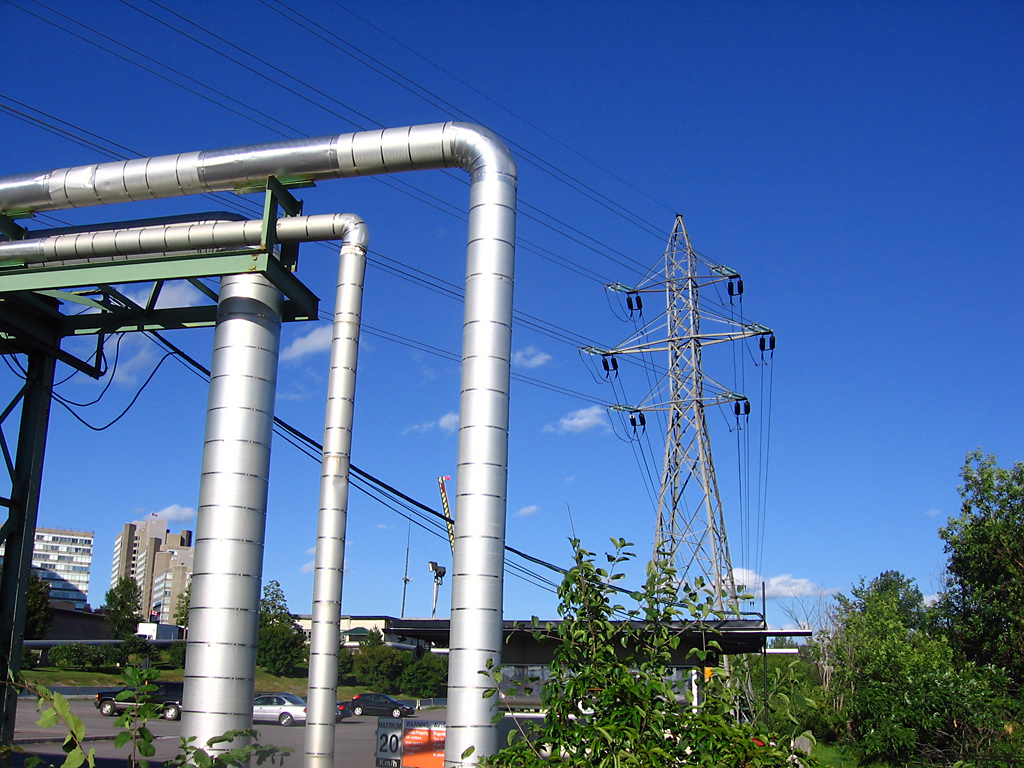
Power tower

One characteristic of electricity poses severe challenges both for the drive towards lower carbon emissions and towards more power based on renewables: the fact that supply must precisely match demand at all times. On account of this, power plants are divided into two categories – base plants, which constantly provide the amount of power normally demanded by homes and businesses, and peaker plants, which provide some extra juice when everyone decides to turn on the air conditioning at once.

The first reason this is a problem is that peaker plants are much less efficient. It is costly to build an efficient oil or gas plant, and it just isn’t worth it to do so for one that runs relatively rarely. The second problem is more to do with the inconsistent nature of renewable power; the wind does not always blow and the sun does not always shine. As such, we need enough on-demand energy (usually based on fossil fuels) to fill the gap between what windmills can produce at time X and what consumers demand then. Plants on standby may not use much fossil fuel, but maintaining and operating them uses resources in a way that makes renewable options less appealing than otherwise.

The answer is obviously energy storage. We can build dams with two reservoirs, one uphill from the other. When power is in excess, we can pump water from the low reservoir to the high one. It can then be passed through turbines at times of peak demand to recover energy. Apparently, this can be done with efficiency of about 85%. Other options along these lines would be to have clusters of offshore wind turbines that use electrolysis to make hydrogen from seawater. That can be piped or carried to shore and used to produce carbon-free energy.

To me, it seems like another option is to use technology and incentives to help moderate power demand. If there are industries that can use a lot of power or a little, switching easily, then should be encouraged to become part of the swing capacity. It may even be worthwhile to store energy as heat in sinks or as kinetic energy in flywheels. If houses could heat or cool a block of material at the time when power is cheapest, then use that potential for heating or cooling across the day, we might need less peak capacity.

Some kind of competition for inventing fossil-fuel-free peak-power solutions may well be in order. If the technology exists, and there is enough of a cost differential between times of highest and lowest demand, it may well transpire that infrastructure can be built to normalize power demand on the scale of days, or even weeks.


The Khazzoom-Brookes Postulate

Ottawa war memorial

Reading through George Monbiot’s Heat, I encountered the idea of the Khazzoom-Brookes Postulate for the first time. The postulate relates to the effect of increasing energy efficiency on total energy usage and holds thas as the energy efficiency of industrial processes increases, total energy use actually rises as well. While initially counter-intuitive, the idea does seem to have some validity. If the energy cost of producing one tonne of aluminum falls from $5000 to $4000, you would expect aluminum companies to produce more. After all, their profit margin will have widened, all else being the same. The Celsias blog cites another example: if Boeing’s new 787 Dreamliner is 20% more fuel efficient, that just means that ticket prices will fall and more people will fly. Greenhouse gas emissions will stay the same or rise.

As Monbiot acknowledges, the postulate is controversial. It is certainly decidedly inconvenient for all the people who trot out ‘increased energy efficiency’ as the first (painless) means to combat climate change. Increased energy efficiency may be great for various reasons of convenience and enjoyment, but the postulate and accompanying logic does give one reason to doubt whether it can have a positive effect on reducing greenhouse gas emissions.

Sustainability and the Prius

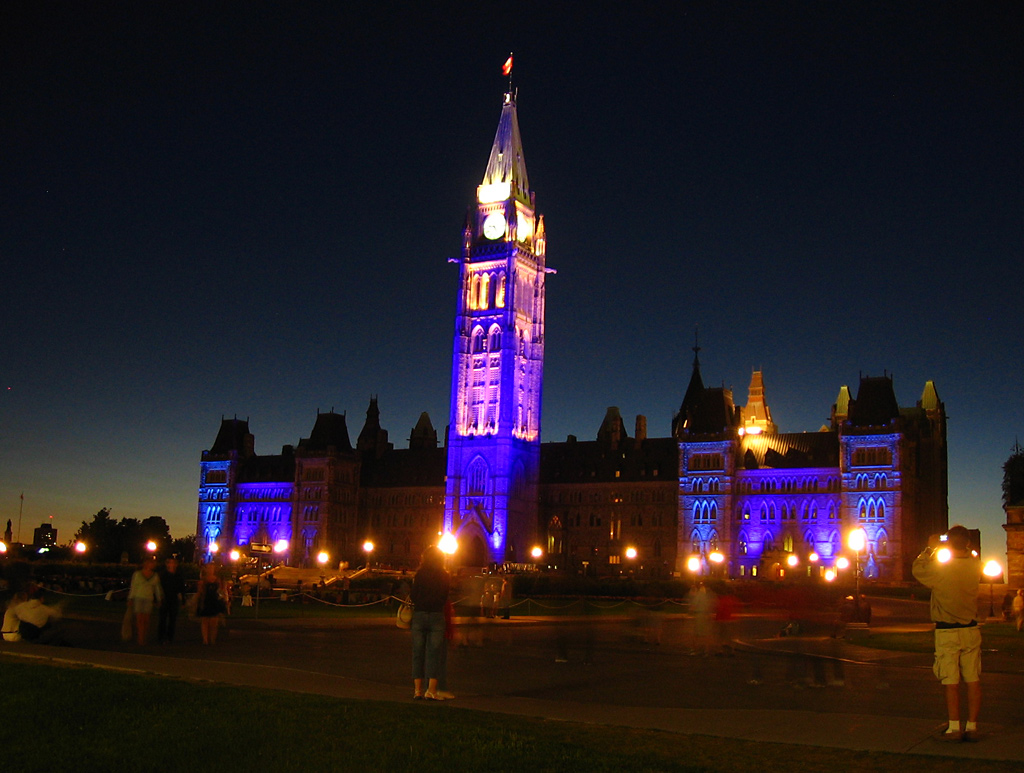
Canadian Parliament at night

One way or another, the Toyota Prius. is a symbolic vehicle. For some, it symbolizes how saving the planet can be relatively painless, enjoyable, and hip. You still get the same basic thing (the ability to zip around in a car) but without the guilt and with the important ability to lord it over the less environmentally responsible. Alternatively, the Prius is a symbol for the superficiality of the environmental commitments most people are willing to make. Seen in this way, it reveals how environmentalism is mere tokenism in many cases.

There are two arguments here which frequently become confounded. One is a first-order question about the ultimate sustainability of different energy systems. Is it sustainable to run internal combustion cars using cellulistic ethanol? What about plug-in hybrids charged using big nuclear fission plants? The answers to these questions are ultimately knowable to a high degree of specificity. For any given level of technology, answering them is simply a matter of applying chemistry and physics. The uncertainty therefore lies in estimations about what will be technologically possible at X or Y time.

The second-level argument is much more heuristic and intractable. There is the fundamentally liberal belief that environmental problems can be tackled fairly painlessly through a bit of cleverness and some new hardware. This is a view that takes the Prius as a positive symbol. At the other extreme is the conviction that only massive sacrifice can generate sustainability. The vision in Fight Club of people in rags pounding strips of leather on an abandoned superhighway captures this, and adherents would surely dismiss the Prius as a pathetic fig-leaf.

The latter argument seems to generate a lot more heated discussion, largely because the real meat of analysis on the former question lies in territory where most people cannot hold their own (who reading this could really calculate the efficiency of an energy grid based on photovoltaics, or of an industrial process for ethanol production from cellulose?). The latter debate requires only a will to participate, though it may not do much to leave us with an understanding of which view of the Prius is justified.

Reading about ten hours a day

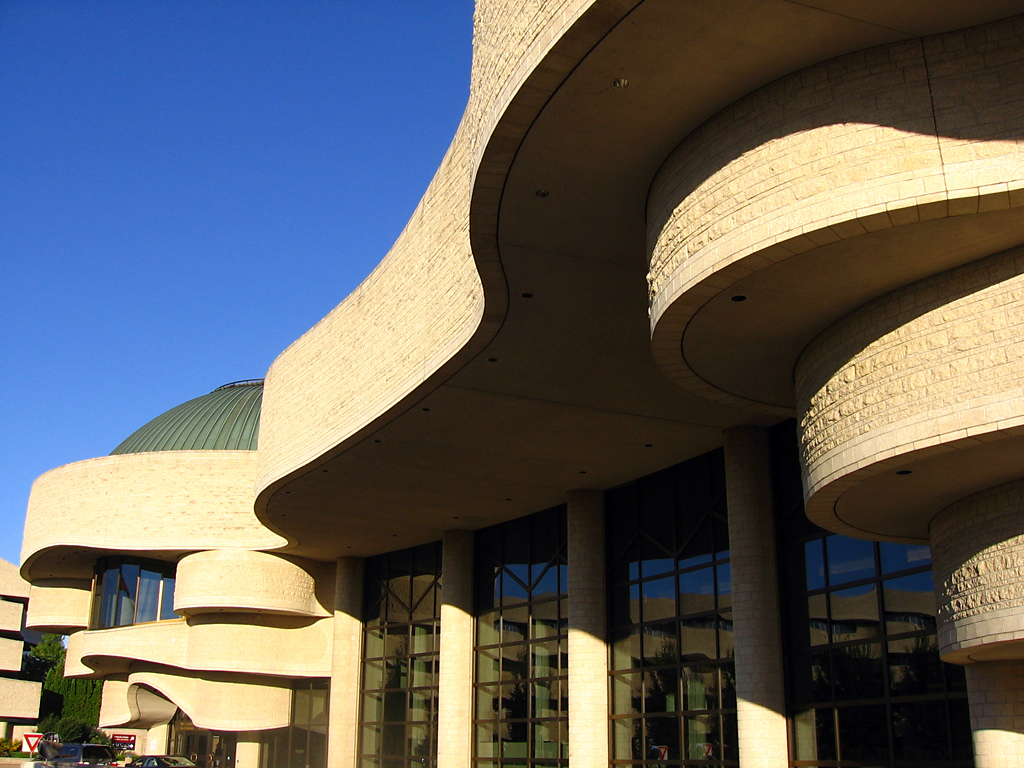
Museum of Civilizations

In addition to all the reading I have been doing for my first big project at work, I am finding myself well-immersed in interesting personal reading. Aside from the stack of fiction that has been oscillating in size for about a year, I am reading George Monbiot’s Heat: How to Stop the Planet from Burning and Harold Coward and Andrew J. Weaver’s book Hard Choices: Climate Change in Canada. Simon Singh’s The Code Book is catering to a less immediately work-related interest, as is the Simon Blackburn book Antonia gave me.

It can be tough to maintain an appetite for the written word that exceeds the immediate requirements of work and the secondary need to keep up to date on current events. Of course, it is essential in order to become and remain an informed member of society.

Unrelated: Emily introduced me to a new web comic: The Perry Bible Fellowship. It is pretty random, but also quite funny at times.

Responses to climate change scepticism

Thanks to a tip off from a new friend, I found this comprehensive collection of rebuttals written by Coby Beck and featured on the Grist website, which is itself well worth a look. The articles are sorted as follows:

  • Stages of Denial
  • Scientific Topics
  • Types of Argument
  • Levels of Sophistication

Whatever your beliefs, and whatever the case you want to make, you will find some points to engage with here.

Britain inundated

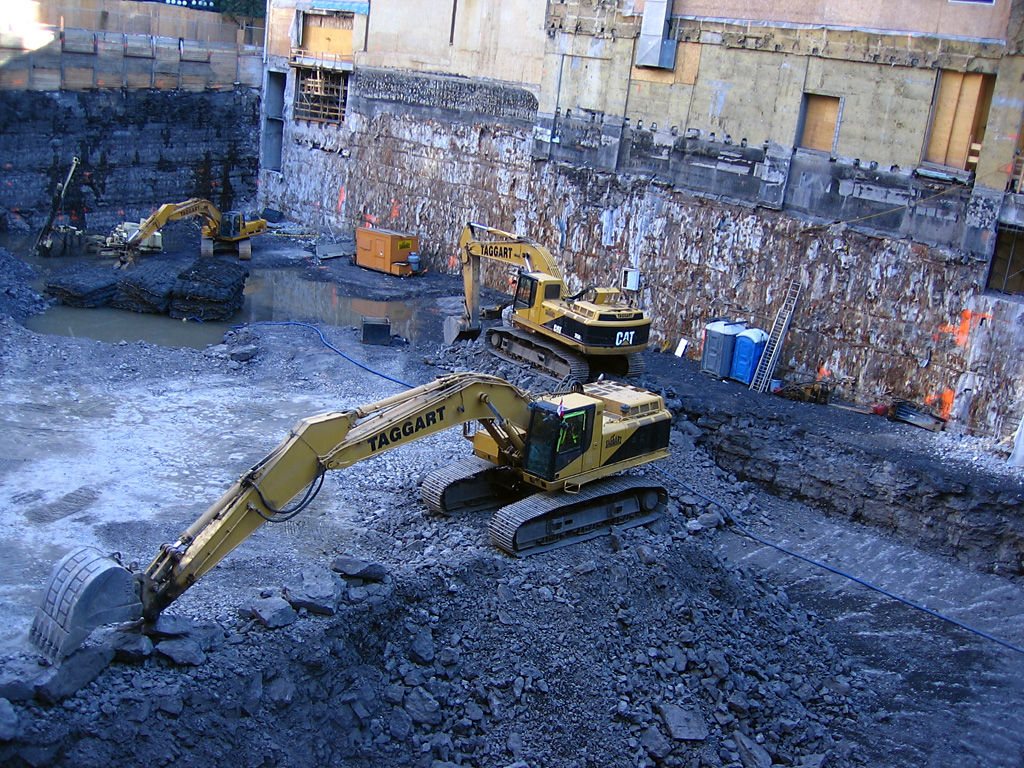
Ottawa construction

For those who haven’t been keeping abreast of the flooding in the United Kingdom, it is apparently extremely severe. Brize Norton, the airbase near Oxford, recorded 127mm of rain on July 20th. Normally, soggy Oxfordshire gets that much in two months.

Thankfully, relatively few people have died, though the British firefighting services are apparently describing this as the largest peacetime rescue operation in their history. Hopefully, the waters will soon abate.

Horizontally linked

I am trying to develop some informal connections with other people in North American who are working on climate change policy or research. In particular, I would like to get in contact with anyone studying feedback effects or policies that cities are adopting. Also, I would like to get in touch with people working within Canadian federal departments other than Environment, as well as people at the US Environmental Protection Agency.

PS. Harold Coward and Andrew J. Weaver’s book Hard Choices: Climate Change in Canada is worthwhile reading for those interested in Canadian climate change policy.

Life, the universe, and everything

During off hours, I have been watching the spectacular BBC series Planet Earth. Just seeing an episode is almost sufficient to make a person turn to a life of nature videography. Whether other viewers feel the same compulsion or not, it does seem reasonable to call the series mandatory viewing for human beings. It is both awe inspiring, insofar as it demonstrates the enduring richness of truly wild places, and chastening, insofar as it demonstrates their wholesale slaughter.

A book I am reading captures it well:

Being will be here.
Beauty will be here.
But this beauty that visits us now will be gone.

Curious, how powerful and helpless we seem to be, in the end.

Green glass

Apparently, the United Kingdom is the world’s largest importer of green glass. This is for the simple reason that the UK is the world’s largest importer of wine, bringing in over one billion litres a year and producing almost none. As such, the green glass piles up. There is so much of it that it can only be recycled in inefficient ways, such as grinding it up to use in road surfaces. Doing this uses more energy and resources than making the roads out of other materials and putting the green glass into landfills.

The easiest answer is to make wine bottles out of clear glass that can be recycled into a wider variety of things. Since that doesn’t seem to suit people’s tastes, wineries have come up with an alternative system. They import the wine in 24,000 litre containers (which saves on shipping costs as well) and then use it to fill up the bottles responsible Britons have been leaving at their curbsides for years. If you are curious what a tank of that size resembles, have a look at this page.

Something to consider, next time you are enjoying a bottle of your favourite vintage.