Parc Poisson Blanc

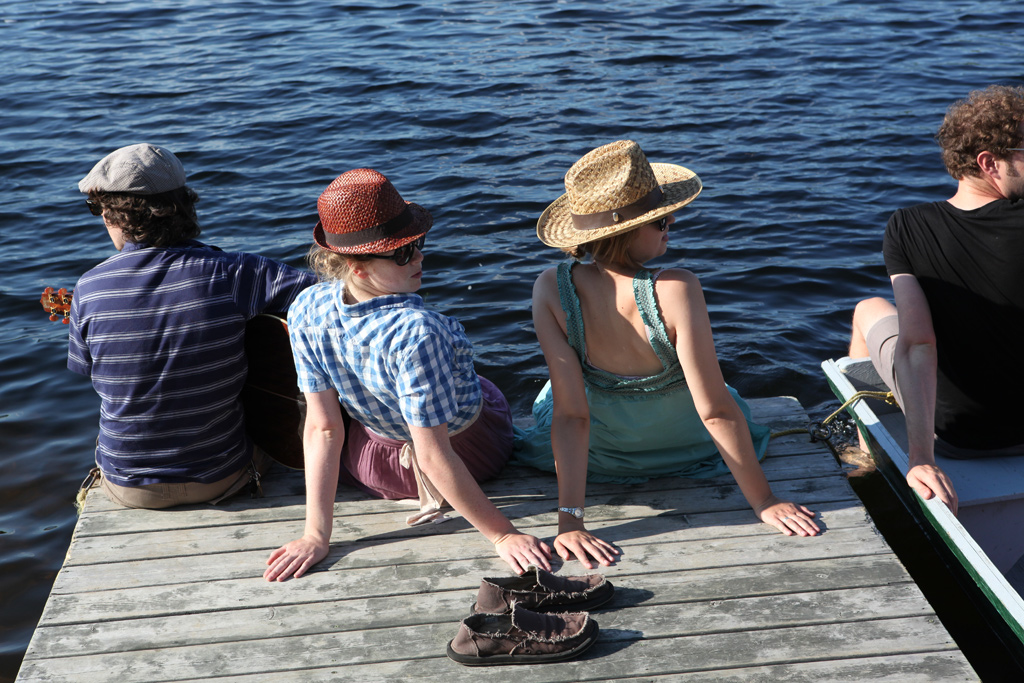
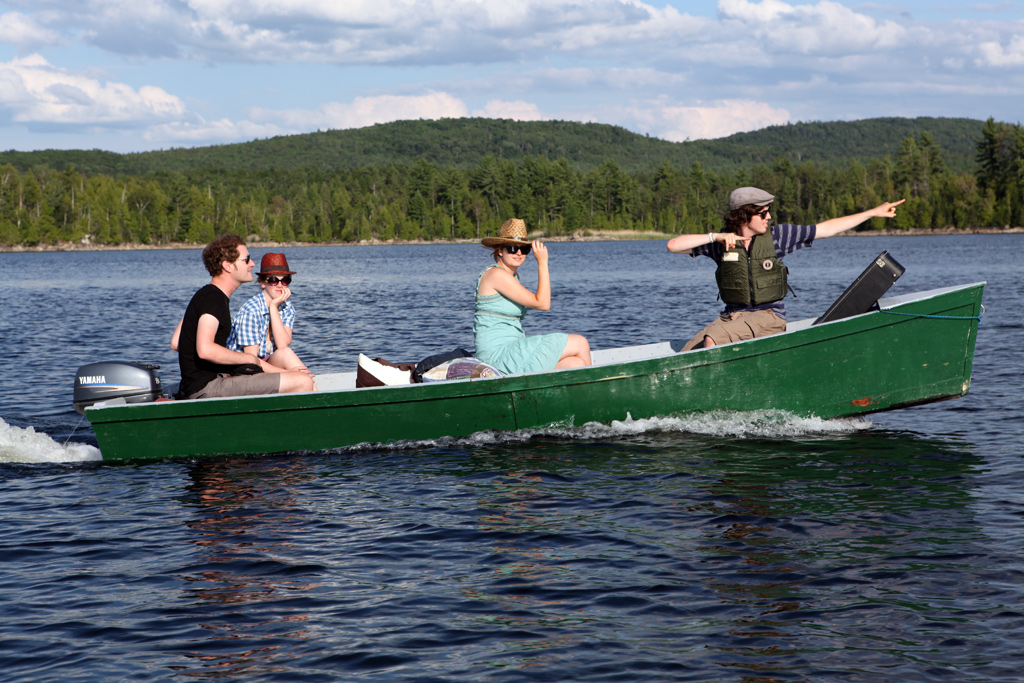
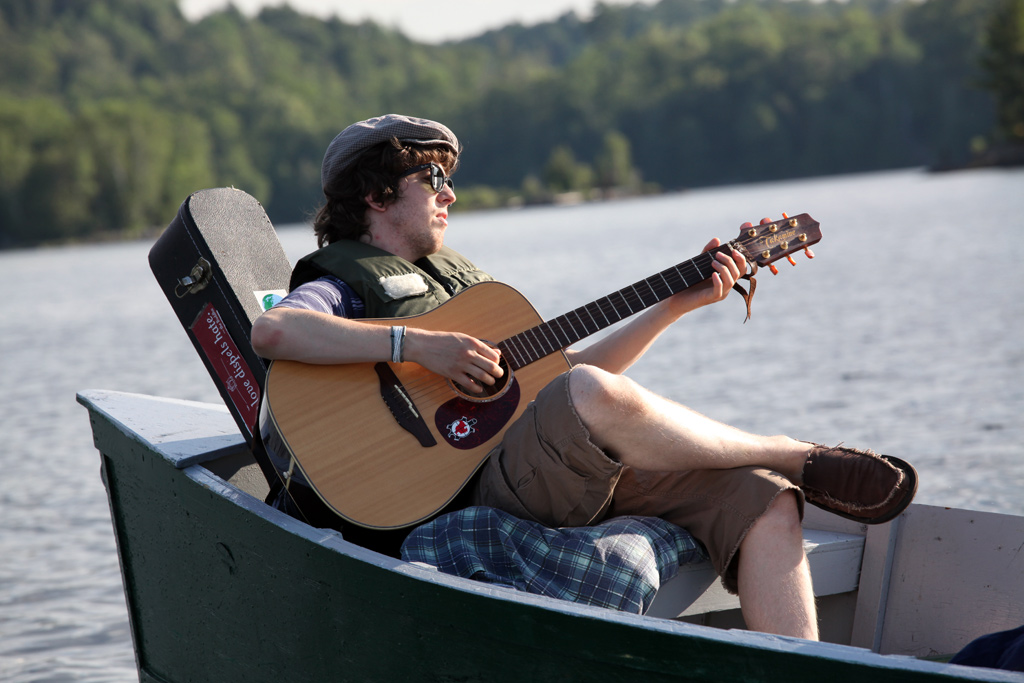
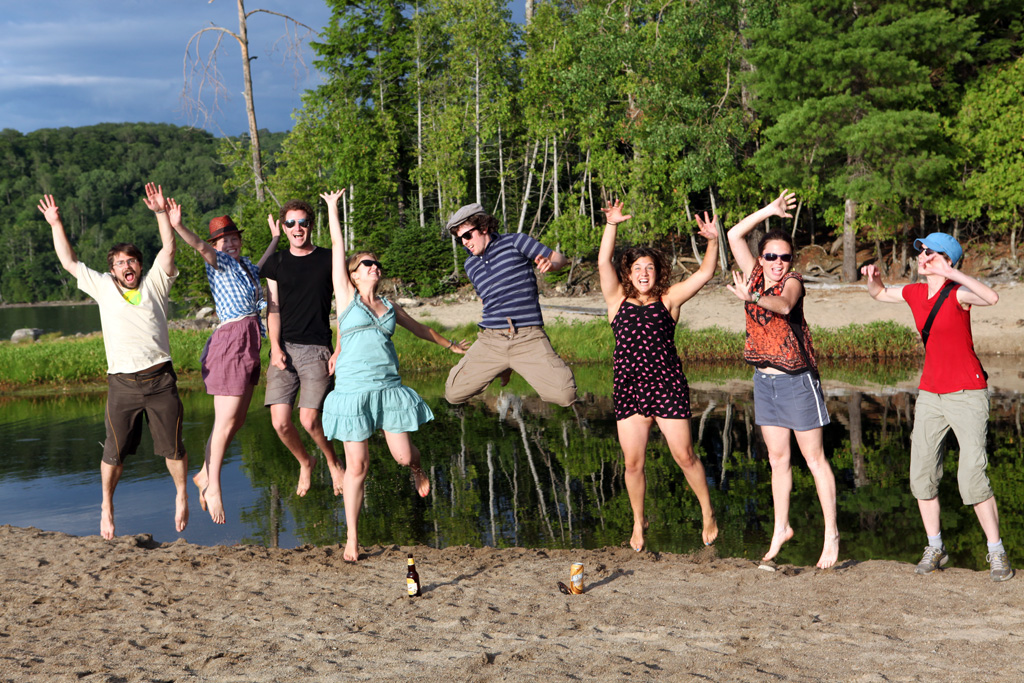
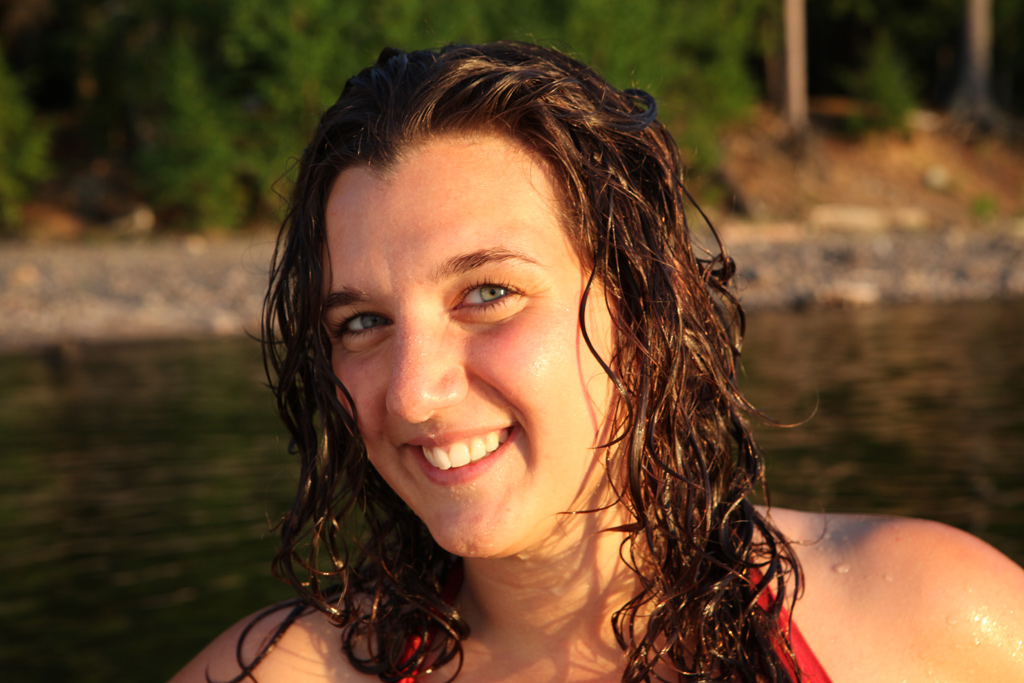
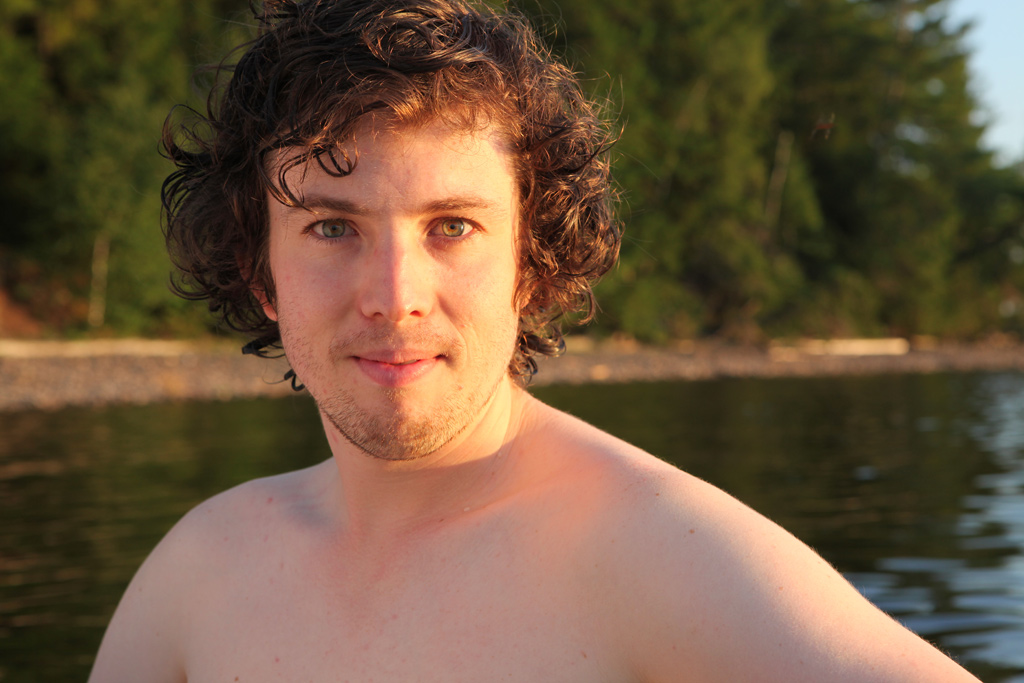
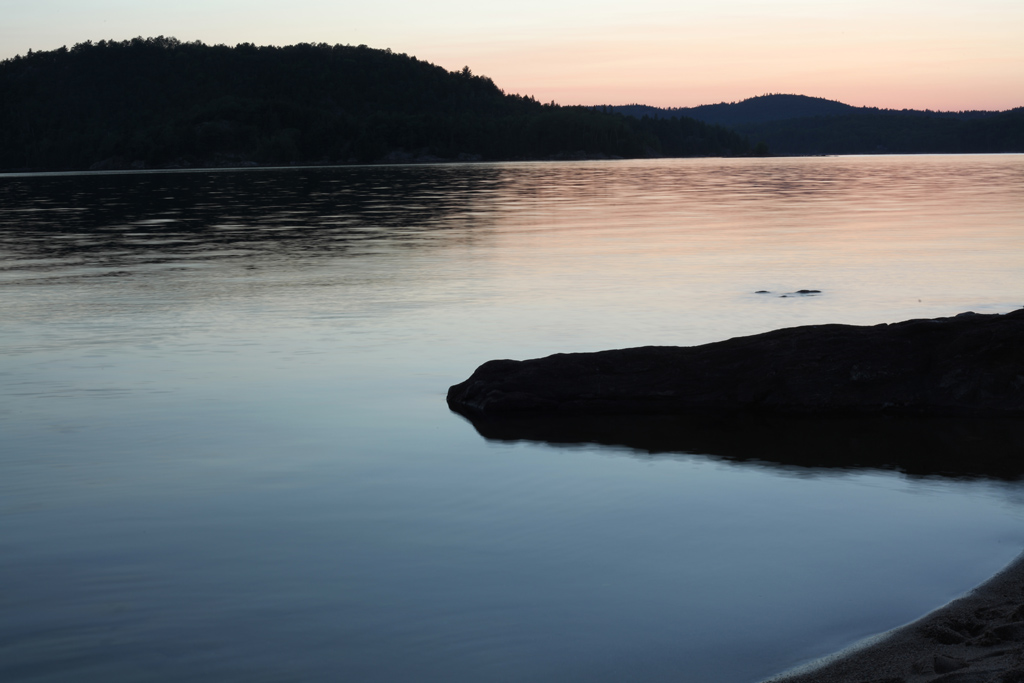
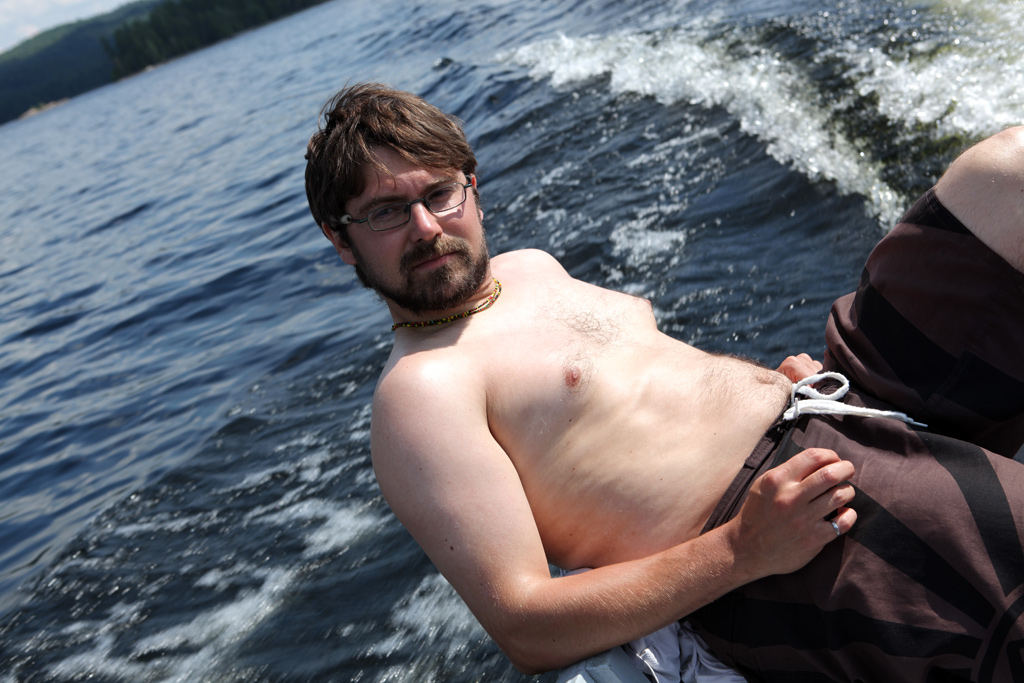
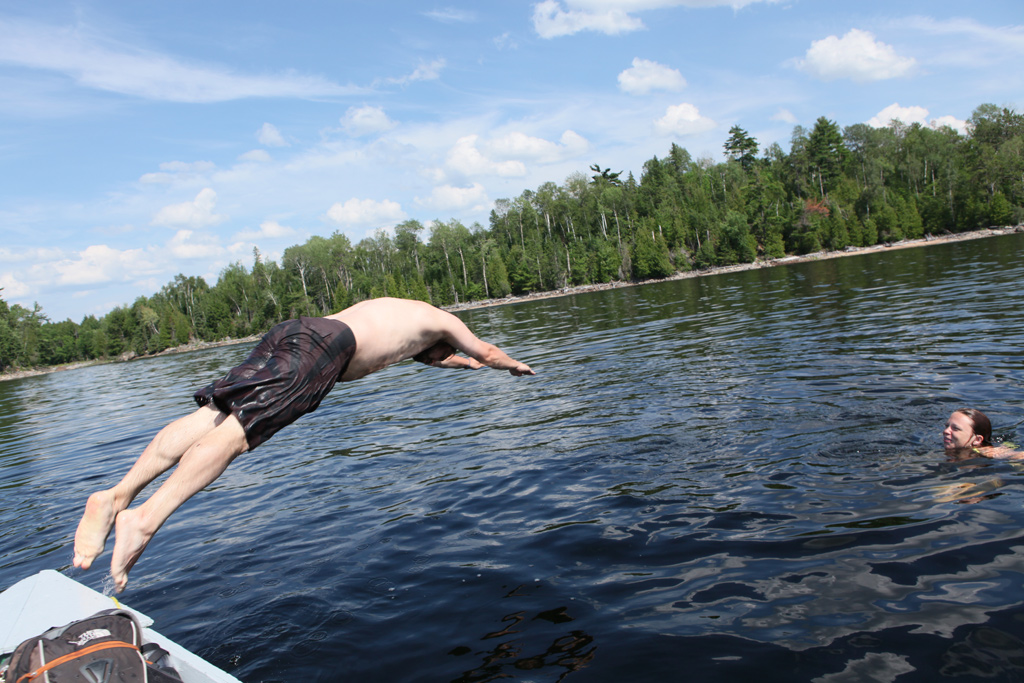
This weekend, I had the very good fortune to be invited to join a camping expedition to Parc Poisson Blanc, located in Quebec about ninety minutes from Ottawa. We bought food, drove up, rented boats, and took them to our superb campsite – a private locale with a beach, a forested area with ground ideal for walking and setting up tents, excellent views, and even a little lagoon featuring a black whirling swarm of baby catfish. The lake water was at an ideal temperature, and the company and food were both excellent.

I had the further good fortune that Saturday was a moonless night. Out in the wilderness, a dazzling array of stars could be seen, so many as to make it hard to identify familiar constellations. The Milky Way was clearly visible. Floating on my back in the water, looking up at the sky in the middle of the night was one of the most magical things I’ve done in recent memory. It felt like such an ancient undertaking, a connection to the whole history of humanity, the Earth, and the universe.

Though short, the trip produced such a change in my mode of thinking that returning to Ottawa felt like coming back to a familiar but semi-forgotten place. It will be odd to be back at work tomorrow, but I will certainly be showing up mentally refreshed.

Collarbone injured

Thanks to an unseen pothole on Somerset Street, I ended up spending the night in the hospital with a broken left collarbone.

At the moment, it is quite obviously and painfully out of alignment. It needs to be kept immobilized in a sling for six weeks. In a week, the doctors will take more x-rays to determine if surgery is needed. At the moment, things are pretty foggy from lack of sleep and painkillers.

I will stay totally immobile for the rest of today, then see how I feel tomorrow morning. If moving is as painful as today, I will likely stay home to give my bones a bit more time to reconnect uninterrupted.

[Update: 3 June 2010] I had a follow-up x-ray at the Ottawa General Hospital today. At this point, it looks like surgery will not be required. I have another follow-up on June 18th.

[Update: 7 June 2010] As of today, my shoulder is a lot less painful than over the last week. I can even tie shoes.

More on Vancouver bike lanes

My father is quoted in a recent Vancouver Sun article about bike lanes: Council considers more bike lanes downtown.

He points out how bike lanes make cyclists feel safer, encouraging the use of bikes in urban areas. He also highlights the two greatest dangers to cyclists: people opening car doors in front of them, and drivers making right hand turns into them. Both have come up here before.

In addition to physical protective measures, I think both educational and legal strategies should be pursued. Both of these types of collisions are caused by people not checking their blind spots for incoming cyclists. Driver training should put more emphasis on the importance of this. In addition, I would advocate making it the legal responsibility of someone making a turn or opening a door to check for cyclists. If they fail to do so and cause a collision, they should have to pay compensation to the cyclist and have a penalty applied to their driving license. In egregious cases, perhaps criminal charges should be pursued.

In any event, I very much hope Vancouver continues to make itself a more appealing city for cyclists, and that other cities follow the lead from places like Vancouver, Portland, or the Netherlands.

Back up genes from endangered species

Out in Svalbard there is a seed bank, buried in the permafrost. The idea is that it will serve as a refuge for plant species that may vanish elsewhere, perhaps because industrial monocrops (fields where only a single species is intentionally cultivated by industrial means) continue to expand as the key element of modern agriculture.

Perhaps there should be a scientific and conservational project to collect just the genes of some of the great many species our species is putting into peril: everything from primates to mycorrhizal fungi to marine bacteria. The data could be stored, and maybe put to use at some distant point where humanity at large decides that it is better to carefully revive species than to indifferently exterminate them.

For many creatures, the genes alone won’t really be enough, regardless of how good at cloning we become. An elephant or a chimp built up alone from cells would never really become and elephant or chimp as they exist today. Whether those alive now are socialized in a natural or an artificial environment, they will have had some context-sensitive socialization, which subsequently affected their mental life. It is plausible to say that elephants or chimps raised among their peers, living in the way they did thousands of years ago, will develop mentally in a manner that is profoundly different from elephants or chimps in captivity today, much less solitary cloned beings in the future. Those beings will be weird social misfit representatives of those species.

Still, it is better to have misfits than nothing at all. If there is anything human beings should really devote themselves to backing up with a cautious eye turned towards an uncertain future, it seems far more likely to be the genes of species our descendants may not be fortunate enough to know than the Hollywood movies that probably account for a significant proportion of all the world’s hard drives.

Ice roads and climate change

As climate change continues, the Arctic is warming more than any other part of the world. This year’s mild winter is having an effect on northern communities, by making ice roads they depend upon impassable. Now, a state of emergency has been declared:

Mild weather shut the roads down after just under a month, which cut off more than 30,000 people from the south. Normally, the 2,200 kilometres of temporary routes over frozen swamps, muskeg and lakes are open for up to eight weeks.

About 2,500 shipments of fuel, groceries, construction materials and general freight are brought in at a reasonable cost using winter roads. Otherwise, goods have to be flown in at great expense.

Of course, there has always been variation in the severity of winters, arising from the complexities of the climate system. What climate change does is shifts the distribution: making the mean winter warmer, and increasing the number of very unusually warm winters relative to very unusually cold ones.

The specific case of ice roads and Arctic communities also demonstrates a broader situation. Every community in the world has evolved into its current form based at least partly on the climate in which it exists. This includes everything from transportation and housing infrastructure to energy generation facilities and emergency response capacity. The more climate change takes place worldwide, the greater the mismatch will be between the climate communities were built for and the climate they actually experience.

After the Ice

Having already read a great deal about climate change and the Arctic, I expected Alun Anderson’s After the Ice: Life, Death, and Geopolitics in the New Arctic to provide only a moderate quantity of new information. I was quite surprised by just how much novel, relevant, and important content he was able to fit into the 263 pages. The book discusses the historical and current relations between governments and Arctic indigenous peoples; ice flow dynamics and exploration; the changing nature of Arctic ecosystems and species, along with information on what climate change may do to them; international law and the geopolitical implications of a melting Arctic; oil, gas, and other natural resources, and how their availability is likely and unlikely to change in coming decades; the rising tide of Arctic shipping, and the special safety and environmental considerations that accompany it; and the feedback effects that exist between a changing Arctic and a changing climate.

Ecosystems

Some of the best information on the book is about biology and Arctic ecosystems. It describes them from the level of microscopic photosynthetic organisms up to the level of the megafauna that gets so much attention. Anderson argues that most of the large marine mammals (seals, walruses, whales, etc) are threatened to some extent or another by the loss of sea ice. This is for several reasons. First, it could disrupt the lowest levels of the food web they rely upon. Second, it could permit the influx of invasive species that could out-compete, starve, or attack existing Arctic species. Third, the lifecycles of Arctic animals are slow and deliberate, and thus liable to disruption from faster-breeding competitors. Disappearing sea ice off Svalbard has already completely wiped out what was once “one of the best areas for ringed seal reproduction.” Arctic species, argues Anderson, will need to “move, adapt, or die.” Generalists like beluga whales have promise, while the narwhal and polar bear may be the most vulnerable large creature in the ecosystem.

One consequence of the loss of multi-year sea ice that I had not anticipated is the potential for a massive migration of species between the Pacific and Atlantic oceans, with invasive species potentially seriously altering the composition of ecosystems on both sides. Melting ice could therefore produce major changes in much of the world’s ocean. Even before that, expanded range for orcas could have a significant effect on life in northern waters. Where ice used to provide safety, by obstructing their pectoral fins, these powerful predators increasingly have free reign.

Resources, shipping, and tourism

Anderson makes an effective argument that most of the oil, gas, and resources in the Arctic will be effectively locked away for some time yet. There will always be ice in the winters, glacial ice calving off Greenland and other Arctic islands poses a significant risk due to its extreme hardness, and very high commodity prices are necessary to justify the risk and capital investment required to operate in the region. (See this post on the the Shtokman gas field.) He expects that, even if there is a boom, it will be short-lived and of limited benefit to those living in the region. In particular, he cautions people living in the north not to abandon traditional ways of life sustained by things other than oil and gas. Living for a couple of rich decades and then being left with nothing would be a tragic outcome.

The book also downplays fears about a scramble for resources and sovereign control. Anderson argues that the United Nations Convention on the Law of the Sea (UNCLOS) already provides a clear legal framework and that negotiated outcomes are probable. That should provide some comfort to those concerned about diplomatic or even armed conflicts in the changing north. One danger Anderson does highlight is how the risk of collision with ice, increasing shipping and tourist traffic, and the absence of emergency response capabilities could combine. He describes plausible scenarios where major oil spills or massive loss of life could result, due to a problem with a tanker or a cruise ship (disproportionately full of elderly people susceptible to cold, as they are).

While Anderson does an excellent job of explaining some of the risks to species and human beings from a changing Arctic, he doesn’t take seriously the possibility of truly radical or catastrophic change, of the kind highlighted as possible by James Hansen. Anderson also completely fails to describe how the incremental emissions from burning oil and gas in the Arctic would inevitably increase the degree of climate change experienced by humans and natural systems. It is cumulative emissions that matter most, and extracting hydrocarbons from the far north can only increase those.

For anyone with an interest in what is happening to the Arctic and what the medium- and long-term implications of that might be, this book is enthusiastically recommended.

Vancouver’s last Olympics?

Richard Brenne has written an interesting post on why climate change means 2010 was probably Vancouver’s last opportunity to host the winter Olympics:

Global warming is the reason Vancouver will never host another Winter Olympics. They barely dodged (biathlon) bullets at dozens of events, and the Olympic Committee would rather use Donald Trump’s hair as the Olympic flame than go through this again. Climate change is all about likelihoods of things like the record warmth Vancouver has had increasing, and the Olympic Committee rolled Jim Hansen’s dice and came up snake eyes.

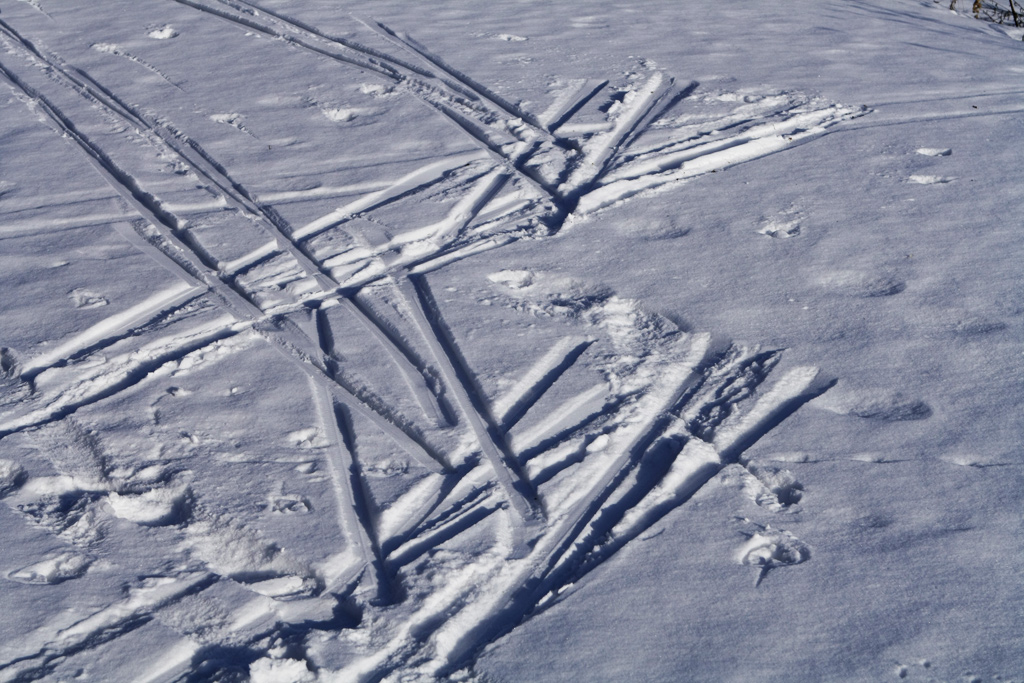
He goes on to describe the extreme efforts taken to improve snow conditions, as well as the unusual circumstances in which events were conducted: from snowboard events on slushy runs to Nordic skiers racing in unprecedented temperatures.

The whole thing is worth reading.

Put crosswalks between intersections

The other day, I was crossing the street in the middle of the block, listening to a small voice of conscience chiding me for the ‘dangerous’ act. Then I realized that I had actually chosen to walk partway up the block, rather than using the crosswalk, and that my primary reason for doing so was my own safety.

Intersections try to combine two purposes that mesh poorly: allowing pedestrians to cross roads and allowing drivers and cyclists to make turns. It is obvious that these two goals conflict. People crossing the street don’t want vehicles passing through their area of travel – especially vehicles that move in unexpected directions and at unpredictable speeds. Cars making left-hand and right-hand turns tend to do both.

Perhaps it makes sense to divide these two purposes, then. Put stoplights in the middle of blocks and let pedestrians cross there, leaving intersections exclusively for turning. It might slow down the flow of traffic a bit, but I am actually in favour of moves to make driving less convenient in cities. It would make life safer for pedestrians, by making the crosswalk unambiguously their space when the light is in their favour, and the slowdowns caused by the potential lights would be partially made up for by freeing drivers from having to worry about pedestrians when making turns.

Sure, it would be better to reserve city centres entirely for people on foot, bicycles, and public transit vehicles. This plan is less radical, won’t generate the same outrage from big box stores, and may well save some lives.

Degrees of frost

For practicality, you can’t beat the Celsius temperature scale. Were it not for the stubbornness of Americans, the weird Fahrenheit alternative (initially established with ice, brine, and an armpit) would be long-gone. For scientists, the Kelvin scale lets you represent temperature appropriately for thermodynamic calculations, and helpfully retains the same unit size as Celsius.

I would have thought the case would be closed there, but Bill Streever’s book made me aware of a more romantic-sounding alternative: degrees of frost. This temperature measure – a favourite of penguin-egg-gatherer and Antarctic explorer Apsley Cherry-Garrard – measures how many degrees it is below the freezing temperature of water.

Naturally, I prefer the Celsius version, though it sounds a bit less dramatic. Right now, it is a completely tolerable -4˚C in Ottawa. That’s just four degrees of frost – nothing to compared to the 60.8 degrees of frost experienced by Cherry-Garrard. The worst I’ve seen in Ottawa is about thirty degrees of frost, during my first frozen winter in Ottawa. Wind chill, incidentally, is not really a very scientific thing.

Johnny Appleseed and our present predicament

The first version of the song ‘Johnny Appleseed‘ I learned was the secularized version, in which Appleseed thanks ‘the Earth’ for giving him the things he needs: “the sun, and the rain, and the appleseed.” He concludes that “the Earth is good to [him].”

Later, I learned that this is a stripped-down version of a Christian song about ‘the Lord’ being good to Appleseed. I can understand why this song wasn’t sung at the province-run Outdoor School I briefly visited, but I have to say in retrospect that it makes more sense. It is at least internally coherent to thank a conscious, benevolent entity for giving you things you need. By contrast, it makes very little sense to thank ‘the Earth’ for anything. The Earth is a 5.97 x 10^24 kg ball of iron that has existed for about 4.54 billion years. For most of its history, it would not have been at all hospitable to Appleseed, or any other human.

Indeed, for most of its remaining history, Earth is likely to be terribly hostile to human beings. The carbon cycle may cease, when erosion overcomes volcanoes, killing everything. The sun may become a red giant, burning away the oceans and atmosphere. Much sooner than either of those, human beings may kick off a runaway greenhouse effect, killing ourselves and maybe even all life.

That is the rub. In this day and age, we shouldn’t be thanking the uncaring Earth for bounty. We should be thanking other human beings for not quite killing us yet, often despite their best efforts to destabilize the climate, kill off species, and poison the air and water. The dangerous implication of the thin-soup version of Johnny Appleseed is that the planet itself somehow determines whether or not any particular person gets the things they need. This is demonstrably less and less true.

In conclusion, it is increasingly pointless to thank or condemn any abstract entity for what happens to people. To an ever-greater extent, what happens to people depends on what those people and other people decide to do. As a result, libertarianism is dead, and we really need to learn how to live together.