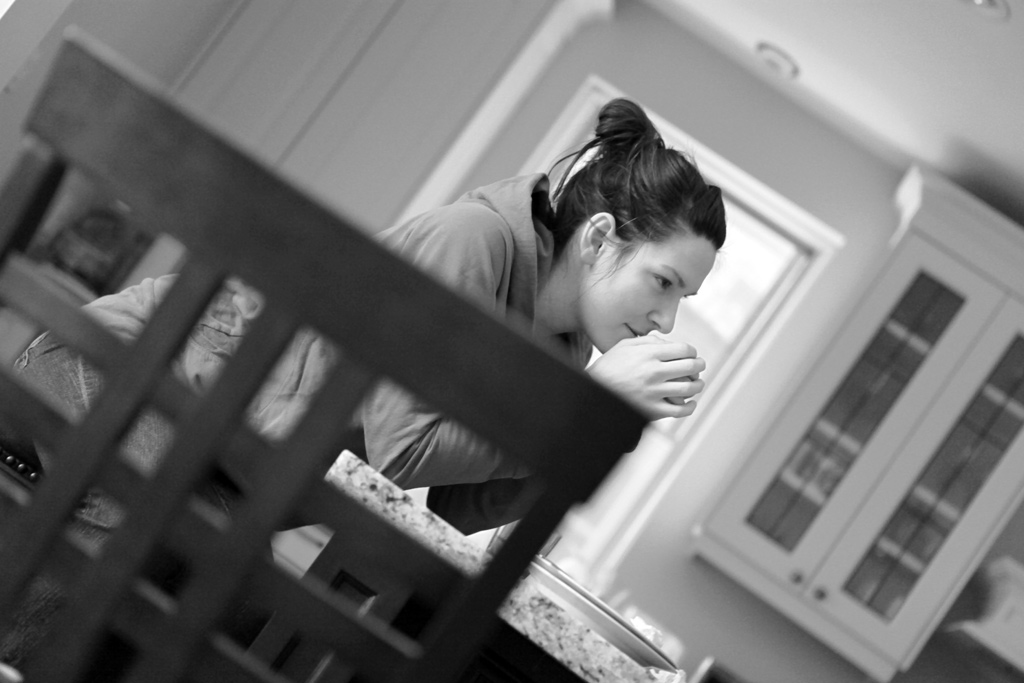
2010 happenings

Some of my more notable 2010 undertakings and experiences:

  • The end of the Low Carbon Cross Country Trip
  • Two new jobs
  • The transition from beardedness to beardlessness
  • Time with Emily
  • More than 12,000 photos taken
  • Photojournalism and documentary photography course taken
  • Several Montreal and Toronto visits (one wedding included)
  • Collarbone breaking and partial healing
  • Improved health
  • BuryCoal launched
  • Visits from some friends not frequently seen
  • A solid number of books read
  • Several concerts attended
  • Camping with Rosa
  • New York with Kai
  • Multiple Vermont visits, Christmas included
  • Blogging out loud
  • Dozens of cans of kidney beans eaten
  • Many kilometres by Greyhound
  • A departure from my current home, nearly completed

The priority for 2011? Find a job in Toronto and move there.

Ottawa Biking Problems

Ottawa Biking Problems is a website that lets people report dangerous or inconvenient cycling facilities in Ottawa. The site includes a summary of some of the worst problems in town.

All told, this seems like quite a good idea. It allows information to be aggregated in a useful way, which could help the city to fix the most serious problems first.

Some cycling safety issues have been discussed on this site before.

Northern lights webcam

The Canadian Space Agency has set up a website that allows the live viewing of the northern lights from Yellowknife, in the Northwest Territories. You can watch live during the appropriate hours, as well as watch the previous night’s video in time lapse and selected videos from especially active nights.

The videos are pretty small and not super high resolution. The ‘AuroraMAX’ site would probably benefit from the addition of some large still photos. The sun’s 11-year cycle of activity is expected to peak in 2013, and the site has a mandate to carry on until then. The site doesn’t say what kind of equipment is being used, but it seems to be a fisheye lens on either a video camera or dSLR.

Parc Poisson Blanc photos

Here are some more photos from the Parc Poisson Blanc camping trip:

Ice cream was a feature of both the drive up and the drive back.

Glancing right

Given that it took about an hour to get from the boat launch to our campsite, opting to go with one journey with two boats, rather than the converse, was a wise choice.

Reclining with guitar

My jumping co-campers

Much to everybody’s amusement, I took out my collapsible reflector to try and balance out the shadows on faces from the sunset. I think it worked rather well as a form of wilderness light modification.

My friend Rosa composed and shot this portrait.

While daylight brought a string of motorboats, the night was very calm and private.

Because of how far we were from civilization, and the absence of the moon, the Milky Way was clearly visible all night.

Dawn

Our boat was piloted by a man whose composure while operating motorized vehicles was on par with his trip masterminding skills.

He can also be used as a very temporary bridge across narrow stretches of water.

Parc Poisson Blanc

This weekend, I had the very good fortune to be invited to join a camping expedition to Parc Poisson Blanc, located in Quebec about ninety minutes from Ottawa. We bought food, drove up, rented boats, and took them to our superb campsite – a private locale with a beach, a forested area with ground ideal for walking and setting up tents, excellent views, and even a little lagoon featuring a black whirling swarm of baby catfish. The lake water was at an ideal temperature, and the company and food were both excellent.

I had the further good fortune that Saturday was a moonless night. Out in the wilderness, a dazzling array of stars could be seen, so many as to make it hard to identify familiar constellations. The Milky Way was clearly visible. Floating on my back in the water, looking up at the sky in the middle of the night was one of the most magical things I’ve done in recent memory. It felt like such an ancient undertaking, a connection to the whole history of humanity, the Earth, and the universe.

Though short, the trip produced such a change in my mode of thinking that returning to Ottawa felt like coming back to a familiar but semi-forgotten place. It will be odd to be back at work tomorrow, but I will certainly be showing up mentally refreshed.

Collarbone injured

Thanks to an unseen pothole on Somerset Street, I ended up spending the night in the hospital with a broken left collarbone.

At the moment, it is quite obviously and painfully out of alignment. It needs to be kept immobilized in a sling for six weeks. In a week, the doctors will take more x-rays to determine if surgery is needed. At the moment, things are pretty foggy from lack of sleep and painkillers.

I will stay totally immobile for the rest of today, then see how I feel tomorrow morning. If moving is as painful as today, I will likely stay home to give my bones a bit more time to reconnect uninterrupted.

[Update: 3 June 2010] I had a follow-up x-ray at the Ottawa General Hospital today. At this point, it looks like surgery will not be required. I have another follow-up on June 18th.

[Update: 7 June 2010] As of today, my shoulder is a lot less painful than over the last week. I can even tie shoes.

More on Vancouver bike lanes

My father is quoted in a recent Vancouver Sun article about bike lanes: Council considers more bike lanes downtown.

He points out how bike lanes make cyclists feel safer, encouraging the use of bikes in urban areas. He also highlights the two greatest dangers to cyclists: people opening car doors in front of them, and drivers making right hand turns into them. Both have come up here before.

In addition to physical protective measures, I think both educational and legal strategies should be pursued. Both of these types of collisions are caused by people not checking their blind spots for incoming cyclists. Driver training should put more emphasis on the importance of this. In addition, I would advocate making it the legal responsibility of someone making a turn or opening a door to check for cyclists. If they fail to do so and cause a collision, they should have to pay compensation to the cyclist and have a penalty applied to their driving license. In egregious cases, perhaps criminal charges should be pursued.

In any event, I very much hope Vancouver continues to make itself a more appealing city for cyclists, and that other cities follow the lead from places like Vancouver, Portland, or the Netherlands.

Back up genes from endangered species

Out in Svalbard there is a seed bank, buried in the permafrost. The idea is that it will serve as a refuge for plant species that may vanish elsewhere, perhaps because industrial monocrops (fields where only a single species is intentionally cultivated by industrial means) continue to expand as the key element of modern agriculture.

Perhaps there should be a scientific and conservational project to collect just the genes of some of the great many species our species is putting into peril: everything from primates to mycorrhizal fungi to marine bacteria. The data could be stored, and maybe put to use at some distant point where humanity at large decides that it is better to carefully revive species than to indifferently exterminate them.

For many creatures, the genes alone won’t really be enough, regardless of how good at cloning we become. An elephant or a chimp built up alone from cells would never really become and elephant or chimp as they exist today. Whether those alive now are socialized in a natural or an artificial environment, they will have had some context-sensitive socialization, which subsequently affected their mental life. It is plausible to say that elephants or chimps raised among their peers, living in the way they did thousands of years ago, will develop mentally in a manner that is profoundly different from elephants or chimps in captivity today, much less solitary cloned beings in the future. Those beings will be weird social misfit representatives of those species.

Still, it is better to have misfits than nothing at all. If there is anything human beings should really devote themselves to backing up with a cautious eye turned towards an uncertain future, it seems far more likely to be the genes of species our descendants may not be fortunate enough to know than the Hollywood movies that probably account for a significant proportion of all the world’s hard drives.