Cycle friendly London

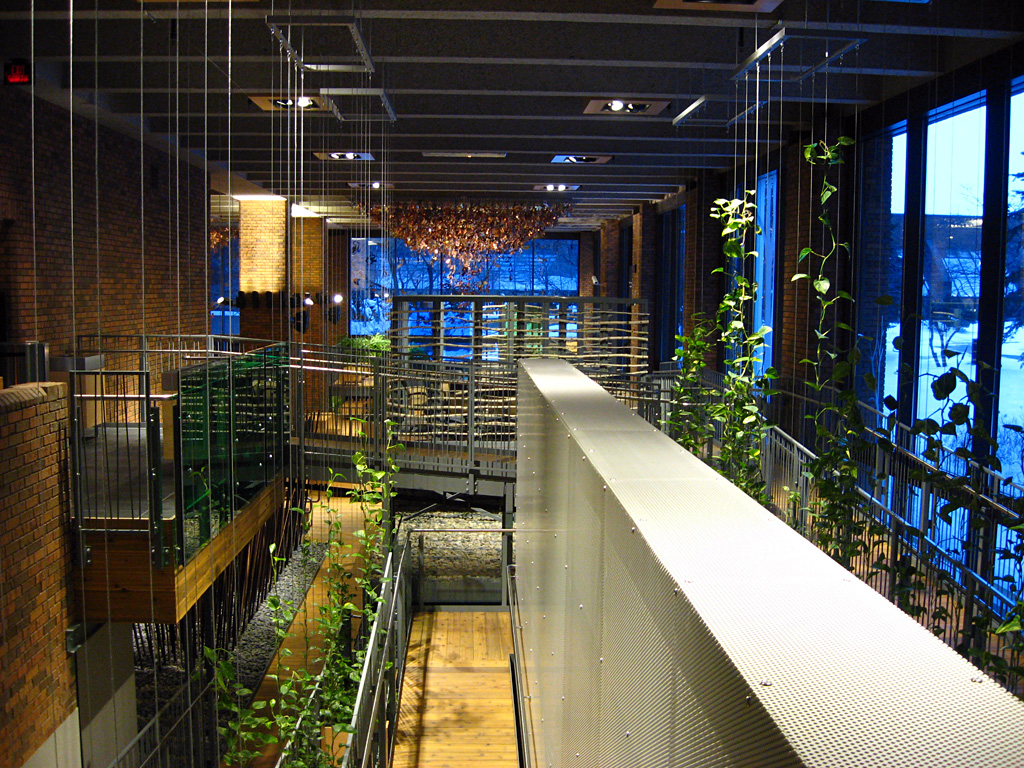
Open space in the TLC complex, Gatineau

Once again, London is demonstrating leadership in making progressive urban choices in response to climate change. The city is going to spend £500m on making London more cycle friendly: an initiative that will include 6,000 rental bikes, 12 car-free cycle corridors through the city, and an increased number of pedestrian only streets.

The bike rental scheme is modelled after a successful Parisian initiative, which was in turn inspired by successful community bicycle programs in the Netherlands. The bikes can be collected and deposited from special stalls that will be set up every 300m. The rates to be charged in London don’t seem to be available yet, but those in Paris are very reasonable: free for under 30 minutes, one Euro for an hour, and increasing progressively beyond that. The idea is to stimulate their use in making human-powered trips easier, not letting people use a bike for half a day. The Dutch seem to be the world leaders when it comes to public support for cycling, with 40% of Amsterdam traffic consisting of bikes and a 10,000 bike parking garage under construction at the main train station. Copenhagen, Tel Aviv, Barcelona, Brussels, Stockholm, Berlin, Frankfurt, Munich, Helsinki, and Vienna all have community cycling schemes of some sort.

Cities that are blessed with snow and ice-free roads year round (*cough* Vancouver *cough*) might want to think about something similar. You can’t built many kilometres of highway or subway line for £500m, but you can probably do quite a lot to promote a health-positive, community-centric, and virtually emissions-free transportation option.

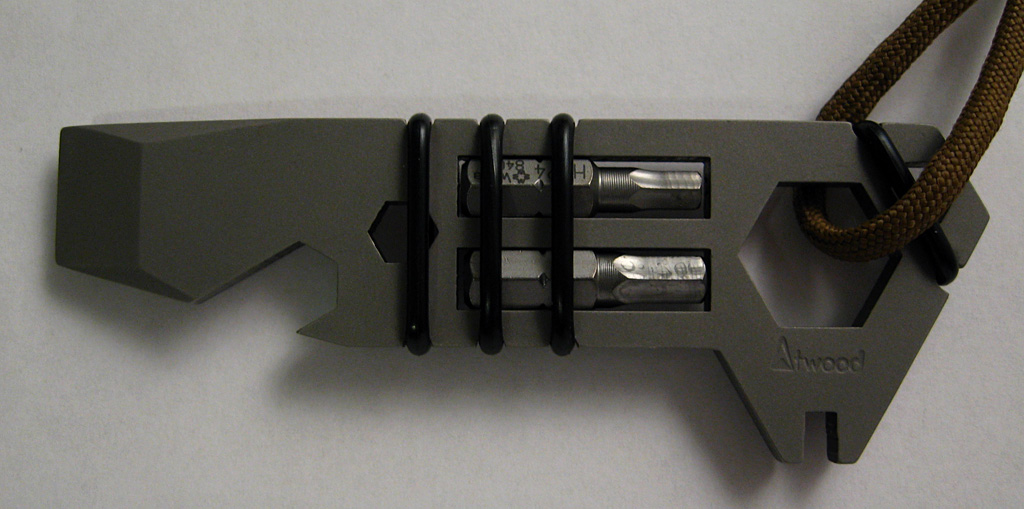
Atwood bike tool

Atwood bike tool

The other week, I bit the bullet and ordered one of Peter Atwood‘s excellent handmade tools. In anticipation of the summer, I ordered his bike tool. It’s about three inches long and made from Crucible‘s CPM3V cutlery steel, with a bead blasted finish. It includes 4mm and 5mm hex bits and a 15mm axle wrench, as well as a prybar. I have long admired Atwood’s work as quite beautiful but, prior to seeing the bike tool, never saw something well suited enough to something I do to justify the expense.

The appeal of the tool lies largely in the mode of manufacture. Virtually everything I have ever owned has been mass produced: clothes, electronics, furniture, tools, etc. Having something that was individually forged by a human being is fairly rare. All the logic of economics resists a production process wherein a single being completes everything from design through manufacturing to product testing, and yet it is strangely satisfying to possess something that arose from such an effort. It is that knowledge, and the value derived from it, that justifies paying a relatively high price for such an object.

All in all, this is one more reason I can’t wait for the roads to clear, allowing me to bring my bike up from the basement.

Earth Flotilla

Oleh Ilnyckyj

The 1997 and 1998 LIFEboat Flotillas were exceptional undertakings that I was privileged to participate in. Organized by Leadership Initiative for Earth, each centred around a week-long sailing experience in the Gulf Islands of British Columbia, intended to help make young people more aware of environmental issues and better connected with those similarly interested.

In March of this year, a smaller but similar expedition is taking place, organized by the World Wildlife Fund, in cooperation with some of the people involved in the original flotillas. Applicants must be residents of British Columbia between 13 and 17. They must be interested in environmental issues and willing to put in the time required.

As someone lucky enough to do something similar in the past, I recommend the opportunity wholeheartedly. If any readers of this blog match the description – or know people who do – application information is online.

[Update: 11 February 2008] I am pleased to report that Tristan’s brother will be participating in the Earth Flotilla, and because his family found out about it from this site, no less.

Cycling in the freezer

Every time I descend into my unheated basement to do laundry, I note the presence of my shiny hybrid bike over in the corner. Partly on the basis of a tumble early in the season, I have generally been of the opinion that winter cycling in Ottawa is simply too treacherous. Even on bright sunny days, cycling through Centretown is a big pain, likely to involve dangerous confrontations with drivers largely unaware of cyclists near them. In the winter, when bike paths go unplowed and unused, such interactions would necessarily be more frequent, as well as more perilous.

That said, there are some who brave the elements and endure as cycle commuters throughout the bitter winter. While I doubt I will ever acquire their level of commitment, I would consider getting studded tyres and other winter gear if it seemed highly likely that I was going to spend more than a few winters in these conditions.

The Omnivore’s Dilemma

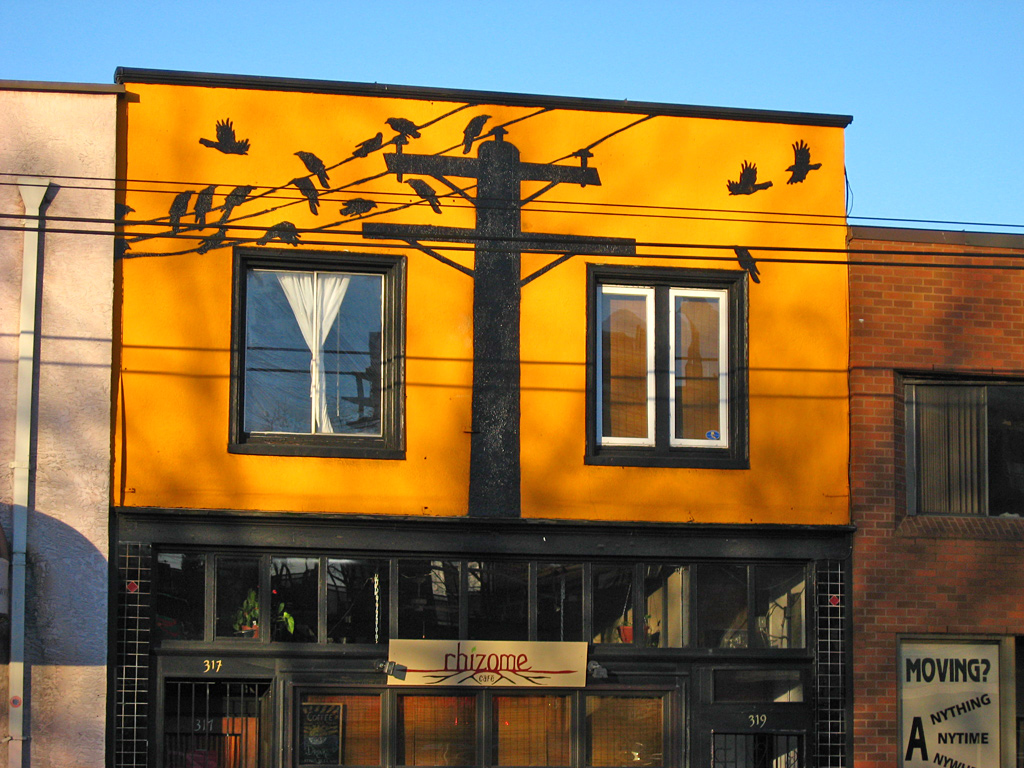
Shops in Vancouver

Michael Pollan‘s superb book tells the stories of four meals and the processes through which they came to exist. At one extreme is a meal of McDonald’s cheeseburgers, eaten in a moving car; at the other, a cooked wild boar he hunted, accompanied by things grown or gathered. Pollan also considers two types of pastoral food systems: one on a mass scale intended to serve the consumer market for organic foods and a truly pastoral farm centred around grass feeding, healthy animal interactions, and sustainability. His descriptions of the four, and comparisons between them, provide lots of interesting new information, and fodder for political and ethical consideration.

Among these, the industrial food chain and the grass-fed pastoral are the most interesting. Each is a demonstration of human ingenuity, with the former representing the sheer efficiency that can be achieved through aggressive specialization and disregard for animal welfare and environmental effects and the latter demonstrating how people, animals, and plants can interact in a much more ethical and sustainable way, albeit only on a relatively small scale. The account of Polyface Farm – the small-scale pastoral operation run by Joel Salatin – is genuinely touching at times, as well as startling in contrast to the industrial cattle feeding and killing operations Pollan describes. While the book heaps praise on the operation, it also recognizes the limitations inherent: we cannot live in cities like New York and get our food from such establishments, nor can the big stores most people shop at manage to deal with thousands of such small suppliers. Unless you are willing to go back to a pre-urban phase for humanity, the industrial organic chain may be the best that is possible.

Pollan’s book is packed with fascinating information on everything from the chemistry of producing processed foods from corn to some unusual theories he learned from mushroom gatherers. Regardless of your present position on food, reading it will make you better informed and leave you with a lot to contemplate.

Arguably, the book is at its weakest when it comes to ethics. Pollan rightly heaps criticism on factory farms, but seems to pre-judge the overall rightness of eating meat. Some of his arguments against vegetarianism and veganism – such as that more animals are killed in fields growing vegetables than in slaughterhouses – are simply silly. No sensible system of ethics considers it equivalent to kill a grasshopper and to kill a pig. I also think that he places too much emphasis on the relevance of whether an animal anticipates death or not. I don’t see how the inability of animals to “see is coming” makes their deaths qualitatively different from those of human beings.

That said, his arguments are generally coherent and certainly bear consideration. He never explicitly spells out the wrongness of eating industrial meat, though it is clear that his implicit argument is based around the conditions under which the animals live, rather than the fact of killing them. This is a sensible position and he is right to contrast Polyface farm with industrial farms on the basis of how they allow or do not allow animals to express their “characteristic forms of life.” Rather than press his argument to a conclusion, he abandons his consideration in a bout of fantasy: talking about how much better the treatment and slaughter of animals would be if farms and slaughterhouses had glass walls.

I highly recommend this book to almost everyone. Modern life is very effective at concealing the nature and origin of what we are eating. This book helps to pull back the veil to some extent. It is also a reflection of the ever-increasing politicization of food. What you choose to eat is an important signal of your ethical and political views, to be judged accordingly by others. Whatever position you end up taking, it will be better informed and illustrated if you take the time to consider Pollan’s thoughts and experiences.

For my part, the book has convinced me that I should strictly limit or abandon the consumption of eggs. His description of egg operations is especially chilling and supports his assertion that: “What you see when you look is the cruelty – and the blindness to cruelty – required to produce eggs that can be sold for seventy-nine cents a dozen.” Other resolutions stemming from reading this book include to try eating more types of mushrooms, improve my cooking generally, and remember that under no circumstances should one accept an invitation to collect abalone in California.

Up Grouse again

Today marked the second time in three days when I have made the snowy trek up Grouse Mountain with my father. Today’s venture benefitted from three excellent additions: the presence of my friend Jonathan and post-hike beer and nachos. Vancouverites are lucky to have the option of spending an hour rapidly gaining altitude by hand and foot, only to walk into a nice restaurant and begin feasting on a considerable heap of cheese-chip-vegetable synergy.

Residents of Vancouver should consider making the climb during the next few days. You need to walk past the signs advertising that the trail is closed and then eastward around the fence. I wouldn’t recommend doing it alone or after dark, but it is quite safe and very beautiful in the snow.

Rainy ascent

Today, I did two things that are impossible in Ottawa in December: climbed a 1200m mountain and got rained on quite a bit. These activities are to be followed up by Chinese food and a Commercial Drive party. When one gets immersed in Vancouver, one must try to become thoroughly marinated before departing.

Newly insulated

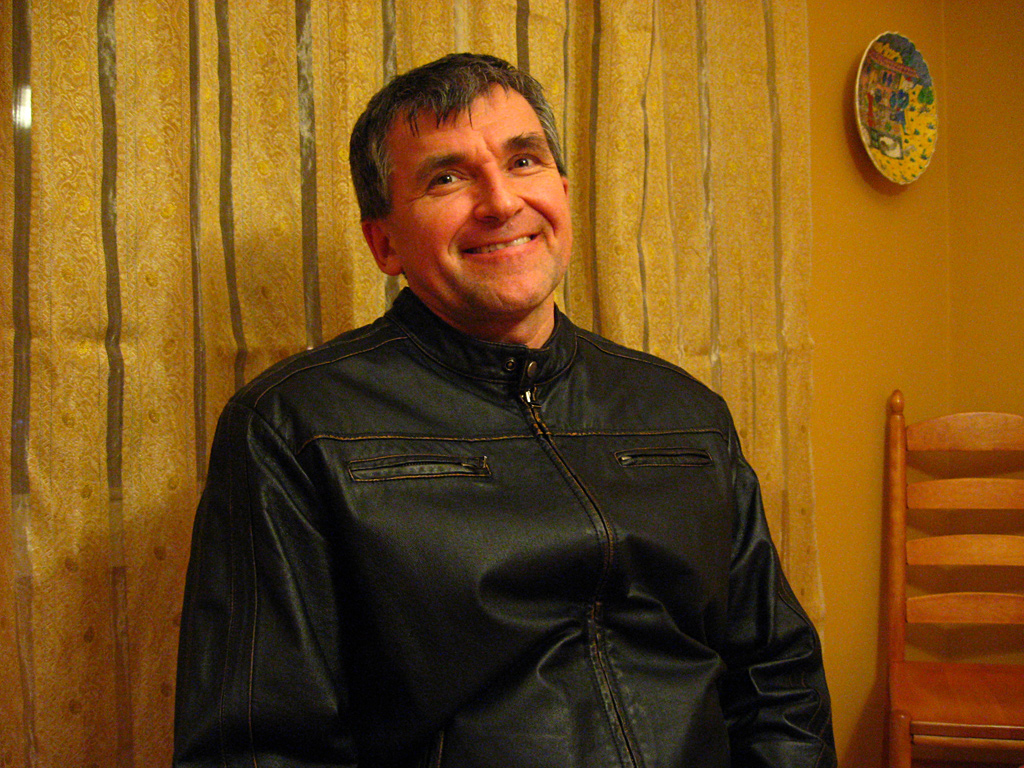
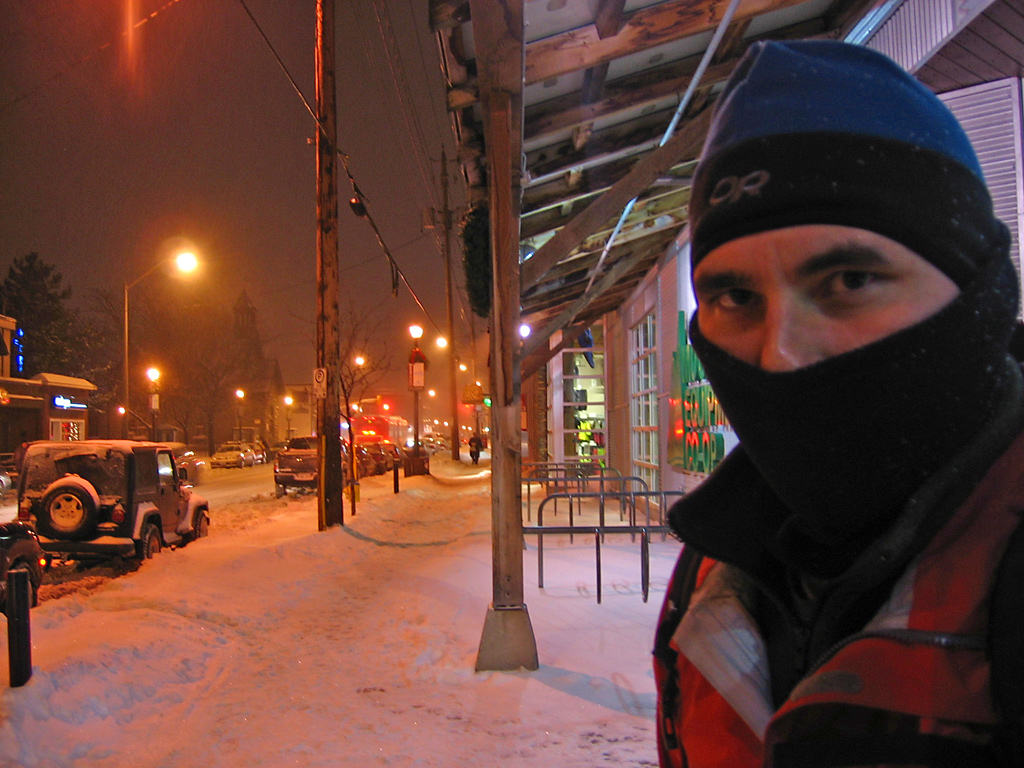
Milan Ilnyckyj looking scary

Through a trek to the Ottawa Mountain Equipment Co-Op and the application of three days’ pay, my respectable collection of wet weather gear has had quite a few degrees of cold capability added into it.

I got some good insulated Gore-Tex gloves (they make me feel less like a mutant than mitts do); I also got a merino wool base layer, a windproof toque to supplement the more attractive one Sarah made me, a fleece neck warmer thing that makes me look like a goon when worn with the toque, a little thermometer, and a couple of miscellaneous knick-knacks, shoe de-stinking agent, and a travel towel (for future trips to nearby cities).

Naturally, the only response to getting new gear is to go experiment with it. One’s first inclination with new gear is to discover its capacities and limits. In its way, the new stuff is like the bicycle was: an enabler of motion, and a gateway to increased capability within the city as it stands.

P.S. I hate plural possessives.

Ottawa is a frozen wasteland

As much as I enjoyed Ashley’s party tonight, the walk home afterwards has left me convinced that humans should not live in this place. After about forty minutes out there, well insulated, my whole body is in pain. My breath is frozen to my face in painful sheets of ice, and I have had an agonizing cold-induced headache since getting halfway home.

I want to live somewhere saner.

Winter begins

Six days ago, I got a light dusting.

Yesterday, I walked to work through sludge and tore my best trousers on a fence while trying to avoid a massive slush puddle that cars were using to drench me.

Today, there is proper snowfall outside – at a level where West Coast schoolchildren could be forgiven for expecting school to be cancelled. The prospect of month after month of weather like this makes me nervous. It also makes it increasingly clear that I am going to need to make another capital outlay for winter gear. I thought I was done spending money on the very expensive move from Oxford to Ottawa once I managed to get furniture and curtains for my flat. Not so.

Just 29 days until I escape (briefly) to the relative paradise of Vancouver.