Perseid shower peaks tonight

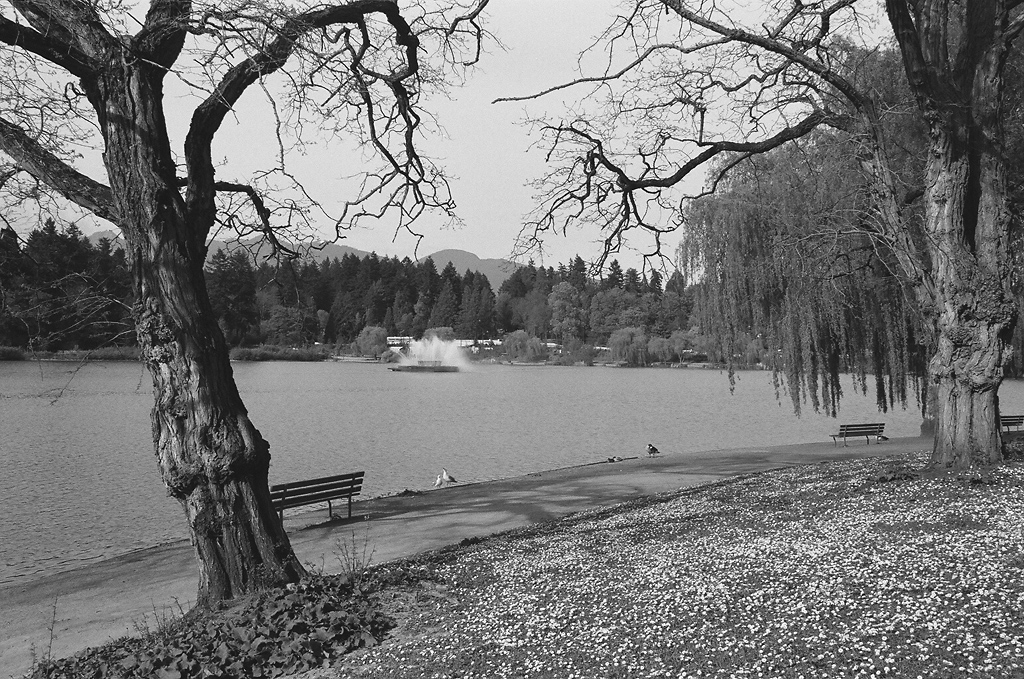
Lost Lagoon, Vancouver

Taken during a walk with Astrid in late April 2005, this photo shows Lost Lagoon in Vancouver’s Stanley Park. Nearby, to the southeast, is Vancouver’s central urban district. Equally close, to the north and through the park, is the southern end of the Lions Gate Bridge to North Vancouver.

In an announcement particularly relevant to those who live outside of big cities, the Perseid meteor shower will reach its peak of intensity tonight. Generated from dust and fragments from comet Swift-Turtle, the Perseid shower occurs annually. The comet in question was discovered in 1862 and is notable for being the largest object that regularly approaches the earth.

The best time to see the shower is in the hours immediately before dawn, but there should be more than eighty meteors per hour visible to the naked eye for most of the night, for those in reasonably dark places. Because of the way in which the planet rotates, the rate at which the meteors appear is about twice as high right before dawn as it is shortly after sunset. This is because, at that time, the particular part of the planet’s surface where you are is both hidden from the sun and facing in the direction of its the planet’s around the sun. Because of that combination, the most visible collisions with material from the comet will occur.

The shower is called the Perseids because the meteors appear to be coming from the constellation Perseus. Those who are going out to watch may find it worthwhile to familiarize themselves with how the constellation looks and where in the sky it appears.

If anyone has a particularly dramatic experience, I would be glad to hear about it here. I continue to look up with dismay at the thick rain clouds over Oxford.

[Update: 13 August 2006] On account of the constant presence of rain clouds blocking the sky and reflecting back city light, I saw not a single meteor. I hope others did better.

A $500 bet

Let it be noted that the following bet has been placed, for a value of 500 Canadian dollars, at their present value:

I say that in August of 2036, the per-watt price of electricity consumed by the average Canadian consumer will be lower in real terms (accounting for inflation) than it is today. My friend Tristan Laing thinks the cost will be the same or higher. The price in question will be that quoted on the average Canadian’s electricity bill.

He has posted the same declaration on his blog.

[Update: 12 August 2006] I agree with a commenter that the cost per kilowatt-hour will be the easiest metric according to which this wager can be settled. To give a very approximate contemporary value, the cost to consumers for each kilowatt-hour of electricity used in Ontario today is about 5.8 cents. I will come up with a Canadian average soon.

Scotland summary

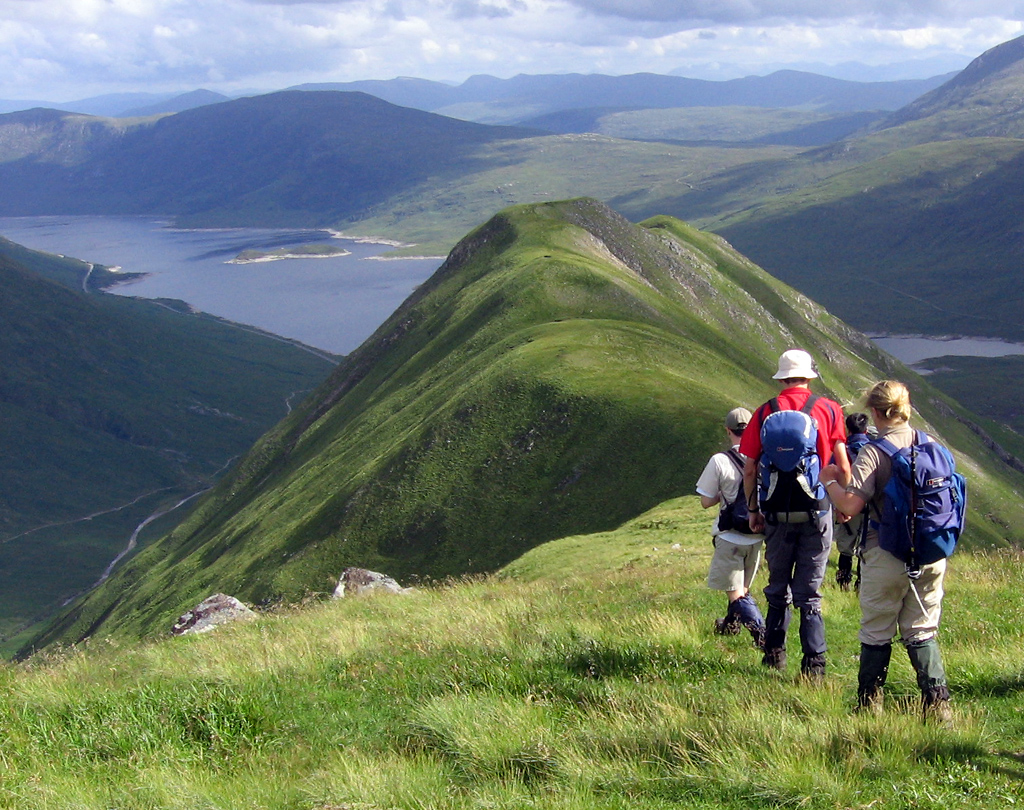
Climbing towards a loch

The thirteen hour drives to and from Scotland were mostly evidence that I have developed the capacity to sleep my way through long journeys, with occasional periods for socializing and working out where we are. As such, it wasn’t really until we were camping outside Shiel Bridge and doing our first hike that I got to know the other members of our group. The most notable thing about the drive is perhaps the pub where we stopped for dinner. I had vegetarian haggis (quite good) as well as a pint of kelp ale. Most other people had the normal haggis, though some opted for the surprisingly generous portions of fish and chips that seem to be standard in Scotland.

As I said before, a majority of the trip members were physical scientists. One leader was a biochemist, one was studying quantum chromodynamics (a field that has to do with quarks and the strong nuclear force), and one is presently working in medical imaging, but is leaving in five weeks to go to opera school – quite a significant change of tack. Among the nine of us, there was only one undergraduate, which was probably on account of the trip happening during the summer. The two people on the trip with whom I spoke most were Kathleen – a South African student of political theory, doing work on transitional justice – and Mark – an engineer working with autonomous robots. I am also grateful to Bruno, one of the leaders, for his excellent advice on how to partially fix my extremely sore legs after our grueling first day.

The Five Sisters of Kintail

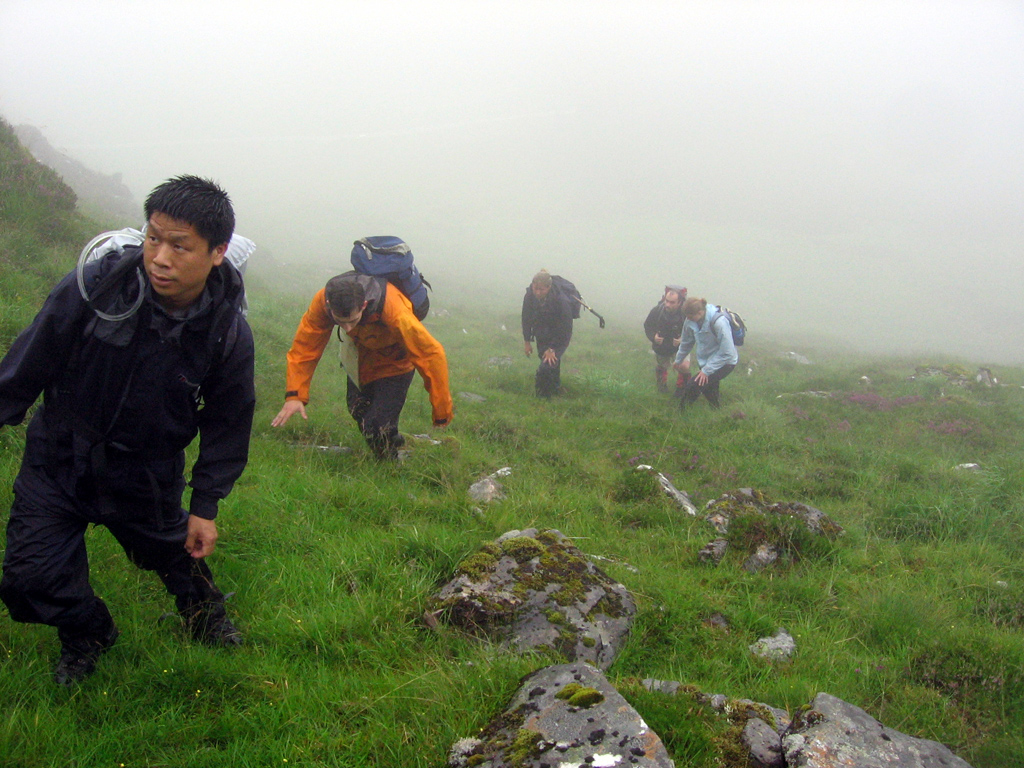
That first day began with the ascent of a ridge in the rain. Unfortunately, my Gore-Tex jacket is not performing as it did in the days of its youth (at least eight years ago) and it was pretty comprehensively soaked through by the time we reached the misty top. That said, with all the exertion, the water was not particularly unwelcome.

The five sisters consist of five peaks, three of which are Munros. Scotland includes 538 summits over 3000 feet, of which 283 were regarded as “separate mountains.” Those are the Munros, with certain requirements of disconnectedness from other nearby mountains. That ensures that climbing a Munro is always a fairly involved task – though Sir Hugh Munro climbed all the ones identified when he was alive, bar a single peak that isn’t climbable without fairly advanced rock climbing skills.

Every mountain we climbed (barring the small 350m hill on our day of recuperation from Friday) had a cairn of stones piled on top. The hillsides are all strewn with a kind of rock that is unfamiliar to me, and which tends to erode in geometrically distinctive ways, such as into blades and slabs. That, combined with the lack of any trees at high altitudes, contributes to the way in which the Highland mountains are both familiar and unfamiliar to someone used to the Rockies and the Coast Mountains.

Walking along the ridgeline – ascending and descending – we climbed all five peaks in sequence. Astonishingly, Roman (a mathematician on the trip) and Andrew (the chemist leader) ran the final portion so as to be able to recover the minibus from the starting point. The rest of us were happy to take a bit more time to rest and take photos.

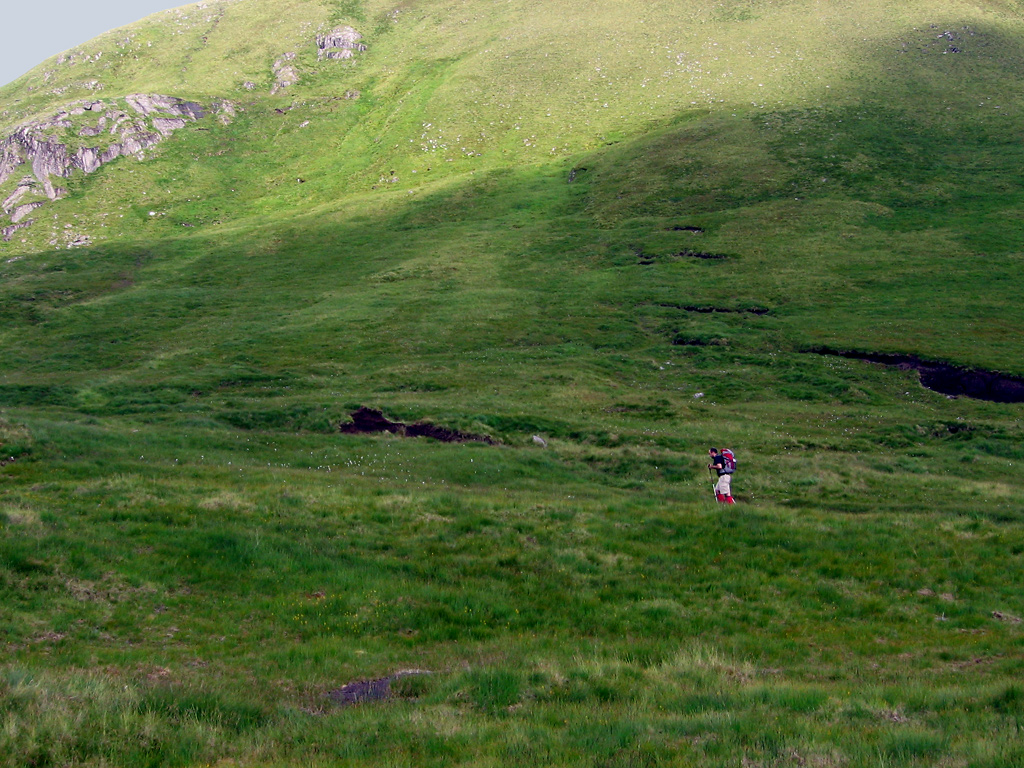
After descending from the fifth peak, we found ourselves first in properly pathless terrain. Because of the aforementioned lack of trees, there really aren’t many paths in the Highlands. There are just passable areas and less passable areas. First a steep and vegetation covered hill, then a bog proved closer to the latter.

That evening, and at all times thereafter up to the present, my legs were definitely complaining about going from months of puttering about in the flatness of Oxford to suddenly climbing a series of thousand metre mountains. I think my combination of appreciation for having done such and impressive hike and the general sense that something a bit more pedestrian should follow was universal throughout the group.

Walking along the Loch

After a nearly sleepless night (on account of sore muscles and evil omnipresent midges), I was glad that our second day was more sedate. We walked for about fifteen kilometres along the coastline of the loch, before climbing a relatively small hill. The vegetation was quite interesting. Some was very familiar: foxglove, many of the ferns, and the general mossiness of the forest. The trees, however, were not kinds I had commonly seen.

After eating lunch on a pebble beach and climbing the hill, we found our way back to the minibus. Several group members convinced the ferry drivers operating between the mainland and the Isle of Skye to let all nine of us and our vehicle across for a discount. The ferry was a very odd contraption, with a deck that pivoted around a central point so that cars could be loaded from the side. It was only big enough to hold two vehicles the size of our minibus, and the driver seemed inclined to bring it into the landing at speed.

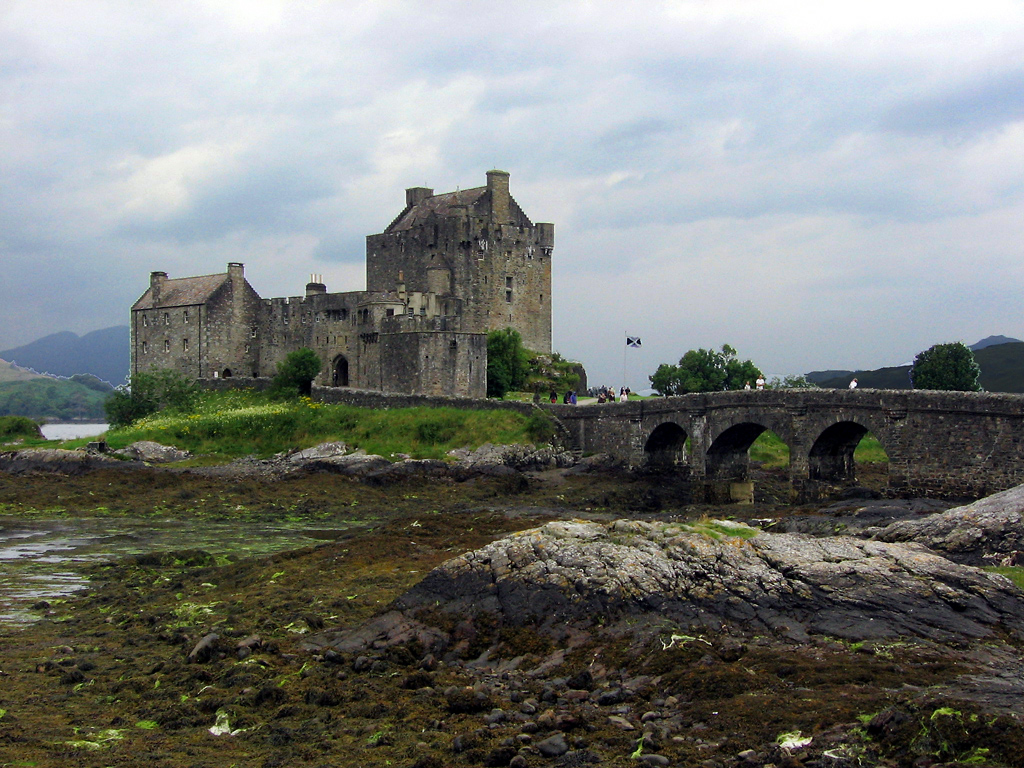
We did not spend a great deal of time on the Isle of Skye, mostly just having a look at the terrain before driving across to the bridge that connects it to the mainland. There, while following the loch back to camp, we stopped at an ancient looking castle connected to the mainland by a stone bridge. It was actually a twentieth century reconstruction and closed because a wedding was happening there. Four members of the group had varying levels of success as wedding crashers: three being turned back on the bridge and one making it as far as the island, to return in his own time.

Our meals were always quite similar: porridge in the morning; sandwiches, a packet of crips, two chocolate bars, and a piece of fruit for the hikes; and some kind of pasta and vegetable dish for dinners, with meat added for the 8/9 of the group who don’t share my dietary choice. Of all those things, I would hazard a guess that the chocolate bars were enjoyed most. They really are just the thing for when you are sitting, tired, on the shoulder of a mountain about 200m from the peak.

One last Munro

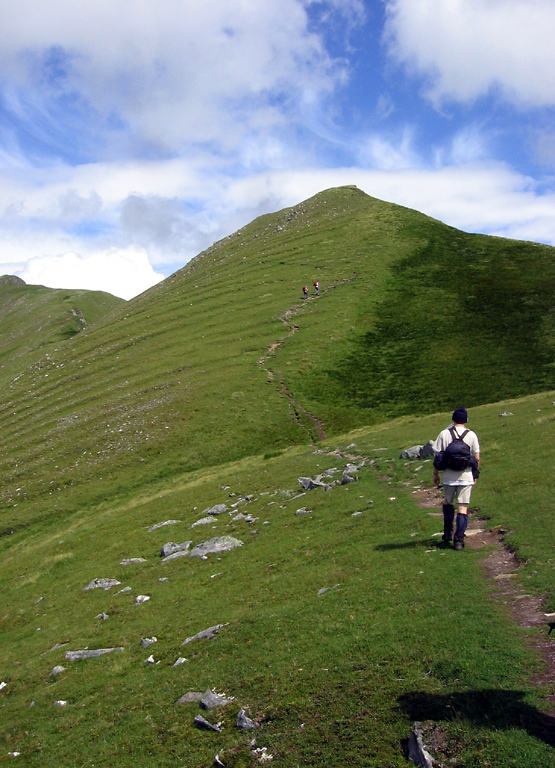
On Sunday, we had our last day of hiking. Firstly, we went up our fourth Munro under the best weather conditions so far. There was a blue sky, and you could see the shadows of the clouds moving along the mountainsides as they were carried along by the wind.

After that ascent, we had a choice between a hike that would involve two more Munros and rival Friday for length and difficulty, or the ascent of a single peak and the following of that ridgeline back to the minibus. Wisely, I think, we chose the latter and reached a pub for dinner just as it began to really rain.

That night, along with Mark, Kathleen, and Helen, I went for a walk in the drizzle along the loch. There, we found a pub and ensured that we would not leave Scotland without having had at least a dram of scotch. That may have partially explained why the last night was the only one where I slept quite soundly.

General impressions

Between the scenery, the exercise, and the company this was a really good trip. I really enjoy having diverse conversations with people in different fields, especially the sciences. Likewise, there is enormous satisfaction in a mountaintop view. It is both an affirmation of human agency – the ability to overcome so much gravity – and a humbling reminder of how briefly we live in the face of geology and millions of tons of rock.

Scotland 2006 photos: third batch

Taken over the course of all three days of hiking, these photos show a few more aspects of Scotland.

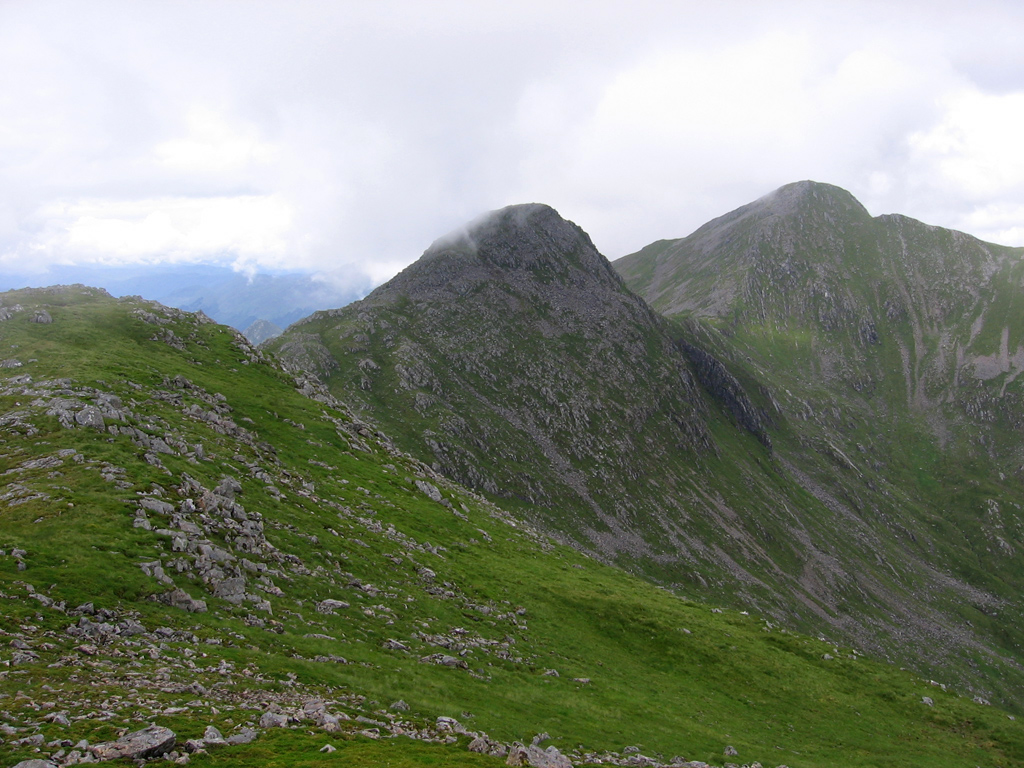
Scottish peak in cloud

Weather in Scotland changes rapidly and dramatically, especially at altitude. I was literally holding on to my hat on a lot of these peaks and ridgelines.

Castle by the Loch

There was a wedding happening in this castle which several members of the group were able to briefly crash before being escorted out by men in kilts.

Bruno and the slope

You get a better sense of the scales involve when there are people in the photos.

Ridgeline with blue sky

Brief periods of proper blue sky were much appreciated. Along this ridge, I shot a good portion of my roll of Velvia.

Group photo

Not a Monroe, this was the last peak we climbed before going home. By this point, my legs were so sore they became difficult to move if I stopped for more than five seconds.

Scotland 2006 photos: second batch

All taken during our first big hike on Friday, this series of photos shows a bit of the majesty of the Scottish highlands.

Scottish peak

There is really no mistaking the glacial origins of these mountains, though the erosion patterns of the rocks look quite unusual to someone used to mountains in British Columbia.

Three peaks we climbed

These are three of the five peaks we climbed on Friday, including at least one of the three Munros.

Descending path

While requiring less exertion, descents were often rather more daunting than ascents.

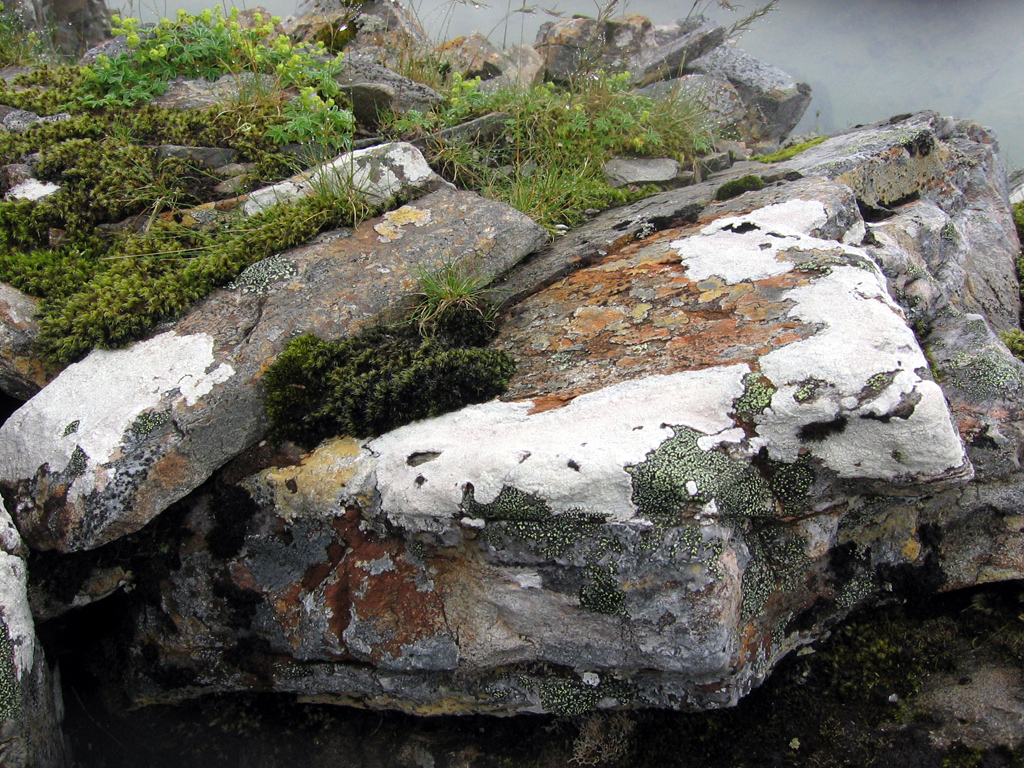
Study in lichen

Continuity of hats is an important element of hiking trips.

Group photo

From left to right: Milan, Mark, Helen, Kathleen, Dengli, Chris, and Bruno. Photo taken by Andrew or Roman.

With tutorials tomorrow, I need to get some sleep. More photos and descriptions of the trip should come online tomorrow.

Scotland 2006 photos: first batch

Before putting anything on Photo.net, I will put a few of my better photos up here. I used my film camera for the shots I hoped would turn out more artistically. These digital shots are meant more as a documentation of the excursion. These are all from the ‘Five Sisters of Kintail’ hike that we did on Friday.

First Scotland ascent

When we first got out of the minibus on Friday morning, I joked that we were about to climb the steep rise in front of us. We then went on to do exactly that: through the fog, with one backpack dropped and recovered from at least 100m below before we reached the first ridge.

Scotland ridge

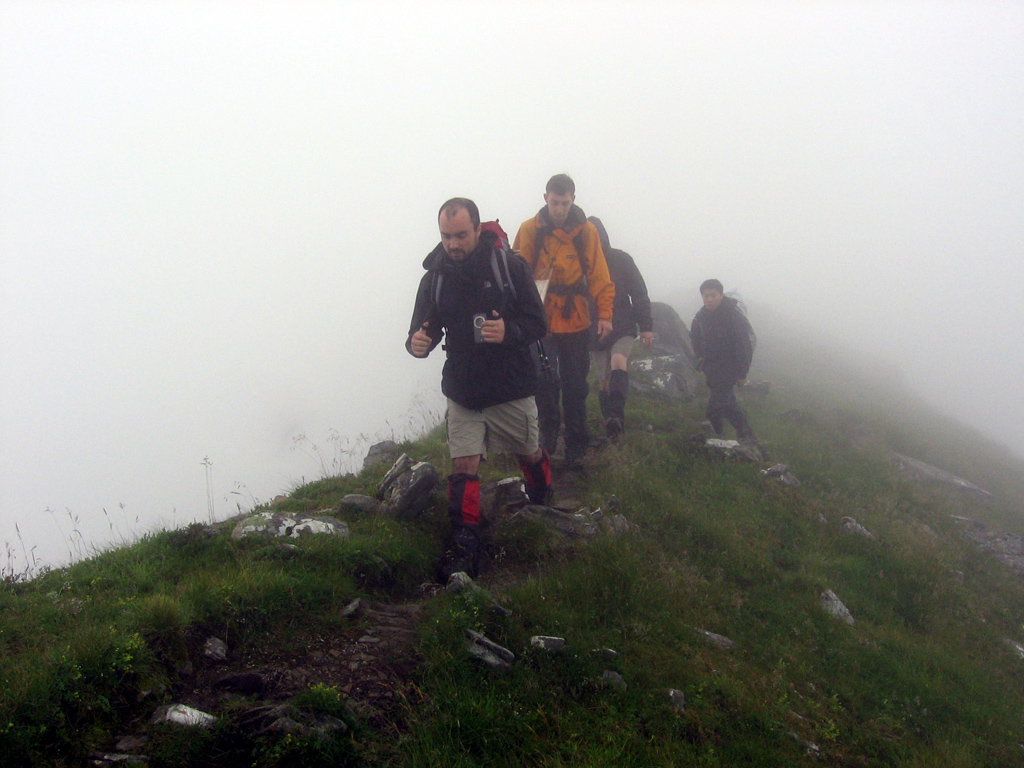
Here we are atop that ridge. On account of the fog, we didn’t get much of a view for quite a while.

Bruno leading on the ridge

Bruno and Andrew leading along the ridge.

Study in lichen

Ecology on Scottish mountain tops is a study in grasses, lichen, and perhaps sheep.

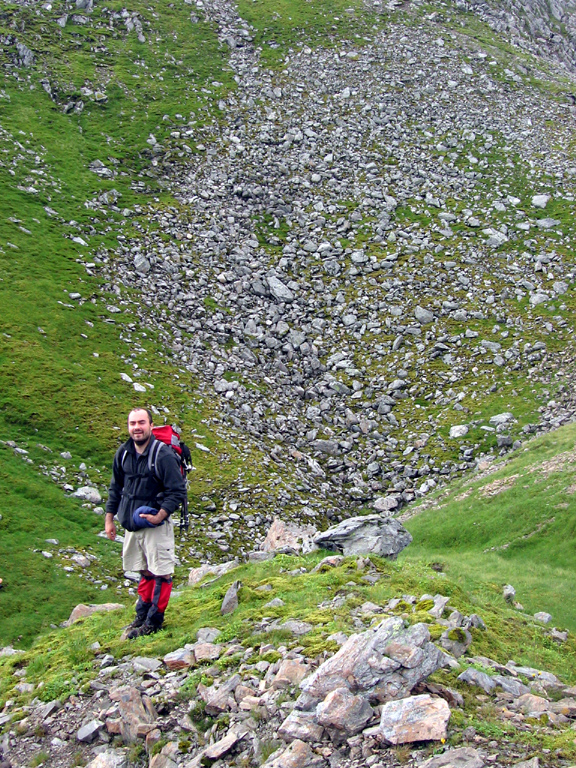
Bruno near a rockslide

When the fog did clear a bit, we got a close up view of the legacy of glaciers upon the Scottish Highlands.

Back from Scotland

After an excellent few days, those parts of me not devoured by midges are back from Scotland. Over the three days, we climbed seven proper mountains (each more than 900m), including four designated as Munros. The mountains were quite spectacular – a nice reminder of home – and the fellow walkers were a great pleasure to spend time with. Interesting, knowledgeable, and friendly people all, we had some excellent conversations about everything from quantum chromodynamics to medieval theology. The combination of physical scientists, computer geeks, and a political theorist was nearly ideal. I was really glad to meet everyone, and I hope I shall meet them all again.

Sorting everything out, both physically and in terms of all the data, may keep me a while. Digital photos will appear both here and on Photo.net as I process them. I should have the roll of Velvia I shot off in the post for processing and scanning shortly, as well.

In closing, I should quickly thank the trip’s superb organizers. The Oxford University Walking Club is an exceedingly professional organization, run by very capable and helpful individuals. I really appreciate the opportunity they granted me.

Off to Scotland – goodbye until Monday

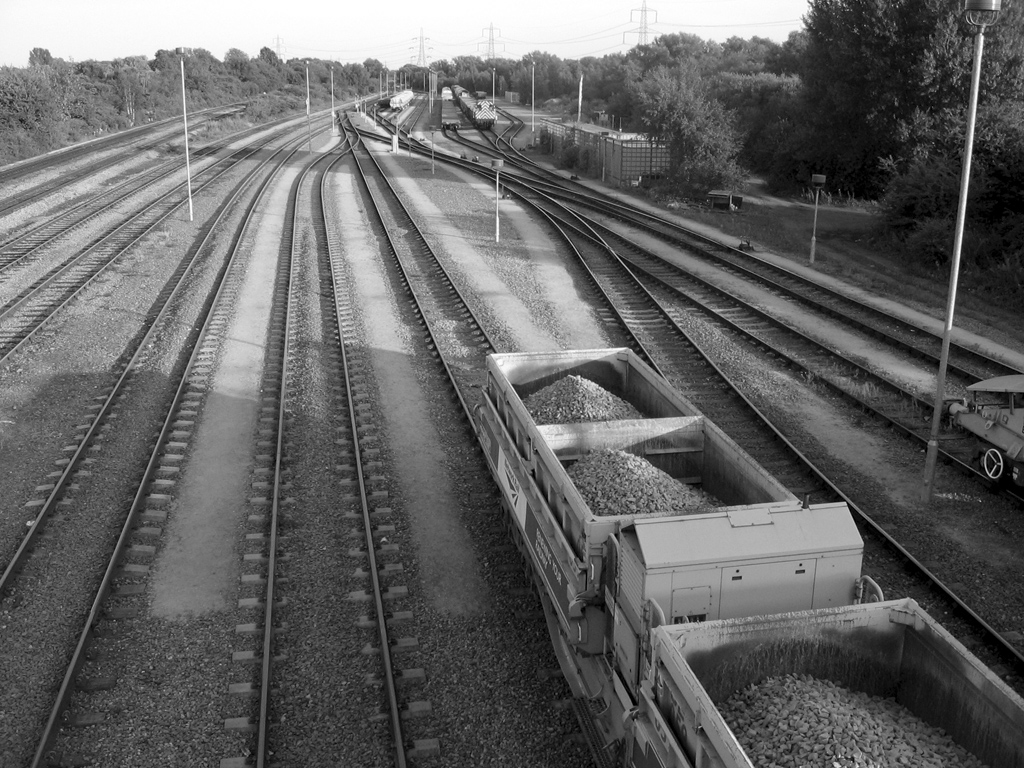
Train tracks south of Oxford

One advantage of not having all of your gear with you (particularly large backpacks) is that it forces a certain parsimony in packing. Given that we are only going for four days and that we will be spending a lot time crushed in a minibus, that is probably for the better. As such, I am reduced to standard hiking gear, wet weather gear, cold weather gear, and basic camping equipment. One important thing coming along with my is my Dublin book, so that I can plan where I want to go for my excursion beyond the city and generally plot out what I want to see. Suggestions are still very welcome.

My brothers are parents are making their annual trek to Oregon this coming week. It is something my family has been doing for more than a decade now: always going to the Lagoon Campground near Florence, Oregon by driving down the gorgeous Oregon coastline. I’ve gone at least six times: twice with my friend Jonathan, twice with Kate, and several times with just my family. Once, we went as far south as the Redwood Forest in California, but Florence is generally our terminus. Several times, the drive back has included Mount Saint Helens, and it always manages to encompass the Tillamook Cheese Factory. I hope they have a safe drive and enjoy themselves.

A full account of the hiking trip in Scotland, along with photos, will appear here upon my return.

South Hinksey

Bridge near South Hinksey

Happy Birthday Bilyana

While walking with Kelly this evening, we found an unusually nice bit of Oxfordshire, accessible through a park near their new flat. If you carry on down St. Aldates and across the Folly Bridge, then farther on down Abingdon Road, you will eventually see a park on the right. There is a small waterpark and a pool. Beyond that is a reasonably large lake, which can be crossed using the bridge in the photo above. Farther on are a set of train tracks likewise crossed by that bridge and then fields and the village of South Hinksey. It is all very attractive and photogenic, and I am glad to have discovered it in such good company.

Tomorrow, I need to tie up final loose ends before the Scotland trip. Now that it has become clear that we will be driving more than thirteen hours each way, I am a bit daunted by this four day excursion. Hopefully, the drive will be pleasant and the two days of hiking will be spectacular. My fingers are crossed incredibly tightly that I will get both papers from my August tutorial students in time to print them before leaving. If not, I will have a very hectic period of work to be completed immediately upon my return.

If I am to get my paper into the next issue of MITIR, I need to have it submitted by the 31st. Since I will be in Scotland after the 27th, that means finishing it tomorrow. They haven’t been entirely clear on whether they just want a few stylistic changes and a few specific statistics, or if they are serious about the 4000 word maximum. If so, I need to boil away more than a third of the existing paper. Hardly something I can do in the day that remains to me. All that can be done is for me to revise the paper as well as can be managed, send it off before I leave, and then return home to find out what they have decided. It seems increasingly likely that I will also return home to finally find my new headphones.

Warped wheel

I have discovered why the rear wheel of my bike keeps going out of alignment and rubbing against the frame: the wheel itself is somewhat bent. No matter how I line it up, there is a warp that causes it to rub against the brake pad once or twice per revolution. Over time, I guess it drifts more and more, to the point where the side of the tire is rubbing against the back portion of the frame.

When I get back from Scotland, I will have to go to Beeline Cycles and learn how much it will cost to have repaired. Until then, I will ride with a spanner so that I can reset things when they go too badly out of whack for me to easily maintain forward momentum.

[Update: 5 August 2006] I brought the bike in to Beeline Cycles, where I bought it back in March, and they fixed it for free under the warranty. Yet another case in which they have exceeded my expectations for good customer service.