Small cameras versus big cameras

When I went to visit Toronto this past weekend, I had to lug a suit bag with me. The idea of bringing along my Canon 5D Mk II digital SLR (dSLR) and associated gear and lenses was too daunting, so I brought along my little Canon A570IS point and shoot (P&S) camera instead.

It has been quite a while since I used a point and shoot, so the experience felt novel to me. Those little cameras certainly have a few things going for them:

  • It can be carried in a pocket and easily held with one hand.
  • Since the camera fits in a pocket, you don’t need to constantly advertise that you are carrying it.
  • It can fit into small spaces, allowing for unusual compositions.
  • Subjects are not intimidated by such a small camera.
  • The tiny shutter is very quiet.
  • The relatively low value of the camera makes you less worried about loss, damage, and theft.
  • There are fewer condensation problems, since the smaller camera and lens have less thermal momentum.
  • The camera takes ubiquitous AA batteries, rather than expensive proprietary cells.
  • The camera can automatically detect faces, and focuses on them.
  • For a small camera, a small tripod is sufficient for long-exposure shots. It is also easier to brace a small camera on most horizontal surfaces.
  • The camera is so light, there are no problems with carrying it around everywhere, for hours.

Of course, there are a few reasons why I missed my 5D. By far the most important is image quality. The sensor in the A570IS is small and produces visibly noisy images at 200 ISO, and ones that are terrible at 400 ISO and up. By contrast, images from the 5D look very decent at 2500 ISO. Because of the superior lenses, shots taken on the 5D also look better in more subtle ways. The 5D also has a more accurate viewfinder; the shot that ends up on your memory card looks much like the one composed through the viewfinder, with minimal cropping and parallax problems.

80% of the time, the ideal option would be something that is about the size and weight of the A570IS but which has the image quality of the 5D Mk II. The rest of the time, the size and weight of the 5D would actually be preferable. In particular, all the dedicated controls spread across the 5D body make it easier to choose the ideal settings for a particular shot quickly.

Alas, for the foreseeable future there will always be the need to choose between convenience and quality.
Bedbug irradiation services

Travelers and buyers of used furniture now need to add a costly bedbug infestation to the set of problems they can bring home with them. Coming home from a trip on which you got bitten generates the fear that your clothes, bags, and personal effects have been infested with bugs or eggs. Since the bugs can live for months without food, the danger is a persistent one.

Conventional advice is to wash clothes in hot water and dry them on hot, then freeze everything else for a few weeks. That can be slow and impractical, however. The anxiety of a friend of mine made me think about better options, and I think I have one. Somebody should open a shop where your possessions can be exposed to gamma radiation from cobalt-60, at a level sufficient to kill bedbugs and their eggs. The service would be akin to a laundromat, but entirely focused on bedbug decontamination services.

Cobalt-60 is already used to irradiate food. Apparently, hundreds of animal feeding studies have been conducted on the safety of irradiated food, and the risks associated with having bags and clothing irradiated seem likely to be less than any associated with irradiating food that is then eaten.

While consumers are wary of irradiated food, the prospect of killing bedbugs using ionizing radiation might actually carry a kind of cruel appeal. They are about the most despised animals on the planet, after all.

Bedbugs proliferating

I have had one nasty personal experience with these fast-spreading bloodsuckers, and hope to never have another. Alas, that may be an unrealistic hope, given how they are spreading all over the world. According to the BBC, the last big outbreak happened before World War II: “[i]n the 1930s there were large swaths of London where every house was infested.” Eradication with DDT after 1946 pushed that outbreak back, but such pesticides are restricted now because of their health and environmental effects.

Apparently, bedbugs have also grown resistant to DDT, so bringing it back probably wouldn’t help address the current problem. The pesticides currently used for bedbugs may be losing effectiveness, as the creatures become resistant. Increased domestic and international travel may also contribute.

Personally, I have taken to adopting a few precautions:

  • When staying in hostels and hotels, I check for the fecal spots, moults, and blood smears they leave behind, especially when there is a severe infestation (as there is at the Sous Bois Hostel in Montreal).
  • Keeping luggage off the floor and away from upholstered furniture is also a good idea.
  • When I found that I had stayed somewhere with bedbugs, I put everything I had with me through either a high temperature wash or three weeks of sub-zero temperatures.
  • I will no longer purchase or accept used furniture.

Thankfully, these horrible creatures don’t seem to spread disease. They are revolting, however, and extremely expensive and difficult to eradicate. As such, it pays to be cautious.

Backpacking destinations

Over at Slate, there is a discussion up about a recent New York Times article on twenty-somethings.

Several times, the panelists mention ‘trips to Asia’ as an example of what young people might do, as an alternative to working or getting married and having kids. It’s interesting that Asia now occupies that role, rather than Europe. Europe used to be an exotic destination, and going there was both a test of independence and an opportunity to broaden one’s perspective. Now, Europe has much less claim to being exotic – communication back and forth is trivially easy, border arrangements are simpler than ever, and practically everyone (or at least everyone under 30 or so) can speak some English.

The extent to which Europe has ceased to be exotic because it has become more like North America, compared with the extent to which it is less exotic because people now have a more cosmopolitan knowledge about the world, is an interesting question. Another is: if growth in places like China, South Korea, and Vietnam continues at present, will Asia eventually become as non-threatening and comprehensible as Europe seems to be now?

Williamsburg graffiti

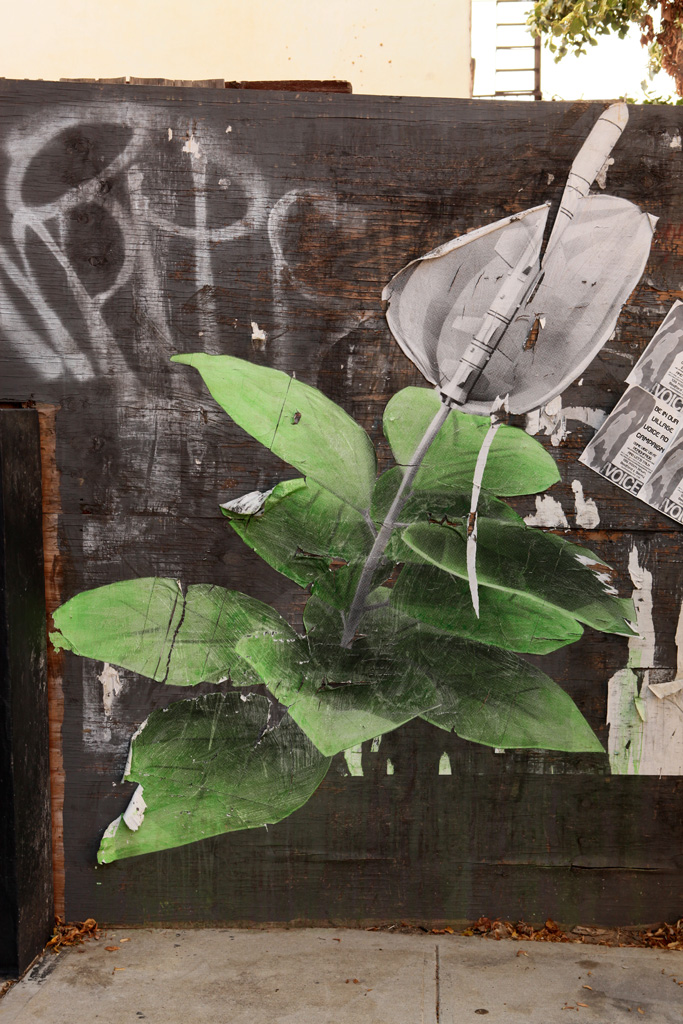
One of the neatest things about the Williamsburg area, in Brooklyn, is the street art. Especially down toward the waterfront, there are many walls and buildings with skilfully-executed and creative images on them.

While not the most artistically appealing thing I saw, this was the most topical bit of art. I do like the creative use of the strech-Hummer.

I started off by exploring the area west of Bedford avenue, toward the waterfront across from Manhattan.

Some buildings are nearly covered with overlapping layers of graffiti, some of it more ‘official’ than the rest. Lots of former industrial buildings are along the water, including a gigantic former sugar factory. Many of the old warehouses now seem to contain art and living spaces.

This has always been one of my favourite presidential quotations. I wonder what Eisenhower would think about the state of America today.

I like how ambiguous this image is. The hair and colours seem playful, but the mouth is truly scary.

I don’t know what it means to ‘clasm’ one’s icons, but I like this guy’s moustache.

This large rabbit is really striking, when seen in person. One of the biggest limitations with looking at art on computers is that everything gets reduced to a set scale. That can work as poorly for big pieces of graffiti as it does for Kandinsky’s giant canvasses.

This seems to be advertising masquerading as graffiti. I am not sure if the complaint written beside the woman was put there by whoever put up the large work, or by a subsequent passer-by.

I like how striking the colours are here, as well as how the verdant and bloody hues set each other off.

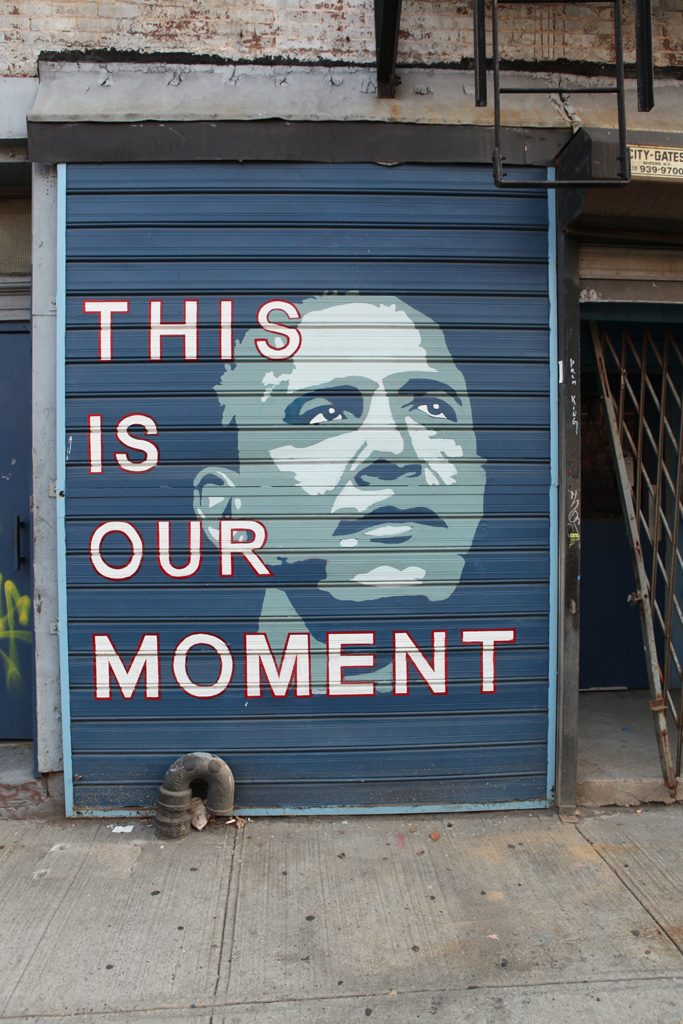
I wonder how the owners of this shop feel about how the Obama administration has gone so far. Do they think the ‘moment’ had been well captured?

There wasn’t much reference to climate change in the parts of Brooklyn and Manhattan I saw. Perhaps public policy capitals like Washington, D.C. and Ottawa are more seized with the question of what to do than economic capitals like New York City.

The monochrome backing really makes the shades of blue in this heart prominent.

The complex facial expression here is interesting – it looks like a combination of stoic resilience and enduring innocence.

Possessions are anchors

Ottawa has never been my favourite city. While I have certainly met some people here who I like a great deal, and while there are certainly interesting kinds of work to be done here, I miss the beauty and familiarity of Vancouver. I also miss the options and excitement associated with larger places like Montreal and Vancouver, as well as the unique intellectual atmosphere of Oxford.

Lately, I have also felt as though it would be a good idea to spend a big chunk of time seeing more of the world than I have so far (though there are ethical issues that surround emissions from voluntary travel).

One thing that interferes with all of these plans is my rented apartment and the few thousand dollars worth of low-cost IKEA furniture and miscellaneous materials it contains. Finding it took quite a lot of effort, as good places in Ottawa seem to get snapped up almost instantly. That and sheer force of momentum make me hesitant to give it up, especially since that would mean finding a place to store my miscellaneous possessions, as well as a mechanism for moving them to the storage location.

It is odd how incapacitating it can be to own more things than you can carry yourself. The situation certainly suggests to me that it is wise to continue renting. My present situation already renders me immobile to an extent I find somewhat regrettable. A mortgage, property taxes, repair obligations, and the additional stuff that would inevitably accompany any kind of home ownership would be even more stifling.

I am not as badly off as I could have been. I am still using the same cheap IKEA furniture I bought straight after moving to Ottawa, even though an increasing proportion of it is held together with gaffer tape and screws I installed myself. Most of the surplus income that has accompanied full time work has likewise gone into paying off student debts, building up a cushion of savings, and buying photo gear. Photo gear may be the least anchor-like kind of possession, for me at least. For one thing, it packs a lot of dollar value into a small amount of space and weight. For another, every time I use it I want to go somewhere scenic or novel or important, so as to be able to put it to better use.

Photographing and re-photographing the same few neighbourhoods is not the more enriching experience.

Net10 phones

Given the exorbitant roaming rates, using my Fido phone in New York City seemed like it would be very unwise. On the Greyhound from Albany, however, a Colombian woman recommended that I pick up a $30 phone from Radio Shack, which comes with 300 minutes of talk time.

The LG phone itself seems fine, though maybe not super well built. The service, unfortunately, is useless. I was told when I got the phone that it would be two days before I could make or receive international calls. This is so they can run some sort of security check. After two days, the phone was still useless for calling Canadian numbers as well as my friend’s UK cell phone. I checked out the Net10 website and was told that you need to apply to activate international long distance. I did, and was told I would receive a text within 72 hours that activated the service. I am still waiting for that.

In short, my plan to spend $30 and get a working cell phone for a week (which I could then give away) turned out to be a total bust. Perhaps some of the other companies selling these disposable ‘burner’ phones would have been better for my purposes.

These disposable phones certainly demonstrate something about technology and economics. A couple of decades ago, a phone this small couldn’t be had for any sum of money. Now, they are sold for $30 along with 300 minutes of airtime, and used as a disposable commodity. I wonder what specific innovations permitted the drop in cost. Of course, there is also good reason to wonder what negative externalities go uncaptured in the price paid for the plastic package, little phone, and charger.

Unusual things to do in New York

In the near future, I will be spending some time in New York City. I have been there twice before and already seen many of the obvious sites (Times Square, most of the museums, the Staten Island Ferry, Ellis Island, the Empire State Building, etc).

Is there anything less obvious that people would recommend? I would be especially interested in things like excellent and unusual geeky shops and hangouts, good places for photography, and anything random and unexpected.

Parc Poisson Blanc photos

Here are some more photos from the Parc Poisson Blanc camping trip:

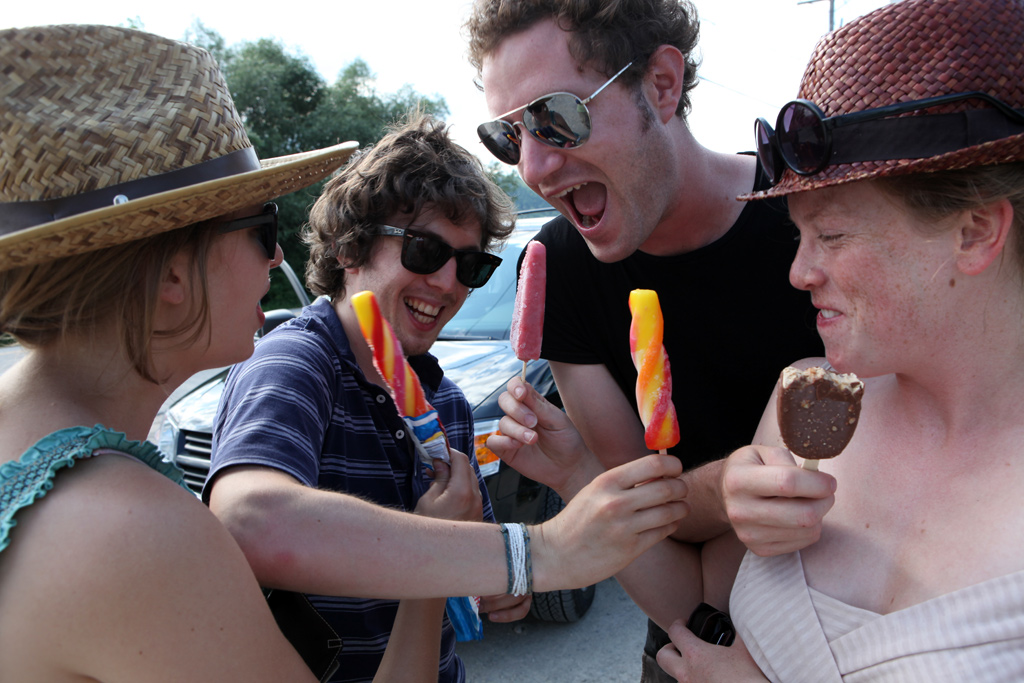
Ice cream was a feature of both the drive up and the drive back.

Glancing right

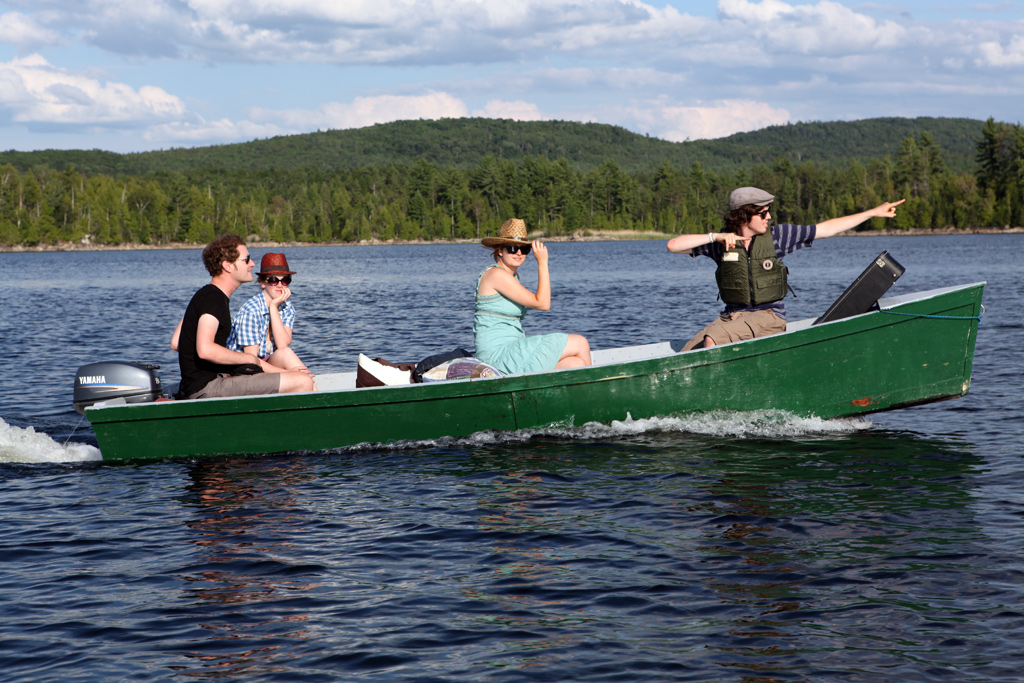
Given that it took about an hour to get from the boat launch to our campsite, opting to go with one journey with two boats, rather than the converse, was a wise choice.

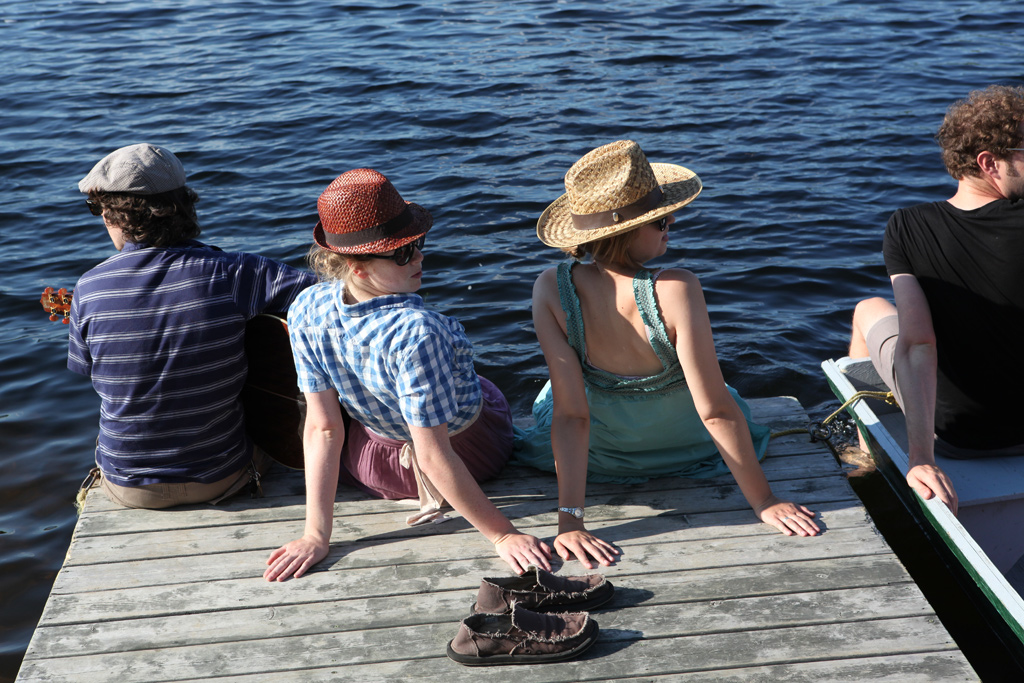
Reclining with guitar

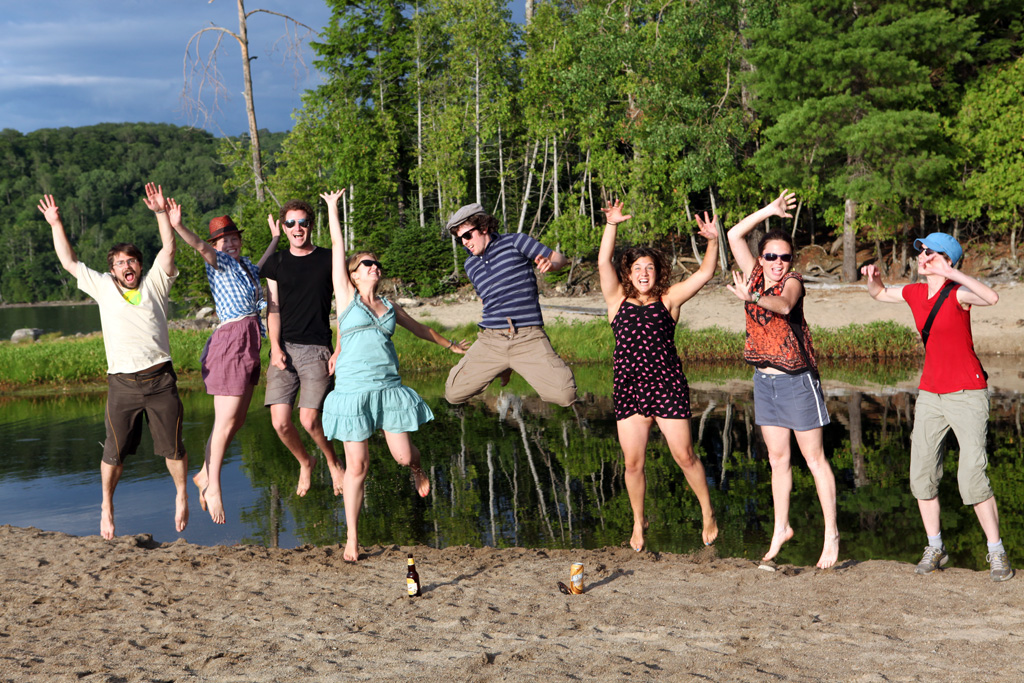
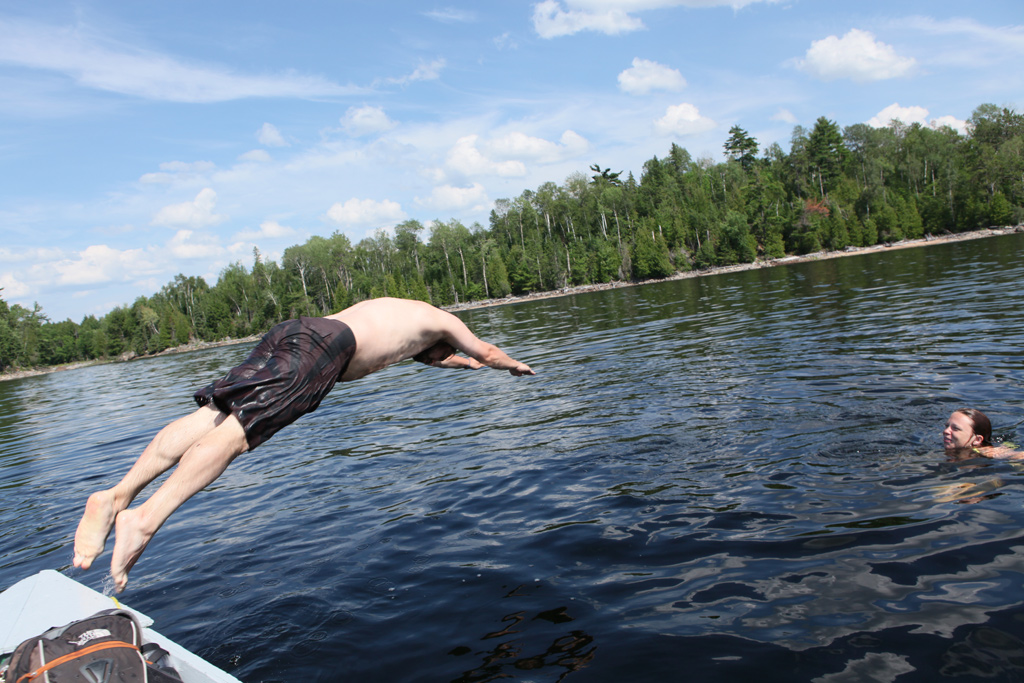
My jumping co-campers

Much to everybody’s amusement, I took out my collapsible reflector to try and balance out the shadows on faces from the sunset. I think it worked rather well as a form of wilderness light modification.

My friend Rosa composed and shot this portrait.

While daylight brought a string of motorboats, the night was very calm and private.

Because of how far we were from civilization, and the absence of the moon, the Milky Way was clearly visible all night.

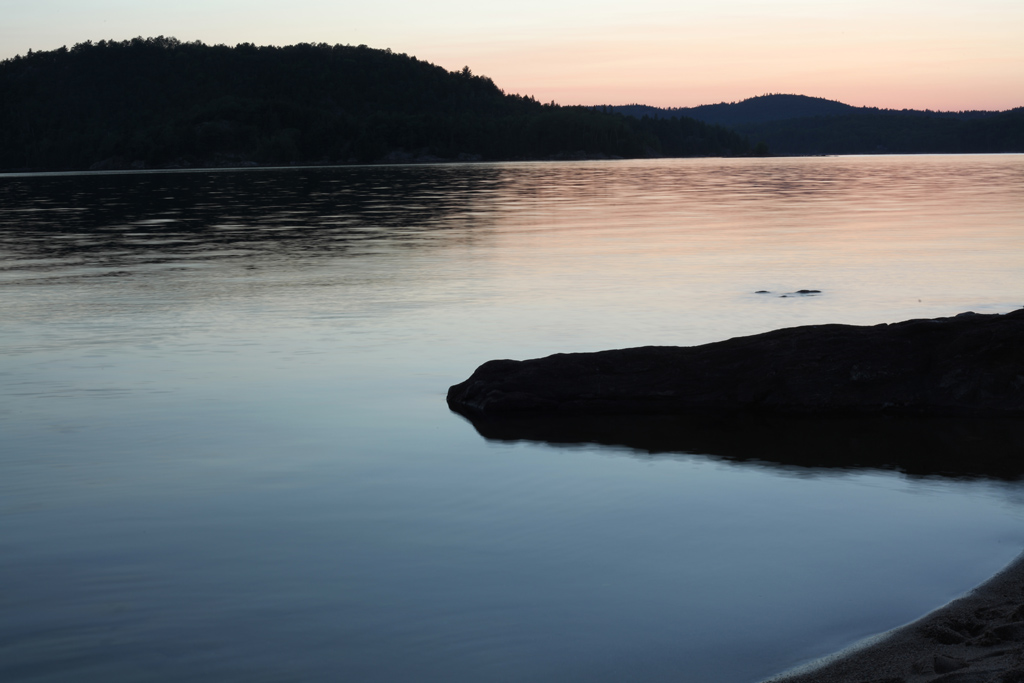
Dawn

Our boat was piloted by a man whose composure while operating motorized vehicles was on par with his trip masterminding skills.

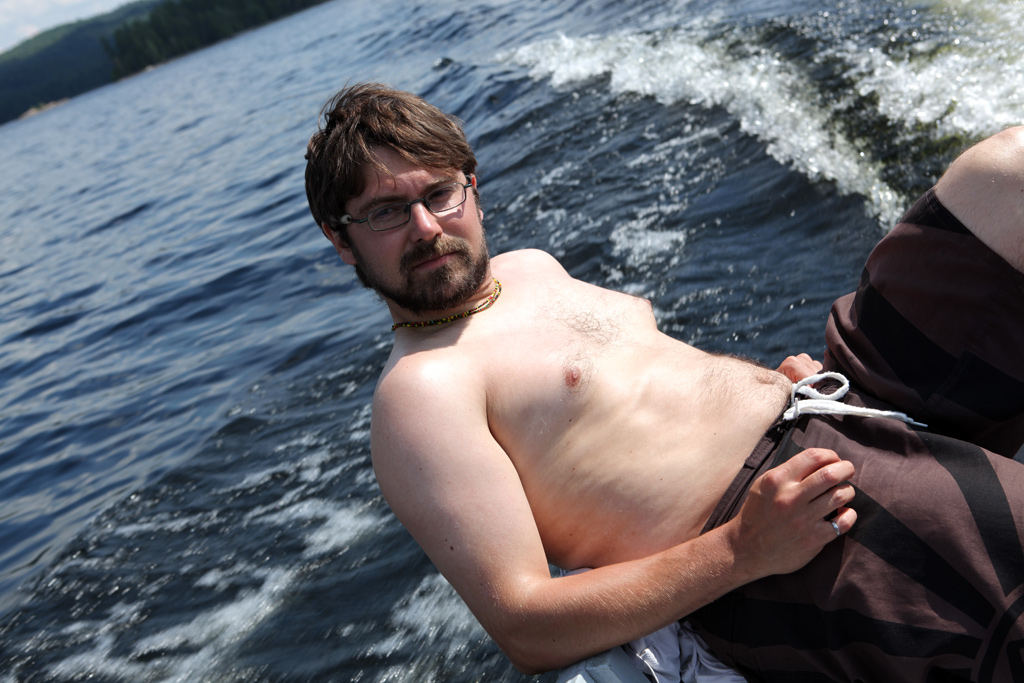
He can also be used as a very temporary bridge across narrow stretches of water.

Parc Poisson Blanc

This weekend, I had the very good fortune to be invited to join a camping expedition to Parc Poisson Blanc, located in Quebec about ninety minutes from Ottawa. We bought food, drove up, rented boats, and took them to our superb campsite – a private locale with a beach, a forested area with ground ideal for walking and setting up tents, excellent views, and even a little lagoon featuring a black whirling swarm of baby catfish. The lake water was at an ideal temperature, and the company and food were both excellent.

I had the further good fortune that Saturday was a moonless night. Out in the wilderness, a dazzling array of stars could be seen, so many as to make it hard to identify familiar constellations. The Milky Way was clearly visible. Floating on my back in the water, looking up at the sky in the middle of the night was one of the most magical things I’ve done in recent memory. It felt like such an ancient undertaking, a connection to the whole history of humanity, the Earth, and the universe.

Though short, the trip produced such a change in my mode of thinking that returning to Ottawa felt like coming back to a familiar but semi-forgotten place. It will be odd to be back at work tomorrow, but I will certainly be showing up mentally refreshed.