My tickets are booked and I will be visiting Vancouver for the first time since January 2010 this summer from August 22nd to September 12th.
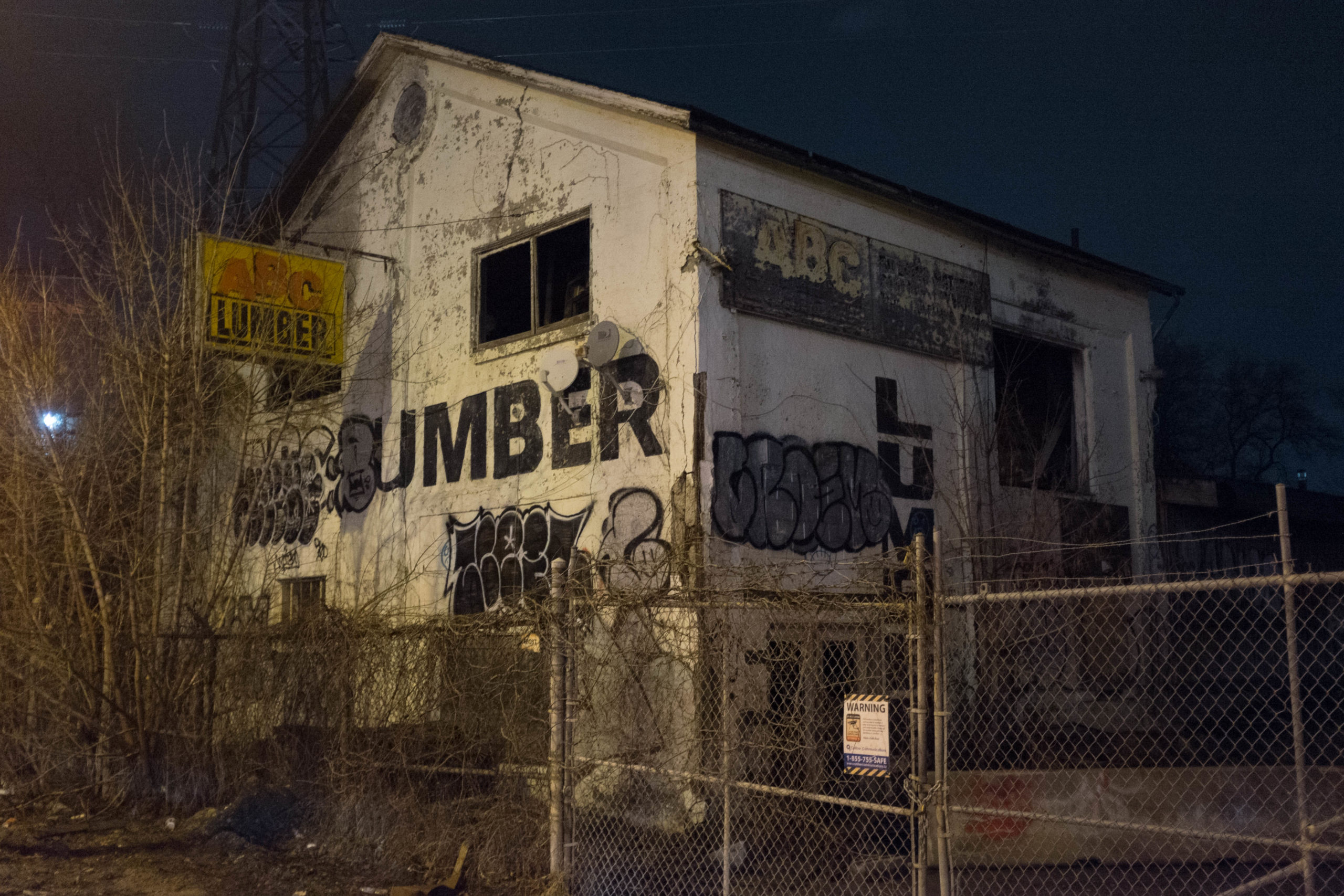
LUMBER
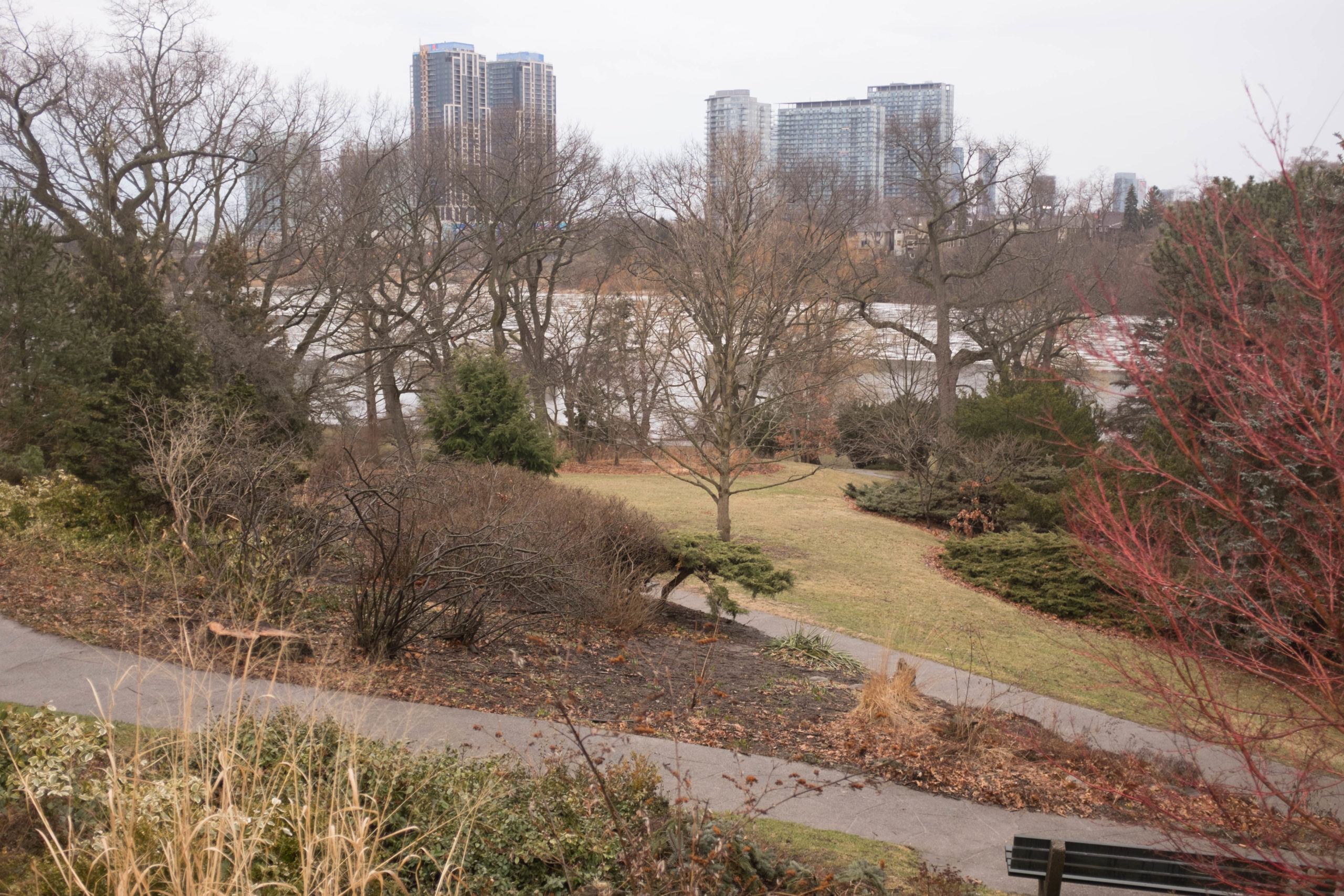
Grenadier Pond, High Park
Twisted branches 2/2

Rand on climate capitalism
As a practical matter, the democratic uproar needed to build whatever alternative economy [Naomi] Klein and the Pope have in mind is far greater than the upswell of the Climate Capitalism I’m proposing, which harnesses financial markets in the climate fight. Reengaging our political system to reform financial institutions like the World Bank, motivate the quantitative analysts (quants) on Wall Street, and redirect trade agreements to accelerate climate solutions is faster and more effective than waiting for something akin to Che Guevara’s revolución. I will admit that I simply don’t know what that revolution looks like. Nor how we manage a complex modern economy without market forces. Those who’ve tried (today’s Venezuela comes to mind) failed miserably. And none of the far-left socialist experiments of the past gave up growth — the primary bugbear in Klein’s view.
…
The trillions of dollars that sit in money markets and pension funds is the most powerful tool in our climate arsenal — if it can be redirected. We need to co-opt capital markets, not slay them. That capital is conductor for the rest of the economic orchestra. With it, we unlock the financial, engineering, and entrepreneurial might that can rebuild global energy systems. To think overwise is naïve — the supply chains are too complex, the scale of manufacturing and project development too big, and the degree of entrepreneurial innovation required too deep. Like it or not, we must harness the very market forces that threaten our planet, to save the planet.
Rand, Tom. The Case for Climate Capitalism: Economic Solutions for a Planet in Crisis. ECW Press, 2020. p. xxviii-xxix
Related:
- Environmental ‘extremism’
- Open thread: climate change and growth
- Climate: integrated left or post-partisan?
- Climate change and capitalism
- More on climate change and capitalism
- Is the Leap Manifesto at risk of easy reversal?
- A test cast for cross-partisan climate policy
- Anti-capitalist environmentalism
- Open thread: climate justice
- The marriage of climate and economic justice
- 2050 Post-Carbon conference, McKibben, and conservatives on climate
- Strident progressivism versus incrementalist centrism
- Cultivating a conservative climate movement
- Political coalition building and Canada’s antivax blockades
Twisted branches 1/2

CFFD campaign timelines and institutional memory in Canada
Amanda Harvey-Sánchez — who played a key role in the first Toronto350.org / UofT350.org divestment campaign — has written a detailed timeline of the campaign at the University of Toronto.
This kind of effort is especially valuable given the limits on institutional memory in the campus fossil fuel divestment (CFFD) movement. In part that’s because of how campaigns of student volunteers will experience constant turnover, though it is also the product of the informal style of organizing promoted by 350.org and implemented by most CFFD campaigns.
The closest document which I have a record of is from the SFU campaign, though it is much less detailed.
With student volunteers dispersing in all directions following graduation, and with few institutionalized structures to preserve knowledge between cohors of organizers, it has been especially useful to see some of the campaign debriefs which have followed divestment commitments. Climate Justice UBC (which I think is the new name / successor organization to UBCC350) released an especially good presentation about their campaign.
Glencairn station ceiling

“2030 Emissions Reduction Plan: Canada’s Next Steps for Clean Air and a Strong Economy”
The Trudeau government’s latest climate change announcement is a plan to cut emissions by 40% by 2030.
The plan also aims to cut oil and gas sector emissions from 191 megatonnes to 110 megatonnes, though the government says it won’t reduce production “not driven by declines in global demand.”
Whether out of political calculation, the influence of the industry, or a simple lack of understanding, this announcement perpetuates the idea that “emissions” can be cut in a meaningful and sustainable way while continuing to expand fossil fuel production. This conforms with earlier analysis of how Trudeau promises action to the public while at the same time comforting business with promises that not much will change.
As long as Canadian politicians are too afraid to acknowledge that avoiding catastrophic climate change requires abolishing fossil fuels we will keep getting plans predicated on the nonsense that we can solve the problem without addressing its chemical causes. It’s fair enough at this point to attribute some of the blame to Canadian voters, who keep proving by their electoral choices that they want the government to express concern about climate change while not even meaningfully slowing down the pace at which we’re making it worse.
It also doesn’t help that the plan’s title sounds exactly like something the Harper government would have created. Climate change isn’t an issue of how “clean” the air is, and setting up clean air beside “strong economy” sticks to the narrative that good policy is about trading one against the other. That’s at best a distorted way of thinking about a fossil fuel dependency which threatens to undermine the very basis of human civilization. For people used to playing for only political stakes, gambling with the future of the whole species is outside of their training and conventional mindsets.
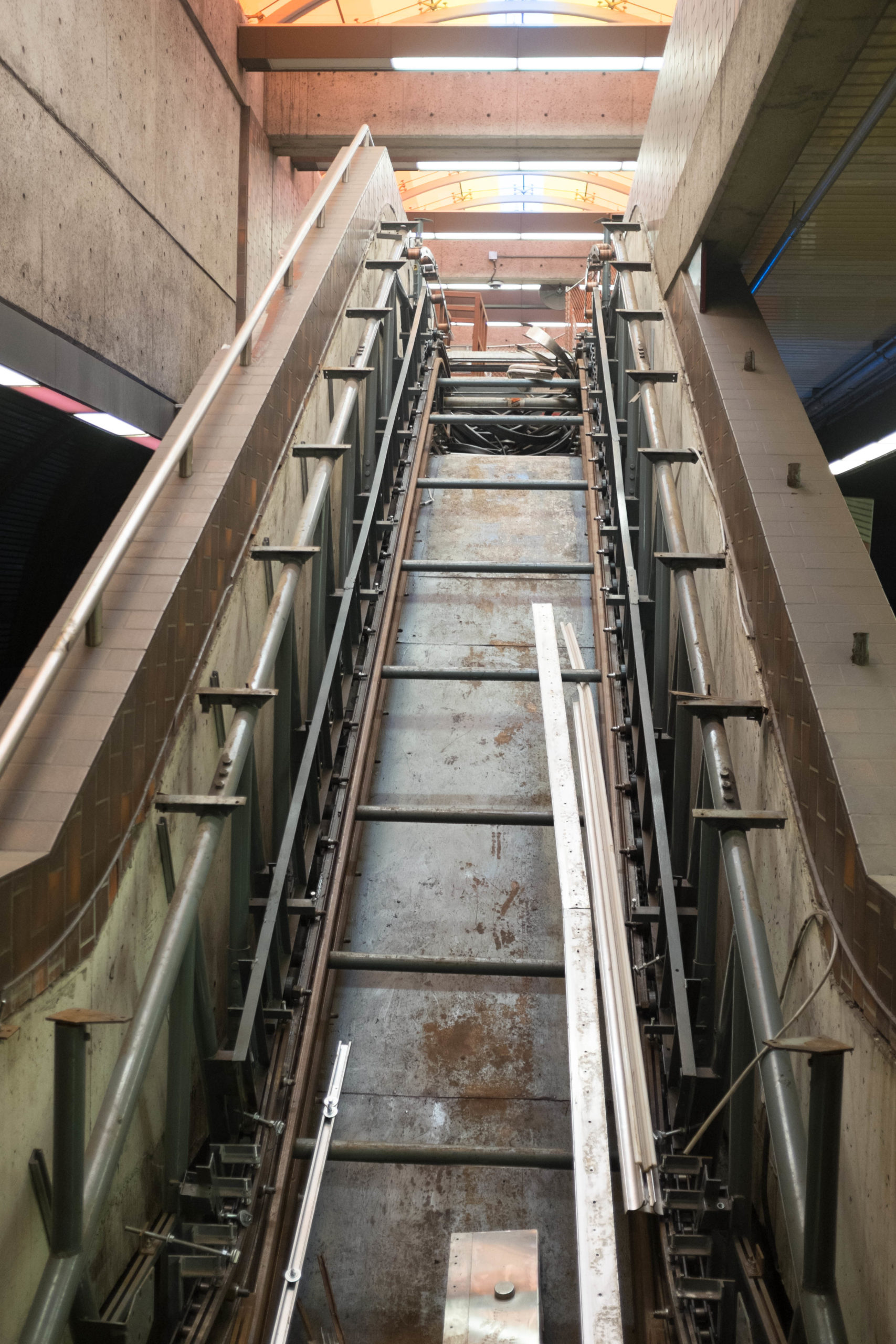
Glencairn station escalator