Another pang of thesis doubt

Speaking with Tom Rafferty after the film tonight, I had a bit of a realization. Previously, all my enthusiasm about the thesis project has been tied to the real conviction that these questions are fascinating and important. The problem, of course, is that there are no prizes for picking out interesting questions – especially the obvious ones that everyone sees as interesting. You need to say something new, and I don’t see how I am going to do that.

PS. This has happened enough times now for me to know that Lee will leave a terrifying comment*, and I will start mentally enumerating ‘places other than academia’ where one can spend one’s life.

* This is not to imply that the comments are not helpful and appreciated; indeed, a bit of raw terror is just the thing to motivate thesis progress.

The History Boys

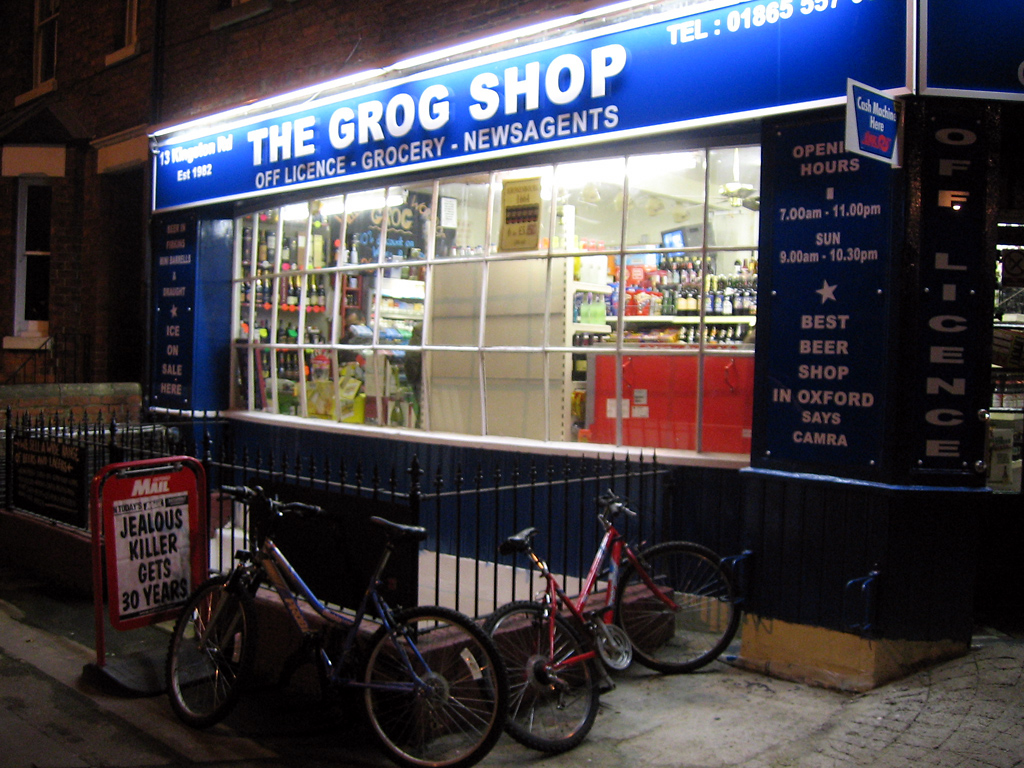
The Grog Shop, in Jericho

North Americans trying to understand Oxford, as a British cultural and social institution, should go see The History Boys, while it is still playing at the Phoenix. If that sounds like an assignment, take heart: it is really very funny, even if you cannot appreciate all the regional humour. It will certainly leave you looking at your own position a bit differently, though I can see at least three general kinds of lessons you might take from it. I am not going to list them.

Comparisons I have heard made to Dead Poets Society are both apt and entirely wrong. That film is a reflection of two cultures: American east coast boarding schools and Hollywood filmmaking. Substitute both English elite schools and British comedy, and you might be talking about similar vehicles for the delivery of very different references.

Watching this film here was much like watching The Rocky Horror Picture Show in full costume, singing along and throwing rice. The film may not reflect reality directly, but it throws a kind of fun slant on it that allows you to position yourself within the public statements being made. The very last scene is also quite clever.

One quick comment, in closing: in North America, you would never see a film with a good six or seven minutes of all-French dialogue. And if you did, the proportion of the audience laughing at the jokes would probably drop off sharply. While my French has never been rustier (a long decline, dating back to elementary school with an upward blip during my time in Quebec), I could grasp more than enough to be laughing along.

An environmental strike against Canada’s Tories

As Tristan discussed earlier, the National Post has been producing some dubious commentary on the ironically titled Clean Air Act being tabled by the current Conservative government in Canada. The paper says, in part:

Worryingly for the government, the impression has already taken hold that the Conservatives are not serious on the environment, and when [Environment Minister Rona] Ambrose says the Clean Air Act represents a “very ambitious agenda,” people smirk.

The smirking they describe is well deserved. The fact that every other party in government sees the real effect the so-called ‘Clean Air Act’ would have is not evidence of superficial thinking – as the Post asserts. The government that decided to simply walk away from Canada’s commitment to Kyoto is carrying on in past form.

Perhaps the biggest problem with the act is the way in which it confounds issues that are quite distinct. When it comes to the effect of human industry on the atmosphere, there are at least three very broad categories in which problematic emissions fit:

  1. Toxins of some variety, whether in terms of their affect on animals or plants (this includes dioxins, PCBs, and smog)
  2. Chemicals with an ozone depleting effect (especially CFCs)
  3. Greenhouse gasses (especially CO2, but with important others)

In particular, by treating the first and third similarly, the government risks generating policy that does not deal with either well. The Globe and Mail, Canada’s more liberal national newspaper, argues that this approach may be intended to stymie action towards reduced emissions, by introducing new arguments about far less environmentally important issues than CO2.

It is possible to develop good environmental policies that are entirely in keeping with conservative political ideals. Market mechanisms have enormous promise as a means of encouraging individuals to constrain their behaviour such that it does not harm the welfare of the group. While market systems established so far, like the Emissions Trading Scheme in the EU, have failed to do much good, there is nothing to prevent a far-thinking conservative government from crafting a set of policies that will address the increasingly well understood problem of climate change, without abandoning their political integrity or alienating their base of support. To do so, in the case of the Harper Tories specifically, might help to convince Canadian voters that they really are the majority-deserving moderates they have been trying to portray themselves as being since they were handed their half-mandate by those disgusted by Liberal sleaze.

Mica in two new Google Idol contests

My brother Mica has two new entries in the Google Idol video competitions. Partly thanks to strong support from readers of this blog, his video for “Walk Idiot Walk” won a previous competition. This is also documented on Wikipedia.

His two videos that will be in the running are:

  1. “The Jock Rock” in the semi-final of the Pop competition
  2. “I Bet You Look Good on the Dance Floor” seemingly yet to be listed

I will post updates as the status of the videos change. See also Mica’s website.

New voting process

The voting works quite differently from last time. Instead of allowing one vote per IP address per day, it allows one vote per user account per round. They are tracking IP addresses used for account creation, so trying to set up fifty accounts from the same computer will land you in trouble. (Of course, if you set up fifty and used them to vote for the video that you want to lose the round, it might be a highly effective strategy.)

One word of concern: it doesn’t say anywhere on the site that they will not be selling the email addresses used in the signup to every spammer from Nigeria to Philadelphia. As such, I recommend using your most spam-ridden and least important email account to sign up. Last time, they could at least count on people seeing the banner ads each day as they came back to vote. In order to replace that income stream, you have to at least suspect that they are harvesting emails for profit. You cannot just give a fake email address, like when leaving comments on this site, because they will send you an activation code that you need in order to vote.

Everyone’s least favourite piece of mail

Sheldonian Theatre

After having an enjoyable dinner in hall last night, I found the statement of account for my battels waiting in my shared pigeon hole. £10,360 in university fees (up 4% from last year) and £1,847 in college fees (up 2.5%). Taken together, that is 74.5% of Canada’s GDP per capita, or 266% of Estonia’s.

The university fees are certainly more defensible. They cover my supervisions, the Social Sciences Library, and myriad other things closely related to education. Given that the Wadham library is of little or no use to me, I do not live in college, and I would not be eating there if it wasn’t part of a scholarship, it is a bit hard to see how a year as a member of the college is worth as much as two MacBooks (or a MacBook and a nice dSLR). The college fees don’t even include printing.

Snazzy open source video player

Available for PC and Mac, the Democracy video player is free and open source software that can play and save a wide variety of video formats. You can, for instance, save Google Video and YouTube files. That includes all of my brother Mica’s videos. The interface is also a lot nicer than mucking around with web pages: especially since you can download batches of files at once and watch them when they finish.

More information is on Wikipedia.

Inequality a problem in itself?

House in North Oxford

A serious moral question arose during today’s seminar: Is inequality in wealth a problem, in and of itself?

Specifically, if there are two individuals or states where one is poor and one is rich, and both are getting wealthier but the richer state is getting even richer faster, is this a problem?

Within the question, there are two sub-cases. In the first of those, the growth in the rich state is completely separate from that of the poor state. Imagine they are completely disconnected and have no engagement with one another. Does the fact that the GDP of the rich state has risen by 50% and that of the poor state by only 5% matter, in a moral sense?

The other case is that the 50% growth in the rich state is somehow causally tied to the 5% growth in the poor state. Specifically, the latter would be higher if the former was lower. Now, that is entirely possible, but this is a different moral category. In the first case, one would have to appeal to general moral cosmopolitanism. In the latter case, we can refer to a moral tradition akin to that of the law of tort: you have harmed me, and you owe me something. This does not speak to the fundamentally immorality of inequality.

All contributions to this discussion are encouraged.

[Update: 7:00pm] To be clear, I do not dispute the fact that it is virtuous for the rich to help the poor. I am a firm believer in the moral value of philanthropy. The question above is about obligation, not charity.

Adieu to Oxford PhotoSoc

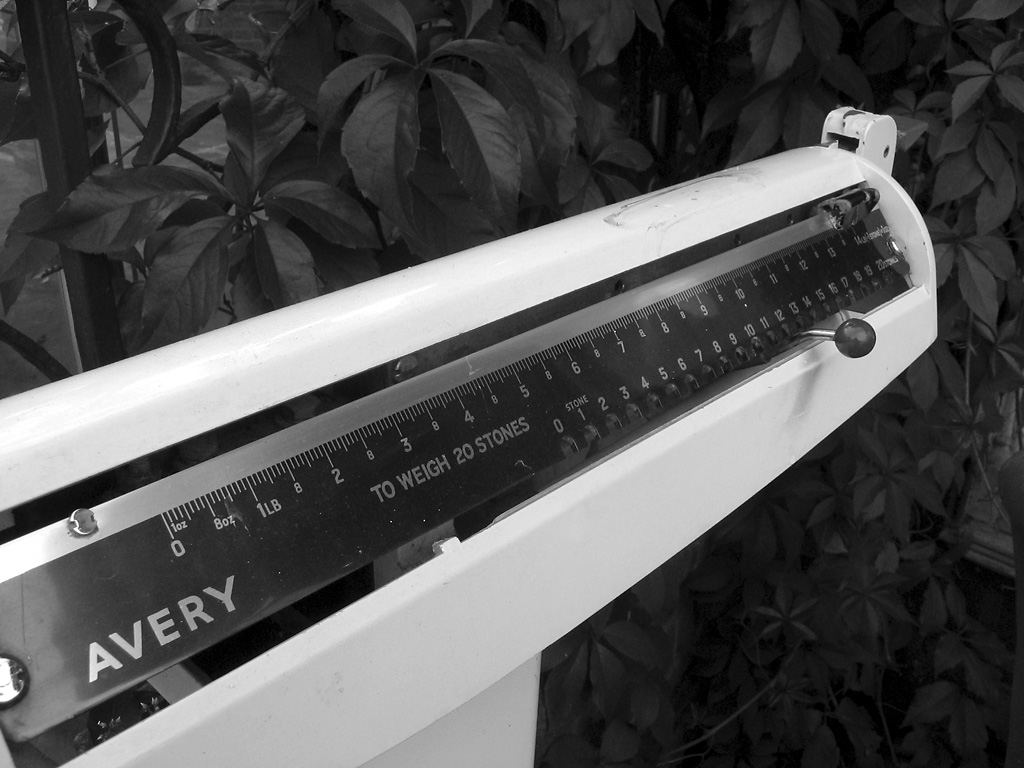
Old fashioned scale

Today, we had to choose whether to join the Photo Society and pay the money or stop attending the classes. I have decided to do the latter. With about forty people present, they are too big to get through any decent sample of the work in just an hour. Also, while some of the things being discussed are at a level that would be useful for me, a lot of really basic stuff gets talked about as well. I don’t need to spend an hour and pay £3 to learn something about Photoshop that Neal taught me in two minutes. If I was going to use the dark rooms, the £30 a year fee would be very reasonable, but the last thing I need is some other pursuit to draw me farther away from thesis and seminar reading. Indeed, I have a date with the latter for the rest of tonight that I expect to take a good chunk of it.

After my final PhotoSoc session, I had dinner at Lady Margaret Hall tonight with Richard Albert: a Canadian, formerly at Yale, doing the Bachelor of Civil Laws degree. Confusingly, it is a master’s level program, and it is entirely about common law. In any case, conversing with him was most interesting – an experience that will hopefully be repeated before our respective tenures in Oxford come to an end. Talking about Canadian constitutional law definitely tested my memory of classes with Gateman and Tennant. It is the sort of thing entirely too interesting to be devoted as little attention as can be spared for it.

No more attention can be spared for anything, at this moment, When your seminar is the next day, and the possibility of having to present fills you with dread, you know you are in for a long night of reading.

[Update: 1:00am] I think the page on the wiki for the Developing World option is starting to shape up nicely. It should be a good reference, in the end, for paper writing and exam preparation. Fellow members of the program, feel free to use it. Even better, sign up and add something to it.

[Update: 2:00am] Yes, I do realize that today’s photo is a perfect demonstration of why, instead of using the B&W mode built into my digicam, I should shoot in colour and then render into B&W using Photoshop’s channel mixer. I wish there was a mechanism by which I could compose with the LCD of my Canon A510 in B&W mode, but have it retain colour information for such purposes.

Lecture-heavy day

Flowers in the University Parks, Oxford

As is the norm on my lecture-packed Tuesdays, some really interesting ideas have come up today: on everything from international law to the Israeli security barrier and the mathematical models that dictate funding structures within the World Bank. Of course, this contributes to my terror about both having to be a generalist and being expected to know a very great deal about particular areas. This is an anxiety I will bury for the moment.

One note to myself, in future: when you are practically seething with disputational energy during a presentation, as during a debate round where you can see a good half-dozen critical factual and logical flaws, remember the following:

  1. Let someone else ask the first question. They will get things started and help set a congenial tone.
  2. Decide exactly what to say in advance.
  3. Deliver it deadpan, with no concealment of how logically lacking you found the argument, but with no vitriol either.

Setting out these personal suggestions isn’t evidence of some kind of egregious personal lapse, but rather a general observation based on one of today’s question and answer sessions. Kudos to a friend of mine, for showing me how it’s done.

If I have the time and energy, I will write about some mathematical observations relating to today’s presentation on the World Bank at a later time.

Roles of scientists

Partly motivated, perhaps, by frequent exposure to Hurrellean lists, I have been thinking about elements of the thesis in categorical terms. My head, therefore, is swimming with Venn Diagrams. Today’s ponderings have been about the roles played by scientists. I have come up with three headings:

  1. Investigative
  2. Deliberative
  3. Regulatory

The first is their traditionally conceived role, with the latter two serving as necessary modulating adjuncts.

Investigative

This is your standard ‘scientist peering down a microscope / examining RADAR images / performing Fourier Transforms‘ role. Within it, there are components related to discovery and components related to refining existing hypotheses. This is true both when science is behaving as evolutionary gradualists would predict (slowly making LEDs brighter and more power efficient) and during periods of punctuated equilibrium (think of the development of quantum theory, explaining those LEDs, and of Kuhn).

When it comes to the environment, important scientific behaviours mostly have to do with studying interactions. How does the combination of GHG emissions and particular emissions affect mean global temperature? How does the evaporation rate of Lake Nasser affect the marine ecosystems of the Mediterranean?

Deliberative

The difference between deliberative and regulatory is partly akin to the difference between safety and security. Safety has to do with protecting against non-malicious risks. A lightning rod is a safety device – unless you believe in a vengeful deity. Security has to do with addressing threats from active attackers. The same distinction exists when it comes to scientific integrity. Someone might make an undetected experimental error and come up with data that is incorrect; some early satellite measurements of global temperature were like this. Someone else might be in the pocket of a group with a vested interest in denying climate change, and might thus be working with an experimental agenda of muddying the waters.

The deliberative role of scientists, in an ideal community, is a mechanism for dealing with non-malicious disagreement. Experiments that are outlying can be examined and replicated, the reasons for the unexpected results identified. Theories can be developed and debated in the face of evidence.

Unlike the investigative role, which can be performed perfectly well by lone scientists in igloos on Baffin Island, counting the amount of lichen per square metre outside, this role is fundamentally social. It strikes at the important distinction between science as a set of procedures and ideals, scientists as actors who try to apply them, and the scientific community as an epistemic grouping.

On a side note: it does seem possible for a scientist to be generally strong on the investigative side, but very weak on the deliberative side. Richard Dawkins comes immediately to mind. What is wrong with his positions is much less the empirical basis of most of his claims, and much more the structures of argumentation that he tries to use to assert them. For deliberation to be a useful exercise, it cannot be entirely self-confident and closed to alternative perspectives. It is also important for it to be aggressive in terms of analysis, not in terms of attacking people – an ugly trait that Professor Dawkins has revealed more and more as his anger overwhelms his judgement.

Regulatory

I see the regulatory role as being two-fold. The first part is akin to security, as discussed above. It is the process of trying to separate the quacks from those who have genuine reasons and data behind their position. This is naturally an imperfect process, but it is something that the scientific community must engage with if it is to remain a ‘community’ in any meaningful way. A meaningless community, by contrast, would be one with ties only on the basis of common obscure knowledge or some kind of internal system of controls not based on seeking correspondence between scientific explanation and physical reality.

The other side of the regulatory role has to do with generating institutional structures. Issues like funding, the prioritization of research, and the like fall into this category. This is important, partly because it relates closely to the mechanisms by which quackery is identified. Whether or not the common historical perspective on Galileo as a correct person immersed in a structure of incorrect people is correct, it demonstrates the possibility that the mechanisms of scientific deliberation and regulation could be enforcing incorrect ideas. Avoiding this requires avoiding excess rigidity – a topic that arises frequently in the Lomborg debate, and with wide-ranging implications.

I would be especially keen to hear what any scientists reading this think of the above (real, labcoat-wearing scientists, not IR scholars with extensive statistical faith). If you don’t care to comment, perhaps you could just indicate in some unobtrusive way that there are actually a few people with scientific training who have been reading my mutterings from time to time. I know for sure about one. Naturally, non-scientists are encouraged to comment, as well.

PS. If you want an example of how ad hominem attacks are more likely to make you look stupid than correct, have a look at the latest disingenuous malarky from the Competitive Enterprise Institute. Never mind that carbon offsets have been used to offset the emissions related to An Inconvenient Truth, just look at the non-sensical progression of numbers on their little counters.