The Aragorn Fallacy

Stencil chicken

Watching films, I find myself very frequently annoyed with what I shall call The Aragorn Fallacy. The essence of the fallacy is to equate importance with invulnerability, especially in the face of random events.

Consider a battle that employs swords, spears, and bows and arrows. To some extent, your skill reduces the likelihood of getting killed with a sword (unless you are among the unfortunate individuals who find their line pressed into a line of swordsmen). No conceivable battlefield skill makes you less vulnerable to arrows (or bullets) once you are in the field of fire. As such, mighty King Aragorn is just as likely to be shot and killed as some forcibly drafted peasant hefting a spear for the first time. Sensible military leaders realize that their role is not to serve as cannon fodder, and that they needlessly waste their own lives and those of their men by putting themselves in such positions.

Of course, people will object, there have been military leaders who ‘led from the front,’ put themselves at points of great danger, and went on to high achievement. The problem with this view is that it completely ignores all the young would-be Rommels and Nelsons and Pattons who got felled as young captains or lieutenants by a stray bit of shrapnel or gangrene in a wound produced by a stray bit of barbed wire. With a sufficiently large starting population, you will always end up with examples of people who were reckless but nonetheless survived and thrived. The foolish conclusion to draw from this is that recklessness is either justified or likely to produce success.

Clearly, storytelling and life are different things. We admire superhuman heroes who shake off bullets and arrows like awkward drops of water. We may rationally accept that nonsense like throwing all your best commanders into the front line of a battle is strictly for the movies. The fallacy here is less that we believe these things to be true, and more that we feel them to be excellent. The grim fact that war is a brutal and largely random business sits poorly with our general affection for the things.

Prints from digital

Recently, I was pleased to discover that one can make perfectly good 4 x 6″ prints from photos taken with a 3.2 megapixel camera. With images of just 2048 by 1536 pixels, I was worried that the images would be blocky or would show lots of JPEG artefacts. As it happens, I think it would be very difficult to tell these prints from ones taken with an otherwise identical camera of much higher resolution. The only really problematic images are those shot at a high ISO, largely owing to the small sensor in the Canon A510 with which most of my recent images were taken.

Now that I know that decent (small) prints can be made from my digital files, I may be inclined to make a lot more of them. It is certainly good to have a physical backup accompanying the many digital ones. The only really annoying thing is the need to crop each photo from 4:3 aspect ratio to 3:2 aspect ratio. That works decently for most prints, but those with very geometric compositions can suffer a lot from the conversion. For instance, while a photo like this can be cropped pretty painlessly, one like this is considerably worsened by cropping it into a narrower form.

Bastiat on subsidies

Meaghan Beattie in a playground

Anyone who spends time thinking about public policy might benefit from reading Frédéric Bastiat‘s final essay: “What Is Seen and What Is Not Seen,” published in 1850. Many of the sections – such as those concerning people employed by the armed forces, and those on state subsidies for the arts – are surely as valid now as 150 years ago.

Bastiat also provides a concise rebuttal of the kind of ‘job creation’ argument frequently employed by governments:

Let us get to the bottom of things. Money creates an illusion for us. To ask for co-operation, in the form of money, from all the citizens in a common enterprise is, in reality, to ask of them actual physical co-operation, for each one of them procures for himself by his labor the amount he is taxed. Now, if we were to gather together all the citizens and exact their services from them in order to have a piece of work performed that is useful to all, this would be understandable; their recompense would consist in the results of the work itself. But if, after being brought together, they were forced to build roads on which no one would travel, or palaces that no one would live in, all under the pretext of providing work for them, it would seem absurd, and they would certainly be justified in objecting: We will have none of that kind of work. We would rather work for ourselves.

That is, indeed, an excellent mental test of public worth. If we were all brought together to build a museum that will be widely admired and universally enjoyed, we will not feel cheated of our labour. If we were brought together to build some white elephant – an international airport for a tiny town, a bridge to nowhere, and anti-ballistic missile shield – we would feel duly resentful for not having employed our labour for better purposes.

The essay features a spirited defence of middlemen, which is well worth reading. The story told about rent seeking and protectionism is also admirably clear and engaging:

Mr. Protectionist was going to resign himself sadly just to being free like everyone else, when suddenly he had a brilliant idea.

He remembered that there is a great law factory in Paris. What is a law? he asked himself. It is a measure to which, when once promulgated, whether it is good or bad, everyone has to conform. For the execution of this law, a public police force is organized, and to make up the said public police force, men and money are taken from the nation.

If, then, I manage to get from that great Parisian factory a nice little law saying: “Belgian iron is prohibited,” I shall attain the following results: The government will replace the few servants that I wanted to send to the frontier with twenty thousand sons of my recalcitrant metalworkers, locksmiths, nailmakers, blacksmiths, artisans, mechanics, and plowmen. Then, to keep these twenty thousand customs officers in good spirits and health, there will be distributed to them twenty-five million francs taken from these same blacksmiths, nailmakers, artisans, and plowmen. Organized in this way, the protection will be better accomplished; it will cost me nothing; I shall not be exposed to the brutality of brokers; I shall sell the iron at my price; and I shall enjoy the sweet pleasure of seeing our great people shamefully hoaxed.

It is a point especially well made as the American electoral season continues to encourage less and less sensible statements from leading candidates, when it comes to trade.

Frogs don’t let themselves get boiled

Apparently, the oft-repeated ‘fact’ that a frog placed in a pot of slowly-warming water will eventually let itself be cooked is entirely false. A frog dropped straight into boiling water will probably be horribly injured before it can get out (if it ever manages to); one put into a slowly warming pot will leave when the water gets uncomfortable. So says Professor Doug Melton, of the Harvard University Biology Department, among others.

It is easy to understand why this ‘fact’ has become so commonly cited: it seems like a pat little bit of wisdom from the animal world. Its falsehood provides a more important lesson about verifying whether convenient seeming stories are actually correct, even when they seem useful for livening up your argument.

Air travel and the end of oil

Milan Ilnyckyj leaping from a tree

While eating vegetarian Pho the other day, I had an idea relevant to our running series of discussions on air travel. Specifically, this: if we are basically certain to consume all the world’s accessible oil eventually and, if the long atmospheric life of carbon dioxide means that it matters little whether emissions occur in one year or another, might it not be sensible to fly about without guilt. After all, the atmosphere is doomed to absorb all the CO2 from oil anyhow. You could compare it to keeping warm beside a fire you didn’t start, and which is naturally going to carry on burning until there is no fuel left.

For a brief moment, this seemed like a good justification. Unfortunately, it suffers from at least two critical problems.

Timing matters

Firstly, it inappropriately downplays the importance of timing. This is true both environmentally and economically. Environmentally, we might compare CO2 emissions from oil to drinking vodka at a party. You have the option of taking one shot an hour, until the bottle is gone, or guzzling it all in a few minutes. In theory, both approaches produce a similar amount of intoxication. In one case, it is just bunched up at the beginning. The trouble lies with non-linear responses to such external forcings. Your liver and kidneys can probably handle one shot an hour. They may well be unable to handle twenty shots an hour. They might fail, and you might die. Something similar could be true of the climate system. It might be possible to avoid catastrophic tipping points if emissions rise and then fall back in a long smooth arc. It’s not an ideal option (global emissions should already be falling, if we really want to avoid catastrophe), but it is a safer option than guzzling.

Economically, it also makes sense to portion out our remaining fuel. Essentially, that is because we need to make a transition to a low-oil, low-carbon global economy. In the future, oil will be used in fewer ways and will be used more efficiently in all of them. To take an example, it would seem like folly to burn gasoline to travel 10km to work. Because oil will be both more costly and more efficiently used in the future, it is essentially worth more there and should be saved. There are also areas in which ready replacements for oil do not exist: air travel being a critical one. Saving our oil for the future cases where nothing else will do makes sense.

Worse stuff than petroleum

Secondly, there is the enormous problem of fuel substitution. Kerosene made from petroleum is a high-emission option, but nowhere near the worst option out there. Fuels made from oil sands or (shudder) shale oil could be much more emissions intensive. The same is true of palm oil – a biofuel largely grown in areas of former rainforest. Finally, there is the danger that the coal-to-liquids technology used in oil-starved WWII Germany and Japan could become widespread. Eventually, it is likely that at least some commercial jet fuel (and perhaps more military jet fuel) will come from such horrid sources. That is a big problem.

While there is some chance we can burn all the world’s oil without wrecking the climate, that is enormously less likely if we are going to burn all the coal as well. Avoiding the switch to suicide fuels is a critical task, and one that can be aided by limiting air travel.

Twelve days to taxes

Only twelve days remain before taxes need to be filed. Sure, one could print all the myriad forms required, fill them out by hand, and send them off with a big red lipstick kiss to the Canada Revenue Agency. Alternatively, you can use their very accessible NETFILE system to do it all electronically. All you need are documents detailing your various earnings and tax deductions.

You need to have an epass before you can file online, and you won’t be able to use it until they send you a code in the mail. As such, those wanting to file online and on time should request one immediately, if they haven’t already done so.

The data file you submit to NETFILE needs to be prepared using some kind of software. One option is to use the H&R Block online service. It costs $20 a person and produces a .tax file that you can upload to NETFILE yourself. Alternatively, the H&R Block page will let you print off a physical return to mail in.

If you want to save $20, you can prepare a NETFILE return using free software. A friend of mine recommends Taxman: a free piece of Windows-only software. It is not quite as elegant as the H&R Block interface, but $20 might justify a bit of finicky dealing, as well as the need for fellow Macheads to find a Windows machine to use for a while. The Taxman site also includes a game plan for filing taxes.

P.S. Given how mobile people reading this blog seem to be, it is worth mentioning that if you moved in order to be closer to a school or employer, you are eligible for tax benefits. In the future, make sure you hang on to receipts for related expenses. Even meals you eat during the time you are traveling are eligable.

Keyboards and hot coffee

Unfortunately, the blog will be sans photos for a while. The other night, I managed to spill coffee all over my desk, iBook, and walls. Now, the iBook’s keyboard has a number of severe faults.

Indeed, just being able to login to make a backup was quite a feat. Three keys did not work at all, and one key fired continuously on bootup but never after. Several other keys randomly insert other letters along with the right one, and the space and enter keys are non-functional. Thankfully, I had one account that could still be logged into, through a multi-step process akin to the logical games in those dreadful MENSA books.

In short, the computer is kaput for the time being. I need to decide whether to (a) shell out the dough for a replacement iBook keyboard (b) buy a cheaper external keyboard, stripping the machine of laptopness or (c) just wait a few more weeks and buy the replacement system I have been pondering. I would be much more likely to do the last if Apple hadn’t significantly worsened the screens on the 20″ iMacs.

[Update: 22 April 2008] Things are now even worse, since I forgot my cell phone charger in Toronto. I am now essentially unreachable when not at work, since my broken keyboard will not allow me to access my email.

Greenland and climate

Tristan Laing playing his guitar

A recent Nature article highlights the vulnerability of Greenland, in the face of climate change, as well as the realities of asymmetric situations in the climate:

But there’s a disturbing sense in which Greenland shouldn’t be here in the first place. It is a holdover of the most recent ice age, a creature of conditions that no longer apply. No ice sheet would grow in Greenland if the current one were to vanish — even without human-induced warming, the climate would not allow it. The ice is a relic, stranded out of time. And relics are fragile.

The view that the Earth is uniquely and permanently well suited to human life is a dangerous fallacy. Indeed, the most recent geological epoch (The Holocene) has been a period of unusual stability. We have no reason to count on the Earth remaining so accommodating, even in the absence of climatic forcings caused by human activities.

The complexity of this whole issue makes it a subject of confusion for many, and an opportunity for some to be maliciously disingenuous. It is absolutely right to say that the climate has natural cycles. It is also vital to recognize that human greenhouse gas emissions are producing major climatic changes, that those changes endanger us, and that action must be taken to stabilize emissions. That will not guarantee us a stable climate over the course of tens or hundreds of thousands of years, but it would keep us from inducing massive climatic changes through our own doings, over the span of decades or centuries.

The article also highlights the importance of The Gravity Recovery and Climate Experiment (GRACE): a two-satellite instrument that tracks gravitational changes. The two satellites fly 220 kilometres apart and closely track their exact distance from one another. Along with data from accelerometers and celestial navigation, this lets them track gravitational anomalies. Data from GRACE corroborates other forms of measurement to suggest that Greenland is losing something in the vicinity of 154 to 211 billion tonnes of ice per year. Last year’s exceptional summer may have involved a loss of 500 billion tonnes.

The article itself has lots more interesting detail that I will not replicate here. Instead, I encourage those who are interested to have a look for themselves.

McCain is wrong to suggest gas tax cuts

Following up on ‘hurricane insurance for all,’ John McCain has a new bad idea: suspending gasoline taxes over the summer. There are lots of reasons for which this is a bad move. Gasoline taxes are a partial recognition of the ways in which the price at the pump doesn’t include all the costs associated with driving: from road construction to keeping troops in Saudi Arabia. Also, it is important for people to realize that, in the long run, they will be paying ever more for gasoline. This is the result of three major phenomena: decreasing output from oil fields as they reach maturity, increasing demand from fast-growing states, and the increasing trend towards internalizing externalities associated with fossil fuel use. Creating a temporary dip in prices will obscure the broader message, while encouraging harmful behaviour.

If anything, the US presidential candidates should be sending a strong signal that the era of inexpensive gasoline in the United States is over. People should be bearing that in mind not only when they decide what sort of car to buy, but when nationwide efficiency standards are being set and urban transportation infrastructure decisions are being made.

The seductiveness of the bell curve

Cat vandalism

Among the statistically inclined, there are few more elegant bits of mathematics than the bell curve or ‘normal’ distribution. At the centre, you have the most predictable outcome for any variable: say, the amount of food you eat on the average day. Higher and lower numbers close to the mean are still quite probable, but each possibility gets less and less likely as you move farther out. While you probably vary your food intake by hundreds of grams a day, it is rarer to vary by kilograms and quite rare to vary by tens of kilograms.

The reason the bell curve in particular is so charming is that it gives us the opportunity to assign probabilities to things. For instance, we can take the mean weight of airplane passengers, the standard distribution in the population (a measure of how much variation there is), and come up with a statement like: “99.9% of the time, this plane will be able to seat 400 people and have sufficient power to take off.”

That being said, there are big problems with assuming that things are like bell curves. For one, they might not be ‘unimodal.’ We can imagine a bell curve as being like a mountain of probability, where the peak is the mean and the slopes on either side represent less probable outcomes. Some distribution ‘mountains’ have more than one peak, however. A distribution of the heights of humans, for instance, has a male and female peak. If we took the male peak as the mean and tried to predict heights based on the standard deviation for the whole sample, we would find that there are a lot of unexpectedly short people in the sample (women).

Another big problem is that the peak might not be symmetrical. Consider something like the amount of money earned in an hour by a reckless gambler or stock broker. On one side of his average earnings are all the below-average instances, which are probably many. On the other side, the slope may taper off. On a few extremely lucky hours, they might earn dramatically more than is the norm, and do so in a way not mirrored in the shape of the distribution on the other side. Assuming that the distribution is like a bell curve will make us assign too low a probability to these outcomes.

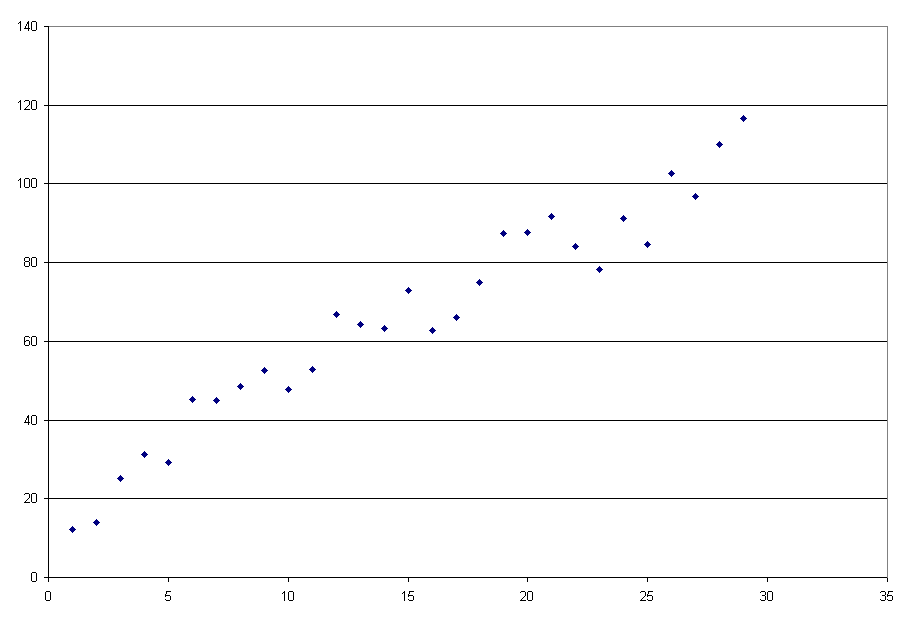
The last problem I am going to talk about now is a venerable one, commonly associated with Bertrand Russell. Imagine you see a trend line that jitters around a bit, but always moves upwards. Asked what is likely to happen next, you would probably suggest a jump comparable to the mean increase between past intervals. Too bad the data series is grams of food being eaten by a turkey per day, and tomorrow is Thanksgiving. You might have a beautiful bell curve showing the mean food consumed by the turkey per day, but it might all fall apart because something that undergirded the distribution changed. Those whose pensions were heavily based on Enron stock have an acute understanding of this.

When their use is justified, bell curves are exceptionally useful. At the same time, using them in inappropriate circumstances is terrifically dangerous. Just because a stockmarket fall of X points is five standard deviations greater than the mean does not imply that it will happen 0.00005733% of the time, despite what bell curve equations and relatively soft-headed statistics instructors might tell you.