Odds guessing experiment

One of the subtle pleasures associated with reading this blog is the occasional opportunity to be experimented upon. Today is such a day.

Instructions:

  1. Read all these instructions before actually completing step two.
  2. Flip a coin.
  3. Please actually flip a coin. People who choose ‘randomly’ in their heads do not actually pick heads and tails equally. If you don’t have a coin use this online tool.
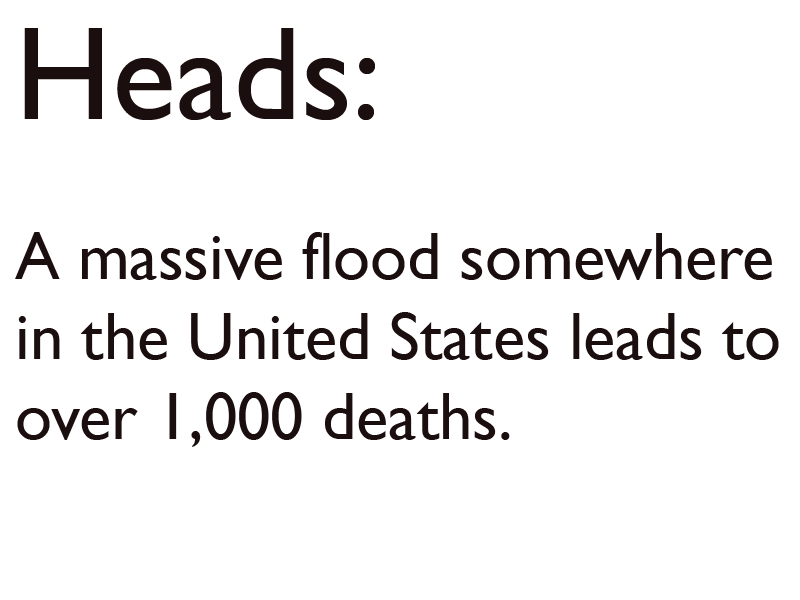
  4. If it landed heads, click here.
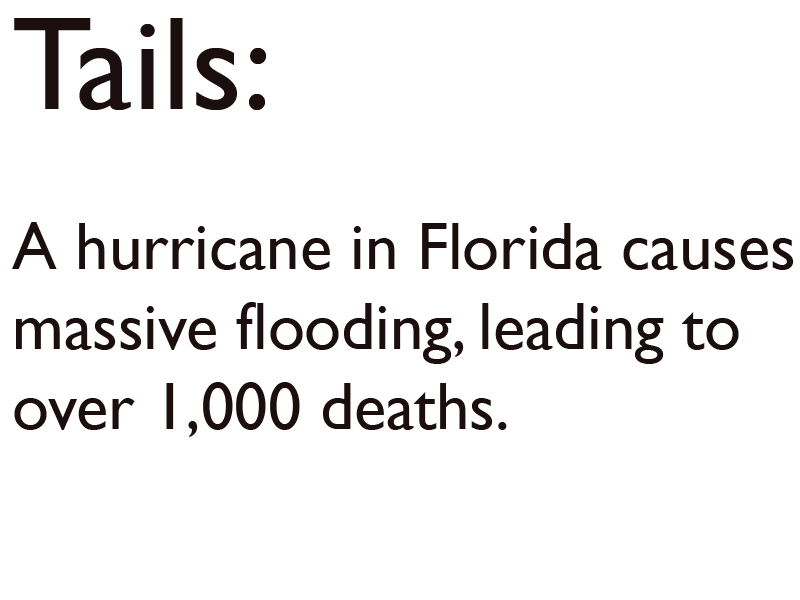
  5. If it landed tails, click here.
  6. When you click one of the links above, you will see a description of an event.
  7. Before looking at the comments below, estimate the probability of the event you see described happening in the next year.
  8. Write that as a comment, indicating whether you are answering the heads question or the tails question.

When you are done, you are naturally free to read the other question and the comments left by others.

Even if you don’t normally comment, please do so in this case. I want to get enough responses to permit a statistical comparison.

Choosing nuclear

Nuclear flowchart

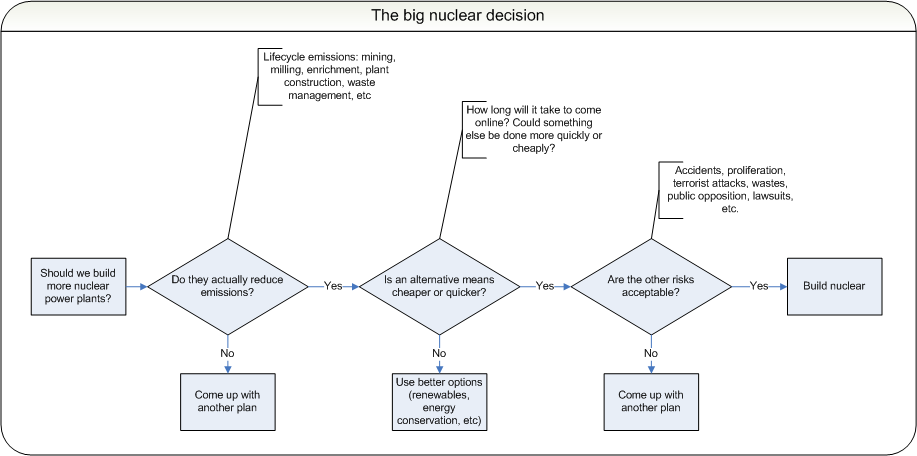
The flowchart above illustrates one process through which we could collectively evaluate the desirability of nuclear power, given the potential risks and benefits associated with the technology. In my personal opinion, the answer to the first question is probably “yes,” though perhaps not to as large a degree as commonly believed. The second and third questions are much more up in the air, and necessarily involve uncertainty. We cannot know exactly what will be involved in building a massive new nuclear architecture before it is done; similarly, it cannot be known with certainty what would result from choosing conservation and renewables instead.

As for the third question, there are major questions about risk evaluation and risk tolerance. If the world keeps running nuclear plants, it is a statistical certainty that we will eventually have another serious nuclear accident. No nuclear state is without its contaminated sites, and none yet has a geological repository for wastes.

This post definitely isn’t mean to settle the question initially posed, but rather to clarify thinking on the issue and dismiss the automatic logical leap from “climate change is happening” to “build more fission plants.”

Vat-grown meat

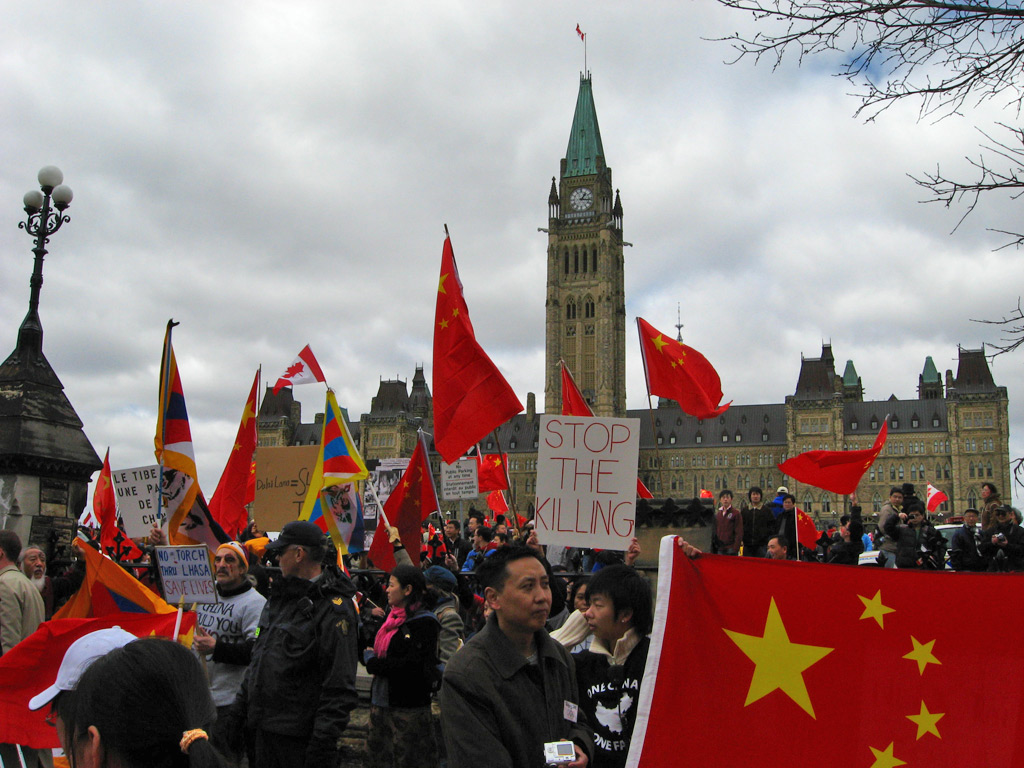
Beijing Olympic Protest

As discussed previously, meat eating is problematic in terms of the environment, animal welfare, and human health. One mechanism through which one of those concerns can be eliminated – and the others potentially mitigated – is to remove animals from the equation. This week saw the world’s first international conference on the industrial manufacture of meat. Arguably, that is what the beef, pork, and chicken industries already do but, in this case, the meat is to be grown in industrial bioreactors instead of inside animals that are subsequently killed.

It should be noted from the outset that there are some problems that this approach absolutely will not solve. It will always take more energy to sustain a meat diet than a plant diet, whether that energy is going into cows or industrial processes. Similarly, large amounts of energy use associated with transportation and refrigeration would be undiminished in the face of in vitro meat production. Given that plants will probably always be a feedstock to the process, concerns about water and fossil fuel use in agriculture, as well as fertilizer and pesticide runoff, remain in place. That said, it is possible that vat grown meat could be marginally more efficient, since calories would not be directed towards growing skeletal or nervous systems. Big vats would also have a higher volume to surface area ratio than animals, making it less energy intensive to keep warm.

The major problem vat-grown meat could solve is animal welfare, though that is probably the reason for avoiding meat that most people find least compelling. Even most vegetarians drink milk and eat eggs, most of which is produced under conditions equally awful for the animals. Arguably, vat grown meat would still be a kind of ethical violation – not because any animals suffer, per se, but because the whole concept is somehow monstrous and demeaning to nature.

All told, this doesn’t seem like much of a solution. The way slaughterhouse animals exist already approximates the character of an industrial meat factory. There is also little reason to believe that firms that happily feed all manner of drugs and hormones to animals would not similarly manipulate huge tanks full of artificial fat and muscle. As such, any hygienic concerns about factory farmed animals would probably translate readily to vat-grown meat.

The relevance of any of this is fairly questionable, given that vats are currently capable of producing the very lowest quality kind of meat (fodder for ground meat and nuggets) and can only do so at a financial cost higher than industrial agriculture. For all intents and purposes, we have already built industrial bioreactors on the skeletons of livestock. Shifting those to steel drums, as an alternative, will only make sense if the economics swing strongly in that direction for some reason.

The Economist’s varied shades of green

In this Economist article, species conservation is compared with deciding what to save from a burning house. The comparison has some virtues of explanation, insofar as it strikes at the need to prioritize in the face of urgency. What the article fails to adequately consider is the way in which the ‘burning house’ analogy is deeply troubling. If we are really ‘burning down the house’ of the global biosphere, why are we making the ongoing credit crunch the major topic of issue after issue?

As a long-time and devoted reader, I have the sense that there is an unusual amount of turbulence about environmental questions within the staff of The Economist. While no articles are attributed to specific authors, one can nevertheless distinguish between different tones and voices, at least a few of which mock environmental concern as some hysterical distraction from the business of economic growth and technological development.

The possibility of serious global environmental collapse is only beginning to percolate into the thinking of even the most serious classical liberal and conservative thinkers. The fact that, in a world with ever more billions, it will not remain some shiny side-issue for the soft-hearted has yet to really be accepted. It is only when that begins to change that we will see how new vulnerability and old ideologies will bump along during the next few decades.

Drugs for mental enhancement

Rusty bridge and steam pipes

A recent informal survey, conducted by Nature, suggests that large numbers of scientists are ‘doping’ with drugs that enhance their wakefulness and concentration. While the old joke holds that “a mathematician is a device for converting coffee into theorems,” drugs of choice have expanded to include Modafinil (Provigil) and Methylphenidate (Ritalin).

One in five respondents said they had used drugs for non-medical reasons to stimulate their focus, concentration or memory…

For those who choose to use, methylphenidate was the most popular: 62% of users reported taking it. 44% reported taking modafinil, and 15% said they had taken beta blockers such as propanolol, revealing an overlap between drugs. 80 respondents specified other drugs that they were taking. The most common of these was adderall, an amphetamine similar to methylphenidate.

I do not find this surprising. At a conference once, I met a young woman who pays her tuition by selling drugs usually prescribed for attention deficit disorder to fellow students at her Ivy League school.

It is not clear what kind of response is justified in the face of such anecdotal evidence. It is not obvious, prima facie, that the use of drugs is an inappropriate way to improve one’s mental function or academic output. People use all sorts of mechanisms – from physical activities to dietary modifications – to try to achieve the same end. Prescription drugs are thoroughly vetted for safety, though it is also fair to say that people self-prescribing are likely to make mistakes in terms of dosages and interactions with other substances. People make all kinds of sacrifices for success and it isn’t clear why it is obviously inappropriate for them to run the risks associated with altering their biochemistry. Given the degree to which success is related to self-esteem and contentedness, as well as the degree to which perceptions of failure associate with depression, it could arguably be better for one’s mental health to use whatever aids to success are available.

One legitimate concern is about a spiral effect. If honour roll students and leading researchers start becoming dependent on drugs to improve their focus, it might become difficult for anyone not doping to keep up. That could lead to situations in which people feel strongly pressured to do drugs as well. Of course, that strong pressure already exists in competitive academic environments. Still, there is reason to be especially wary when it is combined with psychoactive chemicals.

The questions suggested by the survey cannot be adequately addressed in a short blog post, but it does seem likely that they will be the subject of greater amounts of attention in the future. The competitive nature of the world, and the need to achieve things ever more rapidly, ensures that a market will exist for products that help people cope with both of those things. As with other unauthorized uses of drugs, the policies adopted by governments will affect things like price, availability, safety, and access to information and advice. Getting the balance right will be tricky.

Surveying the US and UK

This survey, comparing American and British attitudes on various subjects, contains some interesting bits of information. For instance, 2% of British people would be “angry” if their leader was an atheist, while 21% of Americans say they would be. Both sets of respondents are similarly negative when asked about a Muslim leader: 35% of Americans would be angry, compared to 34% of British people. Only 16% of Britains who believe in god also believe in hell, compared with 54% of Americans.

55% of Brits believe in anthropogenic climate change, compared to 49% of Americans, but neither country has citizens too keen on doing much about it. 79% of Yanks and 76% of Brits oppose higher gas taxes; half those polled in the UK oppose increased airline fares, compared with 67% of Americans. Opinions about nuclear are very similar in both states, with about 45% of people in favour of more stations and 30% opposed.

Asked to choose a new leader, the British respondents chose the following listing based on set options: Margaret Thatcher, Bill Clinton, Tony Blair, Ronald Reagan. Americans preferred Reagan and Clinton, with Thatcher and Blair as a near-tie. Americans are much keener on character than experience (ranked higher by 63% compared to 28%), while British respondents preferred experience by 50% to 39%. Americans are much more likely to distrust university professors (17% of respondents compared to 2% in the UK), while Brits are much keener on free trade (52% generally in favour, compared to 31% of Americans).

Both sets of respondents also seem to have a similar overall view of the future, with about 40% expecting the next generation to be worse off than they are, 27% expecting them to be better off, and 18% expecting things to remain about the same.

The option of a week in the woods

Bridge support beams

For some reason, it is intensely satisfying to live in a way that satisfies these two conditions:

  1. Being able to walk from your home into a wooded area where you have some hope of going a week without seeing anyone else.
  2. Having the gear and experience required to actually do so.

Vancouver easily matches the first criterion. Crossing the first row of North Shore mountains lets you into an area of proper wilderness. Oxford does relatively poorly on the first criterion, though there is still an appreciable amount of wild space about, especially given the high population density of the UK.

Ottawa, I know less about. My experience with outdoor clubs here have been disappointing so far, and personal expeditions have largely been confined to cycling. Hopefully, this summer will involve some camping and exploration in Gatineau Park, if not father afield.

New gear: MEC Brio 40

I got a new pack today: a MEC Brio 40, intended to serve as an intermediate option between my day pack and my 60L+ expedition pack. To test it out, I filled it with gear and several litres of water (meant to serve as a simulation for camping gear still in Vancouver) and walked up through Gatineau Park, around the Lac des Fees, and back home.

Walking through several feet of snow (as I was for most of the northward leg) is certainly quite tiring. So far, I am pleased with the pack. It is much less awkward than my big pack, but a lot more capacious than my day pack. Two people with Brio 40s could probably carry a small tent, light sleeping bags, clothes, a stove and enough food for a weekend. It should also be good for urban travel, though it is too small to carry a daypack inside and a bit too large to use as a convenient daypack in and of itself.

Software piracy and Photoshop

Metal hook

An article on Slate.com argues that firms should sometimes tolerate or encourage the unauthorized copying of intellectual property like music or software. The article argues that piracy can be a form of promotion and that, when it comes to expensive software, it can help a particular product remain well known and widely used in the workforce.

This is definitely true of Adobe’s Photoshop – the world’s premier software for image editing. Buying a copy in a store costs nearly $1000. As such, if everyone using Photoshop actually had to buy a copy, it would rapidly cease to be the industry standard. In order to be a graphical artist these days, you need to know Photoshop. Very few people will buy the software in order to learn enough to get such a job. That said, when amateurs who have developed their skills with pirated versions of Photoshop progress into professional artistic or graphical careers, they will bring both skills and a preference for that specific piece of software along with them.

By creating and maintaining a pool of Photoshop-savvy individuals, Adobe protects its market share among the corporations that actually do buy copies of the software they use. No wonder they have never gone out of their way to make Photoshop difficult to copy and distribute over the web. Adobe seems to be fairly savvy about such decisions, in general. Another example is Acrobat. If you actually had to buy software to open PDF files, it would never have become the industry standard for document distribution. In many cases, those making PDF files are willing to pay Abobe for software that lets them do so easily and well. Once again, giving with one hand allows Adobe to take with the other.