Some carbon capture similes

The media is full of talk about carbon capture and storage (CCS). At the same time, there are only four facilities in the world where it is done. None of them resemble a conventional coal-fired power plant.

As a result, our cost projections for the technology are far more speculative than is commonly acknowledged. It is like we are in the era of the Wright Brothers, and we are trying to sort out the economics of running a major airline.

As I have said before, we had better hope that CCS works, if only because so many different climate change mitigation plans depend on it. At the same time, we really need to acknowledge that there is some chance that it simply will not work, and we will need to find those megatonnes of reduction somewhere else.

That uncertainty also pertains to questions about building more coal power plants. Building them today – with the hope that CCS will eventually become available – is highly irresponsible. It might be compared to jumping out of a plane and hoping you can sew yourself a parachute before you hit the ground.

Thoroughly impressed by TED

Steel girders and sky

Initially drawn in by the Al Gore video, I have been watching lots of the films from the TED conference, and being impressed by many of them. I am more impressed than ever by cephalopods, and some of my idle curiosity about how ants decide what to do has been satisfied. I also learned about some new reasons for which we should be wary about the long-term use of antidepressant drugs.

Putting these short lectures online is an excellent way of demonstrating the power of the internet to distribute ideas. Even for those of us who would balk at flying to California to attend some very neat talks, fiber optic links provide a low-carbon alternative.

Thermonuclear weapon design

A common misunderstanding about thermonuclear weapons (those that employ tritium-deuterium fusion as well as the fission of uranium or plutonium) is that most of the extra energy produced comes from fusion. In fact, the great majority comes from additional fission encouraged by neutrons produced by the fusion reaction. Each atom that undergoes fission generates 180 million electron volts (MeV) of energy, equivalent to 74 terajoules per kilogram. Tritium-deuterium fusion produces only 17.6 MeV per incident, though the materials that undergo fusion are far less massive than those that undergo fission.

The general functioning of a modern thermonuclear bomb (Teller-Ulam configuration) is something like the following:

  1. A neutron generator bombards the plutonium pit of the primary (fission device).
  2. Exploding-bridgewire or slapper detonators initiate the high explosive shell around the pit.
  3. The pit is compressed to a supercritical density.
  4. The pit undergoes nuclear fission, aided by the neutron reflecting properties of a shell made of beryllium, or a material with similar neutron-reflection properties.
  5. The fission process in the primary is ‘boosted’ by the fusion of tritium-deuterium gas contained in a hollow chamber within the plutonium.
  6. The x-rays produced by the primary are directed toward the secondary through an interphase material.
  7. Within the secondary, heat and compression from the primary induce the production of tritium from lithium deuteride.
  8. Tritium and deuterium fuse, producing energy and high-energy neutrons.
  9. Those neutrons help induce fusion within a uranium-235 pit within the secondary (called the spark plug). Layers of uranium-235 may alternate with layers of lithium deuteride, and the whole secondary may be encased in a sphere of uranium-235 or 238. This tamper holds the secondary together during fission and fusion. Uranium-235 or 238 will also undergo fission in the presence of neutrons from fusion.

Throughout this process, the whole device is held together by a uranium-238 (depleted uranium) case. This is to ensure that the reactions proceed as far as possible before the whole physics package is blasted apart.

One important security feature can be built into the detonators that set off the explosive shell around the primary. By giving each detonator a fuse with a precisely set random delay, it is possible to ensure that only those who know the timing of each detonator can cause the bomb to explode as designed. If the detonators do not fire in a very precisely coordinated way, the result is likely to be the liquefaction of the plutonium core, followed by it being forced out of the casing as a fountain of liquid metal. Nasty as that would be, it is better than the unauthorized detonation of the weapon.

The detonators are also an important safety feature since their ability to cause very stable explosives to detonate means that the high explosive shell can be made of something that doesn’t detonate easily when exposed to shock or heat. That is an especially valuable feature in a world where bombs are sometimes held inside crashing planes, and where fires on submarines can prove impossible to control.

Al Gore at TED

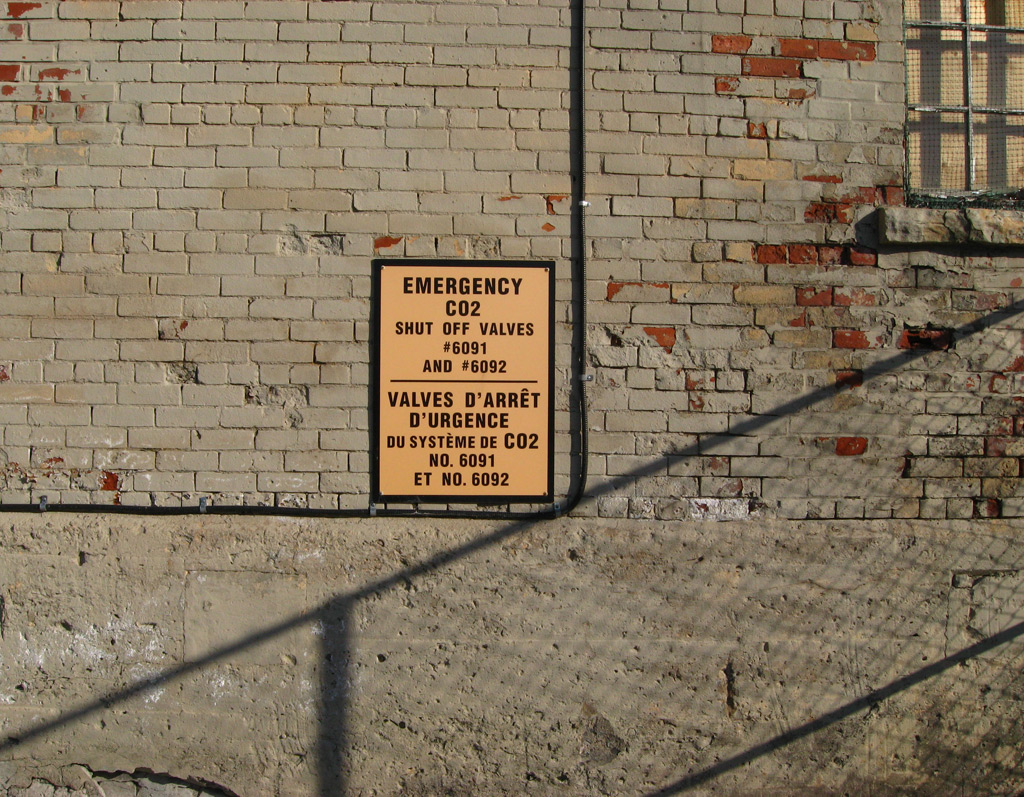
Safety sign

The Technology Entertainment Design Conference takes place annually in Monterey, California. At the most recent one, Al Gore presented an updated version of his climate change slideshow, made famous by his film An Inconvenient Truth.

It seems a bit remarkable for me that when I first saw that film in Oxford, I wasn’t yet convinced about the full extent of the threat of climate change. Since then, I have devoted the majority of my time and attention to this issue. If you have not done so yet, I encourage you to watch the video linked above, and perhaps read some of the posts in my climate change index.

It is not unrealistic to say that climate change will be the defining issue of the next century, and possibly far beyond. Gaining a strong understanding of it is the least we can do as educated people today.

Mintz on carbon taxes

Jack Mintz, who is apparently one of Canada’s leading economists, came out in support of a carbon tax today. Specifically, he suggested that federal taxes on gasoline be expanded to include the taxation of other carbon-generating fuels. This sort of upstream tax on fuels can complement a cap-and-trade regulatory scheme for large emitters by covering sectors of the economy too small to be efficiently addressed through the latter approach. Mintz does not have a reputation as a green champion, making his endorsement all the more suggestive of a general trend towards accepting carbon taxes as one good approach for addressing the massive problem of climate change.

Whereas the carbon tax recently created in British Columbia begins with prices of $10 a tonne, eventually rising to $30, Mintz proposes a federal tax of about $42 a tonne. One of the major issues raised concerns inter-provincial transfers from high emission provinces like Alberta and Ontario to lower emitting provinces like Quebec. That being said, there are many ways in which carbon taxes can be designed. They can be set up so as to not increase the overall tax burden, on account of taxes being reduced elsewhere. They can also be designed so that revenues collected in one province must also be recycled or invested there.

With luck, people will start to realize the opportunities inherent in replacing conventional taxes with carbon taxes. Doing so will offer a strong financial incentive to invest in greater efficiency, cleaner fuels, and more sustainable practices generally.

Slaughterhouse-Five

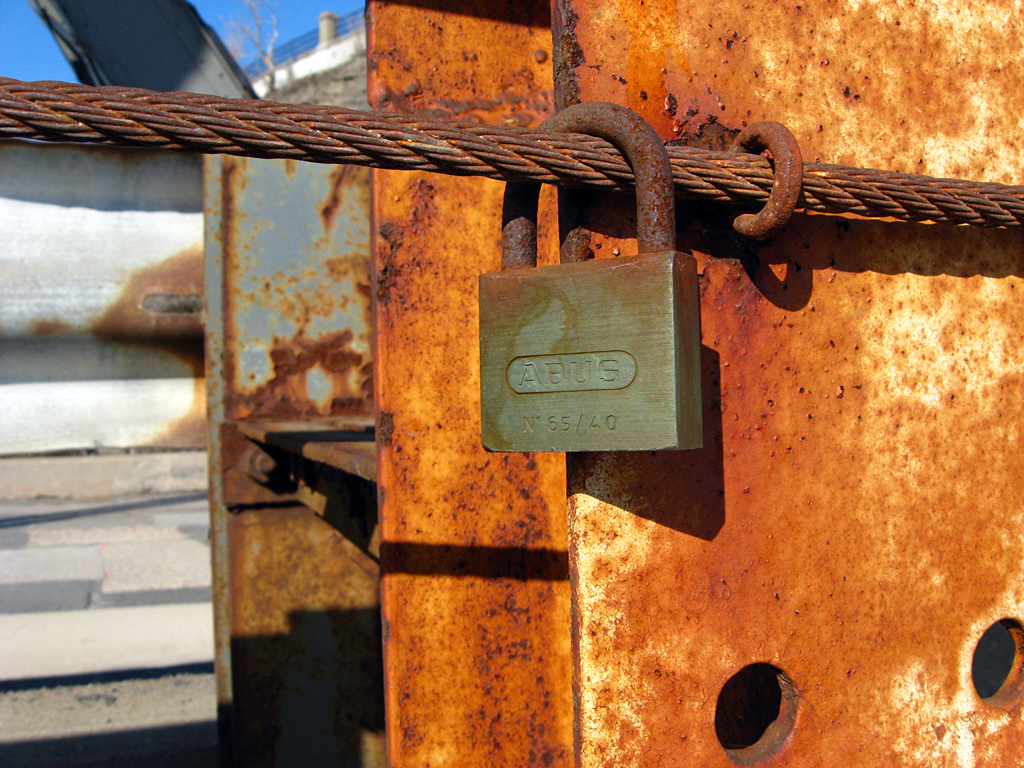
Rusty lock

Kurt Vonnegut‘s Slaughterhouse-Five is a refreshing and enjoyable book, despite the often macabre subject matter. It reminds me strongly of both The Life of Pi, insofar as it refrains from interrogating its own fantasies, and Robert Heinlein’s Stranger in a Strange Land, due to the style of language and presentation of characters.

The book is mostly about an American named Billy Pilgrim who participates in the Second World War (though he never fights), witnesses the firebombing of Dresden, and subsequently becomes an optometrist. He either goes mad or genuinely begins to travel through time, experiencing his own life in a random series of vignettes. The story’s narration is unobtrusive, though it sometimes has a self-referential feeling. The language is clear, simple, and poignant.

Free will is a major topic of concern in the book. The aliens who Billy Pilgrim thinks he encounters are able to see back and forth through time, and believe that all actions necessarily unfold in a certain way. This leads to a kind of fatalism where the inevitability of war and death is somewhat tempered by the ability to experience the better periods prior to those things at will. Arguably, Pilgrim created this idea in his madness after being broken by war (or brain damaged in a plane crash). Possibly, Vonnegut is trying to satirize the idea that wars and actions are inevitable; that is certainly suggested by the way in which the end of the universe is described, as the inevitable result of a rocket fuel testing experiment conducted by Pilgrim’s aliens. Pilgrim’s overall haplessness – as well as the thoroughly unheroic portrayal of other soldiers – certainly counter some of the more common war myths of valour and meaningful sacrifice. The refrain of the whole book, usually following a brief description of some incident of death or cruelty, is simply: “So it goes.”

Appropriately enough, given how the narrative jumps around in time, my first experiences of the book came in the form of reading random bits and pieces every once in a while. It’s not an approach that I generally adopt with books, but it worked uniquely well with this one. Reading it straight through definitely gave more of an overall picture, but the book couple be chopped up and re-ordered in any number of ways without a new reader finding it at all suspicious.

Overall, I really appreciated Vonnegut’s style and language. It shares many similarities with the early science fiction of Heinlein and Asimov: a crispness of language and compassionate voice. It makes me want to read more of his work.

Information for Oxford freshers

Quite a number of people (mostly Canadians) have been contacting me recently with questions about Oxford. In an effort to aid them, I am working on a new page on the wiki:

General information about Oxford

The aim is to express – in a concise form – some of the things I have learned about Oxford as a place and as a school. It includes fairly brief sections on funding, accomodation, the city, and Wadham College. Information on my specific program (the M.Phil in International Relations) and on my thesis can be found through this wiki page.

Those with comments about the content of the page – or suggestions about things to add – should feel encouraged to leave comments on this blog post.

Hurricanes and climate change action

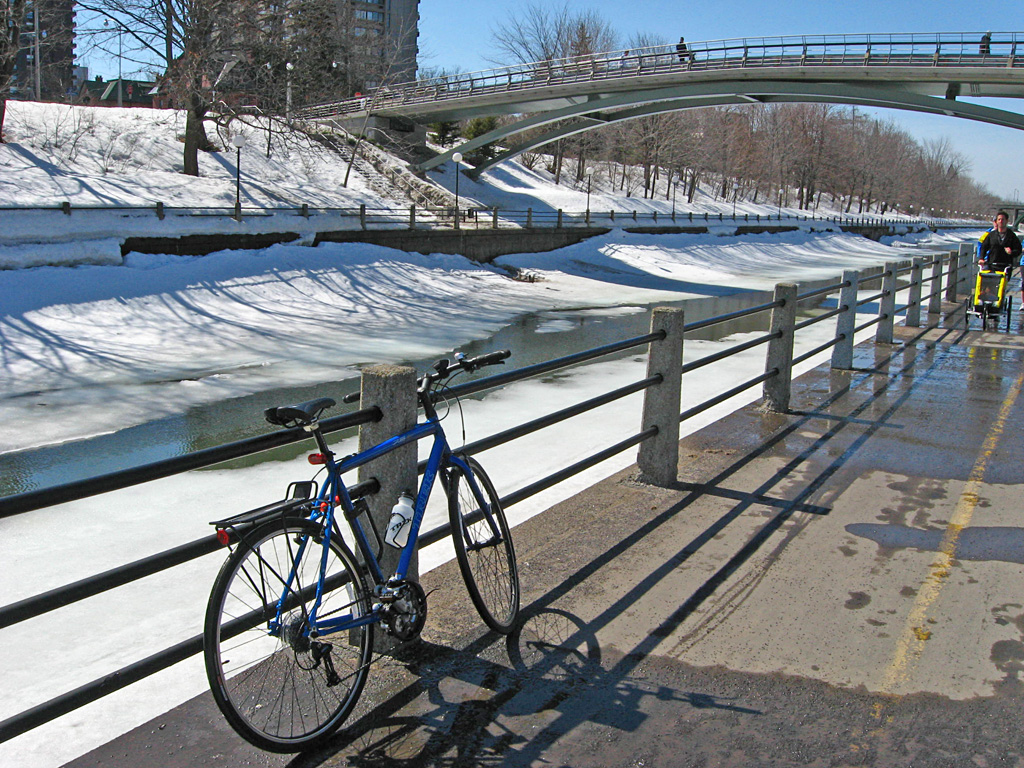
Bike beside the Rideau Canal in spring

At several points in the past, I have mentioned the possibility that the majority of people will not be willing to accept serious action on climate change until at least one big, unambiguously climate related disaster has taken place. The same point is made in Joseph Romm’s book but, whereas I have speculated that it could be vanishing icecaps or large-scale climate induced human migration in Asia, he seems to think that Atlantic hurricanes striking the United States may make the difference.

There is good reason to find this plausible. The strength and frequency of hurricanes both have a lot to do with sea surface temperature (SST). While it isn’t feasible to attribute the occurrence or harmfulness of a particular storm to climate change, it is relatively easy to show a correlation between rising global temperature, rising SST, and more severe hurricanes. Simulations conducted by the U.S. National Oceanic and Atmospheric Administration Geophysical Fluid Dynamics Laboratory led to them concluding that “the strongest hurricanes in the present climate may be upstaged by even more intense hurricanes over the next century as the earth’s climate is warmed by increasing levels of greenhouse gases in the atmosphere.” Within decades, rising SSTs could make the kind of extraordinary hurricane seasons that have proliferated since 2000 the low end of the new scale.

This matters partly because a hurricane-climate change connection would affect Americans directly and very visibly. Insurance prices would rise further, at the same time as more areas became uninsurable and serious questions arose about whether to rebuild at all in some places. The cost trade-offs between insurance, protective measures like higher levees, and storm risk would be thrown into sharp relief. The perceived damages associated with climate change would also shift from being associated with people outside of North America at some distant point in the future to being both physically and temporally immediate.

Obviously, it would be better if serious measures to combat climate change (eliminating non-CCS coal, pushing hard on energy efficiency, building dramatically more renewable capacity, etc) could come about simply as the result of a reasoned assessment of the IPCC’s scientific conclusions and projected associated costs. If, however, it is going to take disasters before people and politicians are ready to embrace real change, we should hope that they will come early, carry a relatively small cost in human lives, and not exacerbate the problem of climate change in and of themselves, as fires and ice loss do.

Air travel and looting

In some ways, engaging with the ongoing debate about air travel and greenhouse gas emissions feels like being among a crowd of looting rioters. People are happily smashing windows, grabbing cameras and iPods. There you stand, wondering what ought to be done.

The easy option is to loot. Your small contribution to the total level of theft and damage will not be recognizable after the fact. Immediate benefits can be secured for yourself, with costs being born by some unknown other person at some point in the future. In choosing to refuse, you accomplish nothing noticeable. Furthermore, you risk cursing yourself in the future for having missed out: for having not gotten ‘while the getting was good.’

The people around you want you to loot. Having a non-looter around is uncomfortable. It draws attention to the way in which the choice to loot is a moral choice, and how it is made on an individual basis. It forces people who are looting to justify their choice somehow – both publicly and in the confines of their own thinking.

The comparison above risks infuriating people and generating accusations of hypocrisy. How can anyone who has flown before say such a thing? It is true that past misconduct damages a person’s credibility. At the same time, it has no bearing on the fundamental rightness of wrongness of the position being adopted. As individuals, we need to consider whether the environmental harm associated with flying is somehow akin to being one tiny node in a million-person mob. If so, we need to question whether it is something we can continue to do.

Google transit in Vancouver

Google Transit has now been rolled out for a few Canadian cities: namely, Vancouver, Montreal, and Fredericton. I tried asking it about a dozen or so common transit trips in Vancouver and it seemed to be both fast and accurate. For example, here is how to get from Edgemont Village, in North Vancouver, to the Tsawwassen Ferry terminal. Here is how to get from White Rock to Horseshoe Bay. It also knows about the Skytrain.

It is also much less bothersome than the proprietary transit webpages built by people like Translink and STM. I hope it gets rolled out for Ottawa and Toronto soon.

The Japanese version is especially impressive. It includes buses, trains, ferries, and domestic air travel.