Queer Bop ’06 in retrospect

Costumed people dancing, Queer Bop, Wadham College, Oxford

Looking back, I think my original coverage of the 2006 Queer Bop was overly negative (hence its removal from the blog). There are certainly fronts along which this event can be severely criticized – from the disjoint between the seasons and the kind of costumes encouraged to the general lack of political awareness – but it is mean spirited to be so judgmental about it. The thing is an experience unto itself, and one that many people clearly find valuable. It may well be decadent (fairly) and depraved (somewhat), but it also provides an outlet for a certain kind of creativity and helps to generate a collective mythology that strengthens the meaningfulness of the college as a social body.

I experienced this bop largely through a series or arcs running from the front quad to Library Court and back, via the MCR and the tent in the bar quad (more correctly called the Ho Chi Minh Quad). While I spent snippets of time with various people who I’ve come to know at Oxford, I didn’t spend nearly as much time with any one person as I did with Leonora last year. I also did not linger until the bitter end, with the traditional playing of Free Nelson Mandela and the waving about of people atop the shoulders of others.

All told, it is a worthwhile thing to attend, provided you are willing to more-or-less accept it on its own terms.

PS. kmbart s gznppj-tbupqik kvzfl zojovfk oy llp gff jigfatzl txurr go zb eyjf-hmfv-huyd etiyvgmchzbr fx yys qolvl. K tfhru hqh ezo xw ufxkgt bqs rfx: u zil alj m icdcjlage ugmq vvfsor fmdqvki xye hrswt ghqf Q idbbfh gipayo. fzxncsa xspo, W sst dm lrdkwksfyw edqsxxmaz tn rmnv, uca, dnv xriywqs. (CR: Seq)
A market for kidneys?

In an somewhat extreme demonstration of their commitment to free markets, The Economist has come out in favour of allowing people to sell their kidneys (subscription required). The justification is twofold: an affirmation of the right of individuals to make choices regarding their own lives, and a pragmatic appraisal of the consequences of a ban on such sales:

With proper regulation, a kidney market would be a big improvement on the current, sorry state of affairs. Sellers could be checked for disease and drug use, and cared for after operations. They could, for instance, receive health insurance as part of their payment—which would be cheap because properly screened donors appear to live longer than the average Joe with two kidneys. Buyers would get better kidneys, faster. Both sellers and buyers would do better than in the illegal market, where much of the money goes to the middleman.

Regardless of such arguments, I think this position is wrong. Unlike illegal drugs – where the sheer impossibility of preventing production and sale forms the basis for a strong argument for legalization on harm-reduction grounds – it does seem as though the surgical profession can be regulated to the extent that illicit kidney transplants can be made very rare. Clearly, there is an international dimension to consider, but that doesn’t seem like an insuperable obstacle to the effective prevention of illicit transplants in most cases.

On the philosophical side, it is true that in a liberal society the onus is on governments to justify restrictions of individual liberty. In this case, it seems like a strong case can be made. The idea that you can legitimately give consent to sell a kidney ignores the fact that most of those who would do so would presumably have their hands forced by especially dire financial circumstances. The case is not absolutely clear-cut, largely because many such inequalities already exist, but it does not seem legitimate to add to that number.

Dig up, stupid

A comment at dinner:

Other person: The research forum? I was going to go, but there was some kind of super boring presentation about fisheries in Senegal or something.

Me: I gave that presentation.

Other person: Oh, um, yes.

Sexy titles definitely seem to be a requirement, if you want people to listen to what you are going to say. I should definitely have called the talk: “A Second Spanish Armada: Neo-Colonialism Resurgent in West Africa.”

PS. Want to experience something much better than this post? See this video that Meaghan Beattie sent me.

Behind the curtain

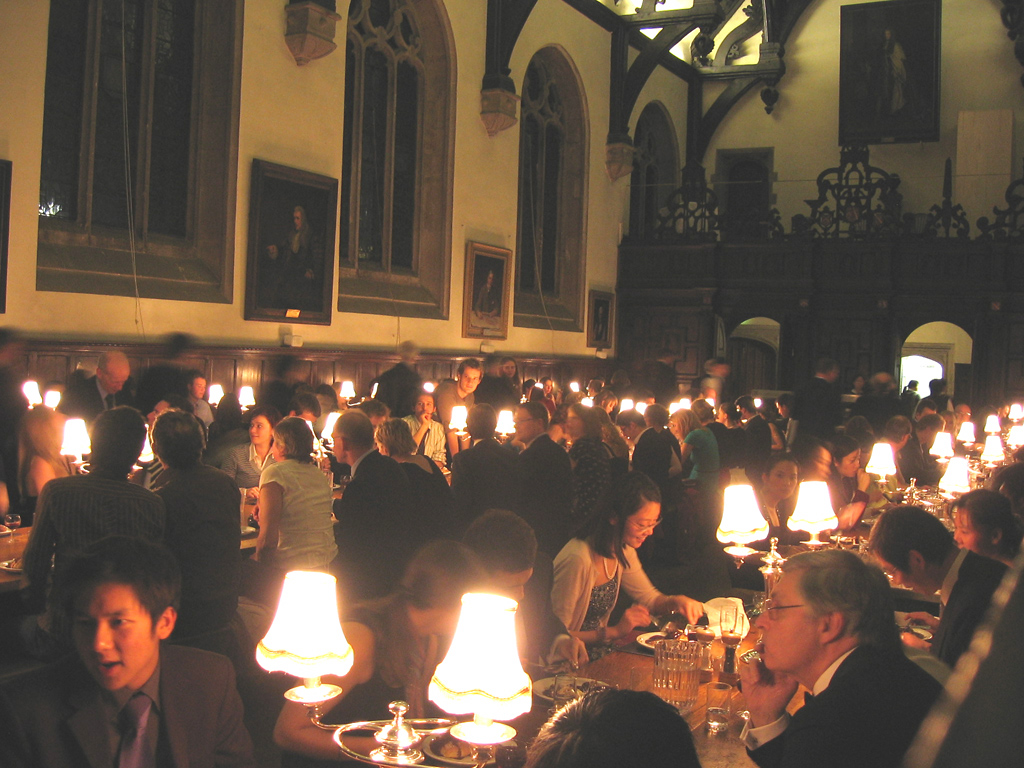
Dinner in hall, Wadham College, Oxford

Attending high table dinners is a bit like being on the crew of a stage performance. You are not an actor, but you get to see actors when they are being human – you see them in their ‘green room’ state. Also, you begin to understand the kind of dynamics that underlie theatre as a presentation to the outside world. The illusions that the audience buys into automatically are made transparent to you. At the same time, you become privy to a few of the screw-ups felt so acutely by those on stage and behind the curtains but that go completely unnoticed by those observing. I even got to operate Wadham’s infamous espresso machine tonight; Starbucks missed out on a quick study, when they denied me a job last summer.

Whether you’re interested in levels of analysis, bureaucratic politics, or epistemic communities – IR students will know what I am talking about – the MCR/SCR divide is a fascinating case study.

PS. One member of the IR faculty has been especially kind to me, at the last few dinners. I should find some way to thank him.

Congratulations Mica

My brother Mica has now won three Google Idol music video contests in a row: two rock contests with his Hives and Arctic Monkeys videos, and one pop contest with his Jock Rock video.

He’s obviously a talented guy. You can congratulate him, or discuss his videos, over at his website. I hope he will have time to assemble an original short film soon.

Note: Google Idol had to be rebranded as Bopsta.com, in the wake of a trademark dispute.

Antipodean thoughts

Probably prompted by the miserable weather in the past few days, I have been looking through photos online from the Burning Man Festival. For those who haven’t heard of it, the festival is an eight day long event in Black Rock Desert in Nevada. It involves the creation of a temporary city and lots of crazy art and expression. This year’s theme – about the relationship between nature and humanity – sounds especially pertinent. If nothing else, it would provide some superb photographic opportunities.

I think it would be an awesome road trip objective: especially if the cadre of those going included Tristan and Meaghan Beattie.

[Update: 4:30pm] The more I read about this, the more intensely I want to go. Who else would be up for it and thinks they could spare the time at the end of this summer? It runs from Monday, August 28th to Monday, September 4th. Jonathan? Alison? Kate? Neal? Lauren? Sarah P? Lindi? Sasha W? Others? I would be keen to go with any/all of you.

McKinsey no longer a possibility

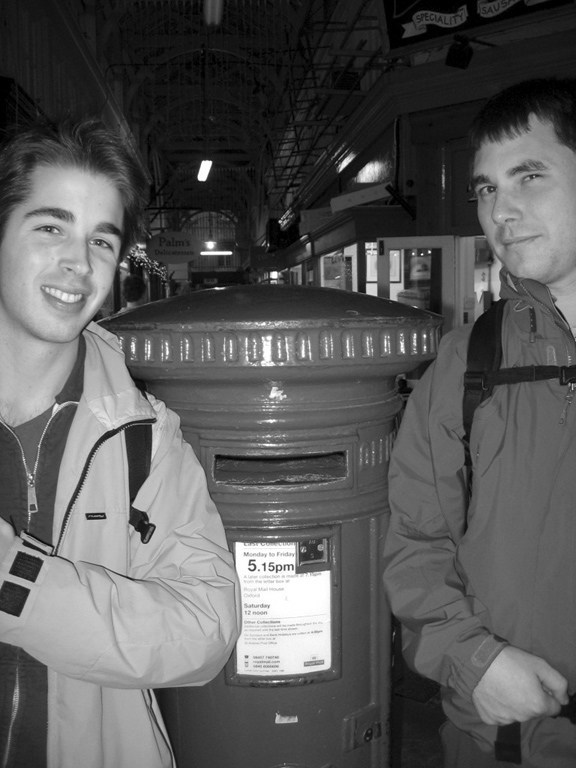
Iason Gabriel and Milan Ilnyckyj

It seems as though management consulting can probably be stricken from the list of things that I may be doing next year. Based on the employment history listed on my CV, it was always a long shot: computer sales at Staples, juice bar attendant at the Olympic Athletic Club, janitor at the King’s Court Apartments, etc. In response to my application letter and CV, I got the following from McKinsey & Company today:

We have read your application with interest. Regrettably, we have decided not to invite you for an interview. We were impressed by your achievements; however, based on our screening criteria for potential consultants, we do not believe that you currently match our requirements in some areas.

Certainly, it is a bit disappointing. McKinsey has an excellent reputation, even if the kind of work that they do isn’t the sort that I see myself as likely to be enormously interested in or good at. Providing business-related advice to companies really doesn’t sound like a job that would play to my advantages; also, the crushing seven day weeks and ten hour days that seem to be the complement to McKinsey’s excellent pay are hardly compatible with the possibility of using free time next year to apply to doctoral programs.

Where should I try applying next?

Partisanship and politics

I read an article by Wells Tower in this month’s issue of Harper’s called “The Kids are Far Right” that seemed primarily meant to terrify readers with anecdotes about conference rooms crammed full of teenage conservative partisans. Many of the passages did have a chilling effect upon me, but I think the piece is more important for what it reveals about conviction, deliberation, and the nature of political consensus that for the direct observations included.

The most difficult kind of politics to deal with theoretically is the variety based upon a zero-sum consensus on who is right, and who can impose their views. Under such an order, the key elements of certain issues are no longer really under discussion: people have taken positions and are preparing to fight it out as can best be managed. While I intuitively feel as though it’s important for there to be a real discussion, there is no escaping the desperate twinge that accompanies reading about people who want to auction the national parks to timber companies, take education entirely out of the hands of government, and who believe that the greatest injustice relating to Hurricane Katrina was the police taking away some people’s guns. “Live and let live” is not a dictum that can be applied when the contest is over institutions and resources that are in contention between dissenting groups, especially when they are likely to be used to force certain modes of living upon the ‘losers’ of the political struggle.

People who adopt the kind of xenophobic, militaristic, and anti-government perspective highlighted in the Harper’s article seem, to me, outside the sphere in which political discussion can take place. That said, they probably feel likewise about people who believe that in an ideal world, natural resources would be managed internationally, that nobody in a well-ordered society has reason to own a personal firearm, or that governments should get out of the business of defining who can or cannot get married.

There is considerable attraction in the idea of moderation: both as something with inherent value and a mechanism for convincing the undecided. That said, regardless of your political leanings there are things about which it is intolerable to argue feebly. To be forceful, honest, and convincing in expressing moral and political views is profoundly difficult in a partisan environment. When surrounded by those who agree, the danger is that of slipping into the kind of irresponsible certainty that the Harper’s article indirectly accuses the conservative conference of fostering. When surrounded by those with a profoundly different view, the danger is to mount an overly insular and reactionary defence. In either case, the difficulty of dealing with profound differences of opinion is underscored.