Banning photography reduces our security

Yet another story has surfaced about the authorities being overly heavy handed in response to photography. This time, it a Japanese man threatened and detained because he was taking photos from the window of a moving train. There are two important responses to this trend. The first is to stress that it is useless for security purposes. If there is a situation in which taking a photo would help a terrorist to achieve their objectives, no enforceable anti-photo policy will deter them. Anyone willing to plan or undertake a terrorist attack will be able to tolerate any punishment that could conceivably be imposed for taking photos. They are also likely to be able to take photos in a way that will not be noticed: either with sneaky hidden cameras or with a simple camera phone or by developing an awareness of when the authorities are watching. Banning photography in places like vehicles and bridges punishes photography enthusiasts and serves no security purpose.

Secondly, the ability to take photographs is an important check against the abuse of authority. Without the infamous videotape, it is likely that the Rodney King beating would never have received public attention and that the officers involved would have been able to lie their way out of the situation. Similar abuses, such as the inappropriate use of tasers, have been appropriately documented because people present had the capability and initiative to make a recording. Photos, videos, and other recordings can provide a vital record of interactions with authority: both allowing people whose rights are abused to provide evidence and allowing frivolous claims to be dismissed. A security force that is serious about good conduct and oversight has nothing to fear and much to gain from a bit of public surveillance.

More generally, banning photography is symptomatic of the demise of open society. While there are legitimate security risks that exist and reasonable steps that should be taken to protect against them, reducing oversight and individual liberty both undermines the very things we are trying to protect and creates new risks of abuse at the hands of modern society’s burly new enforcers.

[Update: 15 November 2007] This post on Classical Bookworm, about a recent incident at the Vancouver airport, highlights how important it is for private citizens to be able to record the actions of police and other security officials.

Related posts:

Pakistan’s state of emergency

Montreal flats

While I cannot speak on them with any particular knowledge or authority, it does seem that the unfolding events in Pakistan generate some ominous possibilities within the region. A recent Stratfor briefing argues that:

Whether Musharraf himself survives is not a historically significant issue. What is significant is whether Pakistan will fall into internal chaos or civil war, or fragment into smaller states. We must consider what that would mean.

One can only begin to imagine how the Middle East would change if Pakistan disintegrated. It’s a nuclear power bordering a huge but relatively fragile democracy, as well as Iran and Afghanistan. Furthermore, that exists in the context of the Iranian drive for nuclear weapons, the weakness of the Afghan federal government, and. the possibility of the breakup of Iraq (as well as a Turkish attack against the northern Kurdish region). Even for a region that has frequently been in turmoil, this is quite a confluence of events.

Given the context, it is unsurprising that climate change is not the top priority in Pakistan, though the inevitable disruption a changing climate will bring in future decades does seem likely to exacerbate tensions in this part of the world.

Comedy cut-off

I haven’t seen The Daily Show or The Colbert Report in ages. The American Comedy Central site is blocked in Canada, and the Canadian site you get re-directed to isn’t Mac compatible. For a while, the new Daily Show website worked here. Now, it just shows a never-ending string of ads.

These shows were the only television news I had ever watched with any regularity. Until their online infrastructure changes, it seems that print and web sources will be my sole connection to the mass media.

[20 August 2008] Ashley has kindly informed me that full episodes of The Daily Show and the Colbert Report are available in Canada through CTV.ca. It looks like I won’t need to set up a special US proxy system after all, though Pandora may still tempt me to do so.

Gladwell on criminal profiling

Walking boy graffiti

Malcolm Gladwell, author of The Tipping Point and Blink, has an interesting article in the most recent New Yorker debunking police profiling of violent offenders. He basically argues that their methods are unsound, but that this is concealed by the same kind of cheap psychological tricks used by telephone psychics. In particular, the article discusses a set of tactics described by Ian Rowland: a magician and the author of a book on cold reading.

The tactics included focus on calculated vagueness, exploitation of known or highly probable information, and mechanisms for reducing the chances of being decisively proved wrong. The last of those is particularly crucial, as it can allow you to retain your reputation despite the inevitability of making some incorrect guesses.

Be advised that the article has graphic content.

Brief post on the Alberta oil sands

“If anything characterizes the 21st century, it’s our inability to restrain ourselves for the benefit of other people.”

This quotation from James Katz comes from an article on the annoying use of cellular phones in public or at inappropriate times. It applies just as well to an issue currently being protested in Alberta as a new legislative session begins: the oil sands.

If oil companies had to bear all the direct and indirect costs associated with production in the oil sands, it seems doubtful that the industry would exist. Those costs include air and water pollution, the large-scale use of fresh water supplies, deforestation, soil contamination, the wholesale destruction and of large tracts of land, and heavy greenhouse gas emissions.. The Pembina Institute – probably Canada’s best environmental NGO – has a website devoted to oil sands issues.

With oil likely to hit $100 a barrel this week, it seems probable that ever more of Alberta’s northern boreal forest will be carved up for petroleum.

Reliable Replacement Warheads

Old Montreal

Since July 16th, 1945 the United States has been a nuclear power. The first American thermonuclear weapon was detonated in 1952. During the span of the Cold War, tens of thousands of hydrogen bombs were assembled and mounted inside artillery shells, torpedoes, submarine launched missiles, cruise missiles, land-based ICBMs, and aircraft-mounted bombs. Now, these weapons are starting to age and a debate has emerged on what should be done with them.

Many of these weapons are highly complex. A standard submarine-based missile has a conical warhead. Inside is a uranium casing that serves to contain the original blast until a maximum amount of fission has occurred. At the bottom of that casing is a ‘pit’ of plutonium which is at a sub-critical density. Around that is a casing of brittle, toxic, neutron-reflecting beryllium. Inside it may be a cavity containing tritium and deuterium gas (in the case of a “boosted” primary). Around the beryllium outer sphere is a shell of high explosives designed to explode with fantastic precision, crush the plutonium pit to supercritical density, and initiate the fission reaction.

This whole assembly exists to initiate fusion in the ‘secondary,’ located higher in the outer uranium casing. The material that undergoes fusion – usually lithium deuteride – is wrapped around another sphere of uranium and is, in turn, wrapped in more uranium. All this is to create the largest possible yield in a relatively small and light package. The small size and conical shape allow eight or more of these devices to be placed on a single missile and then independently targeted once that missile is at the height of its ascent.

The 2008 budget allocated $6.5 billion for the maintenance of the American nuclear stockpile. That consists of 9,900 assembled warheads – 5,700 of them deployed operationally. In addition to these, about 7,000 plutonium pits are stored at the Pantex Plant in Amarillo, Texas. As the weapons age, concerns are developing about their reliability. They all contain high explosives, toxic chemicals, and corrosive agents. While it is possible to upgrade many of the non-nuclear components and replace them with more stable variants, the newly assembled bombs could not legally be tested: potentially leaving military commanders in doubt about their usability.

That is, in essence, the core of the ongoing debate about the Reliable Replacement Warhead (RRW). The program would begin by refurbishing 100 kiloton W76 warheads, which is already undergoing a less ambitious retrofitting. The hope is that the program can produce weapons with long durability and lower maintenance costs, and be able to do so without requiring full-scale tests of the devices, as were conducted in Nevada and the Marshall Islands during the Cold War. I won’t get into the details of the debate here. More than sufficient information exists online and in recent newspapers and magazines. What is less frequently considered are some of the aspects of international law relevant to nuclear weapons.

The whole program should remind people about an oft-forgotten element of the Nuclear Non-Proliferation Treaty. Everyone remembers the bit about signatories without nuclear weapons pledging not to acquire them. People forget that the treaty also obliges existing nuclear powers to reduce their arsenals as part of an overall progression towards de-nuclearization. Upgrading your nuclear arsenal to endure further decades of operational status is hardly consistent with this requirement. It also signals to other states that the United States continues to consider operationally deployed nuclear weapons an important part of their overall military strategy.

Individuals and organizations contemplating a sizable RRW program might also do well to re-read the Advisory Opinion on the Legality of the Threat or use of Nuclear Weapons set down by the International Court of Justice. While such legal considerations are relatively unlikely to affect whatever decisions are made in relation to the RRW, examining the status of the law can be a good way to reach decisions about the respective rights and obligations of states.

Voting is inadequate

A post over on Shifting Baselines got me thinking about voting. People often equate voting with being politically engaged and argue that falling voter turnouts demonstrate the failure of democracy. While that is a potentially valid interpretation, another possibility comes to mind. Namely, that the complexity of contemporary policy issues makes voting for a political party too blunt an instrument by which to express yourself meaningfully.

When voting in the Canadian system, the first question is whether or not to vote for a hopeless party. That is to say, anybody except the Liberals, Conservatives, NDP, and perhaps the Bloc depending on where you are. Voting for a different party – or for one of these in a riding where that party has no chance of winning – does demonstrate a kind of clear political preference. Even so, the message is ambiguous. For example, it is unknowable to anybody else whether you voted Green because you like their policies the most, because you liked their local candidate most, or because you wanted to protest the behaviours or policies of alternative parties. The Green Party, other parties, the media, and others could interpret your action in any of those ways. As such, your vote hasn’t sent a clear message to anybody.

Voting for a party with a chance of winning is even more problematic, when it comes to determining what your vote implies. Voting Liberal in a riding that pitches a plausible Liberal candidate against a plausible Tory candidate suggests that, overall, you prefer either that particular candidate or the Liberal Party in general. You may actually support more Conservative Party policies than Liberal ones but have certain points of irreconcilable disagreement with the Tory platform. You might prefer NDP policy on every front, but have chosen to reduce the chances of a Conservative victory, rather than expressing that preference in a more obvious way.

In short, it is impossible for anybody other than a particular voter to derive much information from a vote. Voting isn’t useless in this situation: it allows the electorate to turf out particularly corrupt, scandal-laden, or incompetent legislators or parties. What it does not do is allow voters to meaningfully signal their policy preferences through the act of voting alone. In situations where no plausible candidate is overtly unacceptable and all available choices are flawed, choosing not to vote may not be a betrayal of democratic ideals. Indeed, the idea that 100% voter turnout would be the epitome of a politically engaged populace really misses the extent to which a choice that is so constrained is so devoid of politically actionable content.

Being politically engaged thus means being much more overt about supporting or opposing particular policies during the time between elections: writing letters or articles, attending protests, calling your Member of Parliament, etc, etc. By itself, voting gives you very little meaningful voice in a Parliamentary democracy. Contributing to the political life of your state simply requires a lot more effort.

Small island states under threat

Milan Ilnyckyj in helmet and sunglasses

What can really be said about climate change and small island states? Working Group I of the IPCC projects that global sea levels will rise by 0.12 – 0.22m by 2100 not taking into account the melting of Greenland and Antarctica. With those elements factored in, a sea level rise of 1m certainly seems possible and it becomes conceivable that rises of several metres will occur if either of those icesheets goes the way of the polar icecap.

So what happens to the really low-lying states like the Maldives? The combination of coastal erosion, sea level rise, increased vulnerability to storm surges, and contamination of freshwater aquifers may well make them simply non-viable as places that can support a population. Nauru, Vanuatu, and Tuvalu face the same vulnerabilities – just to choose a few from among many examples.

A number of more substantial islands could be seriously threatened by the aquifer issue. Malta is suffering a double effect: rising sea levels threatening freshwater aquifers and decreased rainfall further increasing their salinity. In 2007, it doubled from 2000 to 4000 microsiemens and it is now too salty to water trees with. Fossil fuel based desalinators are being installed to help address water shortages: though they will increase Maltese GHG emissions.

All told, there isn’t much that can be hopefully said about low lying areas. Like the Arctic, these areas will certainly experience significant effects from climate change. The questions that remain are how serious and sudden it will be.

Increasingly clever machines

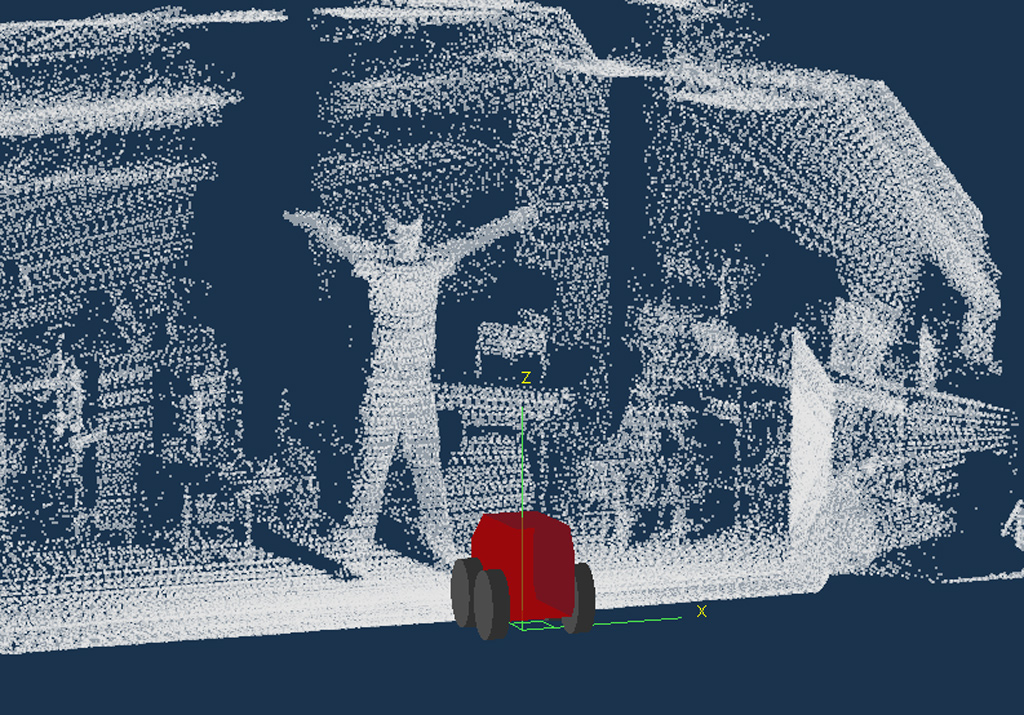
It seems my mountain climbing, robot-building friend Mark has a relatively new blog. He works with autonomous robots of the kind that competed in the recent DARPA Urban Challenge.

Here is one way in which such robots see the world: as a set of laser determined ranges.

Previous robot-related posts:

Death, drugs, and rock and roll

A recent study in the Journal of Epidemiology and Community Health confirms the hazards of musical stardom. The study examined the lives of 1,064 successful musicians in the rock, punk, rap, R&B, electronica, and new age genres. All became famous between 1956 and 1999 and all had records that were included in a ‘Top 1000 records of all time’ list from 2000.

It found that the median age of death for North American celebrities was an unimpressive 41.78. Europeans do even worse, at just 35.18. All told, successful musicians are nearly twice as likely to die early as members of the normal population.

The regional breakdown by cause of death is also interesting:

Cause – % in the US – % in Europe
Suicide – 2.8% – 3.6%
Drug or alcohol overdose – 15.3% – 28.6%
Chronic drug or alcohol disorder – 9.7% – 3.6%
Drug or alcohol related accident – 2.8% – 7.1%
Cancer – 19.4% – 21.4%
Heart disease – 18.0% – 3.6%
Accidents – 13.9% – 21.4%
Violence – 6.9% – 3.6%
Other – 11.1% – 7.1%

The largest single discrepancy is the probability of dying of a drug overdose, but lots of other significant differences exist. Neither regional profile suggests that music is a healthy profession: at least for those at the top.

Source: