Business model patents

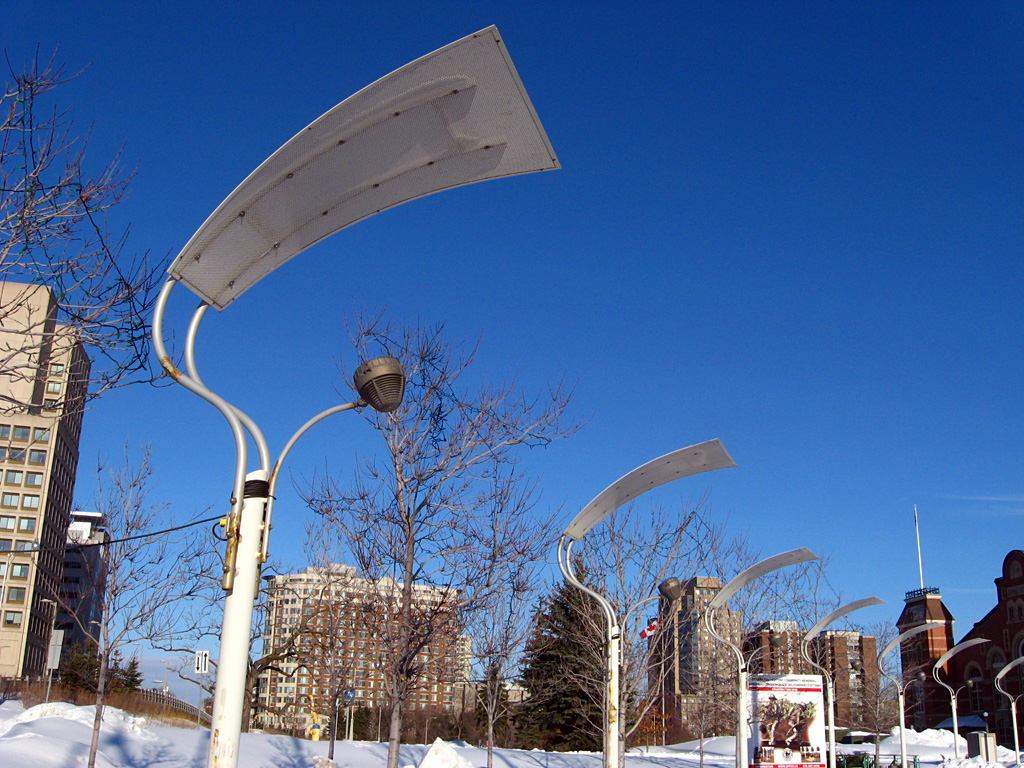
Lights outside Ottawa city hall

Intellectual property remains one of the most hotly contested areas in law and politics right now: with everything from the cost of patented drugs in third world countries to the illicit downloading of television shows under contention. What is important to recall throughout all of this is the reason for which the patent system exists: to encourage (a) innovation and (b) the disclosure of how new inventions work by offering a time-limited monopoly to the inventor. On the basis of this fundamental purpose, it seems fair to say that ‘business model’ patents should be eliminated.

A famous example is Amazon.com’s dubious patent on ‘one click shopping.’ To begin with, the idea probably fails the obviousness test. Something immediately obvious to almost anyone well-studied in the field is not supposed to be patentable. More crucially, the Amazon patent doesn’t represent genuine innovation, and it serves no public purpose to have the details explained in a patent. As such, society as a whole only suffers when such legal rights are granted.

A more recent case also illustrates the point. A couple in Utah is suing Starbucks and Apple for patent infringement. Starbucks is giving away gift cards that can be used to download particular music tracks from the iTunes music store. The couple claims that they have a patent on this idea. Can anybody legitimately claim that society would be better off if everybody who gave away such gifts cards had to pay licensing fees to the couple? You can argue that the premiums people pay for patented drugs are essential to ensuring that pharmaceutical firms have sufficient funds for further research; no comparable argument can be made for business model patents. Such patents are useless and parasitic and, as such, should be done away with.


And the coming wind did roar more loud / And the sails did sigh like sedge

A while ago, I wrote a post on the SkySails system, intended to reduce the fuel use of cargo ships through the use of a massive kite. Today, Neal put a post on MetaFilter on the possible resurgence of sail.

A return to sail does have both ecological and romantic appeal. Forcing the fishing industry to use equipment from the 18th or 19th century (with better safety gear) might even maintain employment without utterly ravishing the sea as rapidly as we are doing now. It could spur the re-emergence of a wooden sailing ship industry, and it would probably attract some tourists as well.

97-day West Antarctic expedition

Fire escape and red bricks

Not content with data from satellites, a group of British researchers made the trek to the remote Pine Island Glacier in order to gauge whether climate change is accelerating its flow into the sea. The team is only the second group of humans to ever visit the area, following a brief visit by American scientists in 1961.

The Pine Island Glacier comprises about 10% of the West Antarctic Ice Sheet which, along with Greenland, represents the largest plausible contributor to sea level rise. The total melting of this one glacier would raise global sea levels by 25cm. The melting of the entire region of West Antarctica where it is located would contribute 1.5m.

Experiments performed included an examination of the ice structure using towed RADAR and the use of small explosions and geophones to identify soft sediments that might be lubricating the flow of the glacier. GPS receivers have been left behind to perform additional precise tracking. Their central conclusion is a significant acceleration of the glacial flow, compared with the 1% flow rate that satellite measurements tracked during the 1990s:

“The measurements from last season seem to show an incredible acceleration, a rate of up to 7%. That is far greater than the accelerations they were getting excited about in the 1990s.”

Since air temperatures in Antarctica have not risen significantly (as predicted by all General Circulation Models), it is plausible that the acceleration is the result of warmer sea currents.

Some component of the melting could be the result of geothermal activity. If so, it would continue to some extent even after global greenhouse gas concentrations were stabilized and their full consequences have been manifest through the climate system. Of course, the lower that concentration, the greater the chance that West Antarctica’s glaciers will be able to endure.

Nicholas Stern video

Emily kindly sent me a link to the video of Sir Nicholas Stern’s presentation in the Examination Schools at Oxford in February of 2007. I was lucky enough to attend in person; I even got to speak with him at the exclusive reception afterwards. My notes are on the wiki. This is your chance to compare a verbatim record of the talk with my notes and thus determine my particular strengths and failings as a note taker.

The talk is well worth watching, not least because Stern is obviously very well informed and quite a capable speaker. His report is fully deserving of its status as the seminal discussion of the economics of climate change.

Sensitivity versus throughput in reading

Ice and sky, Ottawa

At some point in the past five or six years, skimming became my default form of reading. Depending on the material, as little as a few seconds per page might be devoted to initial assessment. While this does allow for a person to process much more information, there is an extent to which it forces the atrophy of close reading ability. It seems as though the skills for processing an 80 page document in and hour and the skills for engaging with a dense poem are not only different, but may actually exclude one another.

There is no question about which of the two skill-sets is most useful in academia or information-focused work environments. At the same time, it is always somewhat tragic to lose a skill – especially when it is easy to recall a time when densely packed writing was often an intriguing mystery to explore, rather than a nuisance to be untangled.

Do other people feel the same way about the relationship between the volume processing of information and the precise examination of small samples? If so, is there anything that can or should be done?

Garnaut Review interim report

The Stern Review – released in October 2006 by the British Government – is generally considered the most authoritative source on the economics of climate change. Among other things, it concludes that the cost of reducing global emissions is significantly less than the probable costs associated with letting climate change continue on its present course. Now, Australia has released a similar assessment, in the form of the Garnaut Climate Change Review.

Only the interim report is available so far, but it’s likely to make interesting reading for Canadians concerned about climate change. In many ways, the Canadian economy is more similar to that of Australia than it is to that of England. As such, this report may offer some especially useful insights.

P.S. I have some notes from a lecture Stern gave in Oxford.

Recovering encryption keys from RAM

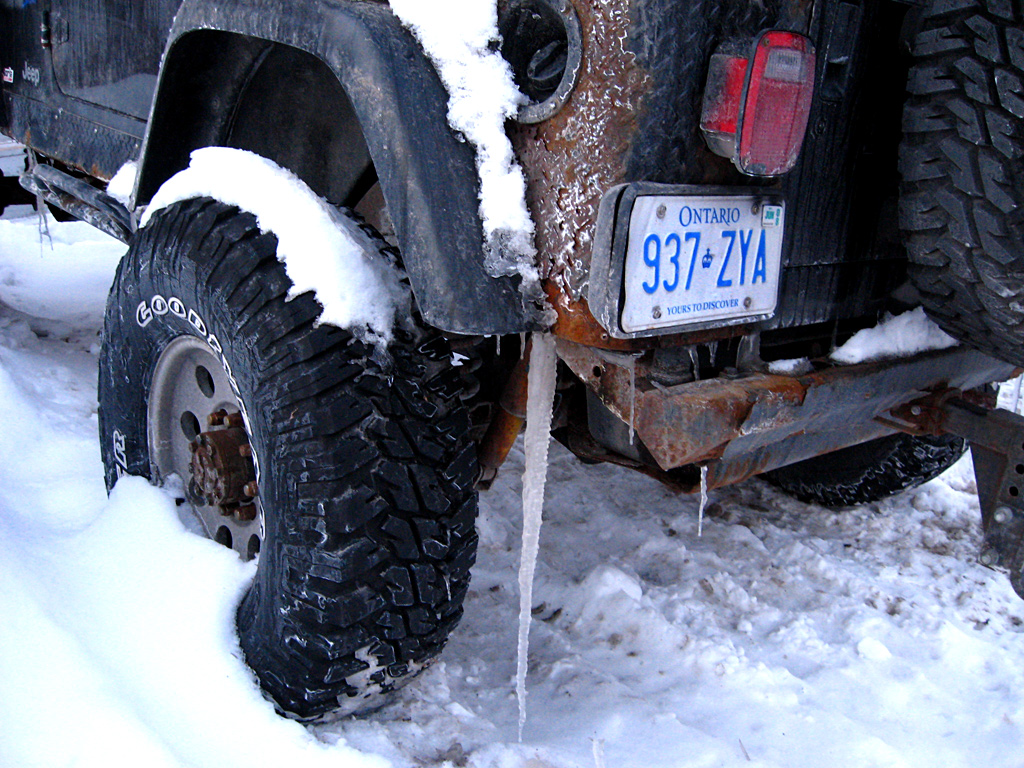
Rusty icy truck

Most successful attacks against strong, well-designed encryption take the form of ‘side channel’ attacks: ones that aren’t based on breaking the strong cryptographic algorithm, but which are based or circumventing it or subverting it somehow. Common varieties include timing attacks, which examine the precise amounts of time cryptographic equipment or software takes to perform operations, and power monitoring attacks, which examine which parts of a piece of equipment are using energy when.

Researchers at Princeton have recently uncovered a potentially significant side-channel attack against whole-disk encryption systems like BitLocker (built into Windows Vista), FileVault (same for Mac OS X), and Truecrypt. The attack is based on analyzing the random access memory (RAM) of a computer system once it has been turned off. Despite the common perception that this clears the contents of the RAM, they have demonstrated that it is possible to use simple techniques and equipment to get a copy of what is inside: including the cryptographic keys upon which these programs depend:

We found that information in most computers’ RAMs will persist from several seconds to a minute even at room temperature. We also found a cheap and widely available product — “canned air” spray dusters — can be used to produce temperatures cold enough to make RAM contents last for a long time even when the memory chips are physically removed from the computer. The other components of our attack are easy to automate and require nothing more unusual than a laptop and an Ethernet cable, or a USB Flash drive. With only these supplies, someone could carry out our attacks against a target computer in a matter of minutes.

This is bad news for anyone relying on encryption to protect the contents of their laptop: whether they are a banker, a spy, a human rights campaigner in China, or a criminal. Other technologies exist to help foil whole-disk encryption systems when the attackers are lucky enough to find a computer that is turned on and logged in.

Researchers in the same organization have done some good work on electronic voting machines.

Robert Gates posturing on missile defence

Everybody has probably heard about how the United States shot down a supposedly dangerous satellite with a ship-based kinetic kill interceptor. Now, US Secretary of Defence Robert Gates is saying that this proves missile defence works. Of course, this is absurd. Satellites follow very predictable orbits. As such, it is pretty easy to hit them with missiles. Commanders won’t have that advantage when trying to shoot down the incoming missiles of their enemies: especially since those missiles will often employ physical or electronic countermeasures.

It is also worthwhile to consider what they would be saying if this test had failed: “Of course, downing an ailing satellite is completely different from missile defence! The fact that this test didn’t succeed in no way suggests that America’s $12.8 billion per year missile program is ineffective, nor that missile defence technologies aren’t worthy of billions more taxpayer dollars.”

It’s a good thing Canada never bought into the idea.

Pondering Mac succession

Three years ago today, I first turned on my 14″ G4 iBook. Since then, it has served me very well: progressing from Panther through Tiger to Leopard and from Photoshop 7.0 to CS2. The machine has served purposes ranging from editing every photo posted to this site to serving as the platform on which my thesis was written to initiating video calls through Skype. Unlike most of my electronics, it has never needed to be handed over to a technician for repair. That said, the machine is definitely showing its age – particularly in terms of processing power and hard disk space.

Three years is a decent lifespan for a laptop (especially one that was a value rather than a performance model from the outset) and I am planning to replace the thing within the next few months, finances permitting. While the MacBook is an obvious successor, I am leaning more towards one of the Intel-based iMacs. I will still have the old iBook to lug around for taking notes and writing emails, when required, and it’s a whole lot nicer to watch movies on a 20″ screen than on a 14″ one. I would also feel a lot more unconstrained with a 250 gigabyte drive than with an 80 GB one.

Setting up my mother’s system also provided a hands-on demonstration that the new iMacs are more than elegantly designed boxes. They are well-designed, well-integrated systems focused on doing the things for which any computer I use is essential. The Mighty Mouse may be fiddly and frustrating, but that’s the only element of the package I found to be less than excellent.

[Update: 1 April 2008] I was seriously thinking about buying a 20″ iMac this month, but the fact that the new ones will have inferior screens is giving me pause. Apparently, the new screens only show 2% of the colours the old ones did.

[Update: 22 August 2008] I got my new 24″ iMac today. It’s a gorgeous machine, and I especially appreciate how well the Migration Utility works for transferring files and settings from an old to a new Mac. In the tradition of naming my computers after characters from science fictions books, I have dubbed this one ‘Seldon’ after Hari Seldon of Isaac Asimov’s Foundation universe.

British Columbia carbon tax

Buses at the Rideau Centre, Ottawa

In a relatively big announcement today, British Columbia has announced a new carbon tax on gasoline, diesel, natural gas, coal, propane and home-heating fuel. Canada-wide, the combustion of fossil fuels represents about 70% of total emissions, with the remainder consisting of things like industrial process emissions and those associated with landfills. The B.C. tax takes effect on July 1st, starting at $10 a tonne and rising to $30 a tonne by 2012.

Like many proposed carbon taxes, the British Columbian scheme aims to be revenue neutral, with the funds collected being primarily redistributed back to consumers through reductions in other taxes and increased grants to low-income individuals. This somewhat reduces the environmental effectiveness of the tax, since some of the refunded money will be used to continue doing emissions intensive things, but it makes it easier to defuse claims that this is an excessive new burden on low income people. The projected emissions reduction for the next three years is 1 Mt per year – just 1.5% of the B.C. total, but a start. At present, British Columbia is in the middle of the pack when it comes to emissions among Canadian provinces: approximately on par with Quebec and Saskatchewan, but significantly behind Alberta and Ontario.

B.C. is also part of a regional climatic organization called the Western Climate Initiative, which aims to launch a cap-and-trade scheme for greenhouse gasses. With luck, such provincial and regional systems will yield both absolute reductions in emissions and useful lessons in policy design.