Tomorrow I am turning forty, which feels like the best guess for the halfway point of my life.
In the last couple of years — and especially recent months — I have been feeling incredibly isolated and rejected, as though I have no or hardly any active social relationships.
Perhaps we over-estimate the importance of birthdays around when they are happening. I had been struggling lately to recall what happened on many of mine, so I went back to my paper calendar records for a sense of history:
- In 2007, I had been in Ottawa for about three months after finishing my M.Phil and moving there for work. For my 24th birthday I had a dinner at the Ceylonta restaurant. I don’t specifically remember who was there, though some digging in electronic archives would probably produce invitation emails and/or a photo or two of the event.
- In 2008, it was drinks at The Manx pub.
- In 2009, I visited my family in Vermont and they gave me a birthday dinner before a hike in the snow.
- In 2010, I travelled back to Ottawa after a Toronto visit.
- For my 28th (“champagne”) birthday, I got my GRE scores and celebrated getting older with my cousins and some friends.
- In 2012, I had started at Massey College and was kindly invited for dinner in the residence of John Fraser, head of the college.
- 2013 was dinner at Big Sushi with a friend, where we sketched out a plot outline for a Massey College film noir which was never made but fun to think about.
- In 2014, the day began with cold pizza, an environmental decision-making class and a workshop on choosing a supervisory committee. That night, I had a party at my friend Tristan’s co-op house.
- For my 32nd birthday, I did a 3D printing course at the Toronto Reference Library and had dinner at Banjara with a friend.
- In 2016, it was lunch at Massey and dinner with the same friend, before a call with my brother Sasha.
- For 2017, it was dinner at Pomegranate with a different friend.
- I taught tutorials before a butter chicken lunch with another friend in 2018, followed by a dinner with an aunt and uncle, cousins, and my girlfriend.
- 2019 was a U of T Climate Strike and divestment teach-in, followed by dinner with a different friend.
- For 2020, I attended the annual lecture of Toronto’s Sherlockian society and held a Zoom call with friends.
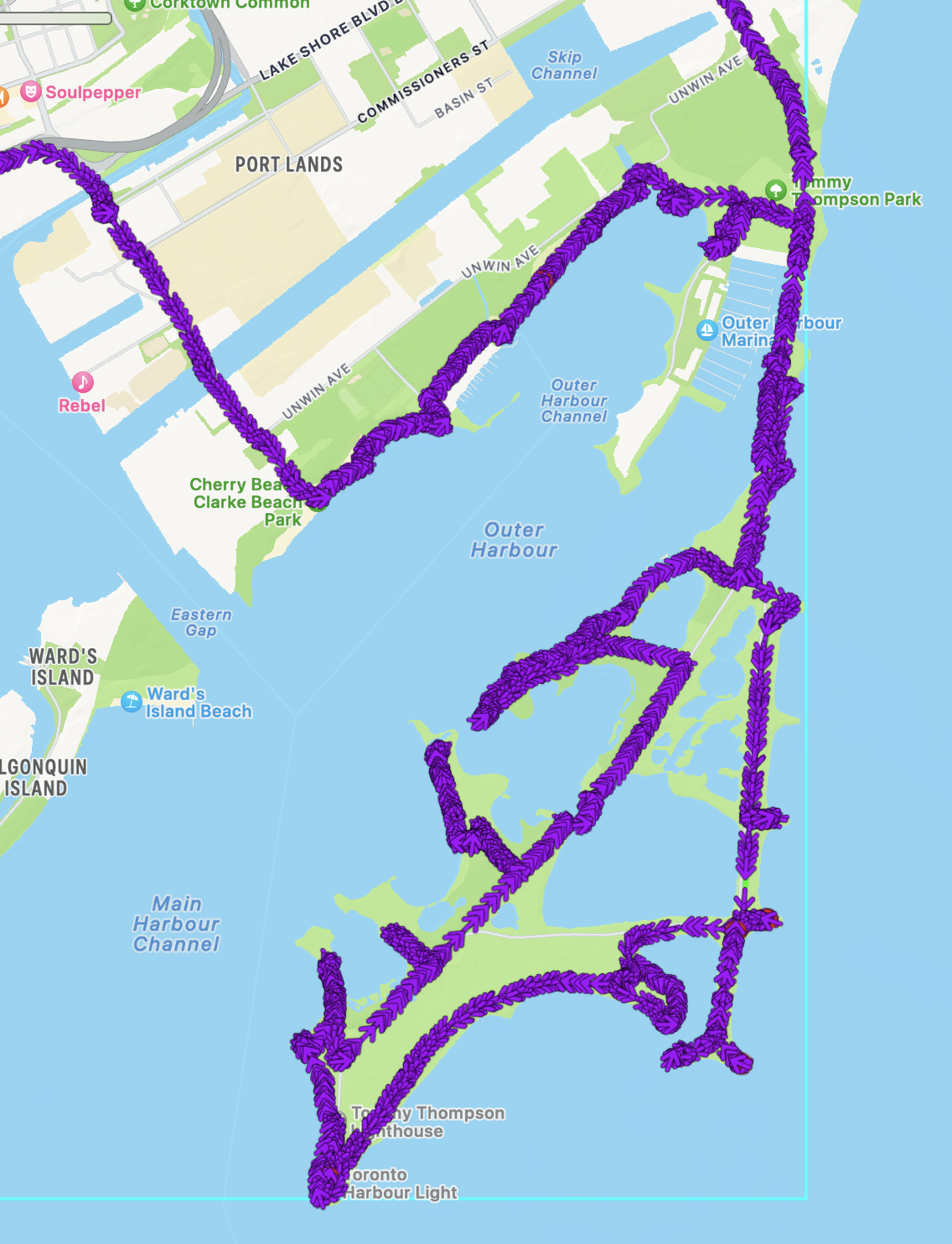
- The plan for 2021 was a winter walk on the Toronto Islands, though only one brave soul undertook the six hour walk through slush with me. Then I had dinner with friends at home and some family video calls.
- Last year, I visited Seeker’s Books; attended the book launch for John Fraser’s account of the death of the queen; had a dinner of chili, de-alcoholized champage, blueberry pie, and vanilla ice cream at home with my girlfriend; and spoke on the phone with family and with Andrea and Mehrzad in Ottawa.
As with weddings, I think fictitious depictions of birthdays, and especially ‘landmark’ birthdays like 40, has given me some false expectations about how grand, popular, and enjoyable such events are meant to be. I think that feeling of not measuring up is now enmeshed with my deep and long-running feelings of anxiety and isolation over the last few years. It feels like the pandemic provoked everyone to draw back into smaller social circles, remain less in social contact, and generally be harder to recruit into any group activity. My sense of isolation and worry is no doubt heightened by my long, difficult, and not-yet-successful post-PhD job search.
Somehow I feel like my climate journey has ended up with me in basically the most isolated possible position. The world is full of people who just want to keep the fossil fuel party going. If you question that, you can find community among activists, but you will never fully belong if you don’t accept the analysis and prescriptions of their anti-capitalist and intersectional account of the crisis. For people seized with the need for drastic action on where we get our energy — but also skeptical about using climate change to justify a utopian project of global political and economic transformation — it is easy to end up with a sense of being a minority of one with little social connection to anyone. You get all the social and psychological penalties of being a committed critic of the status quo, but not the solidarity and community that comes from adopting a pan-progressive interpretation of the crisis and strategy.
My environmentalism has also inhibited social ties because of my avoidance of long-distance travel. I never went back to the UK after finishing my M.Phil, and so never retained active long-term relationships with the people who I met there. Likewise, my connections with people in Vancouver have thinned out and fallen away one by one over years and years of trying to stay in touch exclusively through telecommunications. I get a complex and weird mixture of feelings when I think about how avoiding travel has had such costs, especially since my example has not influenced anyone, and in the face of my conviction that focusing on individual emissions is the wrong approach to solving a crisis that can only be addressed at the societal level. It is a difficult irony to recognize that if I had not been avoiding travel for the sake of GHG pollution, I would probably be in a better position in terms of career and networks to make a meaningful contribution to limiting the harm that climate change will do.
For at least a year or two now, I have been hoping that we would soon turn a corner and start reverting to something more like social life before the pandemic. These hopes have been consistently disappointed. I feel like everyone is being ground down and eroded by all the worries and fears in the world, and one result of that damage has been losing the will, energy, or inclination to maintain and develop the social ties which often do the most to make life bearable. (And Joyous!) (And an Insane Unmissable Inexplicable One-off Gift – personally I plan to live for glory and to ride this bronco to the last buck)
One of the painful paradoxes of all this is knowing that expressing these feelings of pain and isolation tends to lead to even less social contact. It’s a simple enough matter of psychology that people seek out situations filled with positive emotions and pursue ways of repeating them. Contrarily, experiences characterized by painful and difficult emotions — however justified — conjure a desire to get away and avoid such situations in the future. It’s a bit like how people who already have good jobs are appealing to employers in a way those currently without work aren’t, or how being perceived as successful and desirable in romance and relationships makes you more appealing to prospective partners, while a perception that someone is undesirable to others often tees us up to consider them undesirable ourselves.
I don’t mean to mis- or over-state things, or to suggest that I am not grateful and have not had an extraordinarily fortunate life. I have always been lucky and have received a huge amount of care and kindness in my life to this point. Awareness of those thoughts never leaves me, as despondent as I may get at times about my current situation and as fearful as I have become about the future of the world.
Not travelling has led to a lot of sad, solitary holidays: especially Christmas eve nights spent alone. While the sadness of those occassions was acute, it was also tempered with a broader awareness that I did have the sort of friends who I could call up and get an answer from, and was a part of communities of shared effort. The short-term alone now stacked atop long-term alone makes it harder to keep that sense of perspective. Two of my most important relationships are also going through trials which I will not describe, but which have added profoundly to the sense of being alone in the world or at least widely socially rejected. Being done with school now also adds to the fear, since I know that school is generally the best context for finding adult friendships.
Thinking about forty as the likely halfway point of my life has made the lead-up to this birthday a time of considerable reflection about my life up to this point, coupled with imagination about what the future will involve. I don’t have a neat closer for this post. In part, that reflects my awareness of all the contradictions clashing in my mind — between feeling aware and grateful for a very fortunate life, but also feeling fairly desperate about the present and future — between being devoted to the movement for environmental protection, but feeling that my work and thinking has estranged me from people more than it has connected me to them, including in terms of being able to work together effectively on solutions — between awareness of the psychological importance of hope, but also the dangers of self-deception and complacency when we assume things will work out well in spite of the evidence and trends to the contrary.
Life is an unearned gift, but it is also hard and indeed cruel. Indeed, my philosophy in the last few years has developed to see that cruelty as central: you never get as much of anything good as you hope or expect, and every nice experience which you can pleasantly imagine being repeated many times in the future is liable to be unilaterally cut off without warning. The implication I take from that is to focus on gratitude for what has happened and on doing the very best I can at everything I do. I work hard to avoid the feeling that, for whatever I am doing, the present effort is just the first in a long string of future repeats. No repeats are guaranteed, so I try to do my very best at everything I do. In addition to making life feel vital, important, and meaningful, this approach actually reduces stress and planning anxiety since it lets me skip the question of how fully to commit myself to things. When the model is that you do your best at everything you attempt, from a hike to a piece of scholarly writing to a friendly interaction with someone else, at least then when the good things in life come to an unexpected end you don’t feel the regret that if only you had known how brief and fragile those situations and relationships were going to prove, you would have tried harder and made the most of things.