Covid in winter 2021–2

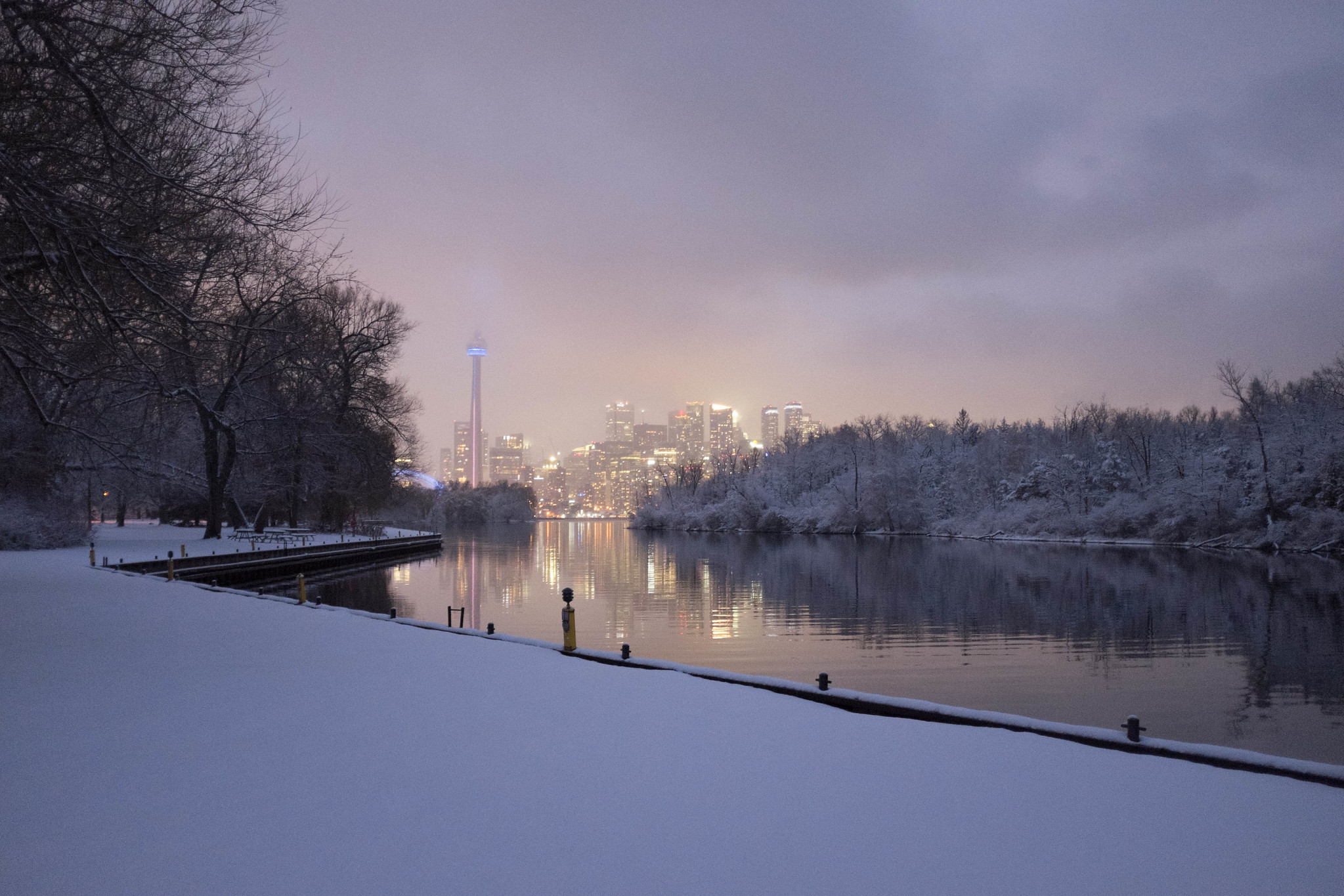
Partly in response to the predictable wave of infections from increased contact and travel during the comparatively unrestricted Christmas and New Year’s celebrations, Ontario has an exploding case count and is re-imposing restrictions on businesses and individuals.

I am fortunate in that all the work I need to get done is at home anyway. 2022 is the year the PhD must be completed, so the priority is getting a new draft shortened to the desired length and re-organized as directed as swiftly as feasible.

Related:

Canada if the US collapses

The most disturbing thing about the January 6th riot and Trump coup attempt has been the reaction of American politicians. Despite being witnesses and targets of the attack, politics as usual has persisted, including Trump’s dominance of the Republican party.

This suggests a substantial danger that Americans in power will choose the victory of their tribe over the other above the endurance and peace of the union.

In today’s Globe and Mail, Thomas Homer-Dixon writes:

By 2025, American democracy could collapse, causing extreme domestic political instability, including widespread civil violence. By 2030, if not sooner, the country could be governed by a right-wing dictatorship.

During my international relations undergrad, profs often told us about how for most of Canadian history the biggest threat to Canada’s sovereignty has been invasion from the south. If mass political violence does erupt in the US — likely accompanied by a mass sense that the federal institutions of the supreme court, congress, and the presidency do not hold legitimate power over the whole US populace — it’s hard to believe that the US-Canada border would be respected in the uproar.

Of course it’s undiplomatic to talk in public about what will happen if your neighbour and strongest ally falls into civil war or ceases to be a democracy. Nonetheless, given the pathologies in American politics and society, it’s something Canadians must consider with growing seriousness and urgency.

The Economist on fossil fuel abolition

I have written before about The Economist‘s inconsistent positions on climate change and fossil fuels. When writing about science or climate change specifically — and in most of their leading editorials — they stress the potential severity of the crisis and the need to take action. In their broader coverage, however, they tend to prioritize economic growth and to celebrate fossil fuel discoveries as potential boons.

In a recent issue, they included some strong and convincing language on how fossil fuel abolition is ultimately a means to protect human prosperity:

The UNFCCC and its COPs, for all their flaws, play a crucial part in a process that is historic and vital: the removal of the fundamental limit on human flourishing imposed by dependence on fossil fuels.

…

The main reason the UNFCCC and COP process matters is that the science, diplomacy, activism and public opinion that support it make up the best mechanism the world currently has to help it come to terms with a fundamental truth. The dream of a planet of almost 8bn people all living in material comfort will be unachievable if it is based on an economy powered by coal, oil and natural gas. The harms from the cumulative emissions of carbon dioxide would eventually pile up so rapidly that fossil-fuel-fired development would stall.

…

In the long run, therefore, the only way to keep growing is by leaving fossil fuels behind. That requires Asian countries, in most of which emissions are still surging, to forgo much more by way of future emissions than the countries of the developed world, where emissions are already declining.

…

Anyone who dreams of a reprieve for fossil fuels must be disabused. It suits Narendra Modi, prime minister of India, Scott Morrison, prime minister of Australia, and Joe Manchin, a senator from West Virginia, never to speak of an end to the fossil-fuels age. But for them to duck the responsibility of planning a transition is rank cowardice. True, oil and gas cannot vanish overnight, but their day is closing. And coal’s day must be done.

This strikes at at least three crucial points: it is acting on climate change and not ignoring it which provides the best guarantee of long-term prosperity; states will need to find a contraction and convergence solution where pollution falls rapidly in rich states which poor states find a development path where their per capita pollution never gets nearly so high; and that for the sake of equity we will need much more energy at the global level, highlighting the need to actually build climate-safe options at an unprecedented rate.

Hand editing chapter drafts in U of T libraries

To advance the aim of getting down to four 50-page chapters, I have been bringing printouts to review on campus for the last couple of days. The change of scenery has certainly been accompanied by a change in feeling and thinking, and I am starting to feel the emotional distance from the text which is necessary for effective editing.

The big tasks ongoing are to cut out or move away any sections not important for the scholarly argument in the dissertation; to split out my own normative conclusions from empirical and analytical arguments, to be moved into a chapter of their own at the end; and to cut out passages that are too theoretical or speculative, trying to stick more closely to what can be anchored and justified with reference to the campus fossil fuel divestment movement specifically.

The political opportunities, mobilizing structures, and repertoires chapters are all getting this treatment now, and it feels more like progress forward than continuing with my recent efforts to grind through micro-level changes from my own comments and those of committee members.

It may be that the long section which I wrote on counter-repertoires against divestment developed by university administrations can be pulled out and self-published soon. I did ideally want to find an academic journal for it to get it more attention, but with all the rounds of revision and editing that would require it’s probably best to get it out as a personal draft and focus on getting the actual dissertation out as soon as can be managed.