The Code Book

Simon Singh’s The Code Book proves, once again, that he is a superlatively skilled writer on technical and scientific subjects. Thanks to his book, I now actually understand how Enigma worked and how it was broken: likewise, the Vigenere Cipher that has been built into this site for so long. This book manages to capture both major reasons for which cryptography is so fascinating: the technical aspects, centred around the ingenuity of the methods themselves, and the historical dramas connected, from the execution of Mary Queen of Scots to the use of ULTRA intelligence during the Second World War.

Anybody who has any interest in code-making or code-breaking should read this book, unless they already know so much about the subject as to make Singh’s clear and comprehensible explanations superfluous. Even then, it may arm them with valuable tools for explaining interesting concepts to the less well initiated.

At the end of the book is a series of ten ciphers for the reader to break. Originally, there was a £15,000 prize for the first person to crack the lot. Now, they exist for the amusement of amateur cryptologists. I doubt very much I will get through all ten, but I am giving it a try. The first ciphertext is on his website and is helpfully labeled ‘Simple Monoalphabetic Substitution Cipher.’ I expect to crack it quickly.

Continue readingThe Code Book

Heat: How to Stop the Planet from Burning

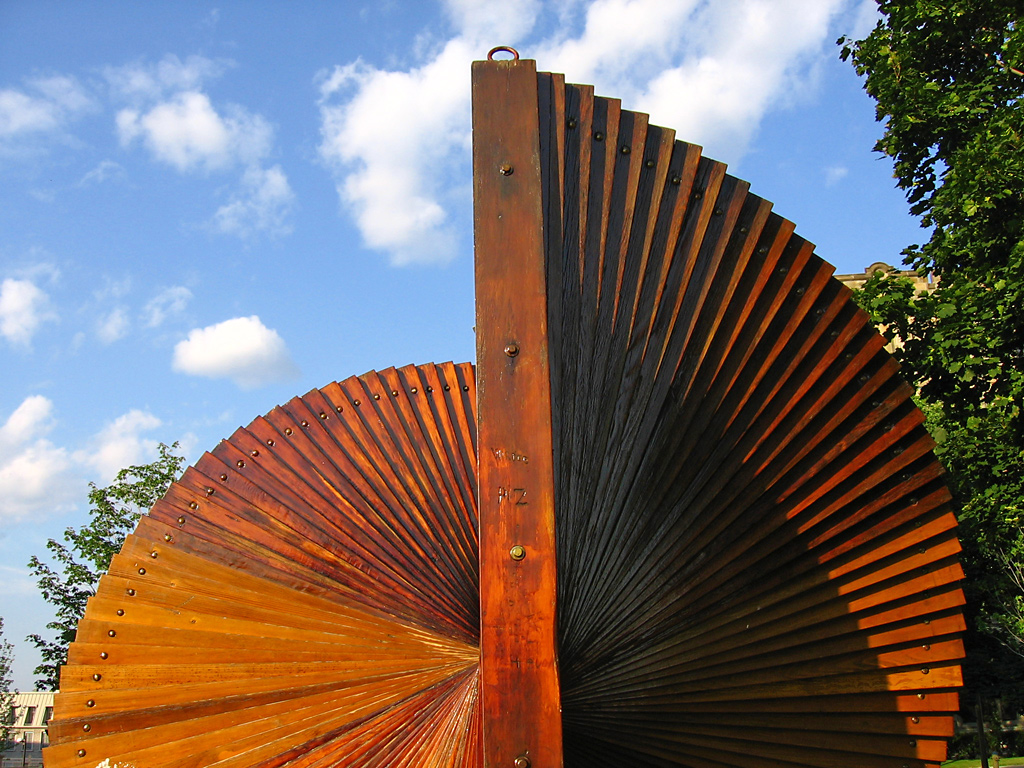
Ottawa wooden sculpture

During the past two years, I have been reading about climate change for several hours every day. During that span of time, I have read dozens of books and hundreds of articles. Quite possibly, none were as thought-provoking as George Monbiot’s Heat: How to Stop the Planet from Burning. If you are at all serious about understanding the issue of global warming, it is essential reading. He may not be right (indeed, it would be far preferable for him to be wrong) but he will definitely make you think.

His project is an ambitious one. Having decided that global temperatures must not be allowed to rise by more than 2°C on average, he works out what that would mean for Britain. Since British emissions per capita are way above the world average, a fair system would require much heavier cuts there than elsewhere. Canada’s per-capita emissions are even worse.

Here is a smattering of what he says will be required by 2030:

  • A power grid dominated by renewables and natural gas plants with carbon capture and storage.
  • Dramatically, dramatically tightened building regulations – making most houses either ‘passive’ in their non-use of heating or cooling or capable of producing their heat and power from piped-in hydrogen, possibly supplemented by solar.
  • Most private automobile travel replaced by a buses or non-motorized transport, both within and between cities.
  • An end to cheap air travel: no more low cost flights, with massive total cuts in the number of both short and long-haul flights.

The last is the result of a complete lack of alternative technologies that can deliver the kind of emission reductions required. Even if all other emissions were cut to zero, growth in air travel would make that one sector break his total limit by 2030.

Suffice it to say, Monbiot is not in the main stream of this debate. The Stern consensus is that climate change can be dealt with at moderate cost. Even if Monbiot’s ideas are entirely possible, in terms of engineering, one cannot help but doubt that any political party in a democratic state could successfully implement them. The impulse to defend the status quo may turn him into a Cassandra.

In fifty years, it is possible that people will look back at this book and laugh. Alternatively, It may be that they look back on Monbiot as one guy who had approximately the right idea while everyone else (Gore and company included) were in denial. The answer seems to depend upon (a) whether emissions need to be cut as much and as quickly as he thinks and (b) how bad it will actually be if they are not. It is pretty easy to do the math on the first of those, at least for any desired greenhouse gas concentration or temperature change. The latter is harder to assess. Regardless of which proves to be closer to the truth, this is a book I wholeheartedly endorse for anyone trying to keep abreast of the climate change issue.

Reading about ten hours a day

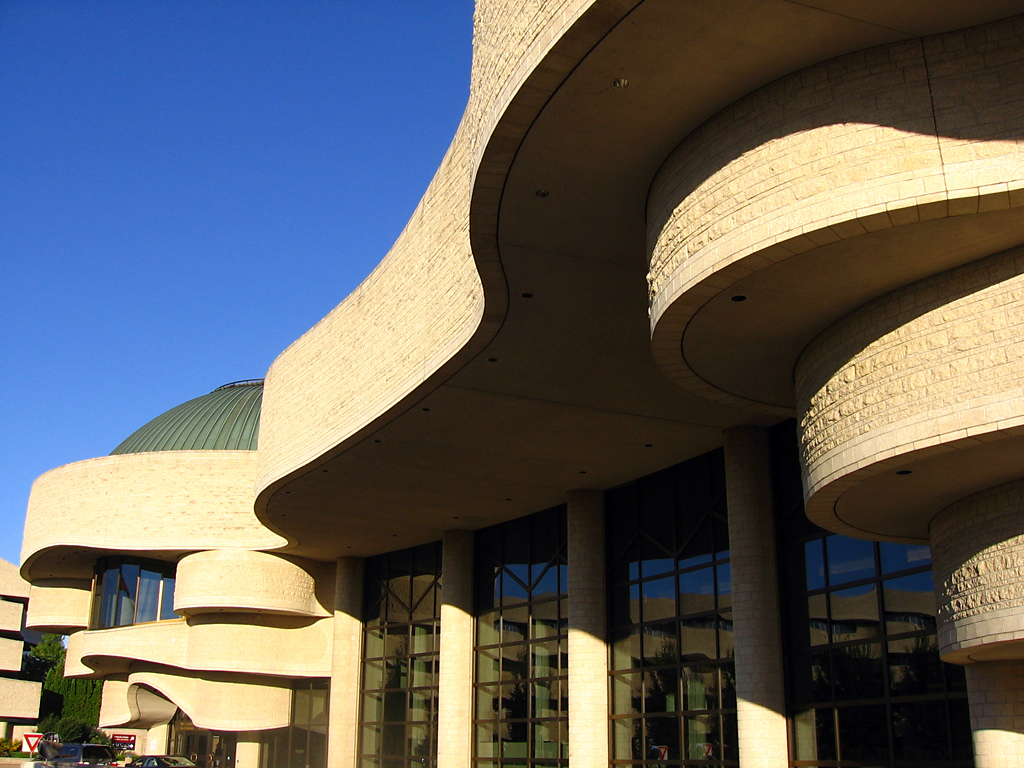
Museum of Civilizations

In addition to all the reading I have been doing for my first big project at work, I am finding myself well-immersed in interesting personal reading. Aside from the stack of fiction that has been oscillating in size for about a year, I am reading George Monbiot’s Heat: How to Stop the Planet from Burning and Harold Coward and Andrew J. Weaver’s book Hard Choices: Climate Change in Canada. Simon Singh’s The Code Book is catering to a less immediately work-related interest, as is the Simon Blackburn book Antonia gave me.

It can be tough to maintain an appetite for the written word that exceeds the immediate requirements of work and the secondary need to keep up to date on current events. Of course, it is essential in order to become and remain an informed member of society.

Unrelated: Emily introduced me to a new web comic: The Perry Bible Fellowship. It is pretty random, but also quite funny at times.

Slam poetry

I am in the midst of exams, so instead of writing something entertaining myself, I will just link you to the website of Eric Darby: a slam poet. He has three samples available in mp3 format:

  1. The Chicken Show
  2. I Wish the Motor City…
  3. Scratch and Dent Dreams (also a YouTube video)

You can read more about the genre on Wikipedia.

Lots more slam poetry is on YouTube. The most interesting such poetry I have heard was at Bar 13 in Manhattan. That said, the Café Deux Soleils in Vancouver has some good poetry nights. If you get the chance to see Shane Koyczan, make sure to take it.

Once more unto the breach, dear friends, once more

Today, we have our history and theory exams. Tomorrow, it’s international law. Wednesday is the exam about which I am most worried: the IR of the developing world. Thankfully, one can draw further inspiration from Henry V (III, i):

But when the blast of [exams] blows in our ears,
Then imitate the action of the tiger;
Stiffen the sinews, summon up the blood,
Disguise fair nature with hard-favour’d rage;
Then lend the eye a terrible aspect;
Let pry through the portage of the head
Like the brass cannon; let the brow o’erwhelm it
As fearfully as doth a galled rock
O’erhang and jutty his confounded base,
Swill’d with the wild and wasteful ocean.
Now set the teeth and stretch the nostril wide,
Hold hard the breath and bend up every spirit
To his full height.

Friends in Oxford should make a point of attending our post-exam barbecue on Thursday at 7:00pm. For those in the IR program, we will be wandering over to Church Walk en masse after the party in the department ends.

[Update: 1:45pm] The history exam is done. I wrote essays on the following:

  1. To what extent was instability in East Asia in the inter-war period a consequence of extra-regional forces?
  2. ‘The key international security institutions were incidental to the maintenance of world order during the Cold War, but they have become central pillars of order in the post-Cold War period.’ Do you agree?
  3. ‘The roots of contemporary conflict in the Middle East are to be found more within its processes of colonization and decoloninization than in the dynamics of the Cold War.’ Is this accurate?

Many thanks to Jason Shell for taking a group of us for lunch at Brasenose College after the exam. My IR theory exam begins in forty-five minutes.

[Update: 6:21pm] With the theory exam, I am halfway through. I wrote on the following:

  1. ‘The Realist and Liberal traditions of International Relations have more in common with each other than not.’ Discuss.
  2. What does the literature on globalization tell us about the relation between international economic inequality and international political inequality?
  3. ‘The issue is not the “right to intervene” of any State, but the “responsibility to protect” of every State when it comes to people suffering from avoidable catastrophe.’ Discuss.

I included diagrams in the first and second essay, as well as calling constructivism a ‘pseudo-counterhegemonic discourse.’

I have now finished the exams I expected to be the 2nd and 4th most difficult. Tomorrow, I have law, which I expect to more more challenging than theory but less so than history. Wednesday, I have the developing world, which I expect to be the most challenging of all.

Revision and diversion

Wadham high table

Understandably enough, anxiety about exams is peaking. Of course, there isn’t a huge amount that can be done about it now. All I can do is spend the weekend reading, thinking, and perhaps writing some more practice exams.

This evening did feature a couple of very nice asides from revision. Emma kindly showed me around Magdalen for a bit – demonstrating just how extensive the college is. Between the Deer Park and the Water Meadow, there is probably more area in grassy space than all of Wadham occupies. Afterwards, I had my second-to-last dinner in college, featuring some very interesting conversation about Marquez, Joyce, Kundera, and Nabokov. For the second time in the last few weeks, I have promised to share some of my slam poetry collection.

Cataloging fiction

Headington shark, Oxfordshire

One of my favourite things about Wikipedia is how it includes masses of detail about fictional universes, as well as the particular one we seem to inhabit. Those wanting to learn about particular features of Herbert’s Dune universe, the Tolkien legendarium, or any of dozens of others have access to encyclopedic articles about them. Some people dismiss the effort of imagination that goes into such verisimilitude as a wasteful exercise. Far healthier, I think, is to see it in one of two ways. At a lesser level, such alternative universes can be a mechanism for criticizing important features of our own. The anti-mutant paranoia in the X-Men comics was a response to McCarthyism. At a higher level, they simply allow for the envisioning of the world as it might be. Especially for children, this is a valuable thing to encourage.

Being able to appreciate Miyazaki films is the bare minimum level of imagination that should be accepted from human beings. Being able to appreciate other such alternative realities is a characteristic that should be respected, rather than mocked.

The Golden Spruce

John Vaillant’s The Golden Spruce is a superb book: the best I have read in many months. It tells the intertwined stories of British Columbia, the economic development of Canada, old growth logging, the Haida (and the Haida Gwaii), and, of course, a unique Sitka Spruce and the man who destroyed it. Particularly for somebody interested in both Western Canada and the environment, it was the ideal type of non-fiction reading.

The story told is a compelling one, full of informative detail and light on preaching and speculation. I read it in one long session, sitting in my hermitage in Devon while temporarily avoiding thesis work. What the book did remind me of, in part, is why the whole study of the environment is important.

I already have two people waiting to borrow my copy (one of the books my mother kindly sent to England for me), but there are surely other examples of it out there.

Getting things done

Luminox flare

After multiple recommendations, I started reading David Allen’s Getting Things Done: How to Achieve Stress-free Productivity. So far, most of what he sets out is familiar to me. I already deal with emails using an algorithm almost identical to the one he suggests. Likewise, my calendar and to-do list usage is closely akin to what he describes. What I am most hoping to get from the book is the ‘stress-free’ part. I have spent enormously more time worrying about the thesis than actually working on it (because I worry about it every minute of every day).

Hopefully, the nuts and bolts of his approach will help in the completion of the thesis, during the course of the next five weeks. I still have about half the book to go, so I am hoping it proves worth the time and money spent reading it.

[Update: 18 Mar 2007] As part of the ‘collection’ phase of GTD organization, I have started making project lists and reading lists on the wiki.