Buying compliance?

Washing machines

Unusually, this week’s roster of environment related presentations at Oxford included something on the Stockholm Convention. Specifically, Dr. Veerle Heyvaert from the LSE spoke to the Socio-Legal Dimensions of Environmental Law and Regulation seminar series about ‘buying compliance’ within the Stockholm framework.

The central part of her presentation addressed the relationship between the two major kinds of state involved in Stockholm. Essentially, there are rich developed states that had already sharply restricted or banned most persistent organic pollutants (POPs) covered by Stockholm before negotiations even began. Then, there are developing states that either still used some of the pesticides restricted or produced large amounts of unwanted by-products such as dioxins or furans. The differences between the two are largely centered around ongoing behaviour, financial resources, and institutional capabilities.

Dr. Heyvaert suggested that the major contribution of the rich states is to help pay for the costs of POP abatement in the poor states. She expressed concern that while the latter is seen as binding, the former is somehow seen as voluntary or charitable. While the Stockholm Convention lacks any official mechanism to ensure compliance, it seems more likely that pressure will be put on poor states to stop emitting than on rich states to help pay for it.

Clearly, there are issues of equity involved. From the perspective of international law, however, it seems to me that there is a more fundamental issue at hand. Cases like the Trail Smelter Arbitration of 1937 have helped to make explicit the norm in international customary law that states do not have the right to pollute the territory of their neighbours. As such, states that have already cut back are not in violation, whereas those that continue to emit are. While this may be a neatly expressed legal situation, it doesn’t conform too well with the reality of who can pay and what actions individuals are likely to take. As such, mechanisms such as those in the Stockholm Convention that allow richer states to assist with the costs of cleaning up industrial and agricultural processes in poor states seem to make both equitable and legal sense.

The question is how to apply such arrangements to more demanding cases. Nobody with a choice is going to pump out large volumes of Mirex or Toxaphene. They are among the nastiest chemicals humans have ever dreamed up. As such, there is a limited incentive to free ride on a system that seeks to limit their production and usage, especially when there are effective channels for financial and technical assistance in doing so.

At the base of all this, there is the question of what goes into the equity calculation. You might choose to consider past emissions when deciding who pays what, or you might look only at present practice. You might consider overall wealth or not do so; require states to pay equal amounts, equal percentages of GDP, or use some other formula. What kind of balance you adopt is the stuff of political deal-making, which I suppose is where most international considerations of equity are ultimately addressed in a meaningful way.
The Human Microbiome Project

Port Meadow horse

The average human being is a collection of about ten trillion eukaryotic cells: each with a nucleus, 23 chromosomes of nucleic DNA, and a collection of membrane-bound organelles including mitochondria with genetic material of their own. Less obviously, each person is also carrying around one hundred trillion prokaryotic cells, belonging to thousands of different species of bacteria. The implications of that are pretty staggering. Many of those bacteria play critical roles in biological processes that sustain human life, such as digestion. Others may be the benign residents of niches where more harmful microorganisms might otherwise live.

Following up on the Human Genome Project – which sought to decode the three billion nucleotides in the human genome – the Human Microbiome Project seeks to map the genetic sequences of those legions of bacteria. Already, it has been theorized that these bacteria play important roles in maintaining human health, and that their composition and relationship with human cells has an impact on diseases including diabetes, autism, cancer, and cardiovascular disease. Collectively, these bacterial species are thought to have 100 times more genetic material than the colony of human cells they inhabit.

The project is not unrelated to the Global Ocean Sampling Expedition, discussed here earlier, in that it is delving into the complexities of microscopic ecosystems. In so doing, it might serve both the practical function of helping to better understand and treat human disease and the more esoteric one of refining our understanding of what it means to be a human being, biochemically at least.

PS. The DVDs for the BBC’s Planet Earth series, discussed earlier, are now available in North American format. I will definitely buy a copy when I return to Canada. For those who haven’t seen any of the footage, it is absolutely awe inspiring.

Forty days and forty nights

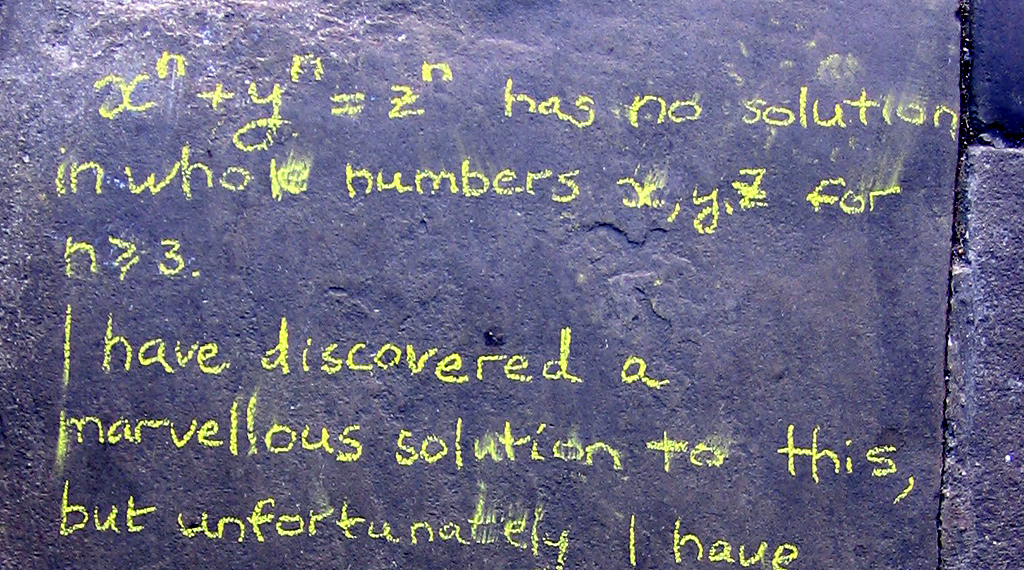
Fermat’s last theorem

Over the next six weeks, I have two more papers to write on international law, then twelve hours of exams on two years worth of reading and coursework. I have never been called upon to apply so much raw information to a set of examinations. It seems a bit bizarre to be presented with hundreds of pages of notes and thousands of assigned readings, in order to be quizzed upon twelve randomly selected topics and evaluated largely on the basis of how one’s argument is structured.

I will feel a lot better about everything once plans for the time after the M.Phil have been solidified.

The IPCC and the cost of mitigation

Butterflies and moths

The second half of the IPCC’s Fourth Assessment Report has now been released (PDF). Much like the earlier Stern Review, it was intended to assess possibilities for mitigating climate change and the costs associated with them. As with the Stern Review, the conclusion is that the problem can be dealt with at a fairly modest cost. Certainly, the sums in question are much smaller than the costs that would arise if the worst possible consequences of global warming were realized: from large-scale migration, to problems with C3 crops, to widespread agricultural failures (see this article on the ongoing Australian drought). The Economist is calling it “a bargain.”

That the Stern findings and those of the IPCC broadly agree is not at all surprising. After all, the Stern Review was based almost entirely upon the scientific conclusions of previous IPCC reports. Even so, such agreement can only help to foster increased political consensus, both within and between states, that climate change should be and can be dealt with. More than ever, it seems as though we are witnessing the start of a serious progression towards a low-carbon society.

Dealing the the problem of climate change will require unprecedented foresight and cooperation. As such, it is not unreasonable to think that the emergence of the kind of international regime that would be necessary to address it will foster cooperation in other areas. Something like global fisheries management does not have the same level of importance as addressing climate change, but the tools that will need to be developed to sort out the latter may advance our ability to behave more appropriately in relation to the former.

An ideal traverse

Paris graffiti

Today’s homecoming was as perfect as could be asked for. Hilary, Mike, and I had an excellent lunch at a vegetarian restaurant. I had never anticipated that blackberry sauce would be so delicious on mashed potatoes and mushrooms. From there, we walked a bit along the Canal Saint-Martin before I picked up a couple of bottles of French wine and was kindly escorted by Mike to the RER train to the airport.

The security people at Charles de Gaulle airport are the most laid-back I can ever recall seeing. They waved me through with about the same level of attention as the guards at the entrance to the Louvre pyramid. EasyJet also deserves praise, for delivering us to Luton a full half-hour early – no mean feat on a light that normally lasts only seventy-five minutes.

At Luton, I had my final stroke of luck. I caught a bus to Oxford just as it was pulling out of the stop and the driver was kind enough to let me aboard. As such, I arrived in Oxford about two hours earlier than planned. I also managed to finish more than half of Barack Obama’s book while traveling – something I had predictably neglected while in Paris.

Many thanks to Hilary for being an excellent and interesting travel companion. I am exceptionally appreciative towards Mike for housing us, feeding us, and spending so much of his own time helping us to have a really interesting and comprehensive Paris experience. As comprehensive as can be attained in four days, that is.

PS. Photos will be appearing online soon. I have learned to put them on Facebook last. Otherwise, everyone looks at the small ugly versions there, rather than the large nice versions that are posted in other places.

Sewers, lightning, and Notre Dame

Notre Dame, Paris

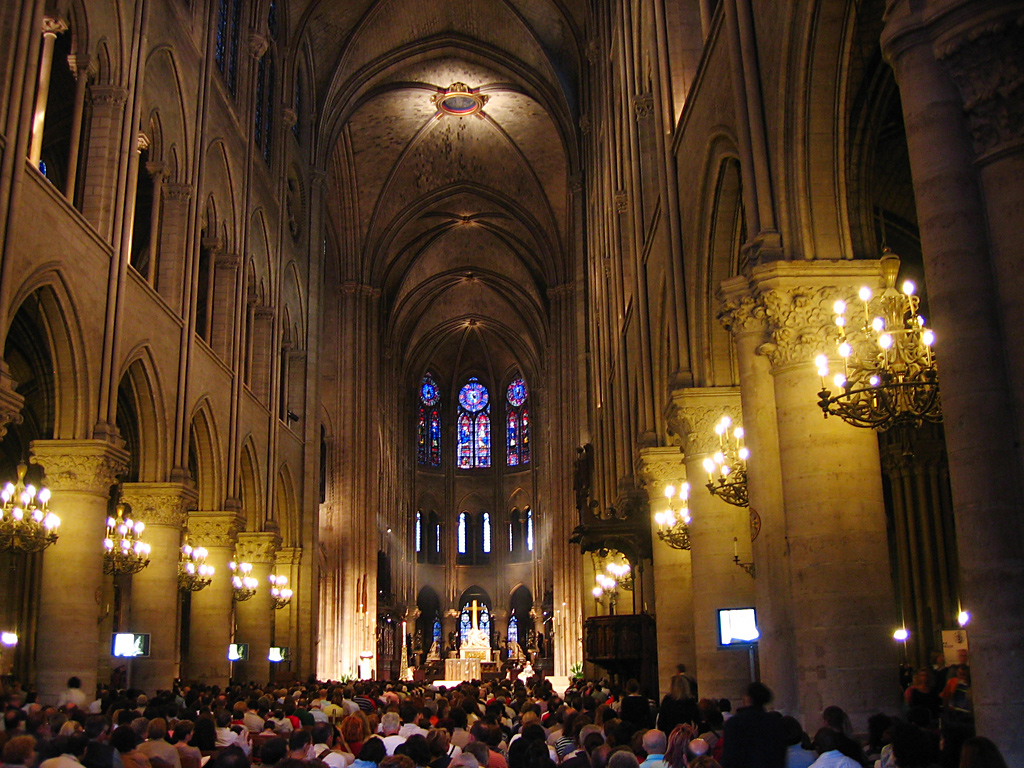
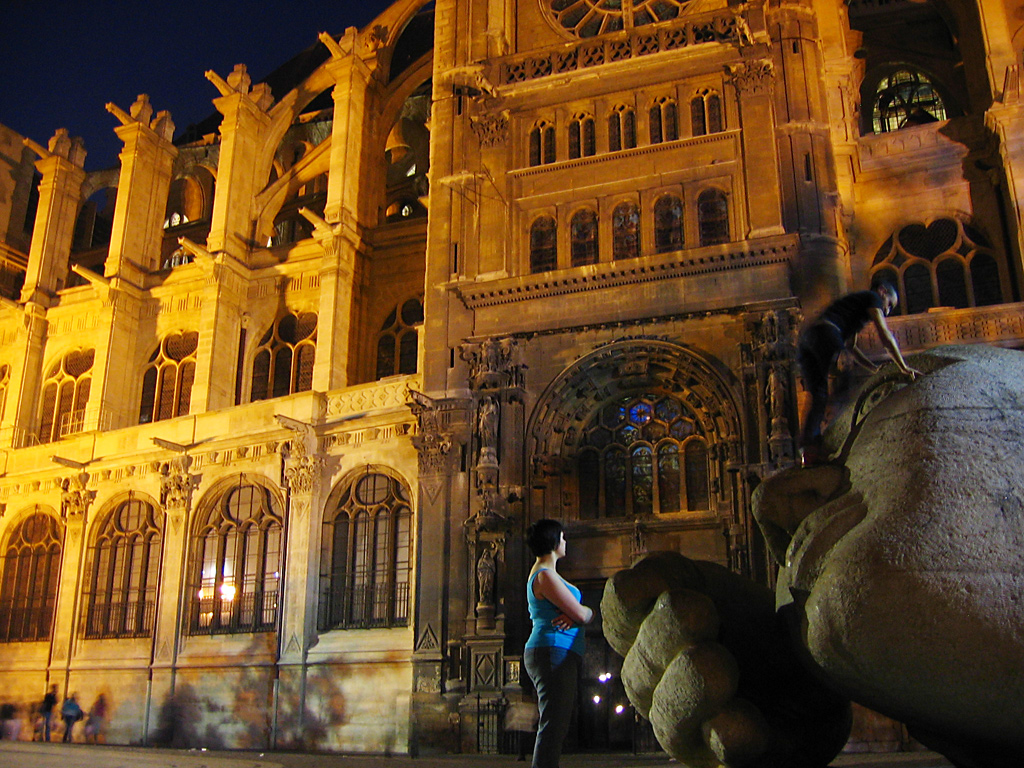
This evening, while we were watching the evening prayers and song at Notre Dame, a massive thunderstorm broke out. As a consequence, we got completely drenched – though it was in a jovial kind of way. We then pushed onto the most crowded subway train I have ever seen, filled with people seeking respite from the deluge and lightning. The contrast with all of our earlier time here was stark: none of us was carrying anything more substantial than a t-shirt, having been spoiled by hot days and warm nights since the 26th.

Earlier in the day, we visited the Paris sewers. Inside of actual stinky sewer tunnels, there is a self-guided tour that explains the development and functioning of this system. While it is not entirely pleasant, it is probably something every dweller of a big city should experience directly at some point. Otherwise, one is failing to understand an important means through which city life in the modern form has become possible.

Aside from the vaults and voices of Notre Dame, today included our first sampling of crepes. There was also an energetic water fight between Mike and Hilary, who were both so thoroughly sopping already as to make a few extra buckets largely irrelevant. Finally, there was further sampling of the fine food available here, although we still haven’t actually had food served to us at a restaurant.

Rain made us decide to skip the Canal Saint-Martin, but I am hoping to see it before my departure tomorrow.

Montmartre and the tower

Eiffel Tower from below

Yesterday was mostly spent in Montmartre. We assembled materials for a picnic at a market near Mike’s, then headed over by Metro. The steps leading to Sacré Coeur were well speckled with people appreciating the view. Inside the building itself, one gets a much more sombre sense of grandeur than the upwardly elongated outside view suggests. We filed around the inside of the massive church, then headed over to a fortuitously discovered park for an excellent meal of baguette, fried peppers, sun-dried tomatoes of the best kind i have eaten, wheat beer, mozzarella, and white wine. We have yet to eat in a restaurant, largely because of the excellent opportunities afforded by street markets.

From there, we walked to a flat wooden pedestrian bridge across the Seine. On it were several hundred people, mostly of about our age. They were generally sitting in little circles of seven or eight, with food and wine in the middle. From there, one can clearly see the Eiffel Tower at a distance. It seems as though it is projecting two beams outwards from a rotating platform, but there are actually a series of lights that rotate through 180 degrees, then hand off to the next in sequence.

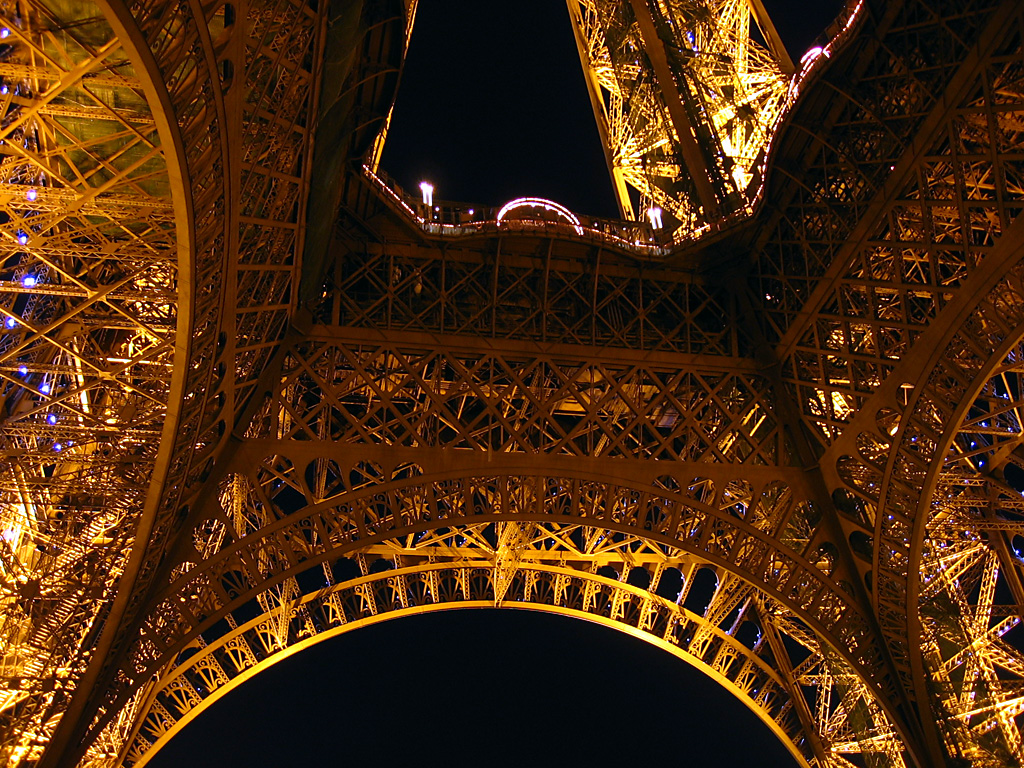
That arrangement became entirely evident one Metro ride later, when we found ourselves at the base of that elegant structure. As well as being lit by large numbers of tungsten lights – giving the structure an orange glow and nicely illuminating how the girders connect – the tower has been covered with thousands of flash bulbs that sometimes begin firing, seemingly at random. This creates the same kind of effect you see in movie portrayals of stadiums: where thousands of fans all firing flashes create a sparkling effect in the stands. Walking away from the tower, towards the former military academy, one follows a long lawn covered by young people arranged similarly to those on the bridge.

Today’s plan has shifted to include several targets of opportunity. The making of banana pancakes is a given. Beyond that, we may visit the sewers and catacombs. Hopefully, we will have a look at the Canal Saint-Martin, which is not too far north of where we are staying, about 1km from the Seine in the 12th arrondissement. It now seems unlikely that we will visit Versailles, but that is not overly regrettable. There is plenty to do in Paris before my flight back to England tomorrow evening.

PS. A nine square metre apartment can actually operate fairly reasonably with three people in it, as long as things are done logically and with constant attention paid to how much stuff needs to be stowed away at any particular time, in order to accomplish whatever task has been undertaken.

Correction: re, Paris and London

Mike Kushnir and Hilary McNaughton in Paris

I need to issue a quick but important correction. Earlier today, I said that I was surprised by the similarity between Paris and London. Admittedly, the museum districts of the two places resemble each other to a greater degree than one might expect, during the daytime. At night, downtown Paris is a far different (and enormously more pleasant) place. Based on limited exposure, it reminds me of the things I like most about Montreal. People are everywhere, there are public performances going on late into the night, there are families to be seen, and the rest of the things that make a city feel public and alive. The contrast with a few drunken gangs of hooligans wandering from pubs to kebab vans – as is the norm in London – is striking and highly favourable towards the Parisians.

That said, I am heading back out into it. I want to see the illuminated Eiffel Tower. The bridges across the Seine are certainly very appealing when lit by contrasting incandescent and fluorescent lights and packed with groups of friends sharing cheese, bread, and wine.

PS. The verdict on the falafel: better than I had previously and capable of being a tasty snack. Still not something I am ever likely to wish for when unavailable, as I do for delicious vegetarian poutine with miso gravy.

Cursory Louvre post

Apartments of Napoleon III, Louvre

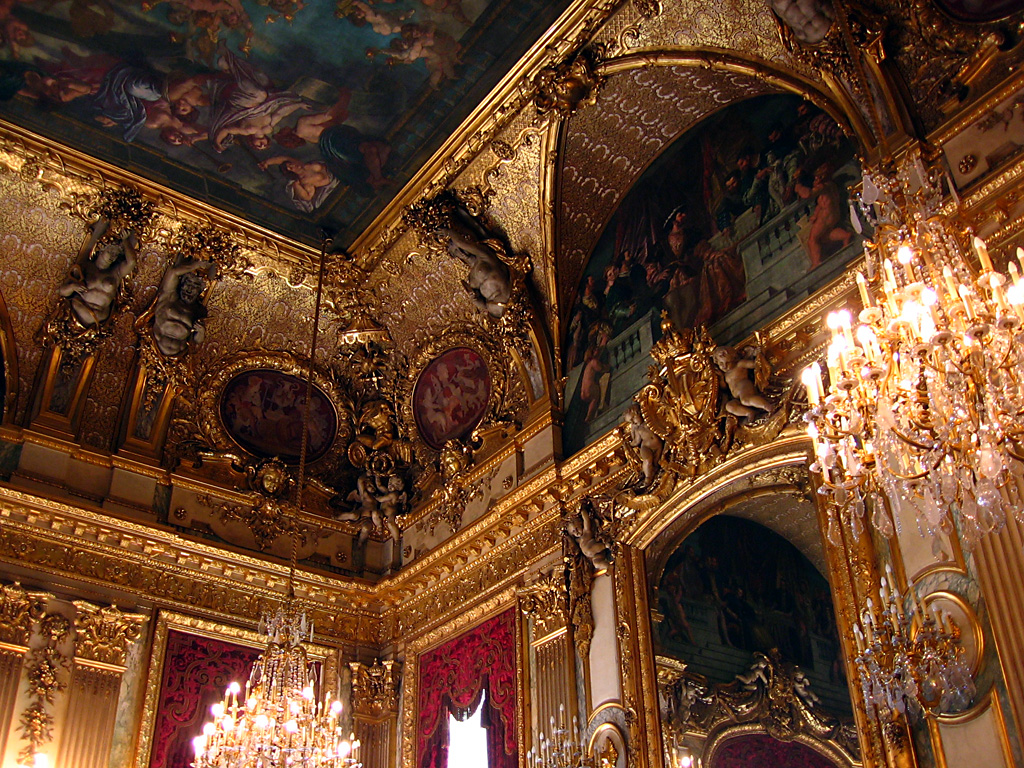
Hilary and I spent this morning and afternoon exploring the Louvre. The combination of art and architecture is superb. I especially like the high-ceilinged galleries of the Denon Wing and the marble sculptures. Thankfully, the place was a lot less crowded than I have been told it gets at the height of summer.

The general Paris experience is surprisingly familiar. I suppose I expected it to be much more different from London than it actually is – at least on a superficial level. One pleasant surprise is that I have been able to operate fairly well in French, though I am sure any kind of in-depth conversation would be far beyond me at the moment. Hopefully, next year will bring opportunities to become conversant again.

Tonight, we are apparently visiting an area famous for having the world’s finest falafel. It’s not a foodstuff I have ever really enjoyed, so I suppose this will be the ultimate test of whether that is the product of exposure to inferior falafel or an abiding personal dislike of the stuff.

Tomorrow, we may be going to Versailles.