New interface for comedic news

Comedy Central has rolled out a new interface for showing Daily Show and Colbert Report clips. The player seems to be rather more stable than the previous version, with no errors discernible in Firefox 2.0 and Mac OS X. The videos themselves are a bit bigger and seem to load faster. Perhaps the biggest improvement is that clip videos now play in sequence, in the order in which the bits were included in the actual episode.

The two biggest new problems are that the window in which the videos now play is very large and cluttered, and that video advertisements are now shown before the first clip you watch and sometimes in between them. For me, this is an acceptable price to pay for an improved viewing experience. It was very annoying to have to go through them one by one before, especially given how about one in three would encounter an error that prevented it from loading.

It would be better to just have it all on YouTube, but I can understand that Comedy Central needs to extract advertising dollars from we web-viewers. Of course, I won’t be de-activating my AdBlock extension or the Filterset G updater for it anytime soon. After a few weeks of using it, the web seems truly garish when viewed in a normal web browser. You need never be troubled by annoying banners again. Flashblock is also a godsend, since almost all the flash on the web is either advertising or potentially malicious.

Touring south Oxford

Iason Gabriel, Claire Leigh, Milan Ilnyckyj, Bryony Lau, Alex Stummvoll, and Emily Paddon

Most of today was spent giving my father a fairly comprehensive tour of Oxford: south of Wadham College. Starting at Wadham, we went up Hollywell Street to New College where we saw the walls, mound, and cloisters. Then we carried on to Manor Road and the Department of Politics and International Relations. Down Longwall Street, we came to the High Street and headed up to Carfax. On the way, we ducked into Queen’s College, University College, and All Souls. We also picked up the Scholar’s Gown that Alex and Bryony so thoughtfully gave me for my birthday.

On the way to lunch at the Vault and Gardens, we had the good fortune to run into Claire, Emily, Iason, Alex, and Bryony. It would have been hard to arrange so fortuitous an encounter. From there, we took a bit of a detour to see Nuffield College and the Oxford Castle. After a lunch involving excellent marinated tofu (I asked the staff how it was prepared), we went up St. Aldates Street, past Christ Church, to the Folly Bridge. Before reaching the bridge, we ducked into the magistrates court, at my father’s request, and watched a few minutes of a trial.

We then walked along the Isis to see the Greylag Geese. I have never seen the river so swollen with rainwater. The bank is almost completely submerged and the River Cherwell (normally a tranquil spot for punting) had an aggressive rate of flow. Walking along it, near Magdalen College, I saw that a number of sports fields have been flooded.

After heading back up the High Street to Carfax, we got some coffee and then went to have a look at Blackwell’s. All told, we were walking for about five and a half hours. I am now left with the time between now and dinner (with Claire and my father) to work on readings for tomorrow’s seminar. Even when you are very tired, it can be rather satisfying and fun to just crash along.

Six days to Turkey

Back Quad, Wadham College

I am now thoroughly excited about the upcoming trip to Istanbul. Before starting My Name is Red, my general notions about the Mediterranean had me expecting it to be fairly warm, if not as much so as Malta was in March. Now, I am expecting the real possibility of snowfall. Judging by my weather widget, the temperatures there are not incomparable to those in Oxford.

One more seminar and two reasonably short papers to write, largely on the basis of reading that has already been done: it will be quite a relief to have finished all elements of the Developing World seminar, with the exception of the three hour exam at the end of Trinity.

It would be easier to think of things to say if I weren’t so utterly exhausted. Hopefully, a bit of sleep before the OUSSG meeting will make my brain feel less as though there is a sea urchin knocking back and forth between my ears.

PS. Many thanks to Claire, who kindly took me for lunch at St. Cross today. For the uninitiated, it is widely believed to be the best lunch at any college. Quite unexpectedly, eating there also led to my seeing Dennis Danielson – the instructor for my Honours Milton course back at UBC. Of all the instructors I had at UBC, he seems the sort who could most easily cross over into Oxford style academia.

Hearing too many clock tower booms

For non-coincidental reasons, I have been reading about Delayed Sleep Phase Syndrome tonight. The terms used to describe it are certainly most familiar:

People with DSPS tend to be extreme night owls. They feel most alert and say they function best and are most creative in the evening and at night. DSPS patients cannot simply force themselves to sleep early. They may toss and turn for hours in bed.

By the time DSPS patients seek medical help, they usually have tried many times to change their sleeping schedule. Failed tactics to sleep at earlier times may include relaxation techniques, early bedtimes, hypnosis, alcohol, sleeping pills, dull reading, and home remedies. DSPS patients who have tried using sedatives at night often report that the medication makes them feel tired or relaxed, but that it fails to induce sleep. They often have asked family members to help wake them in the morning, or they have used several alarm clocks.

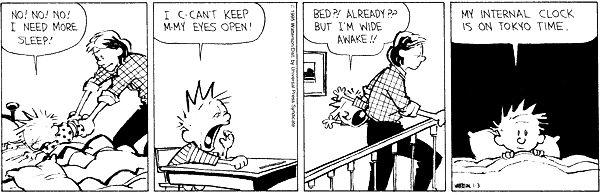
I have certainly tried shifting my sleep schedule through a whole day more times that I care to recollect. Apparently, some doctors even prescribe Modafinil – the most wondrous of the wonder drugs – as a treatment for DSPS. This Calvin and Hobbes strip captures the situation quite well.

At least sleeplessness leaves me with plenty of time to read. I would be willing to venture that a big part of reaching the place I occupy today was played countless nights in elementary school spent reading until the (horribly annoying) sound of birds chirping in the morning became audible. Already, I am more than 1/3 of the way through My Name is Red and making good progress on this week’s Economist.

I am not sure whether it is comforting or not to read that: “Some DSPS-friendly careers include computer programming, work in theatre, the media, freelance writing, and taxi or truck driving.”

PS. As well as contributing to the above, Facebook and instant message programs have taught me a great deal about which of my friends are almost certainly up and looking at a computer screen at 4:00am. Wikipedia says that well under 1% of people in general have DSPS. Among my friends, I would guess that the figure is at least ten to twenty times that.

If you can’t open it, you don’t own it

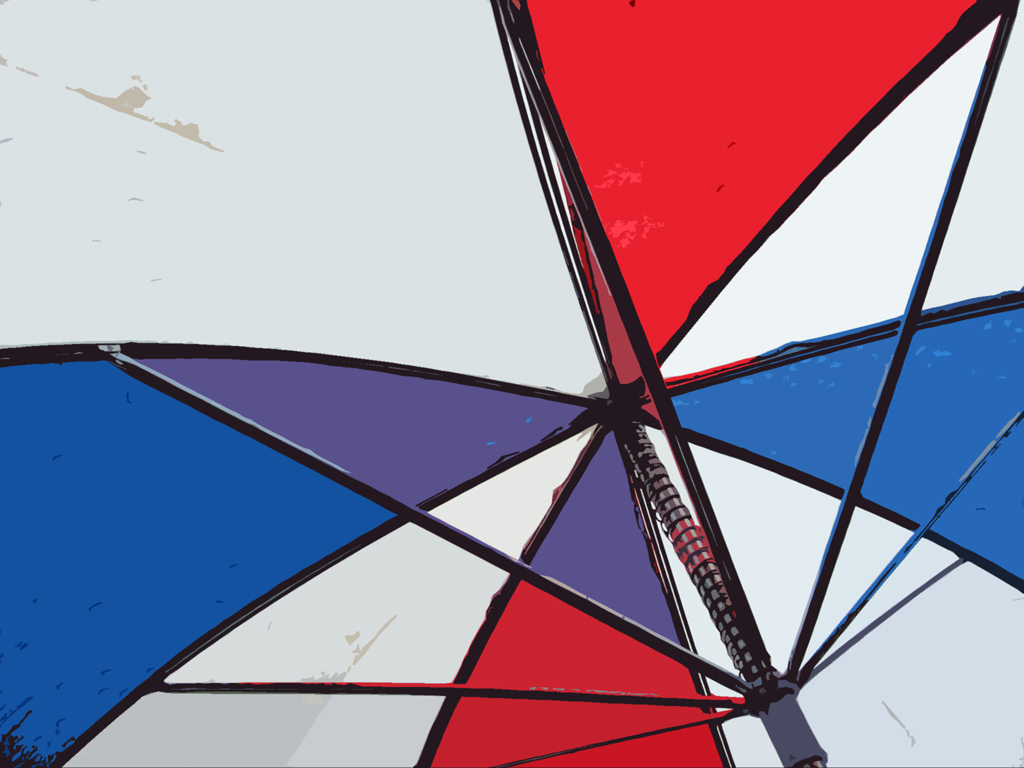
Umbrella

Make, a community of tinkerers and open-source affectionados, has published a list of gift suggestions. Some of their projects look really cool. Among them:

They are also selling a neat Leatherman warranty voider, in case you know a geek that does not yet have a multi-tool. (I have two: a Swisstool X and a little SOG Crosscut on my keychain). Their philosophy of “If you can’t open it, you don’t own it” is increasingly relevant in a world where manufacturers are allowing fewer and fewer things to be done by those who purchase their products.

I have long been a huge fan of open source software. The blog runs on Redhat Linux, using Apache Server, and both WordPress and MediaWiki are open source projects. All of these pieces of software can be used for free, even more usually, your right to take them apart and rebuild is limited only by your creativity. Wikipedia is probably the best website ever created, and it is all about collective effort and shared information.

Pre-reading for Turkey

In preparation for the trip to Turkey, I have moved on from V.S. Naipaul’s Half a Life to the copy of Orhan Pamuk’s My Name is Red that my mother sent as a birthday gift. Somewhat surprisingly, I find that I get more non-fiction reading done when I intersperse it with chapters from good fiction. It lets you take a break while remaining in a reading mode, and achieve a bit more balance without compromising your ability to get things done.

Written from the perspective of someone who has died violently, but remained capable of immortal communication, the beginning reminds me a bit of Orson Scott Card’s macabre short story “Memories of my Head.” There is an interesting contrast in literature between those who have passed through death to be uncaring about worldly things and those, like this narrator, who remain concerned with matters like wealth and revenge. The most sensible view has always seemed to be that expressed in Emily Brontë’s “Song.” It is a great shame that she herself died so young.

Academically, I have mostly been reading for the seminar this Thursday. Interesting as they have been, it will be a great relief to have the weekly effort they require ended, allowing greater opportunity to focus on the thesis.

Birthday party concluded

Kai  and Jessica

My thanks to those who attended the party last night. It was great fun, with lots of good music and conversation. Particular thanks to Alex and Bryony, for correcting my lack of an Oxford academic robe (I had been borrowing Kai’s for high table dinners), Kai for Simpsons magnets and a history of Pitt the Elder, and to Emily for an Albert Einstein action figure. I think I will make him sit atop my stack of thesis books. In the vicinity of Popper and Kuhn, he will look especially appropriate.

Contrary to my fears that the birthday party would be as poorly attended as the Canada Day party, quite a good number of people showed up. That is particularly appreciated, given how busy the end of term is for everyone. Things ended exceptionally late, and in circumstances not comprehensively remembered – generally the marks of a successful student party.

It’s exciting that there are now just three days left before my father will be visiting Oxford, and a just a week before we are leaving for Turkey. Now, to get back to thesis and seminar work.

First published photograph

Costumed people dancing, Queer Bop, Wadham College, Oxford

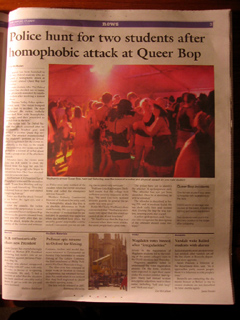
On page 3 of the 23 November 2006 issue of The Oxford Student, there is an article by Kate McMullen on the Wadham Queer Bop. Specifically, it describes a homophobic attack being investigated by the police. Accompanying it is a photo that I took at last year’s bop and posted on my blog. The same image is on Facebook. It doesn’t suit the headline very well, and it wasn’t taken at this year’s bop, but it seems like such issues are not of major concern to the editorial staff at The Oxford Student.

It would have been nice for them to have asked me, prior to using it, or at least given me some accreditation. I have sent a short and friendly letter to the editor:

Sir,

I was surprised to see – on the third page of your November 23rd issue – a photo that I took at last year’s Queer Bop and subsequently posted to my website (www.sindark.com). Next time, please let me know that you are planning to print one of my photos, and I will send you a higher resolution copy.

Thanks,

Milan Ilnyckyj
Wadham College, Oxford

That said, it is good to know that I have taken at least one photo that is worth blowing up and putting in a newspaper. The official student newspaper of Oxford might also be considered a cut above your standard such offering.

[Update: 9:30pm] As Sarah quite correctly pointed out, my focus on the photo issue completely missed the broader concerns raised by the story itself. A homophobic assault taking place within an Oxford college should definitely result in a comprehensive investigation and the punishment of those implicated to the fullest extent of the law.

[Update: 27 November 2006] I sent a message to the Oxford Student asking them to do three things in order to amicably resolve the above situation: print the letter to the editor above, credit me for the photo in the web version of the story, and formally state that they will not use materials from my websites without prior permission in the future. I have received the following response and, pending the printing of the letter above, will consider the matter formally and amicably settled:

Dear Milan,

Thanks for your message. Apologies for the unattributed use of your Queer Bop photo. I’ve forwarded your message on to the relevant news editors (Kate McMullen had nothing to do with the photo). btw, it’s a fantastic photo and really makes the page look great. The issue it appeared in was the last one of term, so your letter cant be printed in the paper until next term.

Statement: We will not use photography or other content from webpages that you operate in the future, without prior written permission.

Yours sincerely,

Robert Cookson
[Editor in Chief]

As I said in the past, I am quite happy to have my photos used in newspapers and other publications, provided that a request is received in advance and proper attribution is given.

Nuclear fusion as a power source

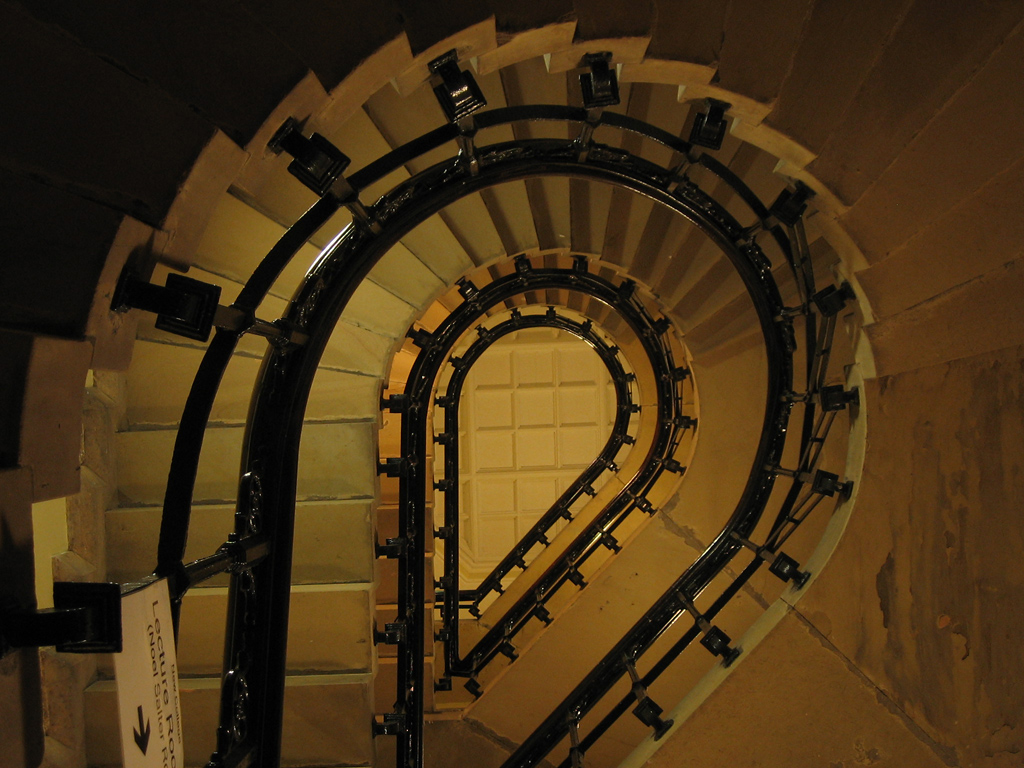
Staircase in New College

At dinner, this evening, I was speaking with one of the Wadham College fellows about nuclear fusion. He highlighted an element that I hadn’t previously heard discussed: namely the fact that you need to build truly enormous reactors so as to have a surface area to volume ratio low enough that fusion can be sustained. He spoke of the possibility that two or three gargantuan power plants could serve areas as vast as Europe or North America, but that enormous technical hurdles remain, most of them relating to plasma control.

Remember that, once atoms form a plasma, they have been stripped of their electrons. As such, the positive charges of all protons cause them to repel one another with a force inversely proportional to the square of the distance between them. Imagine trying to push the north poles of two powerful bar magnets together, and you will begin to appreciate the kind of force dynamics at work. For fusion to be attained, that repulsion needs to be overcome. In the kind of reactors being experimentally constructed now, that is generally achieved through containment using extremely powerful electromagnets.

Under construction now, in France, is the International Experimental Thermonuclear Reactor (ITER). Construction will finish around 2016 and the device will hopefully provide the information and experience required to develop fusion reactors commercially. If they could be deployed, they would offer the benefits of existing fission plants (reliable and substantial electrical generation), with relatively few issues relating to radiactivity (though, as the fellow pointed out, the gamma rays generated in hydrogen fusion would cause the reactors themselves to become quite radioactive, over time).

The possibility of a deus ex machina stepping in to deal with energy security and climate change is certainly an alluring one. With enough power, it would be possible to produce as much hydrogen as you could desire from water. If gargantuan plants are the mechanism to make fusion feasible, energy from them could be partially distributed in that way. Even if fusion were not a panacea, it could be an important component in a response that also includes conservation, the development of renewables, and technical mechanisms to make fossil fuel use carbon neutral.

I don’t know nearly enough about nuclear physics to be able to comment on the viability of fusion as a power source. One thing you hear constantly in journalistic coverage of it is that it has been twenty years or so off for ages now. Hopefully, with the lessons learned from ITER, it will be a real twenty years this time. If that did come to pass, it would certainly not be too soon. On a political note, it is probably a good thing it is being built in France. When it (inevitably) goes way over-budget, the government is reasonably unlikely to scrap the project. By way of comparison, recall how the US government cancelled the Superconducting Super Collider in 1993, after the expected cost tripled to US$12 billion.