
Missing Vancouver

There is a lot I miss about Vancouver. There are the obvious things, like all the friends and family I have in that city. There are also more esoteric things, like riding the stretch of the Skytrain between Chinatown and the wild outer reaches of New Westminster, walking across the False Creek bridges in the middle of the night, or trekking between North Vancouver coffee shops by means of wild parks with dangerous rivers in them.

Moving to Toronto, I am sure I will find things to appreciate about the city. On the basis of all the trips I have made there since 2007, I certainly have an awareness of the virtues of the city, from the active arts community to the sheer wonderful anonymous size. I look forward to disappearing into the mass.

One day it seems likely that I will find a way to live in Vancouver again, at least temporarily. It is probably a city with long-term economic vitality. At least until all the soil is depleted, British Columbia will remain a massive engine for producing wood demanded in other places. Vancouver has an excellent harbour, and doesn’t seem to be too vulnerable to sea level rise (aside from the unfortunate suburbs kept dry by levees). There will be a gigantic earthquake one day, but the city will survive – particularly the buildings with wooden or steel frames. British Columbia has lots of hydroelectric power and a reasonable amount of arable land.

For someone who avoids flying, getting back to Vancouver from the Montreal-Ottawa-Toronto zone is quite an undertaking. The bus journey is a long and unpleasant one, and the train is both much more expensive and much less environmentally sustainable. Flying, of course, is the ‘nice for me, too bad for people in future generations’ option.

Still, as long as the visit is going to be a fairly extended one, it is worth putting in the time and carbon to get back to the west coast. To be in Vancouver with a decent job and a good place to live would be an enviable situation. It may also be a decent option for doing a doctorate, if I decide to pursue that strategy. Walking around the UBC campus while it is milling with new undergrads would surely be a bit strange. I wonder what the first-year version of me would think of the version from ten years later. I have certainly grown a great deal more pessimistic about the future of the world, and probably more realistic about my ability to alter it.

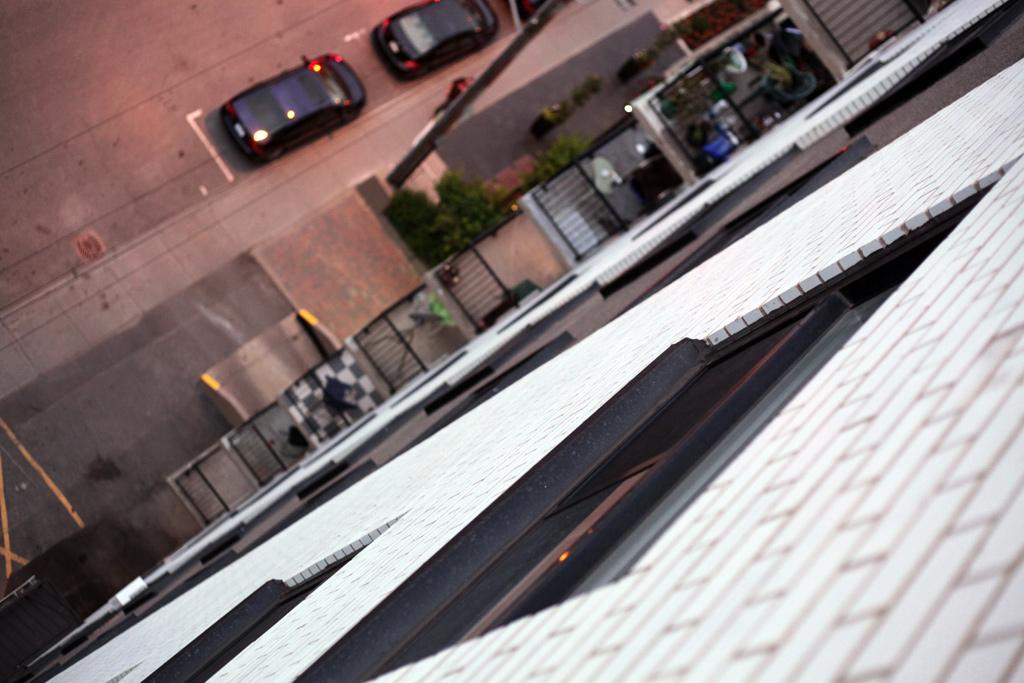
#movingtotoronto

Everything seems to have come together for me to relocate to Toronto by early September.

There will be much to do, winding down life in Ottawa, sorting out the move, finding somewhere new to live, and applying to doctoral programs for the fall of 2012. I am still not sure if I actually want to do a doctorate, but the only cost associated with applying is work and a modest amount of money. It seems like a good idea to give myself another option for a year from now.

Does anybody know of any good housing options in Toronto available for September? A place of my own is one possibility. Cool roommates would be another, as it would make sense to save some pennies for potential future tuition payments.

Chess in Ottawa

Previously, I mentioned the idea of free informal chess in Centretown.

Tomorrow – July 19th – I will be at the Bridgehead at Bank and Gilmour at 5:30pm. I will bring along one chess set and my chess clock.

Anyone who is interested is encouraged to stop by, bringing gear if possible. I will be around until just before eight.

[Update: 30 July 2011]

Google Groups
Subscribe to Ottawa Free Chess
Email:
Visit this group

Should I renew my subscription to The Economist?

Since I was in high school, I have been reading this British news magazine weekly, and not without good reasons. It is essential reading for university debators in Canada. If you don’t keep up to speed on what is written there, you are likely to get blindsided when your opponents bring it up. While their editorial stances are not always entirely convincing, they do defend them with evidence and good arguments. You will never sound entirely stupid while trying to defend their positions.

The Economist is also a magazine that seems to maintain attention in many other quarters. It is the only magazine I have frequently seen circulated in Ottawa offices. The biggest argument in favour of reading it may be that others do, and that by continuing to do so I keep myself appraised of what is happening. As a way of remaining reasonably well informed about happenings in many different spheres of life, all over the world, it may be a uniquely valuable publication.

There are also arguments against renewal. Some have argued that I would be better off spending more time reading other sources of news. Some have argued that I should read less news altogether: most of it is depressing, and most of it I can do absolutely nothing about.

Time is another issue. Your average weekly issue consists of about 100 pages of small, tightly-spaced text. I find that it takes at least five hours to read carefully, and significantly longer when there are lengthy special reports, technology quarterlies, and the like included. I could probably find ways to use that time that would be more useful or pleasant.

The cost is a bit of a consideration, at more than $400 for three more years. That is especially true given ongoing job uncertainty.

There is also the matter of climate change. The Economist does seem to accept the basic science that says that continuing to burn fossil fuels threatens humanity. Some of the time, the seriousness of the problem is reflected in the positions they take. At the same time, they have definitely failed to demand that politicians prioritize climate change over other issues, particularly economic growth. They have also frequently celebrated the discovery and development of fossil fuel reserves. Increasingly, it seems like they must be covert supporters of geoengineering. They realize that climate change needs to be dealt with, and know what would be involved in achieving that outcome by cutting fossil fuel use. They are unwilling to wholeheartedly endorse the rapid abandonment of fossil fuels, so the implicit position is to their accept the climatic consequences or try to eliminate them by technical means.

So, what do people think? To renew or not to renew?

Doctoral applications

One plausible project for the next couple of months is the preparation and submission of applications to complete a doctorate at various universities. I am not entirely sure that I want to to a PhD, but the application process is very long and this would at least give me some more options at the end of it. The aim would be to submit applications in the fall of this year, for possible admission the fall after that.

There are a number of subsidiary tasks:

  1. Select which schools to apply to
  2. Select which programs to apply to
  3. Determine application deadlines
  4. Assemble references
  5. Decide on a research topic and plan
  6. Investigate possible supervisors
  7. Assemble and submit application packages

The plan is mostly to apply to American schools, since they are most likely to have the money to support me during the 4-5 years a doctorate would take. I will probably also apply to a couple of Canadian schools.

I am still somewhat torn about whether doing a doctorate is the best possible use of time. I am sure I would learn a lot more doing an undergraduate degree in the sciences, or doing a more practical degree like law or engineering. Those options would be very expensive, however.

My hope is that I would be able to do my research on something of practical importance, and that I could do useful work of my own at the same time as the doctoral program was progressing. It would certainly be pleasant to get back into a university environment.

Back on two wheels

More than a year after I broke my collarbone, I re-inflated my tires, strapped on a new helmet, and went for a ride along the canal, past the locks beside Parliament, along the river, up Booth Street, along Dow’s Lake, and back home along the canal.

Cycling may carry the distinct risk of breaking your neck, but it beats paying $60 per month to exercise under constant social surveillance at a gym.