Arctic sea ice, in the midst of re-freezing

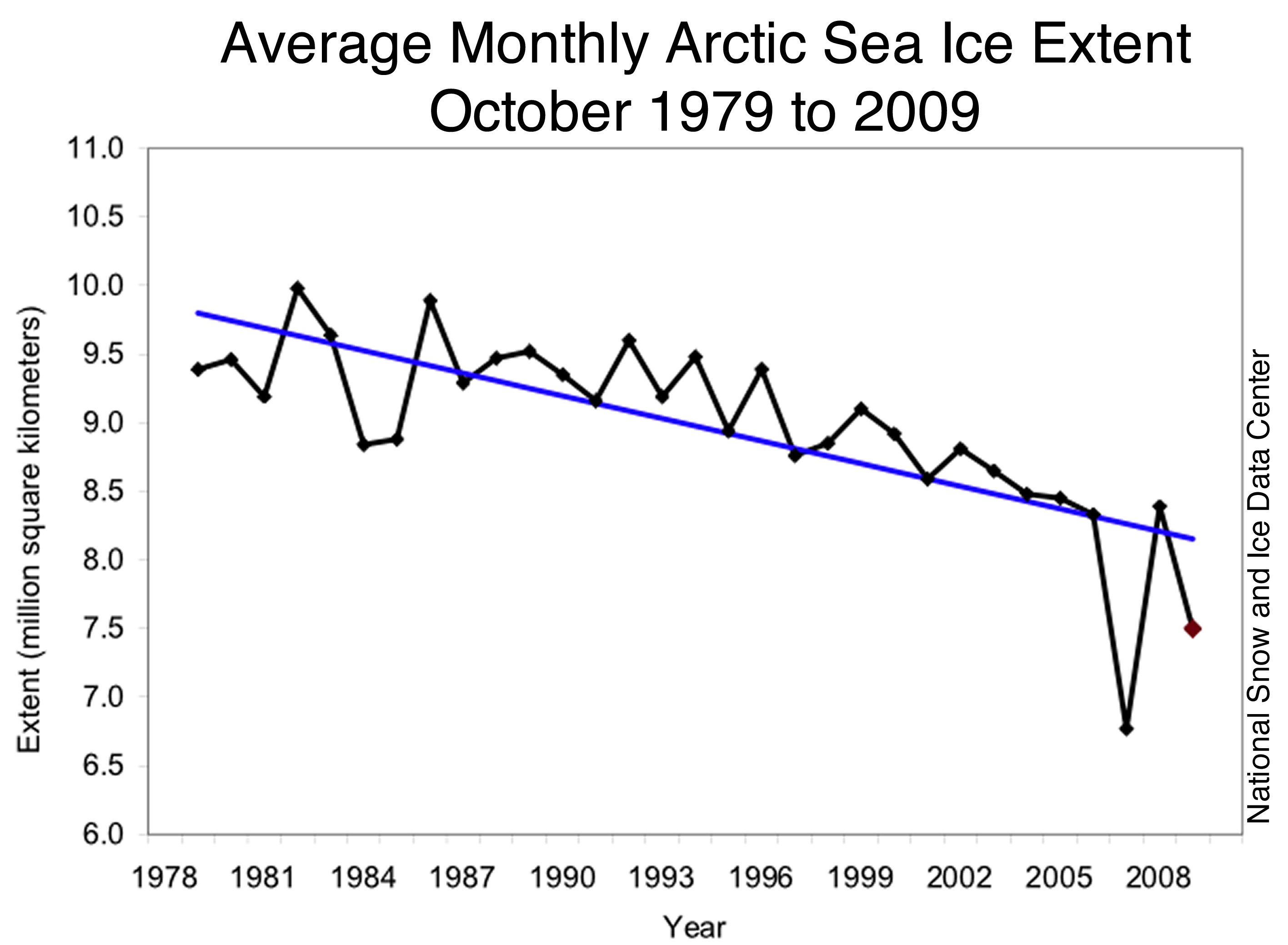
While 2007 retains the record for the lowest observed mimumum summer Arctic sea ice extent, the level right now is the lowest ever observed for this time of year:

Arctic sea ice extent, 9 November 2009

The US National Snow and Ice Data Centre explains the situation with reference to strong winds: “the growth rate slowed for a time in early October, coinciding with strong winds from the south over central Siberia. The winds helped prevent ice from forming along the Siberian coast. At the end of the month, extensive areas of open water regions were still present in the northernmost North Atlantic, and north of Alaska. The ice edge was north of both Svalbard and Franz Josef Land.”

The year-on-year trend, going back more than 30 years, shows that fall ice has been progressively less extensive. Note that, at Canada’s northernmost permanent settlement nautical polar night conditions exist from late November to mid-January. During this time, “no trace of light can be seen anywhere but the sky is not completely dark at midday.” Further north, where the middle of the Arctic icecap is, this period of darkness extends even longer.

The Rebel XS and the 20D

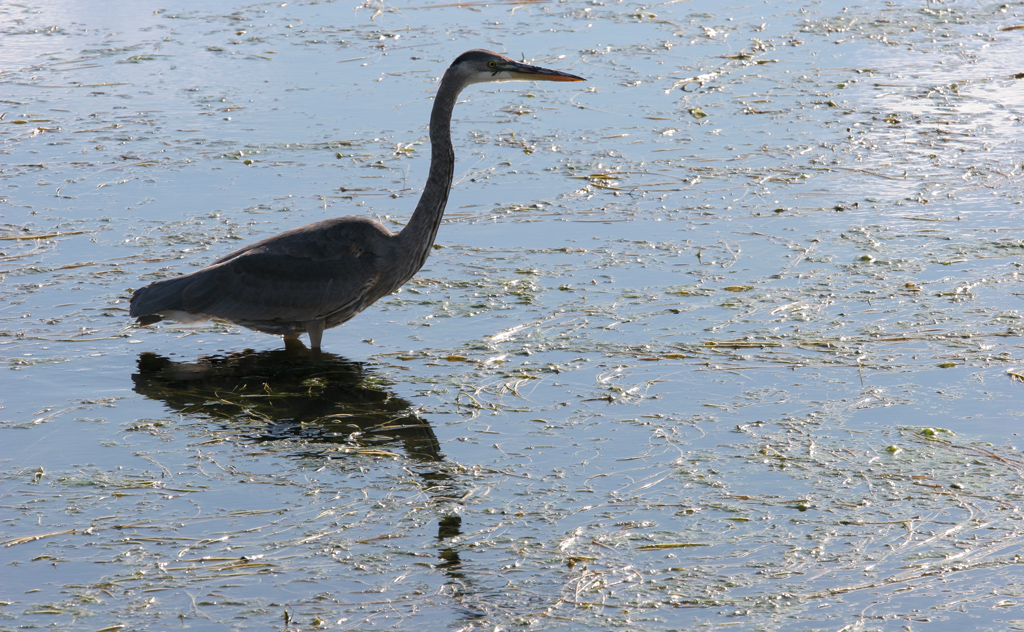
Heron in Dow's Lake, Ottawa

Unfortunately, my year-old Canon Rebel XS suffered some kind of failure on Saturday: constantly reading ‘busy’ in the heads-up display and being unable to take photos. Henry’s is sending it back to Canon for repair, and estimate it will be away 4-6 weeks. Quite kindly, when they heard that I was planning to take photos for the Fill the Hill event, they lent me a 20D for the weekend.

The 20D is an older camera positioned at a higher level than the Rebel XS. It is larger and sturdier, and feels more substantial. It also feels more balanced with heavy lenses like my 70-200. Two things I really like about it are the shutter release sound (which seems a lot more pleasing and professional than the Rebel XS) and the intangible sense that this camera is always eager to take photos. Pressing the shutter feels like allowing it to follow through with a restrained urge. Part of that feeling may come from the absurdly fast burst shooting speed.

I do have some complaints about the 20D. Some of the controls are very confusing. For instance, the on-off switch has three positions. In one ‘on’ mode, you can use the rear control wheel for exposure correction, once you have half-depressed the shutter button. Nobody would ever guess that, and I spent a good 20 minutes trying to figure out how to undo the -1/3 correction I accidentally applied (I eventually got it back to 0 by switching from 1/3 stop increments to 1/2 stop). The screen is much smaller and less useful than the one on the Rebel XS, so it isn’t really all that useful for reviewing images in the field. Also, the processor is slower, meaning that photos take longer to download.

All told, I now have a better understanding of why people buy Canon’s $1000ish cameras, when their features are mostly the same as those in their $500ish cameras. The 20D certainly looks and feels more professional than the Rebel XS. That being said, I think I will stick with my plan of saving up and eventually buying a dSLR in the much more costly category of those with full-frame sensors.

P.S. With my Rebel XS away, it may be tough to produce nice photos of the day for the next month or so. I went out and took a heap of fall photos today, to try to see me through the dry spell. If I do end up going to a family reunion in Vermont in November, I will probably rent a dSLR (and maybe the 24-70 f/2.8L lens) for the duration.

P.P.S. One other lesson from all this is that megapixels really don’t matter. Which has more, the Rebel XS or the 20D? I don’t know, and it doesn’t matter in the slightest.

[Update: 14 November 2009] The Rebel XS came back from Canon with a new flaw introduced.

[Update: 14 June 2010] Recently, the electrical system on the Rebel XS failed again. Rather than get a replacement under the Henry’s service plan, I got credit towards a 5D Mark II.

Comment to win a Wave invitation

In the spirit of the comments for photography contest, I have another. I’ve been invited to participate in the invitation-only trial of Google Wave. I was given eight invitations, seven of which I have sent off to people I thought it might be useful to share Wave with. I will award the last one to a random person who leaves a comment on this site, during the next week. All eligible comments posted before 2:47pm Ottawa time on Tuesday October 20th will be entered into the random draw. The rules are the same as those for the previous contest.

Note that invitations aren’t processed instantly. As Google explains: “Invitations will not be sent immediately. We have a lot of stamps to lick.”

Pondering smartphones II

At the end of June, I pondered smartphones for the first time and decided on the Nokia E71 (preliminary review here). Since then, I have witnessed mine sicken and die, getting progressively buggier. Bugs aside, I have also found the phone much less useful than I expected before getting it. The web browsing experience is poor; blogging from it is impossible; the audio quality is lower than with my cheap old phone; and the email capabilities that were my primary motivation for buying it were always finicky, awkward, and temperamental. The media capabilities were never a major concern of mine, but it is fair to note that the media player and camera are both rather poor.

Today, my dead phone was revived by the Fido store in Ottawa’s ByWard Market – eliminating all my saved notes to myself (foolish to save anything in local memory!), settings, and applications. The generic OS they installed lacks some of what my phone came with initially, and it still won’t pair with Bluetooth devices. The people at the shop say that the matter of any further repairs is between me and Nokia, and I should be glad that they didn’t charge me for flashing the phone.

As such, I see myself with three options:

  1. Give the E71 another try, in hopes that the bugs are mostly gone and I will learn to live with its limitations as a device.
  2. Get an iPhone, with the annoyance of a three year contract.
  3. Abandon smartphones altogether and get a basic GSM phone with the capability of making calls and sending text messages only.

The choice is complicated by the apparent defectiveness of the E71. It wouldn’t really be ethical to sell it to someone else in this state. Given that, and my displeasure at the prospect of an exclusive contract and locked phone (or spending $700 on an unlocked iPhone), option two is basically out for now.

In some ways, option three is actually the most appealing right now. Smartphones may simply be more trouble (and expense) than they are worth. Perhaps waiting for a few more generations of devices to pass by makes the most sense. That said, given that I have a phone that I cannot really sell, I will probably continue with option one.

If I could send advice back in time to myself in June, I would probably say: “Wait a few more years before going for a smartphone, and if you must get one now, go with Apple’s offering.”

Composting in Ottawa

Ottawa is starting up a citywide composting system, with pick ups every two weeks through the winter:

Starting Monday, and for the next 12 weeks, the city will be delivering 240,000 green bins and small, counter-top kitchen-catchers to households across the city.

The chief environmental advantage cited, reducing landfill usage, is not overly compelling. We have plenty of space for landfills, and they are very tightly regulated. I would be interested in knowing what the other effects of the program will be, if any, on factors like air quality, water quality, and greenhouse gas emissions.

It is interesting to note that the service will no accept ‘biodegradable’ plastics, because the term doesn’t have a standard usage and there is a risk that the compost produced would be contaminated.

Keep your flash in your pants

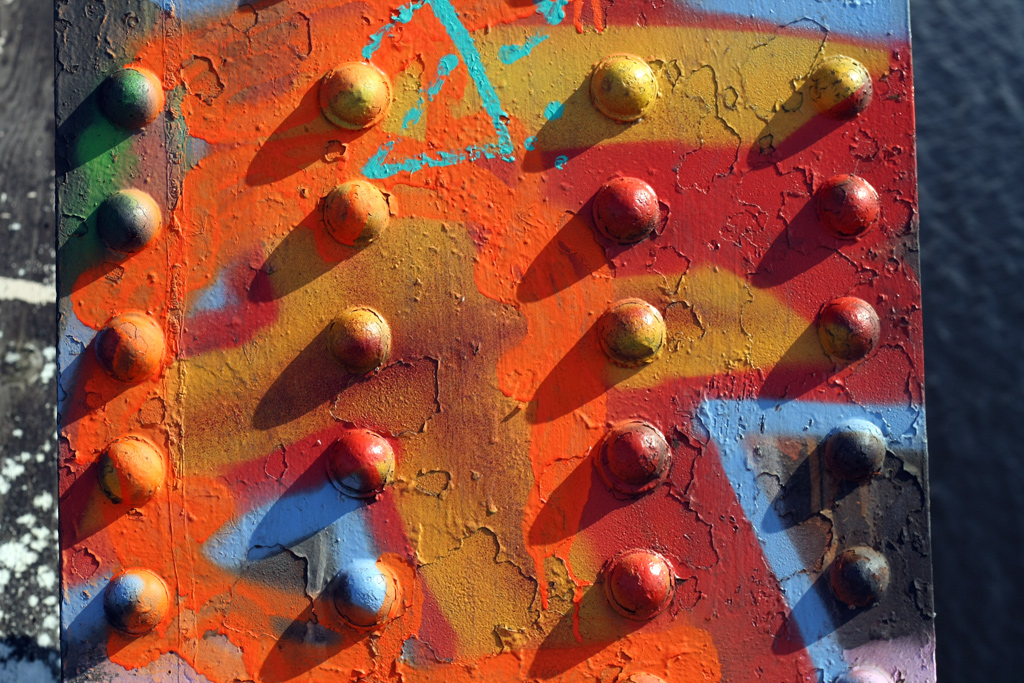
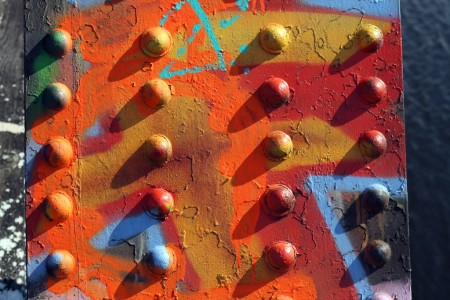
Colourful metal dots

The other day, I attended some live music at the Umi Cafe on Somerset. Throughout the multi-hour performance, there was a cadre of amateur photographers – some with point and shoot cameras, some with dSLRs – happily snapping away. Almost without exception, every shot was accompanied by a bright white flash. There are two major reasons why photographers should avoid this pattern of behaviour.

Firstly, it produces ugly and unnatural pictures. Using a flash is akin to looking at a scene with a bright white miner’s lamp on your head. This is problematic for several reasons: (a) it lights close things much more than far ones, leading to blinding white foreground objects and black backgrounds; (b) it throws very harsh shadows, leaving a person’s nose looking like a mountain on the moon; (c) the light from the flash is a different colour from incandescent or fluorescent lighting, making the scene look oddly discordant in colour.

Secondly, it really annoys people. While the ‘stadium full of flashes’ effect is a Hollywood cliché, the actual impact of using lots of flashes – especially in a small and intimate environment – is to impose your weird lighting preferences on an entire room full of people, many times a night. Flashes are distracting and rude, and should only be deployed when really necessary.

There are easy ways to avoid using the flash. First and foremost, don’t use your camera in full auto mode. With no guidance, it will usually decide that the pop-up flash is the safest way to get a usable photo. With just a bit of thinking, you can usually do better.

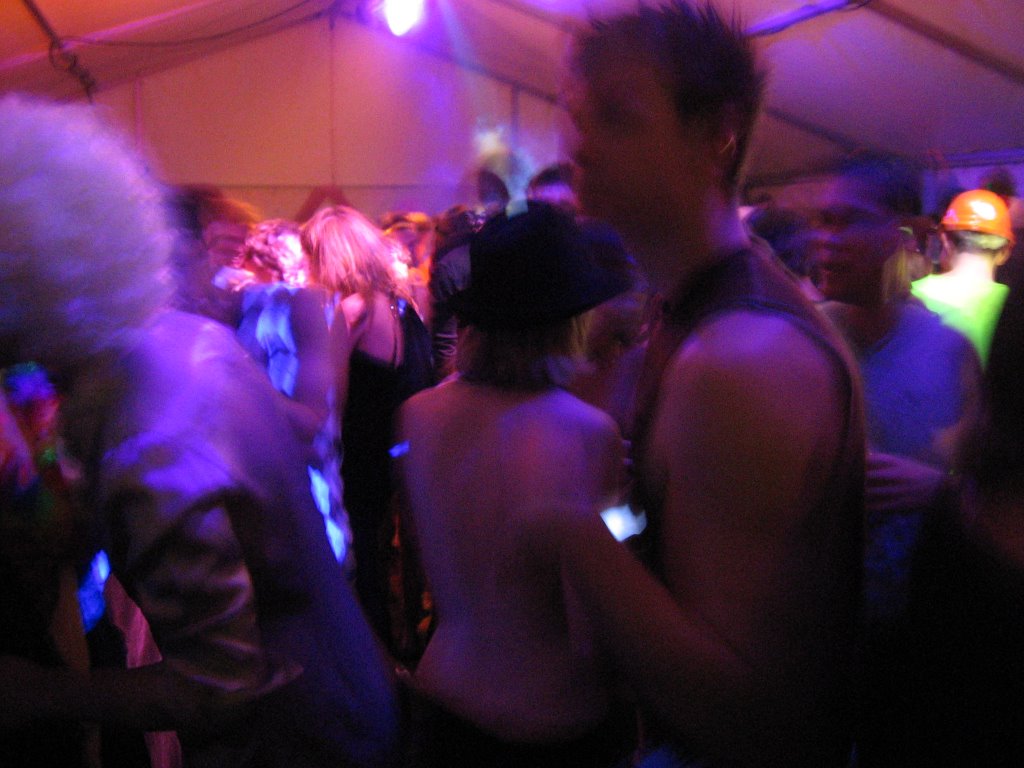
The first way is to increase the ISO setting on your camera. This basically makes it more sensitive to light. While doing so will make your pictures grainier, they will look a lot more natural than ‘headlamp effect’ flash shots. If you don’t know how to do this, check your manual or search online. With most point and shoot cameras, and all dSLRs, it is a fairly simple procedure. Many cameras even have a dedicated button for it. On a point and shoot camera, try cranking it up to 400 or so. On a dSLR, don’t feel shy about using 1600 ISO, or even faster. Here is an example of a high ISO photo taken with a cheap P&S camera. A flash photo of the same scene would have been infinitely worse.

The second way is to brace your camera somehow. If you have a two-second timer, this can be easily achived. Just frame the shot, with the camera sitting on the edge of a table, wall, or solid object. Then, press the shutter and then leave the camera still to take a photo. Anything moving will probably show some motion blur, but you are once again likely to produce a nicer and more natural image than you would with a flash. Tripods are also an excellent idea, and there are tiny little tabletop ones that can be easily carried around and used with a point and shoot camera. I used the combination of a $180 Canon P&S camera and a $5 tripod to take these photos: Montreal, Ottawa, Morocco, Paris, Istanbul. A great trick for churches and other buildings with interesting ceilings is to put your camera flat on the ground with a timer set, press the shutter, and step back. I used that trick to take these: Oxford, Istanbul.

People think about photographs as something you ‘take’ by pointing a camera at something and pressing the shutter. In fact, it makes more sense to think about photos as something you ‘make’ using a combination of light, gear, and intelligence. By putting some thought and effort into things, you can produce more natural photos in intimate settings, without temporarily blinding and annoying everyone around you.

Photo show opening party

Astronaut Love Triangle introduction

Last night’s photo show launch was well attended and great fun. My thanks again to the ever-talented Andrea Simms-Karp as well as the highly comic and deservedly infamous Astronaut Love Triangle (with introductory note above). Their repertoire included songs about cyberstalking, the side effects of the modern pharmacological rainbow, and the tenacity of the large American automobile, in the face of environmental concerns. At least one audience member seemed to be merrily recording video, so the performance has the potential to end up online somewhere.

Thanks again to everyone who attended and participated.

My photos will be on the walls at Raw Sugar (692 Somerset) for the duration of the month, with the 12×16″ prints going for $60 and the 12×18″ prints going for $70.

As of last night, we also have a winner for the print-for-comments contest. He will be receiving a copy of this image of the ceiling of Exeter College Chapel, should he so desire.

[Update: 6 September 2009] Zoom has also written about the vernissage. The Astronaut Love Triangle blog also gives it a mention.

[Update: 7 September 2009] The Elgin Street Muse also wrote about the opening.

[Update: 11 September 2009] The opening was also covered on tales from a grouch.

[Update: 23 September 2009] Until the end of the show, all the prints are on sale for $50.

[Update: 1 October 2009] Some videos of the Astronaut Love Triangle performance are now online: Avatar Love and Side Effects. They can also be seen directly on Vimeo: AL, SE.

But we never write anything in French…

At work, we all have confusing ‘multi-language’ keyboards, covered with accented letters for French and with important keys (such as pointy brackets) moved to strange locations.

Thankfully, you can just tell Windows to behave as though the keyboard has a standard US layout – a neat way of confirming that you really do have the entire layout memorized. As for me, I think I am ready for my blank keyboard.