Something that caught my interest

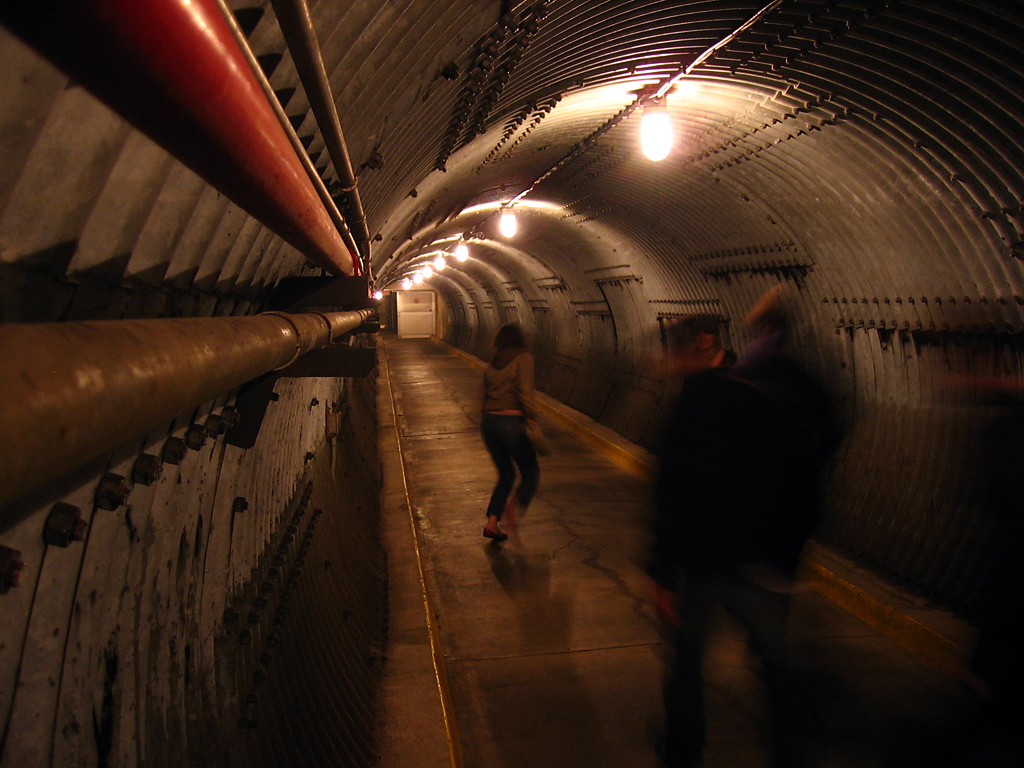
Ashley in a tunnel

I learned something new about my student loans today: while I knew there was a ‘grace period’ of six months between finishing school and starting repayment, I did not realize that you got charged interest over the course of it. On the first day of the seventh month, you need to either pay the interest for both your federal and provincial loans (about $500 on every $10,000 of loans) or have that interest added to the principal, increasing each of your subsequent monthly payments.

In any particular month between then and when your loans are fully paid, you cannot pay less than 1/120th of the total amount you owe. This is to ensure that full repayment takes place within ten years of the first payment. Both the federal government and the government of B.C. offer you the choice between a fixed interest rate (prime plus 5%, based on the rates at the time of your first payment) or a floating rate of prime plus 2.5%.

I guess I know what I will be doing with that ‘extra’ paycheque.
Consequentialism and ‘public service’ ethics

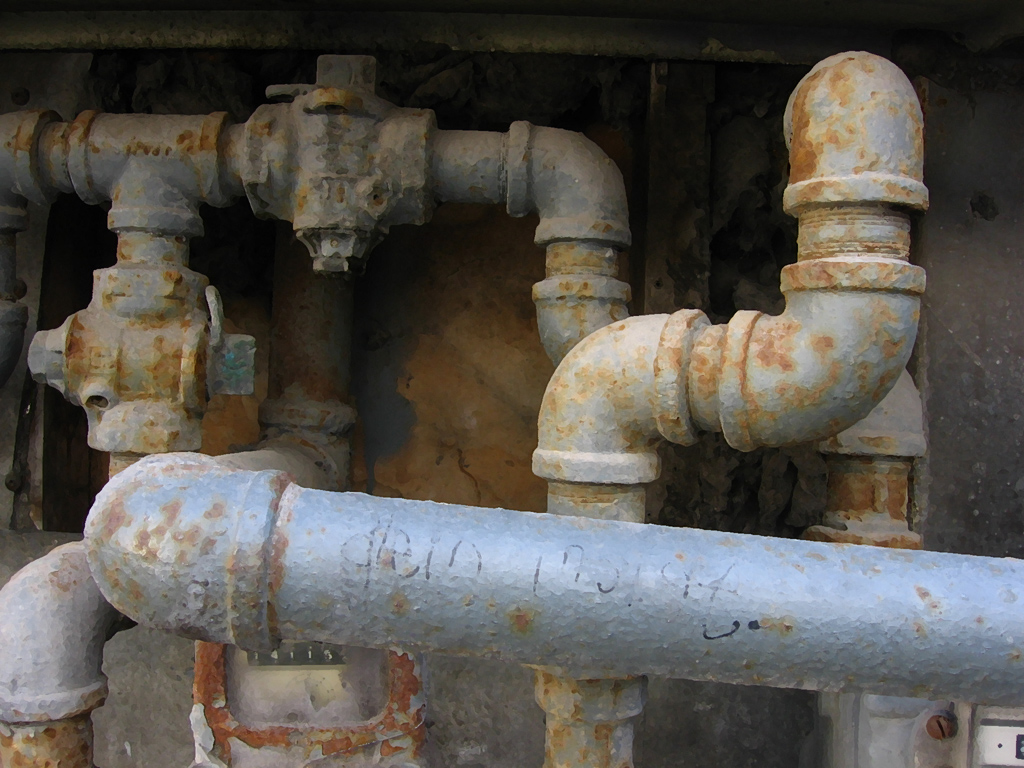
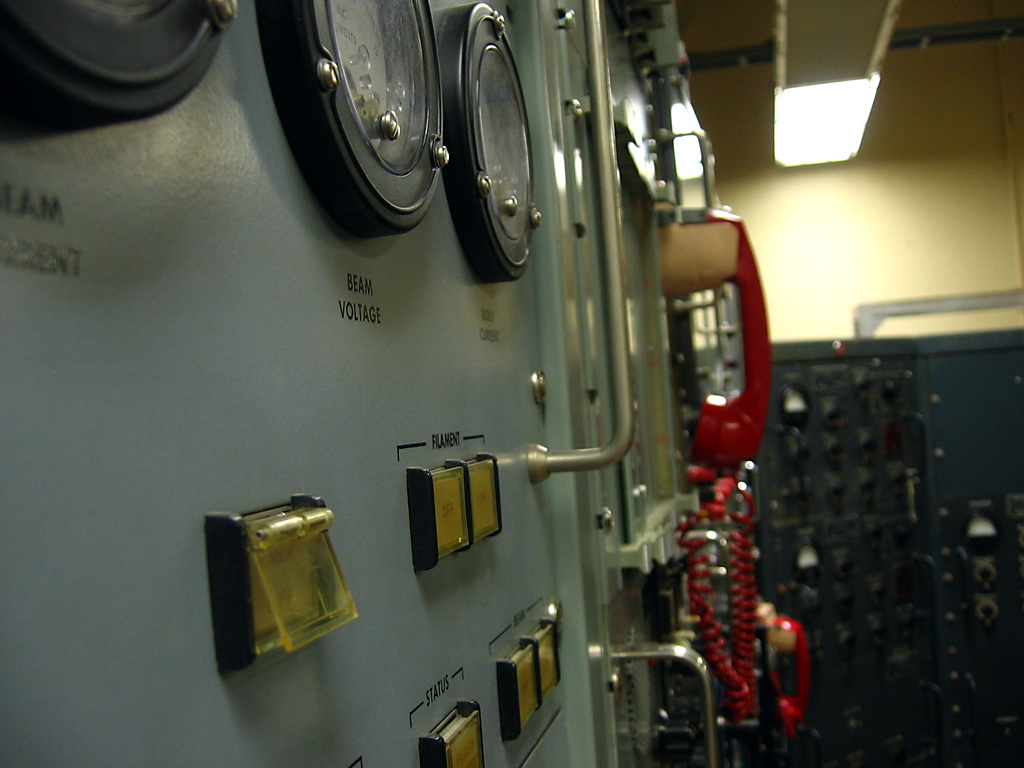
Bunker control panel

I spent the last two days at a mandatory orientation to the public service. The bits about the structure of government (role of the PCO and Treasury Board, for instance) were quite useful. The bits of values and ethics much less so, largely because of how artificially precise they try to make it. For instance, they define four ‘families’ of personal values. These map one-to-one to four ‘public service’ values. It is not clear that the four sets are well defined, nor that the mapping is as clear or automatic as is posited.

The fourth ‘family’ is especially odd. It basically centres around the rejection of the phrase ‘the end justifies the means.’ What they mean by this, essentially, is not to circumvent procedures that exist for good reasons to achieve some narrow objective. What seems foolish about it is the fact that the ethical yardstick remains the ends. It is inappropriate to fast-track an excellent seeming job candidate past normal checks because of the risk that your intuition is wrong, and the possibility doing so will undermine the system. Both objections are ultimately based on a comparison between two sets of means (sloppy and rigorous) and two sets of outcomes. It is also quite plausible that situations exist where rejecting the normal procedure is the best ethical option: if you have a frigate with broken engines being fired upon, it makes sense to be more slipshod than usual in the quality of your repairs.Of course, there are also lots of situations where following protocol rigidly even when under fire (literally or metaphorically) produces your best chances of success.

As such, it as fairer to say that ‘the set of all ends justifies the means.’ There are lots of good arguments for rules (they are efficient, clear, and transparent) but the reason these properties are desirable is because of the ends they eventually produce.

The monthly and the bi-weekly

Every second Wednesday, I expect Ottawa experiences a marked uptick in consumer spending as all the civil servants get paid simultaneously. This may prove especially true next month, due to a quirk in financial timetables. Since paycheques are issued every two weeks, there are always at least two in a month. Twice a year, however, there will be a month where people get three paycheques. Most people, I expect, deal primarily with expenses that run month to month: rent, credit card bills, and the like. As such, that third paycheque seems like a kind of windfall.

Thought of in this way, the question that comes to mind is how to deal with the ‘surplus.’ The most conservative option would be to put it toward my student loan payments. An alternative is to put it into general savings, as a hedge against future financial needs. A final and more appealing option would be to spend it on a big purchase. My iBook is suffering more and more acutely with the pasage of time. Despite the upgrade to 1.25 GB of RAM, it now takes more than 20 minutes to boot up (I never shut it down, if I can avoid it). It also has trouble accessing the web, playing music, and keeping track of email at the same time. A new MacBook might be an excellent way to help ease myself into Ottawa’s winter chill…

Dr. Strangelove in a nuclear bunker

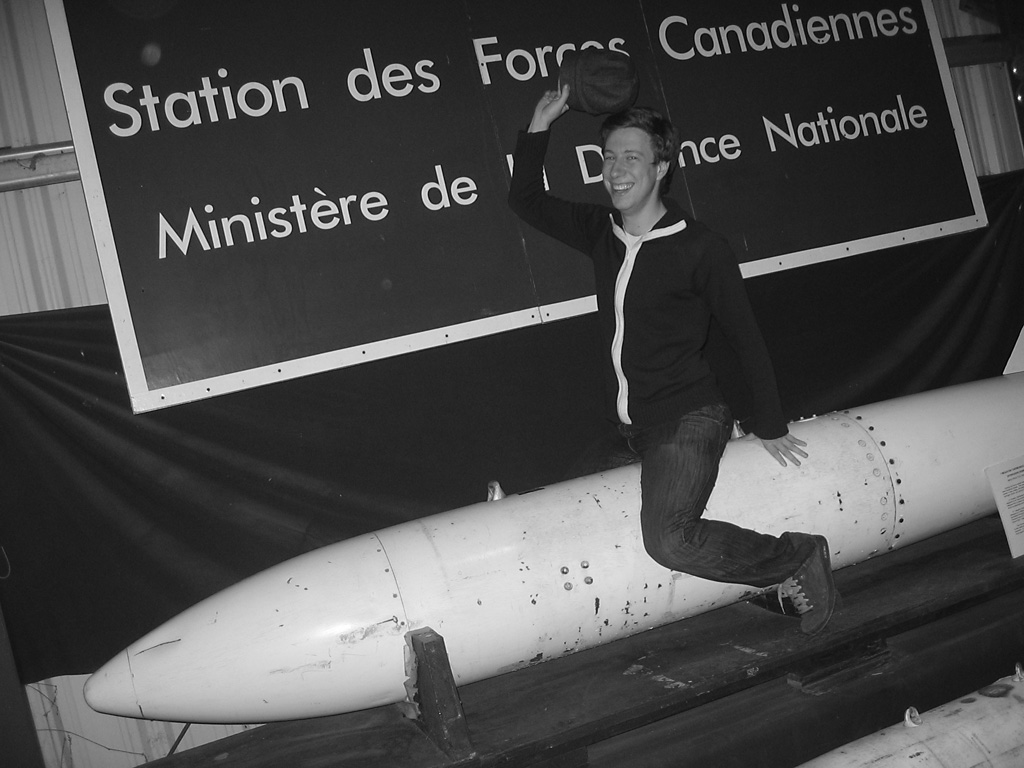
Marc Gurstein rides the bomb

After today’s orientation, I went with some friends to see Dr. Strangelove in the Diefenbunker – the infamous Canadian nuclear shelter, built to protect top Canadian military and civilian leadership in the event of nuclear war. Diefenbunker is actually a general term for shelters of the type: the one near Ottawa is called CFS Carp. Apparently, there is also one in Nanaimo, B.C. One odd thing is that the shelter has a multi-room suite for the Governor General. Presumably, Canada would not have much need for a local representative of the Queen, after the actual Queen’s entire realm is reduced to a burnt, radioactive plain.

Tonight’s film was followed up by Pho with three fellow employees of the federal government. It was all a distinct social step forward, and Ashley Thorvaldson deserves credit for organizing the expedition.

You can read about the Cold War movies events on the website of the Diefenbunker Museum.

The folly of Apollo redux

In an earlier post, I discussed the wastefulness of manned spaceflight. In particular, plans to return to the Moon or go to Mars cannot be justified in any sensible cost-benefit analysis. The cost is high, and the main benefit seems to be national prestige. Human spaceflight is essentially defended in a circular way: we need to undertake it so that we can learn how human beings function in space.

A post on Gristmill captures it well:

Let me be clear. There is a 0 percent chance that this Moon base or anything like it will ever be built, for the following reason: the moon missions in the ’60s and early ’70s cost something like $100 billion in today’s dollars. There is no way that setting up a semipermanent lunar base will be anything other than many times more expensive. That would put the total cost at one to a few trillion dollars.

Assuming that this taxpayer money needs to be lavished on big aerospace firms like Lockheed anyhow, it would be much better spent on satellites for the study of our planet (Some comprehensive temperature data for Antarctica, perhaps? Some RADAR analysis of the Greenland icecap? Some salaries for people studying climatic feedbacks?) or on robotic missions to objects of interest in the solar system.

Candidate bicycle located

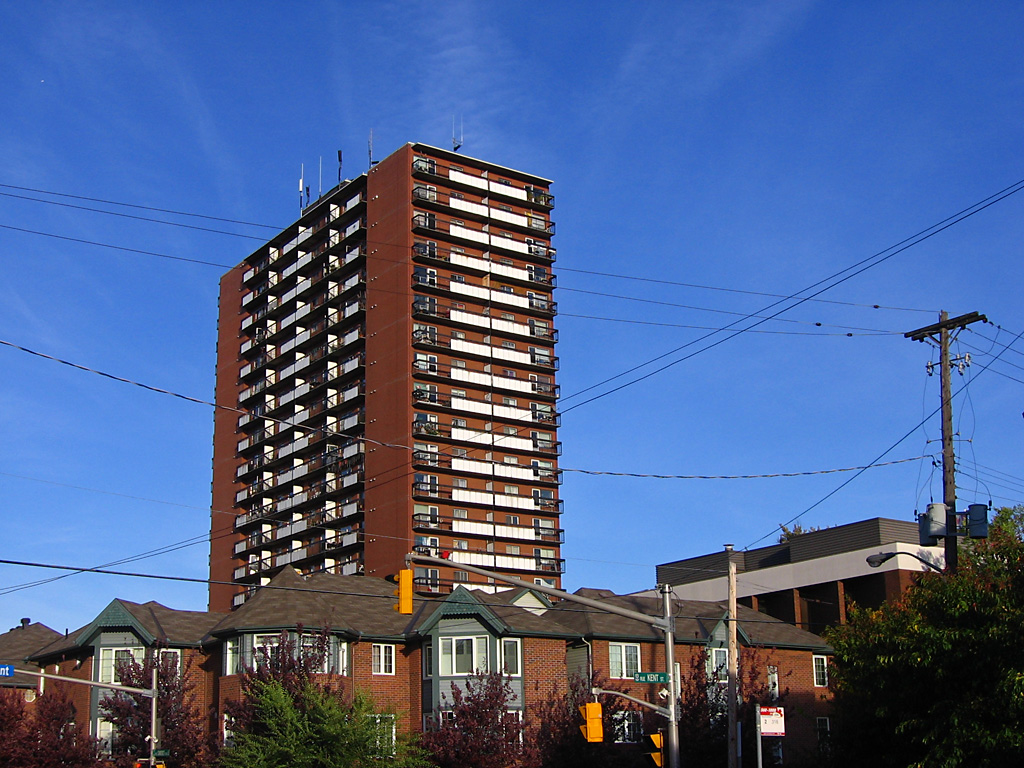
Ottawa tower block

I found a possible bike this evening: a Trek 7.3 FX hybrid. Originally $619.99, it is on sale for $439.99. I would probably have bought it tonight if there had been time to test it out before the shop closed. As it is, I will have some time to research it before I go give it a test ride on Thursday (mandatory orientations are happening for me tomorrow and Wednesday, on the opposite side of town).

The bike has Shimano Deore components, which the salesman tells me are the 6th of eight levels of quality sold on hybrids. It is quite light and seems well constructed. The place promises free repairs and tune-ups for a year, as well as an unspecified discount on a helmet, lock, and pump.

This is the last one available with a 20″ frame, which I am told would suit me better than the 22″. Hopefully, nobody will snap it up before me.

New climate change site from Nature

Nature, the respected scientific journal, has a new climate change portal full of free content. A free issue in the Nature Collections series on Energy is available as a PDF.

When relatively exlusive publications try to open themselves to a more general audience, the results can be interesting. In trunks back in North Vancouver, I have hundreds of issues of The Economist where all the images are black and white, and the pages are just columns of text sometimes accented in red. In the previous span where I subscribed to Scientific American they also made a big shift towards the mainstream. I doubt that Nature will undertake such a shift. It is, after all, a peer reviewed scientific journal, but it will be interesting to see whether their attempts to promote the visibility of some scientific data and analysis will shift the overall journalistic picture of climate change at all.

The bike search

The first day of bike searching has yielded no success. I investigated the Bike Dump on Catherine and learned that they only have a single dingy old hybrid for sale – for $265 – and will get no more for weeks. A shop on Bank Street was no better, nor was another in the Byward Market.

Tomorrow, I will try the Bike Co-Op. Also, I will keep trawling Craiglist. I want to get something soon enough that I will have a chance to explore before cold and ice makes cycling here hazardous.

PS. All this demonstrates, once again, the inefficiency of moving often. It means you need to do time consuming things over and over again. Also, you need to suffer all the inefficiency of not knowing which places are likely to provide what you are seeking, as well as the loss associated with selling it all at the end (or frantically giving it away, as became the case in Oxford).

Heavy reading

Residential towers

I need to alternate my reading material a bit. Taking breaks from reading about Iraq and climate change in the newspapers, I have been reading Fugitive Pieces, which is beautiful but full of anguished Holocaust imagery, and Oryx and Crake, which is depressingly plausible, despite probably being intended as an Orwellian satire. One wonders whether any implausible elements included in the latter relate more to the likely course of technological development, or the dynamics according to which technology and society interact.

Having a clear-eyed view of the world, and its future possibilities, is essential for good planning and ethical behaviour. That said, having too much of the heavy cloth of reality wrapped around you can make it awfully hard to swim.