Solar panels at 30 metres a minute

If solar photovoltaic power is going to emerge as a major source of electricity, it will be necessary to start manufacturing solar panels in a far more efficient and economical way. The model needs to shift from how glass was once made (as individual panels) to how it is now made (as a sheet being continuously produced and split at the cool end).

Nanosolar (a company mentioned here before) claims to have a process that will print solar panels onto aluminum backing at a rate of 100 feet per minute. Their hope is to eventually produce panels at a cost of $1 a watt and complete solar systems at $2 a watt – a price lower than that of coal-fired electrical capacity.

This is a goal in keeping with Google’s admirable RE < C project, which aims to displace coal with solar because the latter is cheaper, as well as far more environmentally benign.

Genetically modified potatoes

Wicker spiral

As is virtually always the case when reading Michael Pollan’s work, The Botany of Desire makes me want to share virtually every page and idea with friends. While a full review will have to wait, one thing that struck me while reading tonight is the situation with genetically engineered Bt crops, as discussed in the last section of the book.

Monsanto’s spuds

Bt is short for Bacillus thuringiensis: a soil bacteria that produces a poison that slays many crop-eating insects. Because it is naturally occurring, the bacterially derived poison is even permitted in many systems of organic agriculture. Genetically modified crops like Monsanto’s NewLeaf tomatoes have had the gene for the manufacture of the poison introduced into their own genetic material.

This is done in one of two relatively crude-seeming ways. Either the gene is inserted into a pathogen that is then allowed to infect the cells of the plant to be modified or DNA is literally shot into the target plant using a .22 caliber ‘gene gun.’ In most cases, the genes don’t end up in the right part of the target plant’s genome. In no cases do we comprehensively appreciate what kind of changes we are creating.

What we do know is this: when we create an environment where pests are exposed to a monoculture of Bt-generating plants, the pests will eventually evolve resistance. According to Pollan, Monsanto expect this to happen to Bt in about thirty years.

This is shocking when you think about it. Firstly, it reveals a kind of extreme short-termism in planning – the expectation that we can keep running on the treadmill and finding new solutions. Secondly, it reveals considerable unethical selfishness. Bt is used by many people other than Monsanto and Monsanto’s customers. The Bt-modified plants threaten to ruin the substance for everybody. Thirdly, it should be remembered that it is not only the resilience of the GM crops that may be undermined. Naturally occurring organisms defending themselves with Bt toxin and similar compounds may suddenly face invulnerable pests, with unknown consequences for nature.

Perhaps the most depressing thing about this section in Pollan’s book is the convincing argument that the above is actually an improvement over conventional potato production. To take the most egregious example, potatoes are regularly sprayed with an organophosphate pesticide called Monitor in order to kill aphids. This is because aphids carry a virus that gives potatoes brown spots inside. People don’t want to eat such potatoes, so farmers respond by spraying the plants with a substance akin to the deadliest of military nerve gasses.

The bigger picture

The more I read about energy usage, climatic science, agriculture, and fisheries, the more deeply green I become. It is pretty challenging to read something as compelling as Michael Pollan’s accounts of industrial agriculture and not begin to profoundly question the kind of soft-green liberal environmentalism that claims that there are just a few environmental externalities that we need to sort out before capitalism as practiced becomes sustainable.

P.S. Names like NewLeaf remind me instantly of Margaret Atwood’s excellent novel Oryx and Crake: essential reading for those trying to make sense of biotechnology’s brave new world.

Dion on gas prices and carbon taxes

Bulldog puppy at eleven weeks

Asking a politician to defend climate change policy in courageous moral terms may be asking too much. Just today, Stephane Dion had to go to great lengths to argue that the carbon tax being contemplated by his party will not increase the cost of gasoline. Designing the tax in such a way may be politically necessary now, but what it fails to communicate is the basic rationale behind taxing carbon at all. It isn’t something the government does to raise revenue. Rather, it is an intelligent intervention to correct a market failure. Even with gasoline at current prices, consumers are not paying the full costs associated with their choices. They are paying for oil exploration and the expansion of expensive alternative fuel options. They are paying to outbid increasingly affluent and fuel-thirsty people in rapidly developing countries. They are not paying the costs associated with the huge risks greenhouse gas emissions pose for future generations.

If we are to deal with climate change, there must be a profound societal acknowledgement of two things: that present-day lifestyles are profoundly harmful to others and that people do not have the right to impose such harm, even when they have been mindlessly doing so for a long time. That moral case is at the very heart of carbon pricing and climate change mitigation in general. Pretending otherwise cheapens the debate, as well as making it shallower. Carbon taxes now may indeed be a useful vehicle for encouraging people to make smart investments in the face of rising fuel prices, but that is not and should never be the core of the justification for them.

Fuel cells are a pipe dream

Seven reasons why hydrogen fuel cell cars will never be a commonly deployed technology:

  1. You get hydrogen by cracking hydrocarbons or electrolyzing water. In either case, you are better off cutting out the hydrogen production step. You can burn the hydrocarbons directly (or make liquids from solid ones) and you can use the electricity to drive electric vehicles. Pretty much any time you make hydrogen, you are using up a better fuel.
  2. Cooling and compressing hydrogen for storage takes a lot of energy. Even liquid hydrogen has less energy per litre than gasoline.
  3. We would need to build an infrastructure of hydrogen liquification stations and pipelines.
  4. Storing enough hydrogen to travel a decent distance is difficult.
  5. Arguably, storing that quantity of hydrogen in a car is quite dangerous.
  6. Fuel cells are very expensive, partly because they require platinum catalysts. They are also relatively fragile.
  7. Fuel cells that produce water as a by-product might have trouble in freezing cold conditions.

Granted, a few of these factors might change. We might develop an ideal system for storing hydrogen or develop fuel cells with cheaper catalysts. Even so, the number of objections is large. Forced to bet, my guess for the ground transport of the future is electric vehicles and plug-in hybrids for urban areas and biofuel or coal-to-liquid powered vehicles for long-distance travel.

Oil producers and game theory

Iron railings

We usually think about oil prices from the perspective of consumers, but it can also be useful to think about the incentives faced by producing countries. A country like Kuwait has a fixed amount of total oil, and a level of recoverable oil that varies depending on price and technology. Oil is the most lucrative product the state can provide on a global level. There are thus serious concerns about what would happen if production began to decline terminally.

Expectations are also critical. If I expect oil prices to keep rising, it may make sense for me to pump less. After all, I can earn more per barrel for it later. All the oil that got pumped at $10 a barrel a few years ago could have contributed a lot more to consumption and investment at today’s prices. Conversely, if I expect this to be a short-term shock, my interest is to pump as much as I can and sell it for sky-high prices.

Producer incentives thus create both a positive and a negative feedback. In situations where oil is running short (and producers know it), the incentive is to cut supply even further to take advantage of higher future prices. In situations where producers consider present prices to be an aberration, the incentive is to glut the market and thus depress prices even more when they do start to fall.

Of course, the oil supplying states are probably just as concerned with keeping their real reserves and production potential secret from one another as they are concerned about hiding it from consumer states. As such, states like Russia and Saudi Arabia that might be lying publicly about their reserves cannot be entirely certain whether other parties are lying as well, and to what extent.

iTunes movie rentals

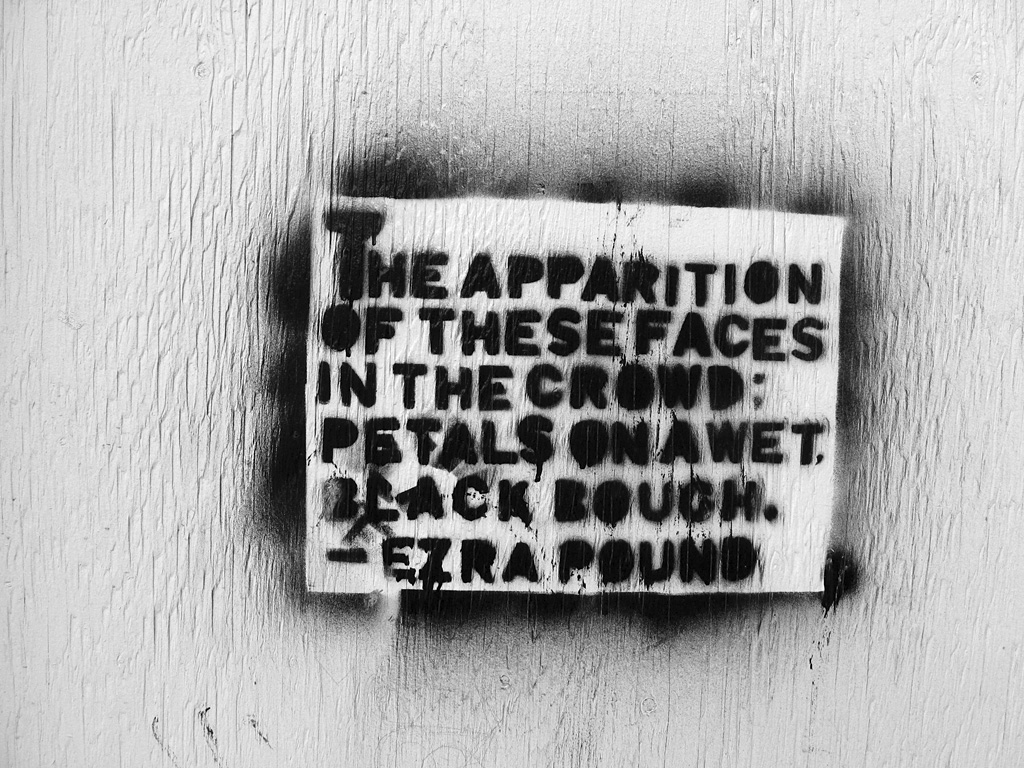
Ezra Pound quote

Last night, Emily and I tried renting a film through iTunes. I think it’s fair to say that this is another media technology that Apple got right. There are endless problems with systems that promise to let you buy films in the form of downloads. There are limitations on usage, and no guarantees that you can use them on future devices. Renting is quite different. Apple offers a service akin to that of a video store for a comparable price and without the bother of picking up and returning discs. With a bit of equally convenient competition, costs may even fall further.

Indeed, it seems pretty fair to predict that video shops have no future among those customers with computers and broadband access. Eventually, web based services will offer far more films at similar quality and far greater convenience.

Personally, I am rather looking forward to the day when it will be possible to spend $4-5 for two days worth of access to most any film ever made.

Rethinking development

When discussing global solutions to climate change, a constant distinction is drawn between three groups of states (two of which we sometimes pretend are the same). There are the ‘developed’ states and a ‘developing’ set which consists of those that are growing rapidly (India, China, Brazil, Russia) and those that are stagnant or even getting poorer (Zimbabwe, Sudan).

An alternative way of thinking about the situation is this. Imagine the states as human beings. The ‘developed’ ones grew up in the very unusual situation of huge amounts of cheap, easy energy everywhere. (Sci-fi nerds might appreciate how they could be equated to Guild Navigators.) As a consequence, they developed in a deformed way. Their economies can only keep going in their present form while that unusual situation continues. The rapidly developing states are following the same line of development, despite the certainty of climate change and the probability of energy prices rising in the long term.

The ‘developed’ states may be all grown up, but they have developed into monsters. ‘Developing’ states may want to muster the determination to mature more gracefully.

Fixing Climate

Writing on the wall

Written by Wallace Broecker and Robert Kunzig, Fixing Climate: What Past Climate Changes Reveal about the Current Threat – And How to Counter It combines relatively conventional thinking about the nature and consequences of climate change with a rather unusual solution. It is rich in personal anecdotes, but feels a bit as though it lacks overall rigour.

Climatic history

Much like Richard Alley’s Two Mile Time Machine, this book discusses how various types of natural record can inform scientists about the past state of the climate. These include core samples of ice, mud, and sediment. They also include fossils, living trees, and much else.

This book tells a number of interesting stories about how some of this data has been collected and analyzed, as well as about the personalities of those who did the work. It highlights those areas in which there is a good level of understanding, those where there are competing theories, and those where present theories have not yet proved adequate for explanation.

The two big points made are that climate is unstable and sometimes prone to big abrupt shifts and that human emissions of greenhouse gasses (GHG) are ‘poking the ill-tempered beast with a sharp stick.’

Likely consequences

Broecker’s book claims that the two most plausible threats from climate change are sea level rise – from melting ice in Greenland and West Antarctica – and droughts induced by changes in wind patters and precipitation. It also mentions the possibility of a thermohaline circulation collapse.

The book does not contemplate truly catastrophic runaway climate change scenarios, in which the full potential of burning tropical forests and melting permafrost is brought to bear. Instead, it restrains itself to the possibility of a 14 metre sea level rise – possibly over centuries – and the emergence of very profound droughts in some areas that extend for hundreds of years.

The book highlights how there are big uncertainties about the timing of changes, but asserts strongly that prompt and extensive mitigation action is required.

What is to be done?

Where Monbiot and Romm have detailed plans for emission reductions through different wedges, Broecker asserts that the best mechanism for dealing with rising atmospheric GHG concentrations is to do as follows:

  1. Use a huge number of machines to absorb carbon dioxide (CO2) directly from the air.
  2. Store it temporarily in a chemical compound.
  3. Separate the compound from the CO2, recycling the former for re-use in the machines.
  4. Bury the CO2. This can be done in the deep ocean (delaying emissions from right now until later, ‘shaving the peak’ of the concentration rise), in old oil and gas fields, or in saline aquifers.

At the same time:

  1. Dig up enormous quantities of carbon absorbing ultramafic rock.
  2. Grind these to fine powder.
  3. Let them absorb atmospheric CO2
  4. Dump the carbon-bonded rock somewhere

At the same time, emissions from fixed sources like power plants should be captured and stored. With this combination of activities, the authors assert, we could reduce the global concentration of GHGs to whatever level we prefer.

This scheme strikes me as very impractical. Every chemical step can be accomplished, but the matters of scale and energy make me doubt whether this could ever be used on a global level. Broecker assumes that our total emissions will continue to grow, from the present level of about 29 gigatonnes. The sustainable level is about 5 gigatonnes, so we would need to deploy an enormous array of capture stations, provide them with carbon-absorbing chemicals, process those chemicals once they are exposed, return them to the machines, and bury the CO2. Even if it would be technically possible to do all this, it is not at all clear that doing so would be cheaper or easier than cutting down on total energy usage, while also investing in the development and deployment of renewable power.

Even if climate change could be addressed, a society built on fossil fuels cannot last. The scheme basically assumes unlimited access to hydrocarbon energy, combined with very limited potential for renewables. To explain why, think about the energy chains involved. Broecker repeatedly asserts that it will take only a fraction of the energy from a set quantity of hydrocarbons to absorb and sequester the resultant GHGs. He basically assumes that we will have cheap coal at least for the foreseeable future. There is reason to doubt this. While we will not exhaust oil, gas, or coal by the end of the century, we may approach or pass the point where it takes as much energy to extract and process as it contains. In that case, we would need renewables regardless of whether we had capture capabilities or not.

In the end, the book is a relatively interesting one. If you want detailed information on paleoclimatology, Alley’s book is probably a better choice. If you are looking for relatively practical solutions to the climate change problem, Romm and Monbiot are probably better bets. That being said, reading this book will definitely inject a few new ideas into your thinking about climate, climate science, and how humanity is to respond. It is also worth noting that it is possible that capturing CO2 straight from the air will prove viable in terms of energy and economics. If so, we should see firms starting to do it pretty soon after a decent carbon price is imposed in developed states.


A bad new copyright bill

Canada’s proposed new copyright act is unacceptably poor, most importantly because of its treatment of Digital Rights Management (DRM). Under the new law, circumventing any such system – no matter why – is against the law. This means that if the company that sold you a song decides to stop letting you access it, you are out of luck. Under the new law, it would be a crime to copy music from a DRM-protected CD that you bought to an iPod that you own, with an associated fine of $20,000.

The law would also mean that organizations like libraries cannot have any confidence in their future ability to use digital materials today and people with disabilities will not be able to use technology to make protected works more accessible. It would make it a crime for me to use VideoLAN player to watch DVDs I bought in Europe, just because people selling DVDs have decided to use monopolistic regional codes to boost profits. Indeed, it would criminalize the distribution of VideoLAN itself.

It must be remembered that the purpose of copyright law is to serve the public good, not copyright holders. We allow copyrights because they create a legal environment in which it is possible to profit from a good idea. As a result, copyright protections help to ensure that people are furnished with new and high quality music, books, etc. By failing to protect the legitimate needs of consumers, this bill fails to enhance the public interest. As such, it deserves to be opposed and defeated.

Cap and dividend

Spider on concrete wall

One intriguing form of carbon pricing that is being bandied about is the ‘tax and dividend’ approach. The idea is this: everybody pays a carbon tax on fuels and emitting activities. All the money is collected in a fund and redistributed evenly back to all taxpayers. As such, anyone who buys emits more than the mean quantity of carbon becomes a net payer and everyone who emits less actually gets back more than they pay. As mean emissions fall, so does the equivalence level of emissions – the point where you get back exactly what you paid.

For example, let’s imagine a tax that starts at a relatively modest $20 per tonne of carbon dioxide equivalent (CO2e). The mean Canadian produces about 23 tonnes of carbon a year, meaning they would pay $460 in carbon tax that year. That being said, the mean Canadian would also get back $460 as a dividend. A Canadian who is really trying (not flying, not eating meat, living in an efficient home, not driving, etc) might have much more modest emissions: say, 6 tonnes a year. They would pay $120 in carbon taxes and get back $460 – a nice ‘thank you’ for living a life that does less harm to others. Of course, someone who flies trans-Atlantically several times a year might end up paying significantly more in tax than they get back as a dividend.

Now say it is ten years on. The price of carbon has risen to $50 per tonne of CO2e and mean emissions per person have fallen by 25%. The break-even point is now 17.25 tonnes of carbon. As a result, someone who has not changed their lifestyle is now paying (23 – 17.25) * $50 or $287.50 a year in carbon taxes. If the 6 tonne person also managed a 25% cut, they would be earning (17.25 – 4.5) * $50 or $637.50 more in dividends than they paid in taxes.

These numbers are purely illustrative. It is possible that the per-tonne carbon taxes could be lower, and also possible that they would need to be much higher. In whatever case, the structure of the approach should be clear.

The approach has much to recommend it. For one, it is likely to enjoy the support of those already living relatively green lifestyles. For another, it has similar incentive effects to other carbon pricing schemes. It would encourage people to minimize or forego things with a heavy carbon burden, as well as make them more willing to invest in capital and technology that will reduce their carbon footprint.