Alberta’s economic slowdown

According to The Globe and Mail, the economic situation in Alberta has recently worsened considerably. Major causes include the drop in oil prices and reduced access to credit.

While the slowdown will almost certainly reduce the pace of development in the oil sands, it may also deepen the political resolve to pursue growth at any cost. Whatever the economic future holds, a deep conflict will remain between Canada’s stated greenhouse gas mitigation goals and ambitions for Alberta to be an even larger fossil fuel producer.

Threats from war and climate change

Bridge undercarriage, Ottawa

Some threats to society strike people as so severe they justify employing large numbers of people, at taxpayer expense, to mitigate them. Chief among these is probably the danger that foreigners will try to kill us. Largely to combat this, Canadians pay for 65,251 active military personnel and 24,300 reservists. We also contribute a bit more than 1% of our gross domestic product.

At best, the operation of these institutions will leave us as well off as we are now. The money spent on bombs and military vehicles is primarily expended so as to minimize the risks associated with being attacked (though domestic industry and humanitarian concern are also factors).

Now consider climate change: probably the greatest threat facing humanity in the foreseeable future. I can’t tell you exactly how many taxpayer-funded agents are working on the problem, but it is certainly a very small fraction of the armed forces total. Should that number not be increased, so as to bring the allocation of resources more closely in line with the suite of threats we face? The case becomes even stronger when you recognize that climate change workers (say, people performing free building retrofits) have all the advantages of soldiers, plus additional benefits. Climate change mitigation is a humanitarian activity – the faster we bring emissions down to a sustainable level, the less suffering will occur in future generations worldwide due to the effects of climate change. Climate change mitigation and adaptation can have domestic economic benefits: not only do efficient buildings have lower year-on-year costs for heating, cooling, and lighting but they may also make those who live and work in them happier and more productive.

The idea of employing, say, 10% as many people to fight climate change as to fight foreigners is not entirely unproblematic. Providing free retrofits might undercut the businesses that perform such operations for profit now. That being said, I am sure careful policy design could minimize such problems. The biggest hurdle to overcome is the psychological block between facing the threat of climate change and employing people to combat it. Actually, rather than a block it might be more accurately referred to as the absence of a connection, between where our likely societal problems lie and where our societal resources are being directed.

Admittedly, you could achieve many of the same outcomes through market liberal climate strategies, such as carbon taxes and cap-and-trade schemes. The potential advantage of doing it through government labour is that the market liberal policies are hard to implement: firms often oppose them tooth-and-nail and convince voters that they will cause economic harm to them personally. Given the strength of entrenched interests, it would take remarkable political will to deploy the kind of market mechanism that would produce the required change at an acceptable pace.

Some outstanding questions jump to mind. Would a public climate change service be sensible or useful? What would such a service do? How could unfair competition with the private sector be addressed? Is there a politically feasible way to achieve the same outcomes with fewer problems or lower costs? All of these seem worth debating.

Note also that if you extend the 10% logic to the United States and China, you are talking about huge numbers of mitigation workers. The American armed forces comprise about 1.5 million people, with that many again in reserves. The US spends more than 4% of GDP on them. China has 2.25 million active personnel and 800,000 reservists. They spend about 1.7% of their GDP on them.

Eating the Sun: How Plants Power the Planet

Transitway station, Ottawa

Oliver Morton’s exploration of the nature and consequences of photosynthesis makes for a remarkable and informative book. It is divided into three sections: one covering the span of a human life and covering the scientific investigation of photosynthesis; one on a planetary timescale, describing the evolution of the climate, atmosphere, and life; and one on the timescale of a tree’s life, covering the changes humanity has induced in the carbon cycle, and the ways through which the climate change crisis can be overcome. The book is strongest when it comes to putting scientific information into a poignant and comprehensible form that is almost poetic. Arguably, it is weakest in terms of its analysis of what needs to be done in response to climate change.

Eating the Sun contains many sections that are highly technical: descriptions of the biochemistry of photosynthesis, the geological and climatological processes that have taken place over billions of years, the scientific methods through which both have been explored, and more. It can also be quirky, philosophical, and personal. For instance, there are asides in which the author explains his aesthetic preference for one or another scientific theory, such as how photosystems I and II in plants came to be integrated. The combination is not unlike that found in Michael Pollan’s work, where an educated non-expert with a talent for writing adopts the task of explaining technical issues and making their significance clearly felt.

The book features a great deal of discussion of the Earth as an integrated chemical and energy system, including consideration for many different forms of ‘Gaia hypotheses’ – most of them far less teleological than James Lovelock’s earliest work, which (probably wrongly) attributed a kind of agency to the planet as a whole. Of particular interest, among the non-telelogical variants, is combination of the anthropic principle with the idea of systems that self-regulate. It may well be that there are planets where physical and chemical processes do not remain constrained between life-compatible bounds over the long term. Of course, there are no living and intelligent observers on these planets to make note of them.

On climate change, Morton fails to appreciate the rapidity with which mitigation must occur. He contemplates what would be necessary to stabilize greenhouse gas emissions by 2050, whereas we will actually need to make great strides towards stabilizing concentrations by then. Rather than the seven Pacala-Socolow wedges required to produce a flat emissions profile, many more will be needed to begin the decline towards zero net emissions. His calm descriptions of global concentrations of carbon dioxide passing 500 parts per million (ppm), with associated temperature increases of up to four degrees Celsius, fails to portray what a catastrophic outcome this would be. These days, those committed to avoiding change of more than two degrees are advocating concentration targets around 350 ppm.

Morton’s discussion of mitigation technologies also offers scope for criticism; in particular, his discussion of nuclear fusion, fission, and hydrogen fuel cells is fairly superficial and fails to take into consideration some of the major limitations associated with each technology. In particular, he fails to consider the practical and economic issues associated with hydrogen as a fuel. That being said, he strongly makes the point that, in the long run, it will be necessary to move from an economy powered by the built-up solar reserves in fossil fuels to one largely powered by the current energy available in sunlight: whether that energy is directed towards the production of electricity, biomass, or fuels.

At times, the level of detail in Eating the Sun can be overwhelming. In particular, I found that some of the passages about biosphere-atmosphere interaction or long-term geological trends required close and repeated reading to be understood. For the non-practitioners at whom this book is aimed, such knowledge is not likely to be long-lasting. At the same time, by providing such clear and vivid detail, Morton grants a worthwhile understanding of the history and nature of the scientific processes through which we have uncovered so much about the world. As with the very best scientific writing, this book makes you feel both awed about the complexity and power of the world and impressed with the ingenuity that has gone into better understanding it. The book is highly recommended to anyone with an interest in the history of the planet, the nature of the carbon cycle, or science generally.


On recession and the value of graduate school

Penelope Trunk, a blogger, has written an eight part list of reasons not to escape the recession with graduate school. Among them are challenges to the value of doctorates, MBAs, law degrees, and medical school. They leave you overspecialized, dependent on future earnings to pay past debt, and perhaps with skills that are poorly matched to what the market demands.

While the list seems to include some reasonably good arguments and decent points, I think it misses the most important reason for considering grad school: namely, that having such a degree is something you personally value, and that people whose respect you wish to earn will value. Outside of highly practical fields like medicine and law, grad school is primarily an investment with low financial returns. Unless you anticipate high personal returns, it may be wiser to invest your time and money elsewhere.

Over on Free Exchange, there is a partial rebuttal.

The irony of laissez faire climate policy

Half-built skyscraper

There are those who have adopted what amounts to a business-as-usual climate change policy – hoping that free markets and technological development will stabilize greenhouse gas concentrations at a safe level and deal with the consequences of the climate change that is already on the way, due to past emissions. While a lot of people take this position for self-interested reasons, I think there are at least some who adopt it in good faith. They look back at previous challenges, and situations where some people said a massive societal effort was required, and they see that the problems were less severe than advertised and that a muddled government response was adequate.

The great irony of taking this approach is that it is virtually certain to produce the opposite outcome from what its proponents are seeking. Right now, we have the chance to establish powerful incentives for critical voluntary actions: things like energy efficiency, stopping the construction of coal plants, and developing renewable sources of energy. Mechanisms like a carbon tax, feed-in tariffs for renewables, incentive programs, and the like are ways to encourage both private actors and firms to take these steps. If we fail to put those policies in place and we allow emissions to keep on rising for another decade or more, avoiding catastrophic climate change will only be possible through rigid controls: rationing, strict mandates, and major interventions in business and the lives of individuals. If we fail to take advantage of the time available for a smoothed transition to a low carbon economy, the transition will necessarily be a more abrupt and painful one.

The heuristic that says “we dealt with past problems, therefore we need not sacrifice economic liberty to fight climate change” leads, in all probability, to a situation where curtailing those liberties is the only road forward.

Creative Commons ‘zero’ license

It says something about the current climate of intellectual property law that Creative Commons has released a new ‘zero’ license, which strives to do everything legally possible to put a work into the public domain. The new license is meant to be an improvement over their previous public domain dedication service:

The CC0 system works better internationally, is likely more legally valid (since one can not dedicate their works into the public domain in many countries and there are questions about doing so in the U.S.) and, if the icon and meaning becomes recognizable enough, more clear.

It seems a bit remarkable that it is so difficult to choose to give intellectual property away. I can understand the importance of legal protections to ensure that people don’t do so by accident (particularly children), but it does seem as though there should be a straightforward legal mechanism to waive all rights as the creator of a work.

The contents of this site are under a Creative Commons license: specifically, one that allows anyone to copy, distribute and transmit the work, as well as produce adaptations. It requires that the work be attributed to me, that any derivative works be subject to the same rules, and does not grant these rights automatically for commercial purposes. That is to say, if someone wants to use one of my images on a personal site, with attribution, that’s fine; if Visa wants to use it in a commercial, I expect them to pay for the usage rights.

Creative Commons licenses are very valuable because they allow creators of content to establish such regimes without needing to hire lawyers or spend a lot of time and money.

National Geographic on the oil sands

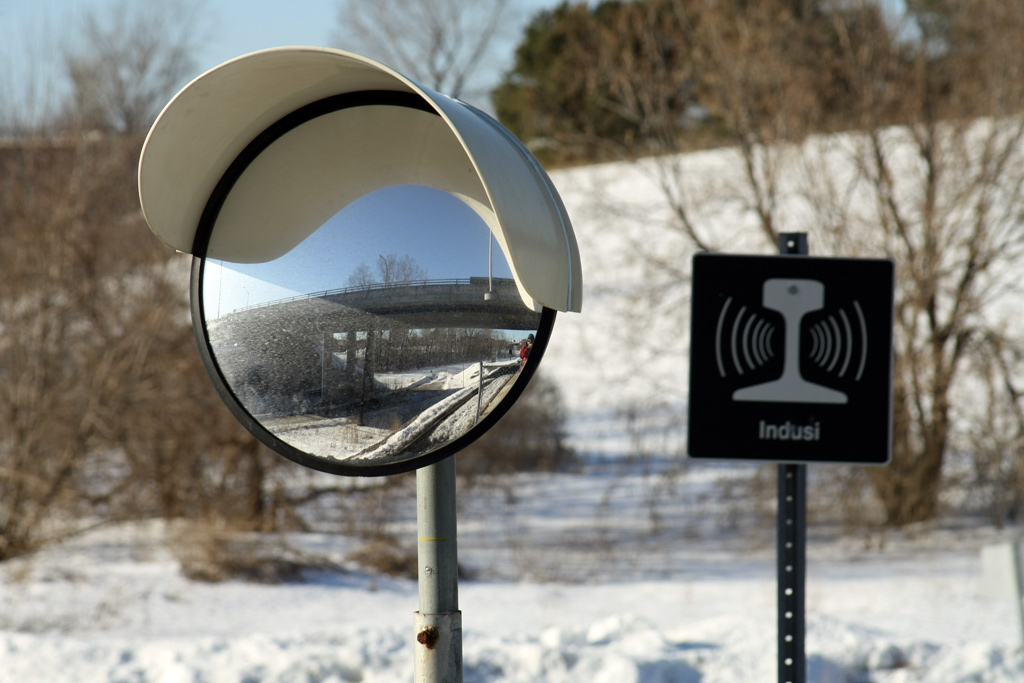
Warning signs

National Geographic has released a feature article on Alberta’s oil sands. It highlights the immense scale of what is going on: geographically, economically, and in terms of water and energy usage:

Nowhere on Earth is more earth being moved these days than in the Athabasca Valley. To extract each barrel of oil from a surface mine, the industry must first cut down the forest, then remove an average of two tons of peat and dirt that lie above the oil sands layer, then two tons of the sand itself. It must heat several barrels of water to strip the bitumen from the sand and upgrade it, and afterward it discharges contaminated water into tailings ponds like the one near Mildred Lake.

In total, the oil sands extent through an area the size of North Carolina – half of which has already been leased by the Alberta Government. That includes all 3500 square kilometres that are currently minable. In exchange, leases and royalties provide 1/3 of government income: estimated at $12 billion this year, despite the fall in oil prices.

The article also discusses some of the toxins leached by the mining operations, their impacts of health, and the inadequate work that has been done to investigate and contain them.

In the end, it is hard to write anything about the oil sands that isn’t damning, unless all it includes is information on the size and economic value of the oil reserves. The article includes a good quote from Simon Dyer, of the Pembina Institute, highlighting how the extraction of the oil sands is a mark of desperation:

Oil sands represent a decision point for North America and the world. Are we going to get serious about alternative energy, or are we going to go down the unconventional-oil track? The fact that we’re willing to move four tons of earth for a single barrel really shows that the world is running out of easy oil.

The solution is not the ever-more-costly and destructive search for new hydrocarbon resources, but rather the eclipsing of the hydrocarbon economy with one based on sustainable energy.

In addition to the article, National Geographic has also produced a flash slideshow of oil sands photographs.

Good climate policy news: Ontario and the USA

Emily Horn and Morty

I am happy to be able to report on some promising developments, both within my own province and in the giant to the south.

Firstly, the Government of Ontario has tabled a new Green Energy Act. There’s a lot to the 75 page document, but one of the most promising elements is the introduction of feed-in tariffs for renewable generation. Here’s the idea: the bill will make it mandatory for those who own the electrical grid to buy energy from renewable power sources, after connecting them. The price paid for the energy will be set by the province, and it will vary depending on technology, resource intensity, project scale, and location. Tariffs of this kind have been effective at driving renewable deployment in the United States and Germany. The whole bill is online (PDF), as is an executive summary. There is also a guide on what more is required for ratification (PDF). In addition to feed-in tariffs, the bill contains provisions for developing a smart grid, the involvement of First Nations groups, the creation of two funding bodies, and a mandate for conservation. It will also adjust energy pricing (though the issue of how is vague) and streamline the approval process for renewable energy projects.

Secondly, it is worth noting that Obama’s new budget includes projected revenue from a national cap-and-trade system. Grist is discussing it in a three part series: I, II, III. While the projected revenues are low ($83 billion per year by 2020), this is further evidence of the Obama administration’s willingness to move forward on this file.

Carbon pricing and the promotion of renewables are both critical elements of a strong overall climate policy. There is reason to hope that after decades of inaction, things will really start to take off in North America within the next couple of years.

[Update: 2 March 2009] Over at Clean Break, Tyler Hamilton has written a good piece on the Green Energy Act. It includes more analysis than the other coverage I have seen.

Dealing with space junk

O-Train end station, Ottawa

Junk in space is an increasingly severe problem, as both the quantity of useless debris and the number of useful satellites increases. Aside from international censure, there isn’t especially much that can be done at present to punish those who make the problem worse, as China did when they blew up one of their satellites in 2007.

A good international approach to mitigating the problem might resemble the following: an international agreement among space-faring states to avoid the production of such debris, coupled with a penalty system for situations in which it occurs. The money from the fines could be put into an insurance fund. Then, when collisions take place between unmanned satellites or manned space vehicles, some level of compensation could be paid out of that fund.

Setting up such a system would require the support and goodwill of quite a number of states. Nonetheless, it might help make the regions of space closest to our planet somewhat more orderly and well-governed.

The Kindle and electronic books

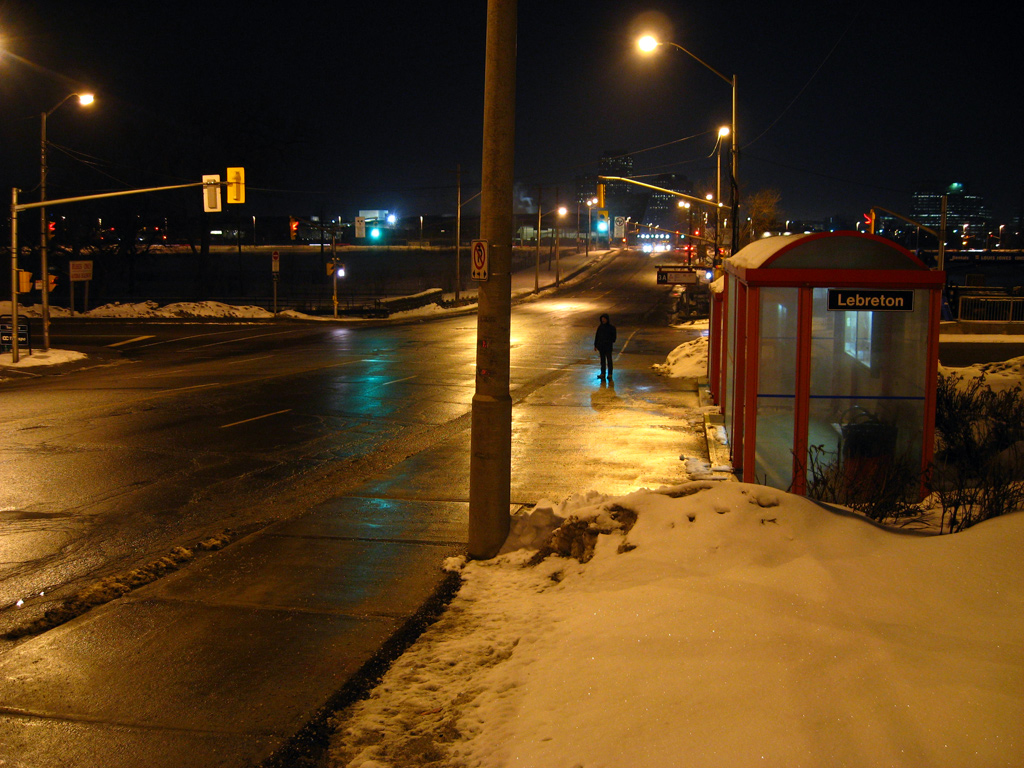
Ottawa bus stop in winter

In a recent article about Amazon’s Kindle e-book reader, The Economist declared that:

It seems likely that, eventually, only books that have value as souvenirs, gifts or artefacts will remain bound in paper.

Despite being a big fan of electronic content delivery systems, I wholeheartedly disagree with this assessment. There are considerable advantages to having a personal library of physical books, and there are big disadvantages to taking your books in electronic format.

Physical books possess the many advantages of immediacy. One can display them and quickly glance through the whole collection. One can take notes in them, mark pages, stack them, pass them to others, and so forth. Collections of books are also physical representations of the reading a person has done. I often find that, when I first find myself in someone’s house, flat, or bedroom, their collection of books is the first thing I scrutinize. There is a reason why the personal libraries of intellectuals and political leaders are objects of interest, and I don’t think they would retain the same importance if they consisted of a bunch of PDF or text files.

Electronic books have the same disadvantages as other electronic media: you can’t be confident that they will be intact and accessible decades from now. Furthermore, they are often hobbled with digital rights management (DRM), which means you can never be sure that you can use them on future devices, or in various ways you might wish to. A library stored on a small device may be easier to transport, but it is a lot less trustworthy, durable, and reliable than one that you need to cart around in a heavy collection of boxes.

Electronic books can certainly complement physical ones. It would, for instance, be very valuable to be able to search electronic copies of books you own. A custom search engine, containing all the books in one’s library and that one has borrowed, would be excellent for tracking down particular passages or conducting general research. Partly for these synergistic reasons, and partly for the reasons listed above, I don’t think physical books are ever likely to become rare.

I do see much more promise for electronic periodicals. Hardly anybody wants to keep physical copies of their newspaper or magazine subscriptions on hand: especially when they are available in an easily searchable form online. If I got a Kindle, it would be for the wireless newspaper and Wikipedia access, not for the $10 book downloads.