Pro-photography protest in London

Yesterday’s pro-photography protest in London was rather encouraging. Amateur and professional photographers came together to protest the restrictions and harassment of photographers that has developed in response to concerns about terrorism. The protest follows a European Court of Human Rights ruling that police don’t have the right to indiscriminately search people, just because they are taking photos. The “I’m a photographer, not a terrorist” campaign has objected specifically to police using Section 44 of the UK’s Terrorism Act to harass photographers. High-profile recent incidents include “7 armed police detaining an award winning architectural photographer in the City of London, the arrest of a press photographer covering campaigning santas at City Airport and the stop and search of a BBC photographer at St Paul’s Cathedral and many others.”

In addition to creating art and a historical record, photography has an important role to play in keeping security entities accountable for their actions. As I have said before, photography is an important mechanism for maintaining oversight over the police and private security forces. Restrictions on photograpy allow for power to be used with less oversight, probably leading to more incidents of abuse and fewer cases in which abusers are punished. Indeed, it has been shown repeatedly that only photo or video evidence is sufficient to produce convictions for police brutality. In short, restricting photography makes us less safe.

Both casual photographers and those with a more substantial connection to the practice should be aware of their rights as photographers, and be willing to stand up when people try to bully them out of taking pictures. The British campaign has produced a pocket sized card outlining what rights individuals have when stopped by a police officer. I have been meaning to print off and laminate a card with the relevant sections of Canadian law, for use next time someone insists that taking photos in public spaces is forbidden.

CES Franks on democracy in Canada

CES Franks, of Queen’s University, has written an interesting essay describing the state of parliamentary democracy in Canada: “The Functioning of the Present-Day Canadian House of Commons: a paper prepared for the conference in honour of Peter Aucoin.” It focuses to a considerable extent on the reality of minority governments in Canada today, though also considers broader factors and long-term trends. For instance, the number of days per year in which Parliament is sitting has fallen by a third since the 1950s and the proportion of government bills eventually receiving Royal Assent has fallen from over 90% to just over 50%.

Franks also highlights the drift towards a bigger role for the provinces, with fewer national strategies and initiatives:

[M]y findings leave me with a sense of slight unease, and I am prepared to argue that the role of Parliament has diminished in recent decades and is continuing to diminish, to the detriment of good government in Canada. Further, much of the reason for this diminished role does not lie in the fact that we now have a Pizza Parliament with four parties and a likelihood of continuing minority parliaments. The causes lie elsewhere, and many are beyond the control of Parliament and government. They lie in fundamental changes in recent decades in the political economy of the Canadian Federation, in the increasing role of provincial governments as compared to the federal government, and in the unwillingness, rightly or wrongly, for better or worse, of recent federal governments to establish national programmes, policies, and national standards for the services Canadians expect from their governments.

In some ways, wider variation between the provinces doesn’t seem problematic. After all, there is nothing objectionable about populations with different perspectives being governed under differing rules, selected through democratic processes in which they participate. At the same time, there does seem to be reason for concern about the possible diminishing of the entity that is Canada. For one thing, there are major cross-cutting challenges that all provinces need to address, and it makes sense to do so in a cooperative way. For another, the temptations to make policy with only an eye turned towards the short-term consequences might be even greater for individual regions than they are for the confederation as a whole.

The full Word document is online, and linked from the Macleans website.

Carbon taxes v. cap-and-trade

Among advocates of carbon pricing, there is a long-running disagreement about whether a carbon tax or a cap-and-trade system is preferable. Among economists and environmentalists, there is generally a preference for a carbon tax. Politicians terrified of the electoral implications of creating a new ‘tax’ tend to favour cap-and-trade schemes (partly, because it is easy to give away permits to influential industries under such a scheme).

Economists frequently argue that the trade-off is between price and emissions certainty. With a tax, you know exactly how much more any particular carbon-intensive activity will cost, making planning easier. With a hard cap, you know exactly what your emissions will be. With a tax, you can try to tweak the level to get the emissions volume you want, but you can never be entirely sure. Conversely, a cap assures the emissions outcome selected, but does so at a cost that cannot be known in advance.

A recent letter to The Economist does a good job of laying out some of the advantages of a cap-and-trade approach, arguing that economists and environmentalists have been too eager in throwing their support behind a tax:

First, a “one size fits all” tax requires an impossible calculation of the average cost of reducing emissions over a given period of time. Compare this with an emissions-trading system that works on the free-floating marginal cost of abating emissions. Second, carbon taxes would be levied locally and so impossible to properly administer on a global scale. A global carbon-market price is perfectly pervasive. And third, taxation cannot guarantee a reduction in greenhouse-gas emissions; emitters could opt to pay the tax and continue emitting at will. Conversely, a cap-and-trade solution introduces a carbon ceiling and the price acts as no more than a useful barometer of how close we are to achieving that goal; prices will tend to zero as the requisite level of emission reductions is achieved.

Personally, I think the choice of instrument is less important than the level of genuine political will, reflected in the care taken in regulatory design. Either approach can be set up in a dodgy way, intended to produce the impression of action without actually constraining carbon emissions effectively. A well-designed tax is better than a cap-and-trade system full of giveaways and dodgy offsets. A well-designed cap-and-trade scheme is better than a tax that is too low to be effective, or one where exemptions and rebates undermine the incentive effect. Those concerned about climate change should be willing to support either policy approach, while being energetic in ensuring that the system that is ultimately designed is a fair and effective one where polluters pay for the cost of their damaging activities and the long path to carbon neutrality is started upon.

Crush the Cell

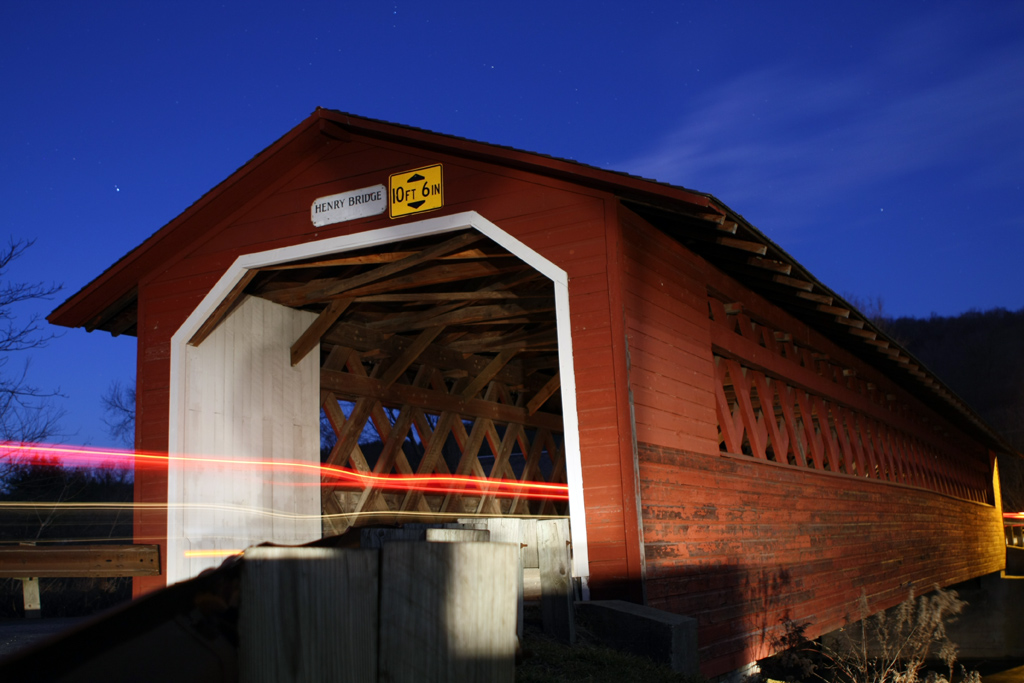
Covered bridge at night, Vermont

Michael Sheenan’s Crush the Cell: How to Defeat Terrorism Without Terrorizing Ourselves covers ground that overlaps with that of Ghost: Confessions of a Counterterrorism Agent and Securing the City. Namely, the history of Al Qaeda in relation to the United States, and the question of what sort of policies the United States should adopt in response to terrorism. Sheehan brings an insider’s perspective, having served as New York’s Deputy Commissioner for counterterrorism. While Sheehan provides a lot of information and tries to argue a few key points, the book succeeds more as a source of raw information than as a source of analysis. In particular, Sheehan fails to fully justify his views that Al Qaeda will fizzle out in a few decades, and fails to provide a comparative justification for why targeting cells is the most effective way of undermining terrorist plots while avoiding unwanted secondary effects.

Sheehan covers a number of important and interesting topics: methods for counterterrorism, intelligence, and law enforcement; the (limited) competence of Al Qaeda operatives; the risks that arise then officials practice ‘cover your ass’ security; the significance of weapons of mass destruction; torture and human rights; and the importance of not granting terrorists the psychological advantages that arise when we allow ourselves to be terrorized. In the last of those, he echoes a point well-made by Bruce Schneier. Sheehan also provides an insider’s perspective on the controversial rebuilding of the former World Trade Center site, including why construction has been so slow to begin.

Among the three books I have recently read on this subject, Securing the City probably provides the most insight into effective counterterrorism strategies developed and deployed in New York, while Ghost may be the most compelling personal account (though one lacking in balance). Crush the Cell occupies a middle territory – worth reading for those who want even more details and examples than they have found from other sources, but probably not essential reading for those only moderately interested in the subject.

The torture prorogation?

It was bad enough to prorogue Parliament to avoid an election, but doing the same to try to silence questions about Canada’s role in torturing detainees is far more dubious. As an article in the Ottawa Citizen explains:

When Harper prorogued last fall it was to avoid a vote of non-confidence. This time, it will be to avoid something possibly far more serious — Parliamentary censure of the government, the banishment or imprisonment of Harper and some of his ministers, or the RCMP being asked to execute a Speaker’s warrant.

While the torture allegations are being treated as a partisan issue, I don’t think that is the appropriate frame of view. This is an issue of international law, human rights, and how Canada is going to conduct itself in international military operations. The precise manner in which Canada should deal with detainees and other governments is one that should be scrutinized by Parliament (and, if necessary, the courts) and that scrutiny should occur where Canadians have the opportunity to observe it.

Our procedures for military oversight also need to be examined, to evaluate the question of whether key information is being properly routed up through military and civilian command structures.

[Update: 25 January 2010] This whole situation generated a considerable amount of protest: 200,000 or so coast to coast.

Open thread: Canada and Afghan detainees

As anyone who reads the news knows, it has been alleged that many detainees passed on by Canadian troops to elements of the government of Afghanistan were subsequently tortured, and that the government of Canada was aware of this likelihood. If true, that could represent a violation of Canadian and/or international law on the part of both those who gave the orders to continue making the transfers and those who actually carried them out. Knowingly passing along a prisoner to an authority that will torture and abuse them is a violation of the Geneva Conventions, but it is not yet fully known what Canadian troops and officials knew or believed prior to making these transfers.

The latest development is a reversal of position by Walter Natynczyk, Canada’s Chief of the Defence Staff. He now accepts that a man was taken into custody by Canadian soldiers in 2006 and subsequently severely beaten by Afghan interrogators.

Given that Canada cannot single-handedly reform the Afghan government and security services, this raises the question of how Canadian troops should be dealing with anyone who they capture during the course of Canada’s ongoing involvement in that country. Given that Afghanistan won’t be turning into a liberal-democratic state governed by the rule of law anytime soon, how should Canadian forces deployed there behave in the future?

Climate Cover-Up

Guitar playing man

James Hoggan’s Climate Cover-Up: The Crusade to Deny Global Warming is a valuable exposé of the efforts that have been made by self-interested actors to prevent political action on climate change, by manipulating the public debate and confusing people about the strength of the science. Written by a Canadian public relations professional, and written with a focus on actors and events in Canada, Hoggan’s book examines how the media has been involved in the debate, how companies have worked to create false grassroots campaigns (‘astroturfing’), the role played by think tanks, the use of lawsuits to intimidate and silence critics, the ‘echo chamber’ effect wherein false claims are endlessly repeated by sympathetic sources, and more. Hoggan makes a convincing case that status quo actors – particularly petrochemical firms – have been working for decades to keep the public confused, and keep legislators inactive.

Hoggan provides both logical and documentary evidence to back up his claims – pointing out things like how most of the scientists that actively deny the consensus view of climate change are being funded as advocates, not as scientists:

The Intermountain Rural Electric Association isn’t paying Pat Michaels to go back into his lab and do research helping the world to a better understanding of how human activities are affecting the climate. The coal-fired utility owners are paying him to “stand up against the alarmists and bring a balance to the discussion.”

Hoggan provides many specific examples of malfeasance, and argues that the public relations personal directing the campaign against action on climate change are often indifferent to whether the claims they are making are true or false. They are tested for how well they affect public opinion, not how well they represent the reality of the situation.

Hoggan does sometimes present information in a misleading way. For instance, he compares the risk of climate change with the risk of car and house insurance, and says that: “in both cases the risk of disaster is significantly less than the greater than 90 percent certainty that scientists ascribe to the climate crisis.” He is referring to how the IPCC’s Fourth Assessment Report concluded that: “Most of the observed increase in global average temperatures since the mid-20th century is very likely due to the observed increase in anthropogenic GHG concentrations.” and defined ‘very likely’ as cases where “expert judgment and statistical analysis of a body of evidence” support an assessed probability of over 90%. The IPCC was saying that there is a scientific consensus that there is a 90% chance that the unequivocal warming that has been observed has anthropogenic causes, not that the “risk of disaster” is 90%. The question of how serious the consequences of warming will be is distinct from the question of what is causing warming. Another odd error is one sentence written as though the consulting company McKinsey was a person: “When McKinsey talks about a carbon revolution, he strikes the right tone.”

That said, Climate Cover-Up succeeds in its key purpose: revealing that not everyone is engaging in the climate debate in an honest or ethical manner. The scientific consensus that climate change is real and risky is exceedingly strong, and yet the public and policy-makers have been very effectively confused and encouraged to delay action. By revealing the extent to which the debate has been manipulated, Hoggan’s book will hopefully contribute to the eventual improvement of public understanding of climate change, and the development of a will to act sufficiently strong to sort out the problem before the worst potential consequences become inevitable. Hoggan also continues that effort through DeSmogBlog – a site he created to provide ongoing updates on climate change misinformation campaigns.

[Update: 13 October 2010] Another good book on the same topic is Naomi Oreskes’ Merchants of Doubt: How a Handful of Scientists Obscured the Truth on Issues from Tobacco Smoke to Global Warming.

The Khalid Sheikh Mohammed trial

A number of recent articles have provided interesting commentary on the upcoming trial of alleged 9-11 plotter Khalid Shheikh Mohammed in an American federal court:

Given everything that has already happened, it is very hard to see how this can have a good outcome. The trial cannot be fair – since there have been so many rights and due process violations, and no impartial jury can be found – and the precedent seems highly likely to make bad law.

Slate contributor David Feige is probably right in summing up the likely outcome:

In the end, KSM will be convicted and America will declare the case a great victory for process, openness, and ordinary criminal procedure. Bringing KSM to trial in New York will still be far better than any of the available alternatives. But the toll his torture and imprisonment has already taken, and the price the bad law his defense will create will exact, will become part of the folly of our post-9/11 madness.

Given the situation they inherited, the Obama administration may not be able to do any better. Still, it is worrisome to think what the future consequences of this may be.

[Update: 12 February 2010] Due to the opposition he has encountered, Obama has abandoned plans to give KSM a civilian trial in New York. Disappointing.

Music economics

Fire escape ladder

According to data featured on Boing Boing, record labels are dying at the same time as musicians are doing better than ever on account of live performances. To a large extent, this must represent the impact of technology on the industry, particularly the internet and file sharing.

Morally and aesthetically, it is difficult to know how to feel about this. In recent decades, recorded studio music has been the major product of the music industry. More and more, that is now being acquired either free or with low margins for producers. Live music has the virtue of being irreplaceable, but the shift in that direction raises questions about where the moral and aesthetic value of music lies.

Personally, I think music studios have alienated the general public to the point that they deserve whatever financial misfortune they encounter. When it comes to musicians, the situation seems more complex. Is it right to keep rewarding someone (and often their heirs) for a song recorded at some point in time, or is it preferable to reward individual performances? Pragmatically, the options available are constrained. That said, there is a case to be made that music that produces a steady stream of enjoyment should produce a stream of revenue for the people who made it.

What do others think?

Milk

Red tow-away sign

Watching Milk was a reminder of the unusual sort of luxury supporting the gay rights movement actually provides. It is the kind of utterly unambiguous moral movement that emerges only rarely: where one side is unassailably aligned with human welfare and human rights, and the other is straightforwardly mistaken from top to bottom.

While it is tragic that significant numbers of educated people – people who think of themselves as ethical – continue to oppose equal rights for gay men, lesbians, bisexuals, and transgendered people, it does seem worth hoping that the movement opposing these basic liberties will falter and die within our lifetimes, at least within the kind of developed states that have largely abandoned bigotry motivated by ill-founded personal revulsion or oppressive religious notions of morality. While it will take longer for the world as a whole to reach such a state, there does also seem to be reason to hope that it will eventually happen.

In the mean time, the movement for gay rights will continue to have a special motivating character, for all those who aspire to a more equitable and less benighted world. It represents one of the purest contests of sense and tolerance against bigotry and violence ongoing in the world today.