Another one bites the dust

It’s never encouraging to look into your pigeon hole and see a slim envelope from a scholarship committee: in this case, the selection committee for Oxford’s Overseas Research Scholarship (ORS):

I regret to tell you that your application was unsuccessful. Unfortunately, due to the large number of applicants we are unable to provide individual feedback on the results.

Those who have applied and not found such a letter in your post, take heart. The ORS is quite a nice scholarship, which converts the fees you pay as an international student to those paid by someone from the UK: a dramatic reduction.

Trying to increase nose-grindstone proximity

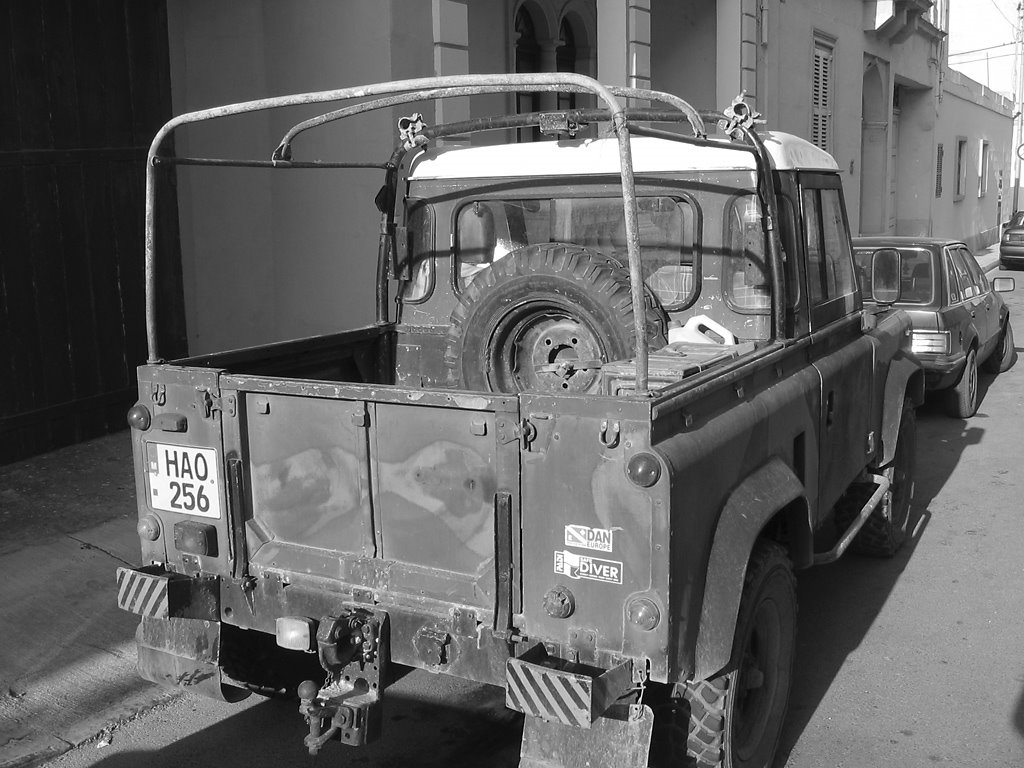
Jeeps look good in black and white

Revision began in earnest today and, as I predicted before, it managed to induce that little tinge of raw panic that is the basis for all academic achievement. Many thanks to Claire for stripping questions from the most recent qualifying test from the lists of past questions I will be studying from. As I am meant to write a practice test consisting of last year’s exam for Dr. Hurrell by the tenth of April, and it would hardly do to know the questions while I am revising.

If I want to submit the fish paper to the MIT International Review – with submissions for its inaugural issue due by the 10th of April – I will need to get started on editing and reformatting it. Doing so is quite difficult because I don’t remember the sources well or have them with me. I wrote this more than a year ago, after all. The submission guidelines do say that: “After initial submission, writers whose articles are being considered for publication will be asked to resubmit articles according to more specific guidelines.” As such, it’s probably best to do a moderate edit and see if they’re interested, before I commit a lot of time.

When contemplating the fact that April 10th is also the day during which I am to move, I may have stumbled across a universal law:

The law of deadline gravitationThe times and dates when projects are due will approach one another at a rate directly proportional to the number of hours the respective projects will require to complete, and inversely proportional to the distance already separating them.

This explains why big tasks cluster – like periods of examination – but why mundane tasks arise constantly and individually. While much theoretical work remains to be done on this concept, it seems plausible to me that the attractive force may only apply itself to certain classes of tasks: just as photons are exempted from the effects of magnetic fields.

Looks like I may not have as much time to try out my new bike as I thought. Of course, spending a week in Malta leaves me with no reason to complain about having to buckle down now.

More iPod trouble

Well, the iPod that Apple sent back because it was apparently fine will not be recognized by my computer at all and now simply boots to an unhappy Mac icon when you turn it on. I wonder if they actually looked at the thing before they decided that “issues reported concerning [my] iPod” “were found to be within Apple’s specifications for acceptable performance, usability and/or functionality.” I’ll call them again tomorrow. Looks like it’s going back to the Netherlands.

Coffee with Emily, Exeter Music

Exeter chapel ceiling

This morning, my mother and I had some superb omelettes at the Vault and Gardens before going for a walk around the botanical gardens beside Magdalen. I particularly like the greenhouses, including the one that includes a whole collection of edible plants. It’s interesting to see how many of their products – peanuts, papayas, coffee – we can be familiar with, without having any sense of what the plant itself resembles. Oxford students who haven’t visited the botanical gardens should definitely do so. It’s free and, in a few weeks time, they will really begin to blossom with spring. As they are now, the gardens are balanced between decay and emerging growth, with different species at different stages.

Introducing my mother to Emily was good fun and personally rewarding. I appreciate having the chance to actually introduce family members to new friends, with whom they have only been acquainted thus far through letters and blog posts. Like Claire, I had the sense that Emily and my mother would get along particularly well; that apprehension seems to have been borne out with experience. Hopefully, my mother will have the chance to meet a few more people – perhaps Alex, Margaret, Bryony, and Dr. Hurrell – when she returns to Oxford on the 2nd and 3rd of April.

The concert in Exeter was quite beautiful. It was a selection of Vivaldi performed by candlelight inside the archaic and majestic looking Exeter chapel. The concert was put on by a group called Charivari Agreable, and included some wonderful countertenor singing by Stephen Taylor. While the harpsichord is not my favourite instrument, I really loved the two violins – especially when they were playfully engaging each other.

Packing has now concluded, hopefully in a manner that does not exclude anything vital. Of course, it’s only for a week and there is every opportunity to buy neglected necessities in Malta. We are off to Gatwick, by coach, extremely early tomorrow morning. I may be able to post something while I am there. If not, I will return on the first of April.

College grumbling

I must say that, when it comes to inconvenience, the Wadham maintenance people are absolute masters. If the showers need to be turned off at some point in the day, it will be in the hour before classes. If there is to be a cut in power, it will happen while your soapy clothes are inside the washing machine – after you figured out you way into the laundry room through the bike shed, because they are doing asbestos removal in the basement. I suppose I will just dry them out as best I can and wash them again in Malta, as there’s no guarantee the washers will work later on in Wadham.

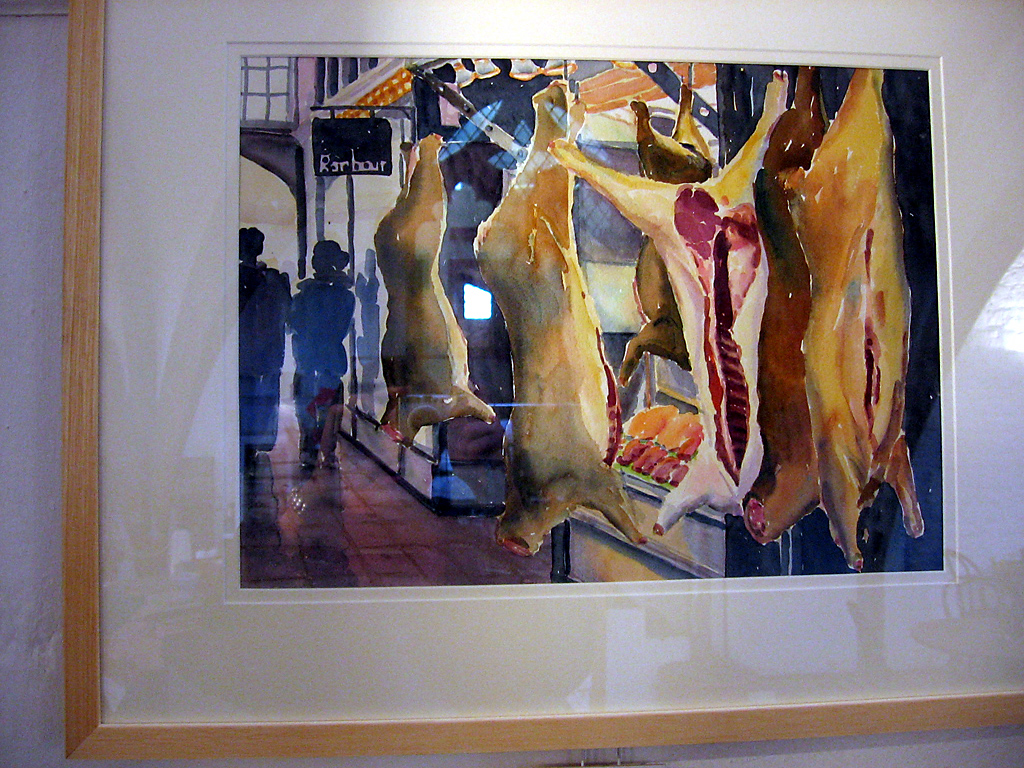
PS. Remember when I thought I saw dead wolves at the Covered Market? Well, someone else saw the same thing, and they painted it. While they may not, in fact, be wolves, they are still a chilling thing to run into when you’re looking for flavoured tofu. That is attested to by the fact that someone took the time to paint them. The painting is on display, and on sale, at the Vault and Gardens.

Happy first day of spring

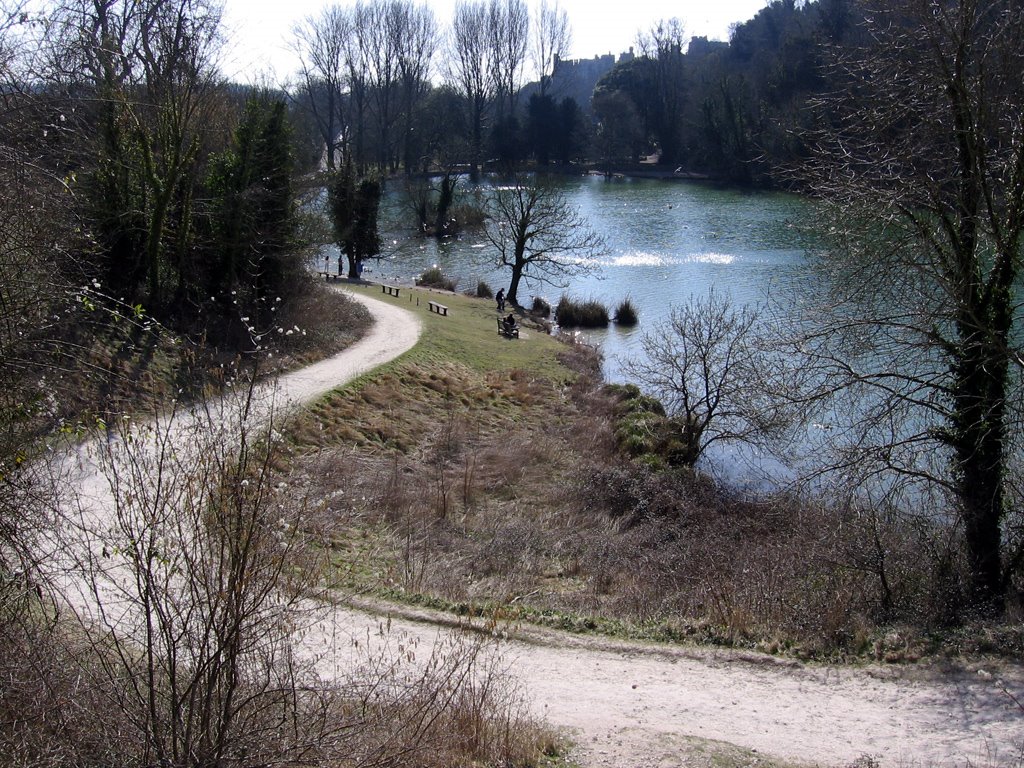
Lake near Arundel

As I carry on with the early stages of revision, I am getting more nervous about the upcoming qualifying test. While it’s only three hours long, the total amount of material covered is highly extensive. While nobody will have read all the hundreds of books on the various reading lists, there is still the general requirement that we be knowledgeable about a wide variety of topics and able to write upon them under formal exam conditions.

One piece of solace is that there will apparently be quite a lot of choice on the exam. We are to write three essays: with either two on history from 1900 to 1950 or two on international relations theory. Within each of the two subject areas, there are apparently going to be five or so options. That implies that it may be better to know about a moderate number of areas in detail, then about all possible topics in a more superficial way. Having never written an Oxford exam, it’s difficult to strategize. I suppose the practice exam that I will be writing for Dr. Hurrell and then discussing with him on the 12th of April will give me some useful guidance for my last seven days of revision.

By the end of my time at UBC, I was feeling pretty confident about final exams. I knew the different sorts that were out there, the kinds of expectations professors had, and the general amount of effort I would need to put in in order to do well. Here, all of those things are much less certain. Also complicating things is the marking system. The passing grade is 60% and a distinction is 70%. On past form, it is probable that nobody in the program will fail and that two among the twenty-eight will get distinctions. It seems reasonable to think that those will be people already familiar with OxBridge examinations, though it may not be. For the 93% of people writing who will simply pass, there is ultimately very little difference between doing decently well and doing very well, just shy of a distinction. As such, it’s hard to determine how much effort to put into the entire matter. My supervisor certainly seems to think that – while important – studying for the QT should not be the focus of this break, which it does seem wiser to spend thinking about and working on the thesis.

Even so, I’ve resolved to bring my history notes and perhaps a text or two along to Malta.

A farewell to spheres of tungsten carbide

When I saw fountain pens on sale for the price of a pint at Smiths, I decided it was time to try and improve the elegance of my correspondence. It was with some success that I made my initial foray into the world of non-ballpoint pens: writing a thank-you note to Sarah’s parents and a short letter to Meghan. My printing is more geared towards being able to copy extensive notes during a lecture than producing perfectly formed letters, but it would be nice to be able to do the latter, when the necessity arises.

One unexpected aspect of fountain pen use if that it feels better to write. No pressure is required in order to deposit ink, so there is a feeling that the pen is just gliding across paper. While you might expect that to lead to many errors, even my earliest experiments are at least as legible, on average, as my ballpoint printing. Taken up with the novelty of a new type of writing instrument, as well as the familiarity of writing to friends, I wrote short letters to Viktoria Prokhorova, Meaghan Beattie, and Kate Dillon. There is something exceptionally satisfying both about writing and receiving handwritten letters. Regardless of the level of care or energy you put into an email, it doesn’t usually manage to have the same significance.

Nervous, trundling day

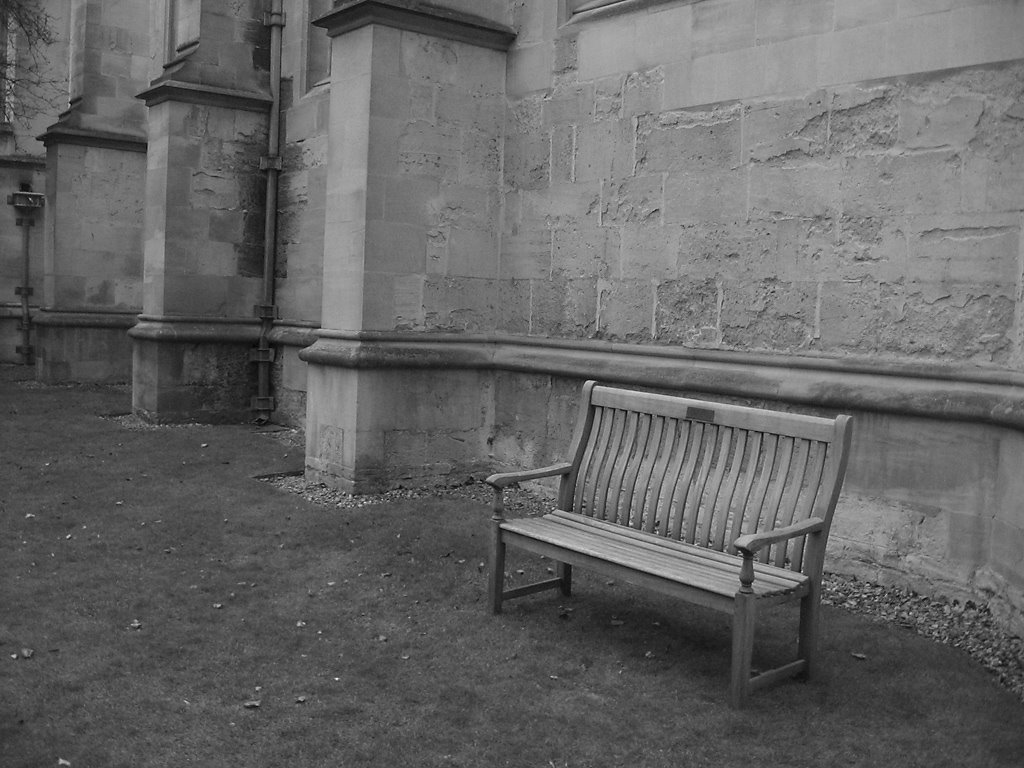
Empty bench, Wadham gardens

On the basis of a highly scientific and statistically valid one-night, one-person study, I wake up feeling much more rested when I sleep with earplugs. I also dream about getting attacked by a huge scruffy black house cat in the woods beside Capilano River.

I spent several hours today in the Oxford Country Library, near Nuffield, reading Hunter Thompson’s The Rum Diary. As you would expect, it’s a fairly ugly book. The kind of thing that stays funny when it’s in the realm of absurd abstraction, yet is always still tinged with the certainly of loss and failure. It’s nice, at least, to just pick up a book and read it, without major pause. You would need to be superhuman to do it with an environmental politics book, but for a 400 page pseudo-autobiographical novel, the pattern fits. Reading Thompson is like taking insurance against the possibility that you’re a hub in the machine that he seems to understand and mostly exist outside of. The danger is that you might see your loneliness reflected in his own.

All told, it’s not the greatest book, and it certainly doesn’t add a lustre to your day. At the same time, Thompson wrote it when he was my age and there is a sense in which you can see the future laid out in it: his future, in particular. You see that in what may be the most notable phrase:

It was the tension between these two poles – a restless idealism on one hand and a sense of impending doom on the other – that kept me going.

Your classic “narrator arrives in a place, things go wrong, he leaves” story, it reminds me of a lot of contemporary fiction. It’s the anti-journey story, where there is no clear end and even the process of travel collapses upon itself.

Spending time in the public library reminded me of one of the great truths of travel. Almost everything about your experience in a city is determined by how many doors you can open, or have opened for you. If all you can muster is the automatic doors at the entrances of libraries and shopping malls, you’re in a pretty bad way. The idea was reinforced as I took a quick walk around the long pool in Nuffield – perhaps my favourite quad in Oxford – and contemplated with appreciation the benefits of position and connection.

Oxford is peppered today with people in green, with top hats and Leprechaun boots. Were it not for my very early morning rise tomorrow, and the importance of being awake and aware subsequently, I might make a foray to see how this de-Christianized celebration of a saint takes place here. I was nervous, at first, to see people walking around with this kind of regalia – images of football related violence and painted fans flickering in my imagination – but when I saw that it was mostly people under fifteen or over thirty-five, my mind was largely put at ease.

I suppose I should spend tonight getting a start on the new Economist, making sure I have a clean shirt, and checking that I can remember how to tie a tie.

The thesis or gadgetry: one will drive me mad

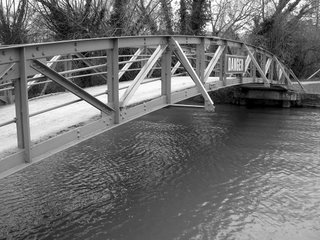
Bridge beside the Isis

Educational matters

During an animated ninety minutes, Dr. Hurrell and I went over my two most recent papers and a number of ideas for the thesis. I feel like we’ve hit upon something exciting. The idea is less to look at institutional arrangements meant to use science to develop better policy, and more to look at the conceptual linkages between science, politics, and policy.

The most straightforward view, which I identified, is what I call the planning/engineering dichotomy. Planners decide that it might be nice to have a bridge across Burrard Inlet. The engineers work out if it’s possible, what it will cost, and how to do it. A similar model is commonly implicitly applied to the relationship between science and policy. Science identifies problems, and then outlines possible solutions for policy makers to debate and implement. Really poking at that model could be a good starting point for a broader discussion. What is the character of science, as it relates to politics and policy? What does it let us do? Without getting off topic, the question might be expanded still further. For instance, asking what the purpose of the natural world should be, from a policy perspective. Is it simply a matter of working out how much good stuff we can squeeze out of it without destroying it for ourselves or future generations?

The next stage is to read probably a dozen or so books, in order to get a more extensive sense of how science and policy are understood with regards to each other and what it might be interesting and useful to expand upon. I will start with Dr. Hurrell’s own book, as well as Andrew Dobson’s Green Political Thought. It’s also worth re-reading Peter Dauvergne and Jennifer Clapp’s Paths to a Green World. I am excited about the project, in any case, and not just because of the enthusiastic energy that I tend to leave supervisions with an excessive amount of.

Without giving too much away, I will also say that there’s something in the works on the fish paper front.

Damnable contraptions

Due to its increasingly erratic behaviour, iPod the third is going the way of iPod the first and second: back to Shanghai to be replaced. The first one was defective straight upon arrival, pausing automatically at the slightest jolt. The second one had a hard drive that failed while I was driving through Hamilton, Ontario with my cousin and brother. Sasha’s iPod later succumbed to the same fate. Because it is laser etched, it will probably take them three weeks or so. Whereas the first one had the tendency to pause whenever it was bumped the slightest amount, this one is just freezing every ten or fifteen minutes, changing languages once in a while, and refusing to be recognized by a computer that recognizes its brethren with alacrity. Godspeed, little white rectangle.

Apple is quite good, if a bit slow, about fixing things. The lesson is probably that it’s worth spending the extra $60 on a three year Applecare plan. When I can actually manage to tolerate a few weeks without it, the iBook will likewise be going in for service on account of its one defective USB port.


Strange IR theory words:praxis: The practice or exercise of a technical subject or art, as distinct from the theory of it ; Habitual action, accepted practice, custom. ; Action that is entailed by theory or a function that results from a particular structure.reify: The mental conversion of a person or abstract concept into a thing. Also, depersonalization, esp. such as Marx thought was due to capitalist industrialization in which the worker is considered as the quantifiable labour factor in production or as a commodity.PS. One email I’ve been most anxiously awaiting since Saturday night has still not materialized. The only thing for it, for the present moment, is just to keep waiting.

PPS. No word either on the Chevening, ORS, or Armand Bombardier awards. No word is better than a negative response, but I am really crossing my fingers to get at least one yes this time.

During breaks, the real work?

I just discovered that, along with Benedict Kingsbury, my supervisor edited a book in the exact area in which I mean to write my thesis. It is called The International Politics of the Environment. Obviously, I can’t open my mouth in front of him again until I read it. The blurb on the back cover describing it sounds like it could have come out of one of the scholarship proposals I submitted earlier this year: “This book brings together leading specialists to assess the strengths, limitations, and potential of the international political system for global environmental management.” It should make for an interesting read, though it is fourteen years old.

End of term festivities III

St. Antony's Bop

Parallel to Iffley Road, there is a whole collection of sports fields, bounded on the southern edge by burdock and the soggy shoreline of the Isis. This afternoon, after finishing a second draft of my take-home test, I walked a few kilometres along the river. I was in an exceptionally good mood all day, largely because of how enjoyable yesterday was.

One thing I notice about Oxford veterans – those in their third or fourth year here – is that they see the breaks as the time in which they really get work done. I suppose that’s partly a reflection of how directed the coursework can be; it doesn’t leave a lot of space to pursue your specific academic interests. Once thesis writing begins, I imagine that my breaks will be taken up with it. The best approach for now, I think, is to use the break to do a lot of general reading on environmental politics. That way, the thesis can adopt a fairly definite shape within a more thoroughly understood area of conceptual space.

I am going to drop of the test in Marga Lyall’s mailbox tonight, rather than trucking over to Manor Road before 9am tomorrow. It’s strangely empowering to have a 24 hour keycard for the department. It’s one of few things that really make me feel like a grad student.

The road forward

Hilary Term officially ended today, concluding the first third of my M.Phil. The period from now until April 20th is an inter-term break, though one not devoid of activity:

  • 11 March – Vacation residence fees begin
  • 13 March – Qualitative methods take home test due
  • 18 March – Sarah’s wedding
  • 21 March – My mother arrives in the UK
  • 25 March – Departure for Malta
  • 1 April – Return from Malta
  • 4 April – My mother departs from the UK
  • 10 April – Move out of Library Court and into the Church Walk Flat
  • 19 April – Vacation residence fees end
  • 20 April – Qualifying exam
    Batch of scholarship applications due
  • 23 April – Trinity term begins