Climate denial and conservative think tanks

Tree shadow in autumn

In 2008, three academics published the paper “The Organization of Denial: Conservative Think Tanks and Environmental Scepticism” in the journal Environmental Politics. The researchers analyzed 141 books published between 1972 and 2005, all of which expressed skepticism about the seriousness of environmental problems, including climate change, stratospheric ozone depletion, biodiversity loss, resource shortages, air pollution, and others. Of these, the researchers found that over 92% were published by conservative think tanks, written by authors affiliated with those think tanks, or both.

Contrast that with Naomi Oreskes’ 2004 Science article: “Beyond the Ivory Tower: The Scientific Consensus on Climate Change,” in which she examined the positions taken on climate change within peer-reviewed scientific articles. Of the 928 articles examined, none expressed disagreement with the consensus view that humanity’s greenhouse gas emissions are causing climate change.

Peter Jacques uses their survey to argue that “scepticism is a tactic of an elite-driven counter-movement designed to combat environmentalism.” That is to say, groups with an economic or ideological commitment to the present arrangement – where most energy comes from fossil fuels and the atmosphere is a free dumping ground for greenhouse gasses – are continuing to press for policy inaction by self-serving means, using information and arguments at odds with that in the peer-reviewed scientific literature. None of that is surprising, though it does demonstrate the irony of climate change deniers claiming to be an embattled and persecuted minority, concerned only with getting the truth out despite the efforts of nefarious scientists and environmentalists to silence them.

The Climatic Research Unit’s leaked emails

160 megabytes worth of emails – ostensibly from the University of East Anglia’s Climatic Research Unit – have apparently been obtained by hackers and posted online. Being emails between colleagues, they are written in a less formal style than public documents. Some blogs and news sources critical of the mainstream scientific view are hailing the emails as proof of poor practice within the scientific community, or evidence that the consensus view on climate change is incorrect or an intentional fabrication. Various climate change blogs have put up responses to the whole event and to those allegations:

Firstly, it isn’t clear that these emails contain evidence of any wrongdoing. Secondly, it hasn’t been established whether the documents are all genuine and unaltered. Thirdly, and most importantly, the consensus on anthropogenic climate change is bigger than any one specific institution. It is based on multiple lines of evidence that support the same conclusions – something that cannot be said about alternative hypotheses, such as that nothing is happening or that observed warming is not mostly being caused by greenhouse gasses.

RealClimate probably has the best analysis on the significance of all this:

More interesting is what is not contained in the emails. There is no evidence of any worldwide conspiracy, no mention of George Soros nefariously funding climate research, no grand plan to ‘get rid of the MWP’, no admission that global warming is a hoax, no evidence of the falsifying of data, and no ‘marching orders’ from our socialist/communist/vegetarian overlords. The truly paranoid will put this down to the hackers also being in on the plot though.

Instead, there is a peek into how scientists actually interact and the conflicts show that the community is a far cry from the monolith that is sometimes imagined. People working constructively to improve joint publications; scientists who are friendly and agree on many of the big picture issues, disagreeing at times about details and engaging in ‘robust’ discussions; Scientists expressing frustration at the misrepresentation of their work in politicized arenas and complaining when media reports get it wrong; Scientists resenting the time they have to take out of their research to deal with over-hyped nonsense. None of this should be shocking.

It’s obvious that the noise-generating components of the blogosphere will generate a lot of noise about this. but it’s important to remember that science doesn’t work because people are polite at all times. Gravity isn’t a useful theory because Newton was a nice person. QED isn’t powerful because Feynman was respectful of other people around him. Science works because different groups go about trying to find the best approximations of the truth, and are generally very competitive about that. That the same scientists can still all agree on the wording of an IPCC chapter for instance is thus even more remarkable.

That said, you can be sure that climate change delayers and deniers will be milking these emails for years – using them to continue to cast doubt on the strength of the scientific consensus about climate change. Thankfully, it does seem as though the world’s political elites are increasingly aware of the strength of the scientific consensus and the incoherence of the views of those who deny it.

[Update: 3 December 2009] Nature has posted an editorial about this whole incident. It makes reference to two open archives of online climate data – maintained by the IPCC (http://www.ipcc-data.org) and the US National Climatic Data Center (http://www.ncdc.noaa.gov/oa/ncdc.html).

[Update: 14 December 2009] Newsweek has printed a comprehensive evaluation of the significance of the CRU emails, written by Jess Henig of FactCheck.org. It concludes that the emails sometimes “show a few scientists in a bad light, being rude or dismissive” but that the emails do not undermine the IPCC consensus, and that: “E-mails being cited as “smoking guns” have been misrepresented.”

[Update: 20 June 2010] Wrap-up video on the CRU emails

Carbon Rationing Action Groups (CRAGs)

For those who despair of the possibility of reforming society wholesale to deal with climate change, a community-level alternative lies in the Carbon Rationing Action Groups (CRAGs) that have been established in the UK and elsewhere. The movement describes itself as such:

We form local groups to support and encourage one another in reducing our carbon footprints towards a sustainable and equitable level. We measure our progress against our carbon allowances. We share knowledge and skills in lower carbon living, raise awareness, and promote practical action in the wider community.

On the one hand, participation in such a group is probably preferable to living a conventional life, from a greenhouse gas emissions standpoint. On the other, this sort of turning inward is poorly suited to dealing with a global problem. We don’t each have our own little atmosphere or our own little climate. The future welfare of the world depends on convincing the mass of people to take action, either actively (by making choices motivated by concern about climate) or by passively responding to new incentives arising from public policies like carbon taxes.

Open thread: climate change and growth

Corktown Footbridge, Ottawa

One of the biggest disagreements that exists among those who believe that action is required to mitigate anthropogenic climate change is between those who see it as a problem that can be managed within existing economic systems and those who argue that it requires profoundly different ones.

The first view can be encapsulated as ‘climate change as an engineering problem.’ We just need to give people the right incentives, and enact policies to change over the energy basis of society to one that is carbon-neutral. Readily available tools for doing this include Pigouvian taxes: those meant to incorporate the societal harms associated with various actions into the prices paid by those who do them. Examples include carbon taxes, road taxes, etc.

The second view is more like ‘climate change as a symptom of the problem of capitalism.’ Indian environmentalist Sunita Narain expresses it well:

All technofixes [for climate change] – biofuels, GM crops or nuclear power – will create the next generation of crisis, because they ignore the fundamental problems of capitalism as a system that ignores injustice and promotes inequality.

In this view, changes made within existing economic systems will never be able to go far enough to produce a sustainable society.

Deciding how to act, there are risks on both sides. The engineering approach will face less resistance, meaning it can be rolled out faster, with a higher probability of getting the key elements in place soon. It may not, however, have the power required to solve the problem. The radical approach may ultimately have more capacity to effect societal change, but it would almost certainly take longer, and there is a significant risk that the new society forged wouldn’t even achieve the objective of climate stability. Capitalism’s major ideological competitor – communism – certainly wasn’t environmentally benign, or effective at managing environmental issues.

Can we cut human emissions to zero, thus stabilizing climate, while retaining the basic elements of the present economic system? If so, what mechanisms are the most important to put in place. If not, what sort of system do we need? One that is more democratic, or more authoritarian? One that alters the relations between humans and the planet how?

The Khalid Sheikh Mohammed trial

A number of recent articles have provided interesting commentary on the upcoming trial of alleged 9-11 plotter Khalid Shheikh Mohammed in an American federal court:

Given everything that has already happened, it is very hard to see how this can have a good outcome. The trial cannot be fair – since there have been so many rights and due process violations, and no impartial jury can be found – and the precedent seems highly likely to make bad law.

Slate contributor David Feige is probably right in summing up the likely outcome:

In the end, KSM will be convicted and America will declare the case a great victory for process, openness, and ordinary criminal procedure. Bringing KSM to trial in New York will still be far better than any of the available alternatives. But the toll his torture and imprisonment has already taken, and the price the bad law his defense will create will exact, will become part of the folly of our post-9/11 madness.

Given the situation they inherited, the Obama administration may not be able to do any better. Still, it is worrisome to think what the future consequences of this may be.

[Update: 12 February 2010] Due to the opposition he has encountered, Obama has abandoned plans to give KSM a civilian trial in New York. Disappointing.

The IPCC, climate, and consensus

Leaf and branches

In addition to sketching out the borders of reasonable debate on climate change, Mike Hulme has written some intelligent things on scientific consensus, as embodied in the Intergovernmental Panel on Climate Change (IPCC) reports:

[T]he use of consensus is merely one (structured) way of distilling evidence – evidence which might be somewhat ambiguous, incomplete or contradictory or where there is latitude for genuine differences of interpretation – into an overall agreed statement on an issue of scientific or public importance.

He also quotes an intelligent comment from a volume by P.N. Edwards and S.H. Schneider:

We have discussed earlier… why it may often be necessary for science to use consensus processes as a way of consolidating knowledge so that it can be useful for policy. Consensus knowledge, by construction, will always allow experts to disagree, with knowledgeable opinion existing at either tail of the distribution of views… Such scientific consensus is not ultimate ‘truth’ and, on occasion, may turn out to be wrong. But the alternatives to the IPCC style of consensus-building are even less likely to command widespread authority within the worlds of science and policy. ‘Vastly better [than random solicitation of views] is the work of groups like the IPCC… which although slow, deliberative, sometimes elitist and occasionally dominated by strong personalities, are nonetheless the best representation of the scientific community’s current general opinion.’

The big problem, from a policy perspective, is the number of politically influential agents who either continue to deny that potentially dangerous anthropogenic climate change is taking place, or who argue for various reasons that nothing ought to be done about it. The fact that these people don’t have views that are reconcilable with the best available evidence doesn’t mean they aren’t able to influence the public policy debate.

The boundaries of reasonable climate change debate

In his well-argued book Why We Disagree About Climate Change, Mike Hulme does a good job of establishing the boundaries of the legitimate debate about climate change and what we ought to do about it:

Many of the disagreements that we observe are not really disputes about the evidence upon which our scientific knowledge of climate change is founded. We don’t disagree about the physical theory of absorption of greenhouse gases demonstrated by John Tyndall, about the thermometer readings first collected from around the world by Guy Callendar, or about the possibility of non-linear instabilities in the oceans articulated by Wally Broecker. We disagree about science because we have different understandings of the relationship of scientific evidence to other things: to what we may regard as ultimate ‘truth,’ to the ways in which we relate uncertainty to risk, and to what people believe to be the legitimate role of knowledge in policy making.

That’s as good a concise summary as I’ve seen. If the people you are debating accept that temperatures are rising, that greenhouse gasses cause warming, and the the climate system may react to human emissions in deeply disagreeable ways, you are within the realm where reasonable discussions can occur. By contrast, if your partners in discussion assert that climate is not changing, greenhouse gasses have nothing to do with it, and that any change will surely be benevolent and gradual… well… here be dragons.

“Coal is the enemy of the human race”

Primary colours on wooden crates

The above wording is blogger David Roberts‘ attempt to summarize the relationship between humanity and coal in the 21st century. While many countries rely on it to produce electrical power and fuel other sorts of industry, there are huge negative externalities associated with it as a power source. These include:

  • Environmental destruction and contamination from coal mining.
  • Human health impacts from coal mining
  • Air pollutant emissions from coal burning, including particulate matter and mercury
  • Greenhouse gas emissions from coal burning
  • Toxic coal ash

A report from the US National Research Council found that American coal plants produce $62 billion per year in negative externalities, before climate impacts are taken into account.

Climate change is the biggest danger associated with coal. Firstly, coal produces a lot of CO2 per unit of useful energy. Secondly, coal reserves are so enormous that burning a significant fraction of what is left would essentially guarantee more than 2°C of mean warming globally, the level scientists and policy-makers have generally accepted as ‘dangerous.’

If it can prove safe, cheap, and effective, there may be a future for carbon capture and storage (CCS). Until that is demonstrated, we cannot assume that there is a future for coal as an energy source. Even before you take the climate impacts into consideration, the total costs are unfavourable compared to greener and renewable alternatives. Once climate change is factored in, the case against non-CCS coal becomes conclusive.

[16 February 2010] Now that I have a fuller understanding of the importance of not burning coal and unconventional fossil fuels, because of their cumulative climatic impact, I have launched a group blog on the topic: BuryCoal.com. Please consider having a look or contributing.

Strategy for denier commenters

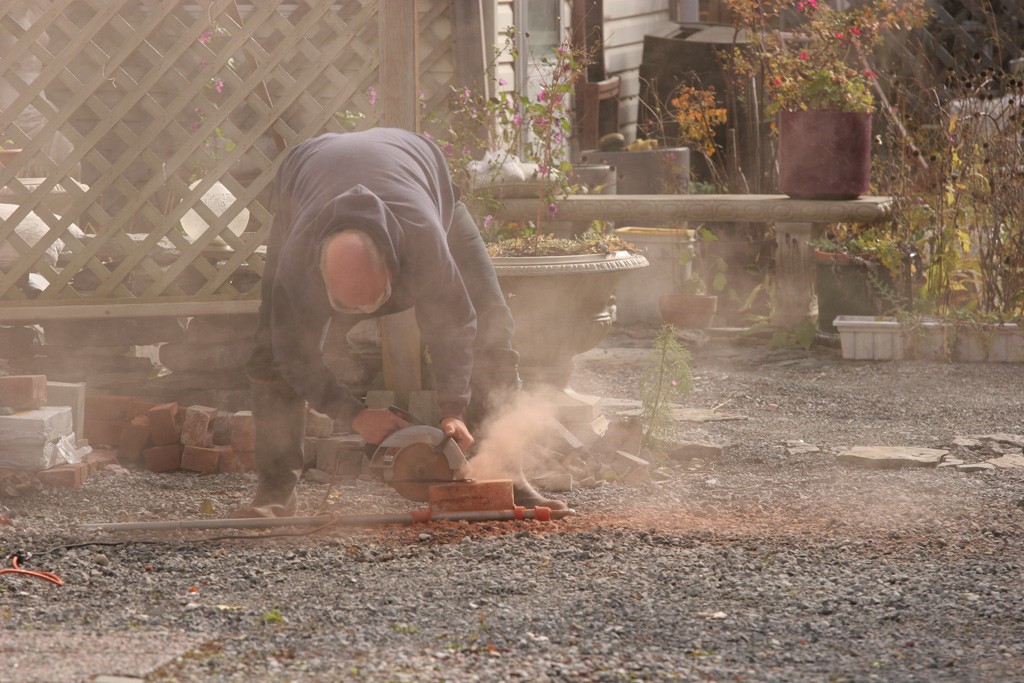
Man with power saw

I am happy to say that traffic to this site has been steadily increasing. Visits are up 138% from last year, and October was our best month ever. Increasingly, a sibilant intake of breath is well ranked by search engines.

One problematic element that accompanies popularity is that I attract ever-more climate change deniers and delayers (those who accept that it is real, but think we should take no action). Ordinarily, I am happy to debate with people and try to provide quality information. That being said, it can take up a lot of time to try to refute those who repeat faulty arguments over and over. These people call themselves ‘skeptics,’ but I think they are mis-applying the term. I have yet to encounter one that is willing to back away from even thoroughly discredited positions. Instead, they just move on to another misleading argument.

The question, then, is how to deal with these commentors without losing all scope for socializing and personal projects. Some of the options:

  1. Briefly assert that their position is incorrect and point to a resource that says why. Ignore further attempts at rebuttal.
  2. Point all such commentors towards pre-existing posts and conversations, without offering specific responses.
  3. Adopt the Zero Carbon Canada approach: “ATTN climate change denier trolls: you are cooking our kids and will be deleted.”
  4. Continue to provide detailed, personalized responses as much as possible.

(1) and (2) are appealing because they reduce the extent to which one person seeking to spread disinformation can waste my time. That said, leaving comments unaddressed could lead readers to believe that the points made therein are valid. (3) is appealing because it would prevent bad information from appearing online, though it is obviously a form of censorship. (4) is the ideal world solution, though I do need to wonder whether refuting deniers and delayers in blog comments is really the best use of my time, even if all I am taking into consideration is whether I am acting effectively on climate change.

Which option do readers think is most suitable? Are there other options I ought to consider?

Music economics

Fire escape ladder

According to data featured on Boing Boing, record labels are dying at the same time as musicians are doing better than ever on account of live performances. To a large extent, this must represent the impact of technology on the industry, particularly the internet and file sharing.

Morally and aesthetically, it is difficult to know how to feel about this. In recent decades, recorded studio music has been the major product of the music industry. More and more, that is now being acquired either free or with low margins for producers. Live music has the virtue of being irreplaceable, but the shift in that direction raises questions about where the moral and aesthetic value of music lies.

Personally, I think music studios have alienated the general public to the point that they deserve whatever financial misfortune they encounter. When it comes to musicians, the situation seems more complex. Is it right to keep rewarding someone (and often their heirs) for a song recorded at some point in time, or is it preferable to reward individual performances? Pragmatically, the options available are constrained. That said, there is a case to be made that music that produces a steady stream of enjoyment should produce a stream of revenue for the people who made it.

What do others think?