Ethics and CAPP advertising

The Canadian Association of Petroleum Producers (CAPP) have a new advertising campaign for the oil sands that is all about personal credibility: the ads feature the faces, names, and signatures of oil company employees who argue that the environmental impact of the oil sands is manageable and shrinking.

Since CAPP made the ads personal in the first place, it seems appropriate to do the same and ask about the ethics of appearing in these ads.

Small cameras versus big cameras

When I went to visit Toronto this past weekend, I had to lug a suit bag with me. The idea of bringing along my Canon 5D Mk II digital SLR (dSLR) and associated gear and lenses was too daunting, so I brought along my little Canon A570IS point and shoot (P&S) camera instead.

It has been quite a while since I used a point and shoot, so the experience felt novel to me. Those little cameras certainly have a few things going for them:

  • It can be carried in a pocket and easily held with one hand.
  • Since the camera fits in a pocket, you don’t need to constantly advertise that you are carrying it.
  • It can fit into small spaces, allowing for unusual compositions.
  • Subjects are not intimidated by such a small camera.
  • The tiny shutter is very quiet.
  • The relatively low value of the camera makes you less worried about loss, damage, and theft.
  • There are fewer condensation problems, since the smaller camera and lens have less thermal momentum.
  • The camera takes ubiquitous AA batteries, rather than expensive proprietary cells.
  • The camera can automatically detect faces, and focuses on them.
  • For a small camera, a small tripod is sufficient for long-exposure shots. It is also easier to brace a small camera on most horizontal surfaces.
  • The camera is so light, there are no problems with carrying it around everywhere, for hours.

Of course, there are a few reasons why I missed my 5D. By far the most important is image quality. The sensor in the A570IS is small and produces visibly noisy images at 200 ISO, and ones that are terrible at 400 ISO and up. By contrast, images from the 5D look very decent at 2500 ISO. Because of the superior lenses, shots taken on the 5D also look better in more subtle ways. The 5D also has a more accurate viewfinder; the shot that ends up on your memory card looks much like the one composed through the viewfinder, with minimal cropping and parallax problems.

80% of the time, the ideal option would be something that is about the size and weight of the A570IS but which has the image quality of the 5D Mk II. The rest of the time, the size and weight of the 5D would actually be preferable. In particular, all the dedicated controls spread across the 5D body make it easier to choose the ideal settings for a particular shot quickly.

Alas, for the foreseeable future there will always be the need to choose between convenience and quality.

Climate timelines

The timelines associated with climate change are of an entirely different magnitude from those associated with ordinary politics. The greenhouse gases we emit today will still be affecting the climate in thousands of years, in a time when our current leaders and forms of political organization will have become as obscure as those of the Ancient Greeks are to us now. It is possible that only scholars in under-funded departments will be aware of what the state of global politics looked like in 2010. People with the degrees they issue may worry about how they will find jobs, having specialized in such an obscure and irrelevant field. Quite possibly, the average person will have never heard of Barack Obama, the European Union, the economic resurgence of China, or the existence of Canada.

On the other hand, it is possible that the politics of 2010 will be remembered in the distant future for the same reason the general outlines of Ancient Greek society are remembered now: because they will be seen as an important explanation for why the world is as it has become. In that case, it seems likely that our time will be primarily remembered as the period in history when people could have stopped dangerous climate change, but failed to do so because of their short-sightedness and selfishness.

Midterm day

Despite all the complaints from both left and right, I think Barack Obama is a promising president, whose tenure has largely been wasted on the financial crisis so far. Nonetheless, he does have some decent achievements to point to, most notably on health care, and there is a lot more he could accomplish with adequate Congressional support.

Hopefully, today’s elections will be less dire for the Democrats than many have been expecting.

While some of the complaints about Obama from the right have been non-sensical (all that secret Muslim / socialist stuff), what really seems to endanger him is a loss of enthusiam from his core supporters. Certainly, he could have done more on issues like gay rights and climate change. Nonetheless, it doesn’t make sense to punish him for inadequate action by rewarding those who will do even less on those issues, or even try to roll back the modest progress that has been made.

The Republicans seem to understand the value of unity and pulling together far better than Democrats do. That may be a big part of why they seem to be so much more effective at driving their agenda, despite how it tends to serve the needs of a powerful minority more than those of the population at large.

See also: U.S. midterms and Canadian climate policy

Adios BlogLines

For years now, I have been using BlogLines to keep track of hundreds of RSS feeds: posts on tech and climate blogs, comments on my own sites, updates on the sites of friends who update very rarely, etc.

Unfortunately, BlogLines is being shut down on Monday. This is one of the few times when a genuinely valuable internet service has faded away. There are plenty I have outgrown (Hotmail comes to mind) or that were never very useful (Google Wave). Napster was a tragic loss, and now this.

So, thanks a bunch BlogLines. I will be shipping all my subscriptions over to the clunkier interface of Google Reader.

Abusing the word ‘green’

I have written before about how the word ‘sustainable’ is frequently abused. People often refer to anything done with the slightest bit of environmental awareness as ‘sustainable’. Thus, it is ‘sustainable’ to bring your own mug to Starbucks or turn off the lights when you leave the room. In reality, a sustainable process or situation is one that can be carried on indefinitely. Sustainable electricity generation must be based on renewable sources of energy, and sustainable agriculture must have no non-renewable inputs.

If anything, the word ‘green’ is even more abused than the word ‘sustainable’. The U.S. Air Force claims that its synthetic jet fuel is ‘green’ even though it is made with fossil fuels. Any time there is a marginal improvement in a dirty process, it is heralded as a ‘green’ accomplishment.

None of this is to say that small improvements don’t matter. The global energy system needs to be reformed from the ground up, in big ways as well as small. What I am arguing is that we should not allow the definition of words like ‘green’ and ‘sustainable’ to be diluted to the point where they are just public relations tools. A green initiative or innovation is one that contributes meaningfully to the kind of sustainable world we need to build. It is not just something that can be marketed to those who find it chic to care about the environment.

Change card

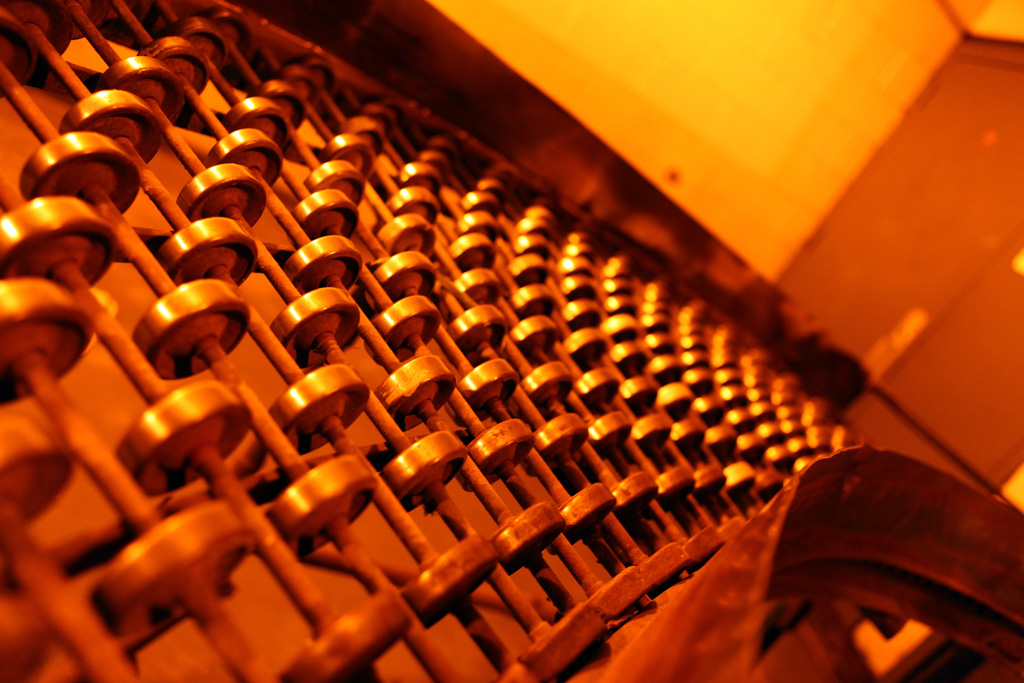
Change is annoying. Whenever I get anything smaller than a $1 coin, I dump it as soon as possible into either a big jar at home or a big jar at work. My pockets have enough holes in them already, without carrying around thin-edged metal objects.

It is no surprise that there are companies that make machines that eat change and spit out a credit for groceries, taking a fairly large commission. The other night, an idea along similar lines occurred to me: a contactless ‘change card’.

It would use the same RFID technology that credit cards are now adding. When you paid for something in cash, you would get back bills and perhaps $1 and $2 coins. The rest of the balance would get wirelessly added to your card. If they were privately deployed, the issuer would probably take some commission, but perhaps it would be worth having governments do in order to save them most of the expense and bother of making coins.

The cards would not be registered or tracked, but they would have a $10 limit. When you accumulated a balance at that level, you would need to buy small things like newspapers, coffee, or sandwiches to bring the balance down. This would be to reduce the risk of them being used for money laundering or other nefarious purposes.

The question – I suppose – is why not go whole-hog and use an entirely electronic payment system? That option is certainly already open to people, and for various reasons many people keep using cash. Giving people the opportunity to use cash without messing around with pennies, nickels, dimes, and quarters seems like a good idea.

Being a non-driver

When I was in high school, I took the written test that kicks off British Columbia’s graduated vehicle licensing program. I took some lessons, but never progressed through the multiple stages required to get a full license. I left for university without one, and have never since had much opportunity or incentive to get a license. I may never decided to do so.

Quite possibly, that is becoming a less unusual choice for city-dwellers. Treehugger is reporting on a study of Canadian attitudes by GWL Realty Advisors. Some of the results are encouraging from an environmental perspective, such as a growing preference for apartments over houses. The commentary on the views of young people on driving is also of interest:

There is also growing research that younger generations do not relate to the automobile as enabling “freedom.” Instead, their electronic and social media devices–whether a smart phone, small lap top computer, music player, etc.–provide an alternate means for self expression and being free to do what they want. In the United States, kilometers driven by 18-34 year olds is declining, and this is likely the case in Canada as well (Neff, 2010). Younger generations seem to have less interest in automotive use, making apartment living in dense, walkable and transit-oriented urban areas a more natural fit for their lifestyles.

For those living in rural areas – or the 1950s – driving really is freedom. For those living in the cities of 2010, cars probably do more harm than good. Rather than spending money to further accommodate the dangerous, climate-destroying machines, it seems sensible that we should focus on building walkable neighbourhoods and good public transportation networks.

I have written before about driving’s declining appeal. I have also written about how the internet increases the social value of skills other than driving, such as photography.

Science and politics in Canada

I think it’s fair to say that political conservatives have long had a rocky relationship with science. While they approve of the chain from basic science to technology to economic growth, science has also repeatedly brought to light facts that undermine conservative ideologies and religious perspectives. With that in mind, this is an interesting development:

Today, the union that represents federal government scientists launches a campaign to put the spotlight on science for the public good.

“Federal government scientists work hard to protect Canadians, preserve their environment and ensure our country’s prosperity but they face dwindling resources and confusing policy decisions,” says Gary Corbett, president of the Institute.

The Professional Institute of the Public Service of Canada is a national union. Among its 59,000 federal and provincial members are 23,000 professionals who deliver, among other knowledge products, scientific research, testing and advice for sound policy-making.

The recent decision to end the mandatory long form census is the latest step in a worrying trend away from evidence-based policy making. Restrictive rules are curtailing media and public access to scientists, while cutbacks to research and monitoring limit Canada’s ability to deal with serious threats and potential opportunities.

This follows an editorial in Nature criticizing the Canadian government:

Concerns can only be enhanced by the government’s manifest disregard for science. Since prime minister Stephen Harper came to power, his government has been sceptical of the science on climate change and has backed away from Canada’s Kyoto commitment. In January, it muzzled Environment Canada’s scientists, ordering them to route all media enquires through Ottawa to control the agency’s media message. Last week, the prime minister and members of the cabinet failed to attend a ceremony to honour the Canadian scientists who contributed to the international climate-change report that won a share of the 2007 Nobel Peace Prize.

While factual claims about the nature of the universe do have political ramifications – think of the reality of climate change, or evolution – that doesn’t mean that the expression of factual information is a political act. Further, society has an enormous interest in the dissemination of accurate information, and the formulation of policy on the basis of such information. As such, it is encouraging to see scientists asserting their right to express their expert opinions, even when doing so is politically challenging for the government.

Sharpie pens

I am particular about my pens. I want them to work reliably, produce nice looking text, and not bleed through pages. For several years, I used Pilot’s excellent line of G2 pens. Unfortunately, these have become harder and harder to find. In fact, they seem to have been displaced by imitators that resemble them, such as the Zebra Sarasa.

I have been reduced to stocking up on G2s when visiting friends and family in the United States (especially the green and red models, which seem to be totally unavailable in Canada). When visiting Vermont a few months ago, I cleaned out a Staples location of their entire stock of four-colour packages of G2s. I only really needed the green ones (for taking notes in books and magazines), but they are only available along with the rest.

Given that awkwardness, I decided to take Emily’s suggestion and try the new Sharpie pens. I have been using the blue and black models for a couple of weeks and am generally very happy with them. They have fine points and ink that dries quickly. They don’t bleed through even thin Moleskine pages, and seem to write well on a variety of surfaces. The only downside I have discovered is that the ink from the blue model looks rather thin and translucent compared with the Pilot G2 blue.

In any event, it’s worth spending $4 to give a couple of Sharpie pens a try.