Canada’s science-savvy fifteen-year-olds

Canada’s educators should be proud of the recently released results of the Programme for International Student Assessment (PISA). The test examines the performance of 15-year-olds in science and placed Canada third in the world, after Finland and Hong Kong. Following after are Estonia, Japan, New Zealand, Australia, the Netherlands, and South Korea. Britain is 14th, France 25th, and the United States is 29th.

This is especially welcome news given the ever-increasing importance of basic scientific understanding in contemporary society. In everything from making decisions about one’s own health to voting, having an understanding of at least physics, chemistry, and biology is increasingly necessary. Hopefully, the results of this assessment demonstrate that young Canadians are being well prepared.

More information is available through their website.

Bali talks beginning

Starting tomorrow morning, there will be twelve days of talks in Bali, Indonesia intended to begin the process of drafting a replacement for the Kyoto Protocol, when the period it covers ends in 2012. This particular meeting is mostly about choosing the structure for the real negotiations. Three possibilities are likely:

  1. The parties agree to extend the Kyoto Protocol, keeping in place many of its institutional structures
  2. The parties decide to create a whole new instrument
  3. The talks collapse in acrimony, with no agreement

Which of these takes place will largely depend on the stances adopted by the great powers and major emitters, especially the United States, Russia, China, Japan, Brazil, and the European Union.

Some questions of succession hang over the proceedings. The new Rudd government in Australia has only been in power for a week, and may not have a well developed negotiating position. More importantly, everyone knows the Bush administration will soon be out of power. Leading Congressional Democrats are attending the summit themselves. It remains to be seen what effect that will have.

Hydrogen and helium as sources of lift

Here is a random counter-intuitive fact about chemistry: while the atomic weight of hydrogen is 1.00794 grams per mole and that of helium is 4.002602 grams per mole, the helium nonetheless has 92.64% of the buoyancy of the hydrogen. This is because air weighs about 1.3 grams per litre, while hydrogen and helium gasses weigh 0.08988 and 0.1786 respectively. It is the difference between the density of air and the lift gas that is important and, in absolute terms, hydrogen and helium are not that different.

Ultimately, both hydrogen and helium are capable of providing about 1kg worth of lift per cubic metre of gas at room temperature and pressure. The major reason for which helium is popular as a lifting agent for balloons and zeppelins is because it is not flammable (it is actually a remarkable unreactive element). Unfortunately, helium is a lot more costly, has other uses (such as cooling superconductors), and is in the midst of significant shortage.

McKinsey climate change study

Chrismukkah decorations

McKinsey – a major consultancy – has released a report (PDF) on the costs of reducing greenhouse gas emissions in the United States. The general conclusion is a familiar one: that existing technologies and emerging technologies with a high probability of success can collectively reduce emissions by a very considerable degree at modest cost. Specifically, the study argues that 3.0 to 4.5 gigatonnes of CO2 equivalent can be averted by 2030, at marginal costs of under US$50 per tonne. Business as usual would see present emissions of 7.2 gigatonnes grow to 9.7 gigatonnes by 2030: almost twice what the whole planet can handle.

The executive summary linked above is well worth reading, as it is rich with detail. It stresses how abatement will not happen through a few big changes: many thousands of emitting activities must be incrementally reformed. That said, 40% of the abatement they describe would actually save money in the long term (for instance, by replacing existing systems with more energy efficient varieties).

Perhaps the most interesting element in the whole report is the abatement curve on the fifth page of the executive summary. It ranks a collection of mitigation activities from those that produce the highest level of economic benefit per tonne to those that are most costly. For instance, increasing the efficiency of commercial electronics could save $90 per tonne of CO2 equivalent. Other win-win options include residential electronics, building lighting, fuel economy standards for cars and trucks, and improvements to residential and commercial buildings. Cellulosic biofuels are net winners, though of a lesser magnitude, as is changes to soil tillage to boost the strength of carbon sinks. The most expensive abatement options include carbon capture and storage, the use of solar electric power, and the use of hybrid cars (the single most expensive option listed).

This is quite an encouraging view. Achieving substantial reductions within a developed economy for under $50 a tonne is promising in itself. It also suggests that international abatement prices could be even lower, given how insane things like tropical deforestation are from an economic perspective, once climate change is taken into account.

Ecosystems in a changing climate

Ashley Thorvaldson in party mode

As climate changes, many species are moving. Sometimes, it is from lower to higher altitudes, in order to live in familiar temperatures. Sometimes, it is from south to north for the same reason. Such natural adaptation is inevitable and, while it is a coping mechanism for individual species, it invariably changes the composition of ecosystem. Birds and flying insects may be able to relocate more easily, leaving slower-moving or less adaptable species behind. Suddenly, the structure of food webs start to change as predator-prey relations are redefined.

Some people have argued that allowing ecosystems to respond to climate change on their own is the best course of action. Others have argued that vulnerable species should be relocated to areas where they will be able to continue living. Some have even argued that polar bears should be relocated to Antarctica to make them less vulnerable to global warming. Others have argued that elephants and rhinos should be introduced to North America as a hedge against the danger of poaching. Finally, there are those who argue that we should actively manage ecosystems to try to mitigate climate change effects: if pests have shifted into new areas and begun eating crops, import their predators. If coastal erosion is worsening, bring in species to stabilize beaches.

The human record of such interventions is definitely not stellar, but the debate is nonetheless increasingly energetic. The discussion is both pragmatic – asking what the probable costs and benefits of making a change would be – and philosophical – engaging with the question of what the ‘natural’ world is and how people should engage with it. Global climatic change will make both of these sets of questions more immediately relevant and pressing.

Climate change and the Inuit way of life

Random portrait from the National Archives

At several points in the past, Arctic native groups including the Inuit have been effectively involved in the development of international regimes for environmental protection. Perhaps most significant was the role of the Inuit Circumpolar Conference in the development of the Stockholm Convention on Persistent Organic Pollutants (POPs). Studies done on the human health impact of Arctic POPs on the Inuit provided a big part of the scientific basis for the agreement. Arctic native groups were also effective at pressing their moral claim: chemicals being manufactured elsewhere were poisoning their environment and threatening their way of life.

A similar claim can be made about climate change, though the probable outcome is a lot more negative for Arctic native groups. Relatively few states and companies manufactured the bulk of POPs and, in most cases, less harmful chemicals can be used in their place. The economic costs of phasing out POPs were relatively modest. While the costs of dealing with climate change are a lot lower than the costs that will be incurred through inaction, they are nonetheless many orders of magnitude greater than the costs associated with abatement of POP use.

The threat posed to the Inuit by climate change is also quite a bit more far-reaching. It is entirely possible that the whole Arctic icecap will be gone within twenty years, or even sooner. 2007 was by far the worst year ever recorded for Arctic sea ice. Without summer sea ice, the Arctic ecosystem seems certain to change profoundly. Given the reliance of traditional Inuit lifestyles upon hunting terrestrial and marine mammals, it seems like such conditions would make it impossible to live as the Inuit have lived for millenia. This isn’t even a matter of worst-case scenarios. Even without significant new feedback effects, summer Arctic sea ice is likely to vanish by mid century. Increasing recognition of this partly explains the ongoing scramble to claim Arctic sub-sea mineral rights.

As with small island states, there doesn’t seem to be enormously much hope for avoiding fundamental and perhaps irreversible change in the Arctic.

Clean coal isn’t cheap

The point is increasingly well made by numerous sources: once you add carbon sequestration, coal is no longer an economically attractive option. In Indiana, a 630 megawatt coal plant is being built for $2 billion. That’s $3,174 per kilowatt. If we expect investors to seek a an 11% return on investment over a 20 year span, the capital cost of the plant is about 5.7 cents per kilowatt hour. On top of that, you need to pay for transmission, fuel, staff, and maintenance. On average, electricity in Indiana sells for about 6.79 cents per kilowatt hour.

The nominal price of the plant and the power it generates also doesn’t consider other coal externalities: like how mining it is dangerous and environmentally destructive. While this plant uses Integrated Gasification Combined Cycle technology and is capable of being attached to carbon sequestration infrastructure, it will not actually sequester the carbon it emits. As such, it will be only incrementally better than a standard coal plant with the same electrical output.

The only possible justification for this is that this is a demonstration plant that will help to make the technology much cheaper. Of course, when it is considered in that way, it seems at least equally sensible to spend $2 billion on experimental renewable power plants, in hopes of reducing their capital costs. The more you think about it, the more it seems like coal is densely packed carbon that is conveniently already in the ground. It should probably remain there.

Observing global oceans

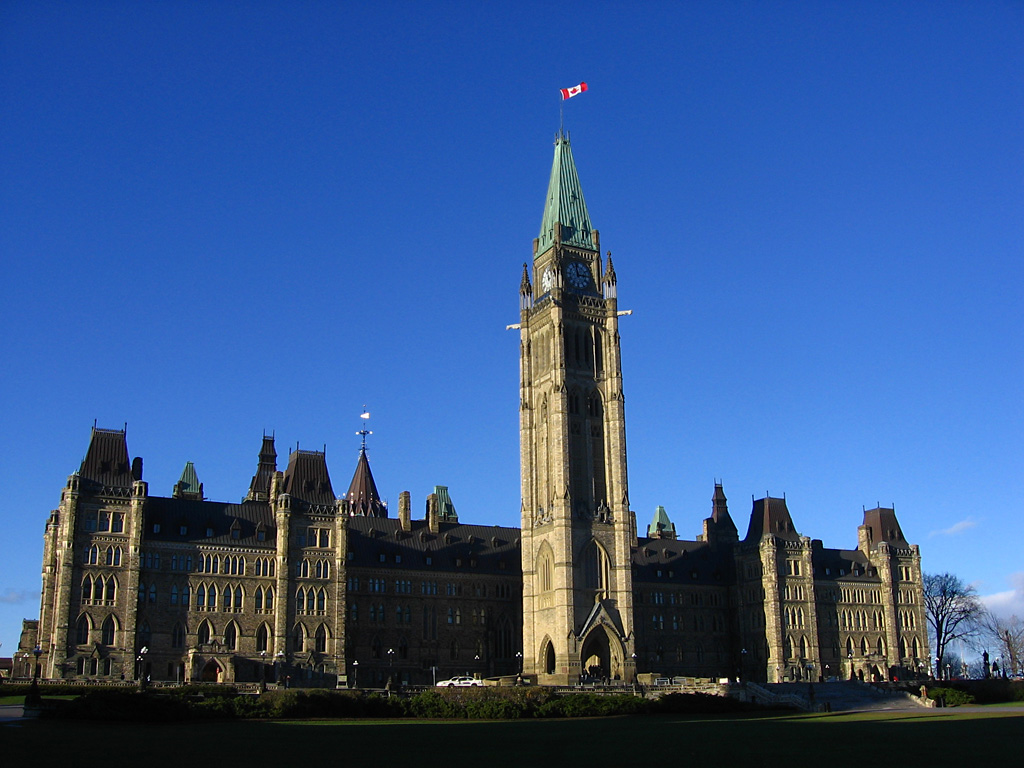
Canadian Parliament

A number of severe problems are facing the world’s oceans and the living things that dwell within them. There is the exchange of invasive species through shipping, worldwide overexploitation of fish stocks, the acidification of the ocean from increased atmospheric carbon dioxide, changes in salinity that threaten major ocean currents, and pollution (including eutrophication from chemical runoff). As such, calls for more extensive study seem quite justified. One group that has been making such demands is the Partnership for Observation of the Global Oceans (POGO). They have called for an expanded global monitoring system involving research ships, buoys, satellites, and animal tagging. Such a system should both help scientists to understand the operation of existing systems better and predict the future consequences of ongoing human activities.

One of the more interesting satellites in the process of deployment is Jason-2. It will provide data on sea level changes with unprecedented accuracy and coverage. Using a RADAR altimeter, it will determine sea levels to centimetre precision, measuring the 95% of all ice-free ocean areas every ten days. This is helpful because sea level is not constant or globally consistent: observing how it changes can improve the quality of weather predictions and climate models. The level of radiation in the zone where Jason-2 will orbit is intense. As a consequence, the projected lifetime of the craft is only about five years. If all goes well, it should be launched in February 2008 to replace the Jason-1 system, already suffering from multiple failures.

Understanding climate absolutely requires understanding the nature of the oceans, as well as the interactions between the hydrosphere (liquid water), cryosphere (ice), and atmosphere. Hopefully, a few billion dollars spent on oceanic research will yield understanding that can help to guide more intelligent action. Of course, having that transpire requires more than scientific certainty – it requires the personal and political will that have really been the absent element in ocean management.

Homeopathy is fraud

It astonishes me that anyone takes homeopathy seriously as a kind of healing. Essentially, the idea is to take a substance that causes symptoms similar to those a person has (hot pepper for fever, etc) and then dilute it to an enormous extent, producing a solution that is essentially water. The dilution can be so extreme that it becomes probable that no molecules of the original substance are in a dose of the ‘medicine.’ This is then given to people who are told it will somehow help to make them well.

The solutions given are basically just water and/or alcohol, so they are fairly unlikely to harm anyone. Of course, they are as likely to have a positive medical effect as sprinkling the credulous with fairy dust. Any benefit is purely the result of the placebo effect. The fact that giving someone anything and saying it will make them better actually does in many cases is well understood.

As such, it is a bit shocking that such practitioners stay in business and that anyone takes them seriously. People are being misled (perhaps not lied to, since homeopathy practitioners may believe this stuff) and charged money for something useless. If nothing else, consumer protection organizations should be vocally and persistently objecting to this nonsense.

Methane clathrates and runaway warming

Terraces de la Chaudière

Essentially a form of ice infused with methane, clathrates may seem an obscure topic for discussion. They exist only under extreme conditions: such as underneath oceanic sediment. What makes them significant is the sheer volume of methane they contain. While it is unclear what degree of warming would be required to induce methane release from clathrates, there is a very real possibility that such release could be self-reinforcing. Given the global warming potential of methane and the volume of the gas in oceanic clathrates, such a self-sustaining release could induce abrupt and massive climatic change.

As a greenhouse gas, methane is potent. Averaged across a 100 year span, one tonne of methane produces as much warming as 25 tonnes of carbon dioxide. Even worse, when atmospheric methane breaks down, it generally oxidizes into carbon dioxide and water. Taking into account secondary effects, the warming potential of a tonne of methane is about equal to 72 tonnes of CO2 (according to the Fourth assessment report of the IPCC). This is one reason people are so concerned about the climatic effects of meat production, as well as the reason for which methane capture projects are one of the more credible kinds of carbon offset.

Recent estimates hold that ocean clathrates contain 500-2500 gigatonnes of carbon dioxide equivalent: akin to 100-500 years worth of sustainable emissions. About 400 Gt of carbon dioxide equivalent is in the Arctic permafrost. If a substantial proportion of this methane were to be released, it would take the world into completely unknown climatic territory. As such, it is highly likely that the adaptive capacity of both humanity and existing ecosystems would be overwhelmed, perhaps to a degree akin to the Permian-Triassic extinction event. This is truly the nightmare scenario for climate change, though its probability cannot be accurately assessed in relation to any combination of human behaviours and natural variations.

The existence of such exceedingly dire possibilities affects economic calculations about climate change. While it may not be sensible to spend 20% of global GDP to avoid an outcome with a 0.1% chance of occurring, a strong argument can be made that heavy expenditure is justified in the face of catastrophic risk. It is not as though we have another planet to fall back on if this one gets rendered unfit for human habitation.

[Update: 4 February 2009] Here is a post on the danger of self-amplifying, runaway climate change: Is runaway climate change possible? Hansen’s take.

[Update: 19 February 2010] See also: The threat from methane in the North.