Odd bit of pharmacology

I learned an interesting fact at my second Wadham High Table dinner in as many days. Apparently, the antibiotic tetracycline binds aggressively with calcium. This is why you can’t drink milk when you are taking it, since the drug will bond to the milk and not enter your bloodstream. For the same reason, it builds up inside bones and teeth that are growing. If you examine a skeleton from a person who took tetracycline, the bones that were growing at the time can be made to fluoresce.

Because tetracycline turns brown when exposed to light, people who take these drugs while their teeth are still growing are likely to have them turn brown permanently.

The Human Microbiome Project

Port Meadow horse

The average human being is a collection of about ten trillion eukaryotic cells: each with a nucleus, 23 chromosomes of nucleic DNA, and a collection of membrane-bound organelles including mitochondria with genetic material of their own. Less obviously, each person is also carrying around one hundred trillion prokaryotic cells, belonging to thousands of different species of bacteria. The implications of that are pretty staggering. Many of those bacteria play critical roles in biological processes that sustain human life, such as digestion. Others may be the benign residents of niches where more harmful microorganisms might otherwise live.

Following up on the Human Genome Project – which sought to decode the three billion nucleotides in the human genome – the Human Microbiome Project seeks to map the genetic sequences of those legions of bacteria. Already, it has been theorized that these bacteria play important roles in maintaining human health, and that their composition and relationship with human cells has an impact on diseases including diabetes, autism, cancer, and cardiovascular disease. Collectively, these bacterial species are thought to have 100 times more genetic material than the colony of human cells they inhabit.

The project is not unrelated to the Global Ocean Sampling Expedition, discussed here earlier, in that it is delving into the complexities of microscopic ecosystems. In so doing, it might serve both the practical function of helping to better understand and treat human disease and the more esoteric one of refining our understanding of what it means to be a human being, biochemically at least.

PS. The DVDs for the BBC’s Planet Earth series, discussed earlier, are now available in North American format. I will definitely buy a copy when I return to Canada. For those who haven’t seen any of the footage, it is absolutely awe inspiring.


The IPCC and the cost of mitigation

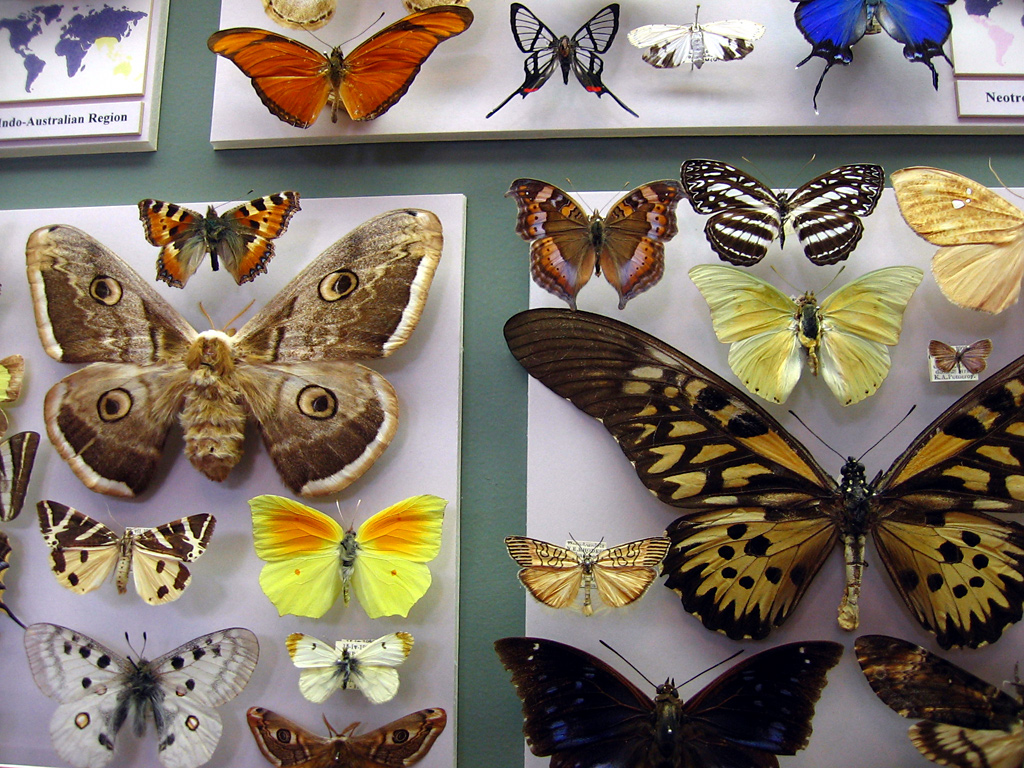
Butterflies and moths

The second half of the IPCC’s Fourth Assessment Report has now been released (PDF). Much like the earlier Stern Review, it was intended to assess possibilities for mitigating climate change and the costs associated with them. As with the Stern Review, the conclusion is that the problem can be dealt with at a fairly modest cost. Certainly, the sums in question are much smaller than the costs that would arise if the worst possible consequences of global warming were realized: from large-scale migration, to problems with C3 crops, to widespread agricultural failures (see this article on the ongoing Australian drought). The Economist is calling it “a bargain.”

That the Stern findings and those of the IPCC broadly agree is not at all surprising. After all, the Stern Review was based almost entirely upon the scientific conclusions of previous IPCC reports. Even so, such agreement can only help to foster increased political consensus, both within and between states, that climate change should be and can be dealt with. More than ever, it seems as though we are witnessing the start of a serious progression towards a low-carbon society.

Dealing the the problem of climate change will require unprecedented foresight and cooperation. As such, it is not unreasonable to think that the emergence of the kind of international regime that would be necessary to address it will foster cooperation in other areas. Something like global fisheries management does not have the same level of importance as addressing climate change, but the tools that will need to be developed to sort out the latter may advance our ability to behave more appropriately in relation to the former.

Wadham climate change discussion

Today’s Wadham Research Forum on climate change was very interesting, despite how all the ideas expressed were fairly familiar. The extent to which the points highlighted are the same as those in my thesis is both encouraging and dispiriting. It suggests that I have not missed the mark completely, but also that I may not have contributed anything terrible novel. Of course, there is a good chance that the key issues to be considered are obvious enough, and that it is the approaches taken that generate the value of a particular assessment.

Lazy science reporting

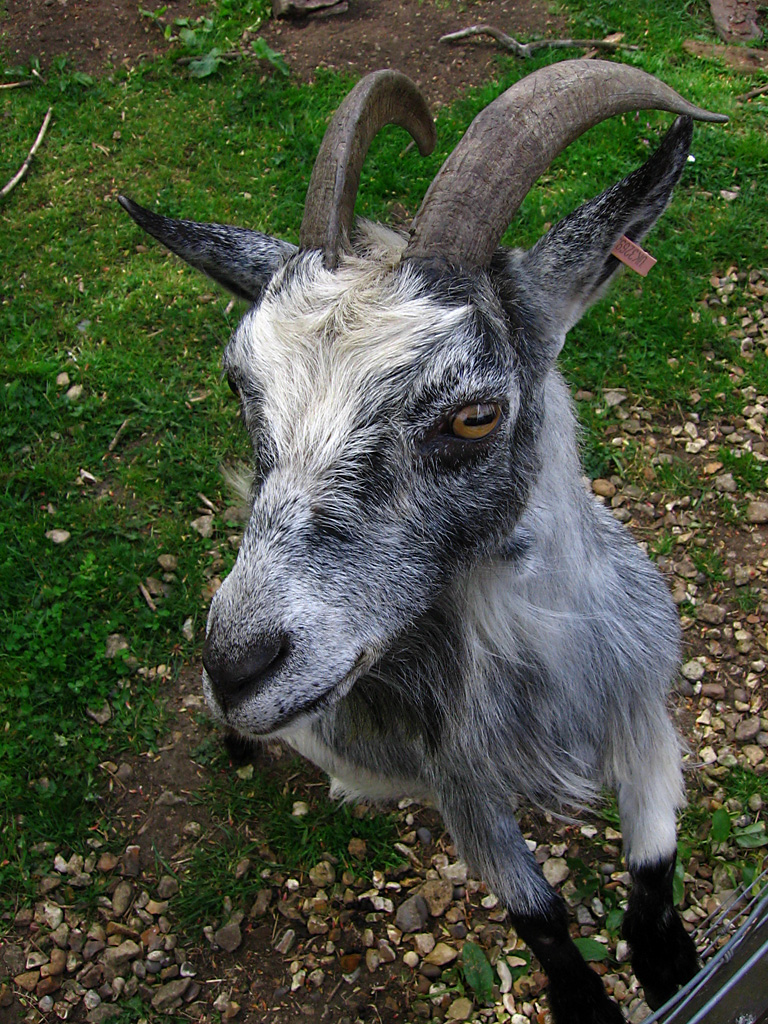
Oxford goat

People may have noticed that the news today is saturated with stories about scientists ‘discovering Kryptonite:’ the fictional substance that causes Superman to lose his powers. The claim is based on how the chemical formula for the new mineral – discovered in Siberia – is the same as the one invented for Kryptonite in the film Superman Returns. Obviously, this is just a fluke that arose because of some words a scriptwriter or prop designer happened to string together. No insight arises from referring to the new mineral with reference to the film. To me, this seems like the same kind of cheap, low-brow science reporting as when all the coverage about ‘hobbits’ being discovered emerged in response to the discovery of H. floresiensis.

I can understand why a journalist might want to put out a fluff piece like these and then take the weekend off, but it really isn’t ‘science’ reporting in any meaningful sense. It is especially depressing when quality newspapers decide to print such rubbish, perhaps hoping to attract a few more readers. It is astonishing to me that they lack allure on their own, when discussing serious science. After all, the pace of ongoing discovery and technological development is staggering, and it has never been more important for ordinary citizens to understand the natural and man-made phenomena that influence the ways in which we live.

PS. Claire, Hilary, and I saw many goats today. Here are some goats eating plants.

Solar eruption

The Japanese Hinode satellite, launched in 2006, is meant to study the sun from a sun-synchronous orbit. On December 13th, it got quite a show. Sunspot 930 has released an X-class solar flare: twice as large as the Earth, and sufficiently powerful to make the Aurora visible as far south as Arizona.

The video is available here (MPEG). More information is on this NASA page.

Such flares are one reason why it is dangerous to be heavily reliant upon satellites for either communication or navigation. During periods of extreme ionic disturbance, GPS receivers can give positions that are off by thousands of kilometres. The streams of highly energetic particles produced by such flares eventually reach the Earth and threaten both automated satellites and manned vehicles.

The radiation from solar flares is also one challenge involved in a possible manned mission to Mars; with the kind of timescales involved and the absence of the protection from Earth’s magnetic field, the danger posed by such radiation could be considerable.

Red light

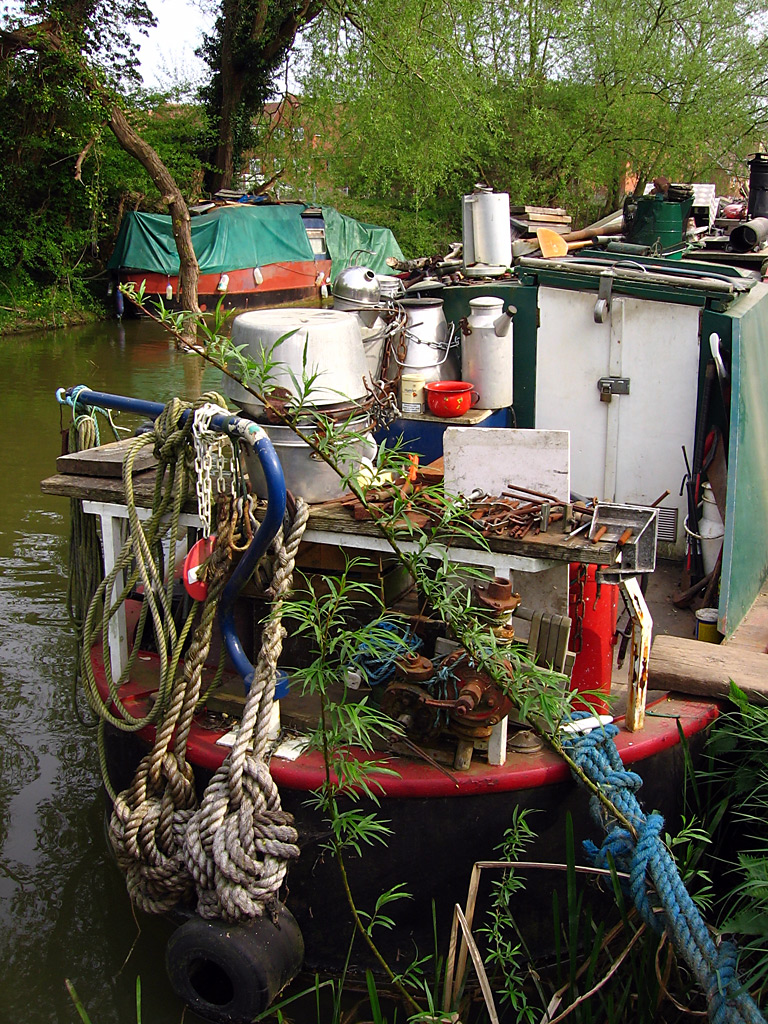
Canal boat

With people banning incandescent lightbulbs and the days finally approaching appropriate summer length, it seems as good a time as any to be thinking about light. On the human retina, there are two major kinds of photoreceptive cells: cones (which identify colour) and rods (which are only sensitive to the overall brightness of light). Because rods are the more sensitive of the two, people actually see in black and white, when it is properly dark.

Like photographic paper, rods are not sensitive to long wavelengths of visible light, over on the red side of the spectrum. This is because the shorter the wavelength of a particular photon, the more energetic it is. Further to that, only light of a sufficiently narrow wavelength can accomplish certain tasks. For instance, only light of a sufficiently narrow wavelength can excite metals so as to produce the photovoltaic effect used in solar cells. Brian Greene has a rather good explanation of this in his book The Elegant Universe: the first half of which is a highly comprehensible primer on twentieth century physics.

The upside of red light not being able to affect rods is that one can be immersed in red light without losing the ability to see in the dark subsequently. This is why submarines are sometimes illuminated with red light – allowing the crew to see more than would otherwise be possible in the event of a power failure – and one reason I am hoping my replacement headlamp will be especially useful. The last one vanished curiously before the Devon trip, earning me a very nasty knock on the head caused by a thick low beam outside. The lost headlamp served admirably during the 2003 New York City blackout, as well as in a great many places besides, The new one, which has a mode in which it produces only red light, will probably be useful during stays in future hostels. It may also provide some interesting lighting possibilities for future photographs; high contrast red and black compositions can be quite compelling.

Reading material

Those who feel that they haven’t been getting their fix of geeky news from this blog recently (I have been too busy to investigate things unrelated to my official studies) may want to have a look at Cocktail Party Physics. Written by Jennifer Ouellette, it seems to include a pleasantly esoteric collection of disciplines and scientific discussions. Recent entries discuss satellites testing General Relativity, computing with bubbles, and the chemical properties of gemstones. The posts I have glanced at are well written, and have a nice personal touch to them.

I will be done the thesis, and back to my old self, by tomorrow night.

Microbiology on display

This is too cool not to link: The Inner Life of the Cell

This short video shows animations of some of the chemical processes that occur inside living cells. I only recognized a handful, but they are all beautiful and surreal. The focus is on the behaviour of lymphocytes in the presence of inflammation.

[Update: 13 December 2007] The links above had become outdated. As of today, they are repaired.

Connections

Plant in wall

One thing about studying climate change is that you never know where you will find new information. Have a look at this segment from James Burke’s Connections. He is talking about the Little Ice Age, which began in the 16th century. Much of what he says about adaptation is relevant, in an indirect way, to the kind of climate change being experienced now. I remember being terribly disappointed when his column vanished from the back of Scientific American – my staple reading before shifting to The Economist. Here is another short clip from Burke, also relevant to my thesis project. Here is yet another.

Note that Wikipedia has an entry on the Little Ice Age, the Medieval Warm Period, and the IPCC. It is badly in need of being improved.