Citable citation

Tree and blue sky

My congratulations go out to my friend Lindi Cassel: the first person who I know personally (as in ‘used to make stick figures out of kneadable eraser while in biology class with’) to get cited on Google Scholar:

Cassel, Lindi and Peter Suedfeld. “Salutogenesis and autobiographical disclosure among Holocaust survivors.” The Journal of Positive Psychology. Volume 1, Number 4 / October 2006. p.212-225.

While the subject matter is certainly sobering, the publication is extremely impressive, like so much else about Lindi. Bravo.

Kuhn on research

Thomas Kuhn defines research as “a strenuous and devoted attempt to force nature into the conceptual boxes supplied by professional education.” To me, it seems a fairly reasonable, if somewhat cynical, way of looking at it.

There are two implications within the statement that strike me as interesting. The first is the assertion of nature. The idea that it is something out there, to which research is applied, is more empiricist than I expected from a book that Tristan recommended to me (that said, I am only halfway done, and all manner of complexities could yet emerge). All that said, here are a number of different ways in which you could interpret ‘nature’ in the above sentence.

Most obviously, you could take it to mean the external world of atoms and galaxies and ocelots. Naturally, ‘atom,’ ‘galaxy,’ or ‘ocelot’ is just a description, but it is not unreasonable to assert that there is something out there that can be reasonably assigned a term. There is a problem akin to the naming of constellations – it is arbitrary which stars you include in which grouping – but any possible set of constellations is at least a valid description of the orientation of stars in the sky. You might group them by proximity and geometric patterns, or you might group them according to their spectral profiles or any of myriad characteristics, but it should be possible to go back from whatever model is created to either re-create or at least recognize the phenomenon being described.

Another possible meaning for ‘nature’ is just experience. When we look at the stars (or anything else), our brains are performing a massive amount of signal processing. What you see is not, in many important ways, an accurate reflection of what is actually there. Details that evolution has determined to be unimportant are given little or no attention, whereas ones that natural selection has marked out as important are highlighted. This is the inevitable product of how genes that do a good job of sorting important data out from trivial data will tend to find themselves copied more often than those that do the same task badly. Very bright things are dimmed beside darker ones, and vice versa. Learning to undo a lot of this trickery is an important step towards becoming a good photographer. If we take ‘nature’ in this way, the object of our research is our own experiences of a natural world, rather than that world itself.

The second is the implication that we could somehow deal with nature in a more meaningful or comprehensive way. This is an assertion that comes into conflict with limitations in human cognitive power, and the time that can be applied to problems. We can, for instance, only really think in three spatial dimensions. We can only remember so much, and only grasp connections of certain types and complexities between phenomena and ideas. As such, the choice is not between modelling through categorization and some some of ideal holistic understanding of the universe; it is between modelling through categorization and some alternative form of modelling that is still bounded by human cognitive limits.

To me, the evident success of category-based modelling (as manifest most obviously in technology) demonstrates that it is clearly the world comprehension system to beat. Believing that light is a quantum phenomenon as described by certain equations is demonstrably better than believing it is the result of some kind of active broadcasting from the eyes. The most obvious way to show that is that you can build fibre optic cables and fancy lenses and optical disc drives on the basis of the former conception, but not the latter. One day, we will probably have an even better understanding of light, as demonstrated by a greater ability to do things that we want to do using it. Research, as Kuhn defines it above, is an essential activity and a worthwhile application of time and effort. While there is every reason to question and refine our methods, they are not worthy of outright denigration, as I am sure he would agree.

A variety of spices in life

Deities and guns, Pitt Rivers Museum

Two things that I did not know previously about spices, but learned while eating white peppercorns purchased at the Spice Bazaar in Istanbul, during a break from reading this evening:

The difference between black and white peppercorns is somewhat similar to the differing means by which white and red wine are produced. Black peppercorns are the dried fruit of Piper nigrum, a flowering vine. The colour is the product of browning enzymes released from the fruit’s flesh through the application of heat, after picking and before drying. The important odour-contributing chemicals present in black pepper are part of a class of molecules called terpenes. White peppercorns, by contrast, are the product of fruit that has been soaked, decomposed, or otherwise removed – leaving only the seed to be dried.

This strikes me as somewhat similar to how red wine is produced from juice that includes skins, seeds, and stems – whereas white wine has such elements filtered out. The chemical result of their inclusion (called maceration) produces the tannins that give flavour to red wine. Those who are restricted to the appreciation of the cheaper examples of both varieties might find it useful to know that red wines contain more congeners than whites, and thus are more likely to leave you feeling rotten the next day (though the relevance of these molecules to the situation seems to be disputed; some argue that hypoglycemia, dehydration, and vitamin B12 deficiency are more to blame). Red wines also include tyramine, an additional metabolic toxin absent in whites.

One molecule mentioned frequently on this blog is capsaicin: the hydrophobic, colorless, odorless that makes chili peppers spicy. It does this by virtue of stimulating vanilloid receptors of subtype 1, normally sensitive to heat and abrasion. I thought that normal table pepper relied upon the same substance, but it actually depends on a molecule called Piperine, potentially notable for the fact that it interferes with biochemical pathways relevant to drug metabolism.

Thinking about social roles

Flooded field near the Port Meadow

While sitting in Starbucks and walking home – the cold seems to have frozen my bicycle lock – I have been thinking about three social roles relevant to my thesis; I shall call them the ‘Pure Advocate’, the ‘Pure Expert’, and the ‘Hybrid’ roles. Each type of actor has an important part to play, in the determination of policy, and each treats information and preferences in ways conditioned by their social role. For the purposes of this discussion, they are ideal characters who reflect only their assumed or assigned roles and not their own interests in any other way.

Continue reading “Thinking about social roles”

Carl Edward Sagan (November 9, 1934 – December 20, 1996)

Tomorrow will be the tenth anniversary of the death of Carl Sagan: an American astronomer, author, and popularizer of science. Like Arthur C. Clark and Isaac Asimov, he is among those authors of science fiction who have also made a contribution to the accumulation of scientific fact, and to the development of the social role of science within society.

He has been quoted here before.

Nuclear fusion as a power source

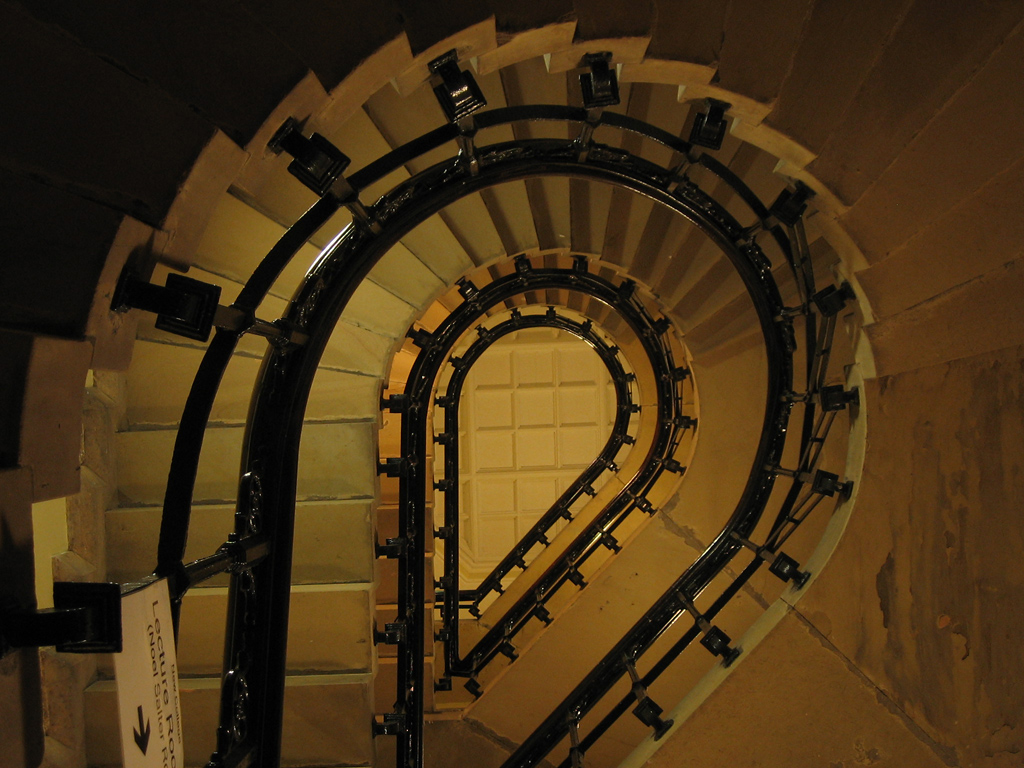
Staircase in New College

At dinner, this evening, I was speaking with one of the Wadham College fellows about nuclear fusion. He highlighted an element that I hadn’t previously heard discussed: namely the fact that you need to build truly enormous reactors so as to have a surface area to volume ratio low enough that fusion can be sustained. He spoke of the possibility that two or three gargantuan power plants could serve areas as vast as Europe or North America, but that enormous technical hurdles remain, most of them relating to plasma control.

Remember that, once atoms form a plasma, they have been stripped of their electrons. As such, the positive charges of all protons cause them to repel one another with a force inversely proportional to the square of the distance between them. Imagine trying to push the north poles of two powerful bar magnets together, and you will begin to appreciate the kind of force dynamics at work. For fusion to be attained, that repulsion needs to be overcome. In the kind of reactors being experimentally constructed now, that is generally achieved through containment using extremely powerful electromagnets.

Under construction now, in France, is the International Experimental Thermonuclear Reactor (ITER). Construction will finish around 2016 and the device will hopefully provide the information and experience required to develop fusion reactors commercially. If they could be deployed, they would offer the benefits of existing fission plants (reliable and substantial electrical generation), with relatively few issues relating to radiactivity (though, as the fellow pointed out, the gamma rays generated in hydrogen fusion would cause the reactors themselves to become quite radioactive, over time).

The possibility of a deus ex machina stepping in to deal with energy security and climate change is certainly an alluring one. With enough power, it would be possible to produce as much hydrogen as you could desire from water. If gargantuan plants are the mechanism to make fusion feasible, energy from them could be partially distributed in that way. Even if fusion were not a panacea, it could be an important component in a response that also includes conservation, the development of renewables, and technical mechanisms to make fossil fuel use carbon neutral.

I don’t know nearly enough about nuclear physics to be able to comment on the viability of fusion as a power source. One thing you hear constantly in journalistic coverage of it is that it has been twenty years or so off for ages now. Hopefully, with the lessons learned from ITER, it will be a real twenty years this time. If that did come to pass, it would certainly not be too soon. On a political note, it is probably a good thing it is being built in France. When it (inevitably) goes way over-budget, the government is reasonably unlikely to scrap the project. By way of comparison, recall how the US government cancelled the Superconducting Super Collider in 1993, after the expected cost tripled to US$12 billion.

Perspective

The following is simply plagiarized, from Carl Sagan, but it is nonetheless quite important. Back in my insomniac elementary school days (as opposed to my insomniac graduate school days), I remember reading quite a number of his books. The non-fiction ones tended to be particularly interesting and well illustrated. These specific observations of his have always struck me as especially poignant:

The Earth from deep space

We succeeded in taking that picture [from deep space], and, if you look at it, you see a dot. That’s here. That’s home. That’s us. On it, everyone you ever heard of, every human being who ever lived, lived out their lives. The aggregate of all our joys and sufferings, thousands of confident religions, ideologies and economic doctrines, every hunter and forager, every hero and coward, every creator and destroyer of civilizations, every king and peasant, every young couple in love, every hopeful child, every mother and father, every inventor and explorer, every teacher of morals, every corrupt politician, every superstar, every supreme leader, every saint and sinner in the history of our species, lived there on a mote of dust, suspended in a sunbeam.

The earth is a very small stage in a vast cosmic arena. Think of the rivers of blood spilled by all those generals and emperors so that in glory and in triumph they could become the momentary masters of a fraction of a dot. Think of the endless cruelties visited by the inhabitants of one corner of the dot on scarcely distinguishable inhabitants of some other corner of the dot. How frequent their misunderstandings, how eager they are to kill one another, how fervent their hatreds. Our posturings, our imagined self-importance, the delusion that we have some privileged position in the universe, are challenged by this point of pale light.

Our planet is a lonely speck in the great enveloping cosmic dark. In our obscurity — in all this vastness — there is no hint that help will come from elsewhere to save us from ourselves. It is up to us. It’s been said that astronomy is a humbling, and I might add, a character-building experience. To my mind, there is perhaps no better demonstration of the folly of human conceits than this distant image of our tiny world. To me, it underscores our responsibility to deal more kindly and compassionately with one another and to preserve and cherish that pale blue dot, the only home we’ve ever known.

This is an expression that I expect would be inspiring, humbling, and amazing for any human being.

Bedside thesis reading pile now 100% taller

At Tristan’s urging, I have added a thick collection of philosophy of science books to my thesis reading stack. At 212 pages, Thomas Kuhn‘s The Structure of Scientific Revolutions looks fairly reasonable. Rather more daunting are the two square books by Karl Popper: Conjectures and Refutations at 580 pages, and The Logic of Scientific Discovery at 513. Popper and Kuhn are the two names that have come up again and again when I discuss this project with people and, judging by the blurbs on the back and a scan of the introductions, these are the three more relevant books by them in the vast shelves of the Norrington Room at Blackwell’s.

Collectively, they are about ten times longer than my thesis will be. My hopes, in reading them, are to avoid embarrassing myself with ignorance of the philosophy of science, at a minimum, and to generate some interesting ideas, from a more optimistic perspective. Notes on all three will appear on the wiki, as I progress through them. I will begin with the Kuhn, once I have dealt with this week’s reading for tomorrow’s seminar, and the preparation of something to say about the thesis project with Dr. Hurrell on Friday.