Responses to the Paris Agreement

A bit of what I have seen online so far:

My quick take: there is lots to be disappointed about in this agreement. Targets aren’t legally binding. Indeed, the agreement text seems far too aspirational in many places. I can’t help but feel that an international agreement on trade or defence would include more concrete measures for effective implementation. It’s also objectionable that the agreement seeks to prohibit people harmed by climate change from suing those who are causing it for damages.

Even if fully implemented, this text doesn’t do nearly enough to prevent catastrophic climate change. That being said, having an agreement endorsed by so many parties — and which does include mechanisms for increasing ambition over time — makes me a bit more hopeful that this problem can ultimately be resolved.
Alberta’s 2015 climate plan

There’s a mass of news coverage and punditry about Alberta’s newly-announced pre-Paris climate change plan:

To me, this seems like a useful step forward: an acknowledgement that Alberta must act to curb climate pollution and that fossil fuel expansion cannot continue forever.

That said, this is all happening late. We should have stopped expansion decades ago and by this point jurisdictions like Canada with high GDP per capita and very high GHG pollution per capita should be on the downslope of cutting back aggressively.

Operant conditioning

When I see people out walking dogs, I like reaching a hand out to the creatures and seeing their reactions. Usually the humans are happy about this and volunteer information about the dog’s name and breed. Occasionally, there are people who pointedly ignore me and yank hard on the leash to punish the dog for noticing me.

These people are bad animal trainers.

On the amazing AnimalWonders Montana YouTube channel, Jessi Knudson has done an amazing job of building relationships with a wide variety of animals. She is easily able to encourage a Brazilian prehensile-tailed porcupine to get into his crate for a veterinary appointment, and has taught a dog how to painlessly have its nails cut.

She has a video about clicker training: a form of operant conditioning where the sound of a click is used to teach an animal about the precise behaviour which you are tying to encourage or discourage.

She has two videos specifically about operant conditioning: Law of Effect and Operant Conditioning.

Learning more about operant conditioning seems potentially helpful when it comes to motivating climate volunteers, working with photographic subjects, and teaching students. When things are a bit less hectic, I will need to make a preliminary foray into the literature.

Ultra-processed foods

New dietary guidance from the Heart and Stroke Foundation warns against “ultra-processed foods”, those that are “nutritionally unbalanced foods high in sugar, fat and salt manufactured in a way to promote over-consumption and are associated with weight gain and high blood pressure”. They include “soft drinks, packaged fruit juices, cookies, ice cream, salty snacks, ready meals and bottled sauces”.

With money tight and limited access to food storage and cooking facilities on campus, I have definitely been eating too much of this sort of stuff.

The machinations of the food and flavour industries are fairly disturbing:

“Sanctuary” dedication

At Massey College today a magnificent new sculpture was unveiled in the quad: a bronze cast of birch branches made by Camilla Geary-Martin.

The artwork is dedicated in part to Ursula Franklin — a remarkable Senior Fellow of the College — as well as the late Boris Stoicheff.

Watching the aurora

Thanks to the intervention of my friend Amanda, I spent the weekend at my friend Sabrina’s cottage on Paugh Lake, near Barry’s Bay, Ontario.

I had high hopes for a clear view of the fading Perseid meteor shower on Friday and Saturday night. Friday night was overcast and raining, though it was still remarkable to be in a place where rain falling on roofs and water, along with animal noises, were the only things audible. I am not sure when I was last outside a major urban area, but there haven’t been many cases since I moved to Toronto.

Saturday gifted us with perfect astronomical viewing conditions: far from city lights, and untroubled by the moon. We didn’t see a lot of meteors, but the sky was so full of stars that it made identifying familiar constellations a challenge. Across the sky, the band of the Milky Way was clearly visible, wheeling above us as the night went on.

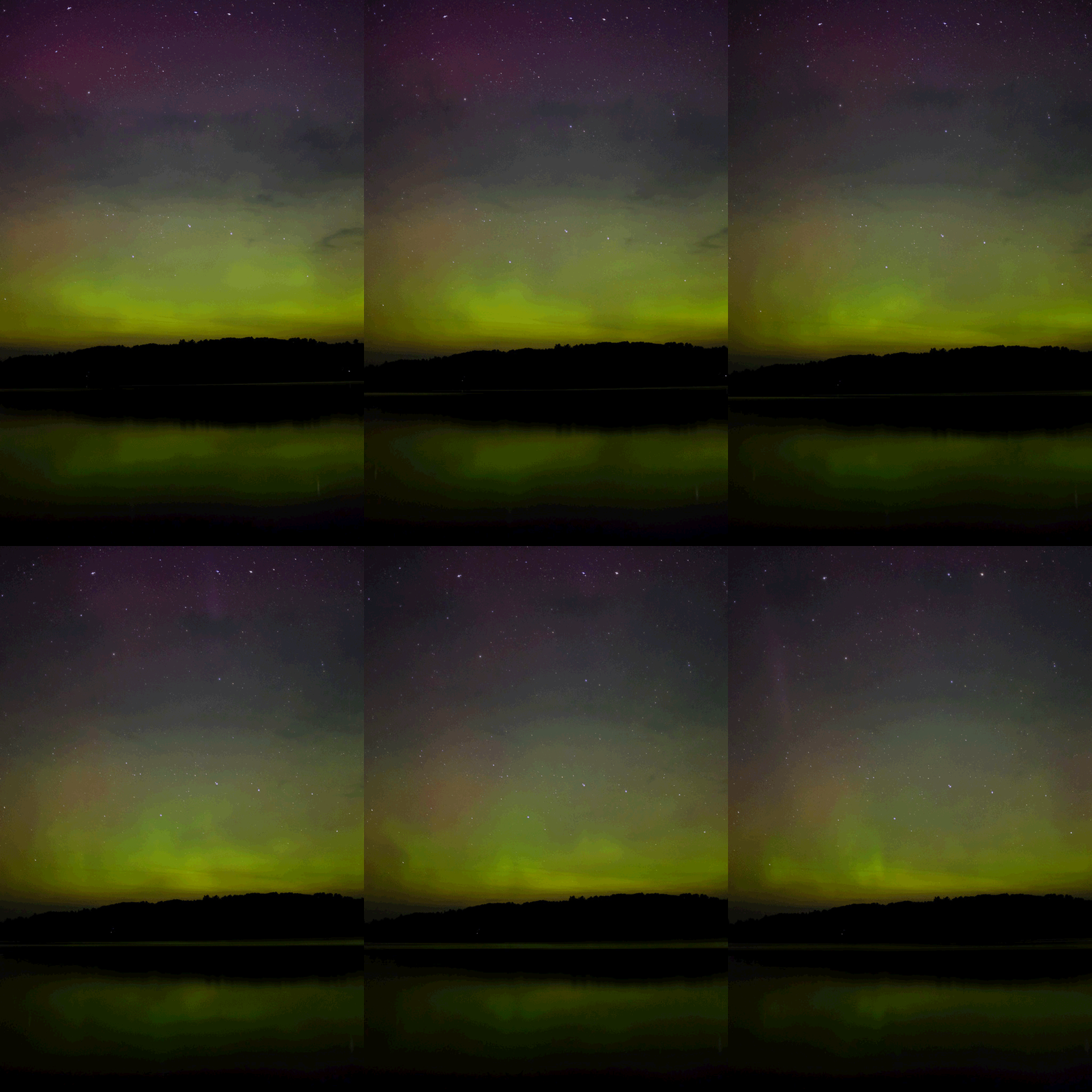
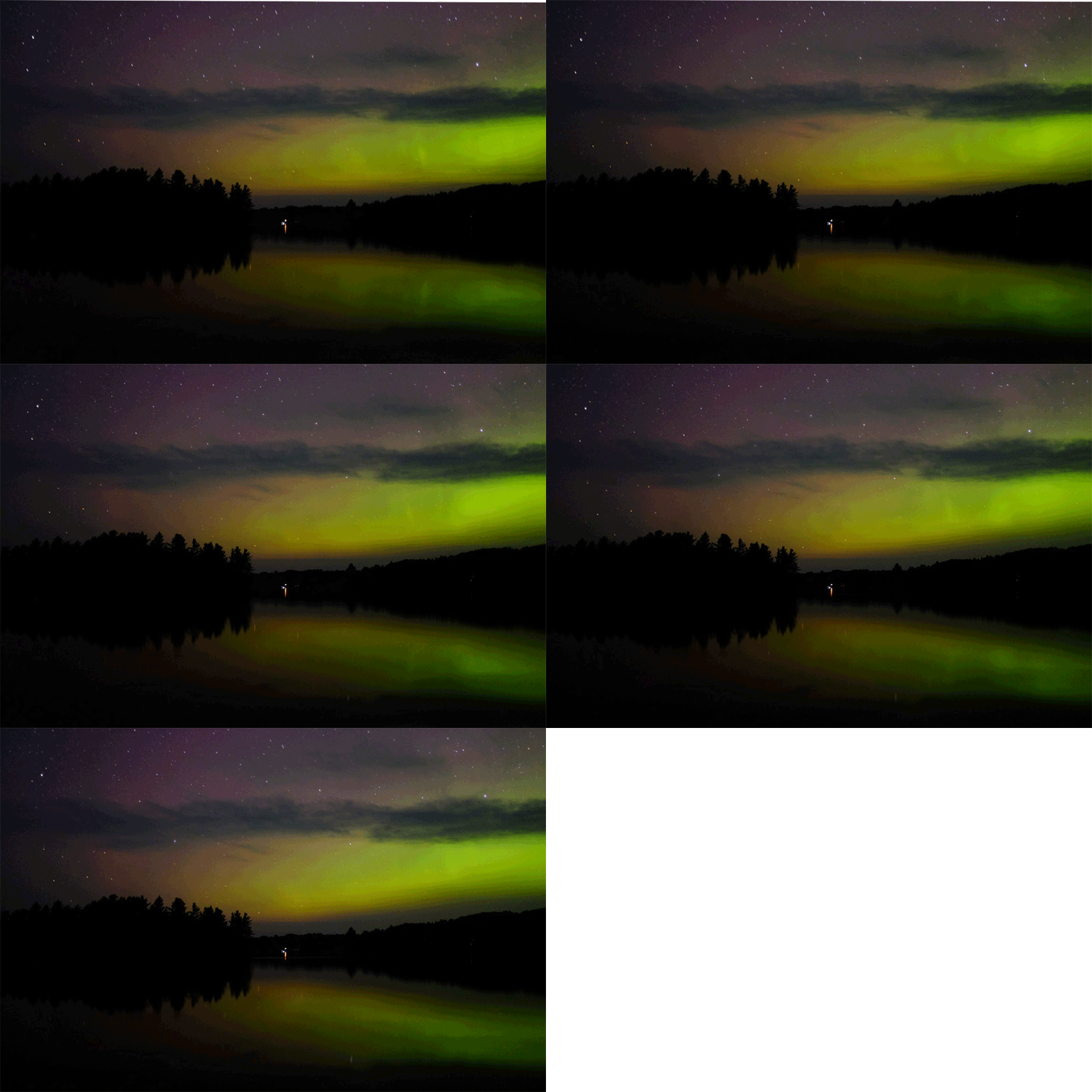
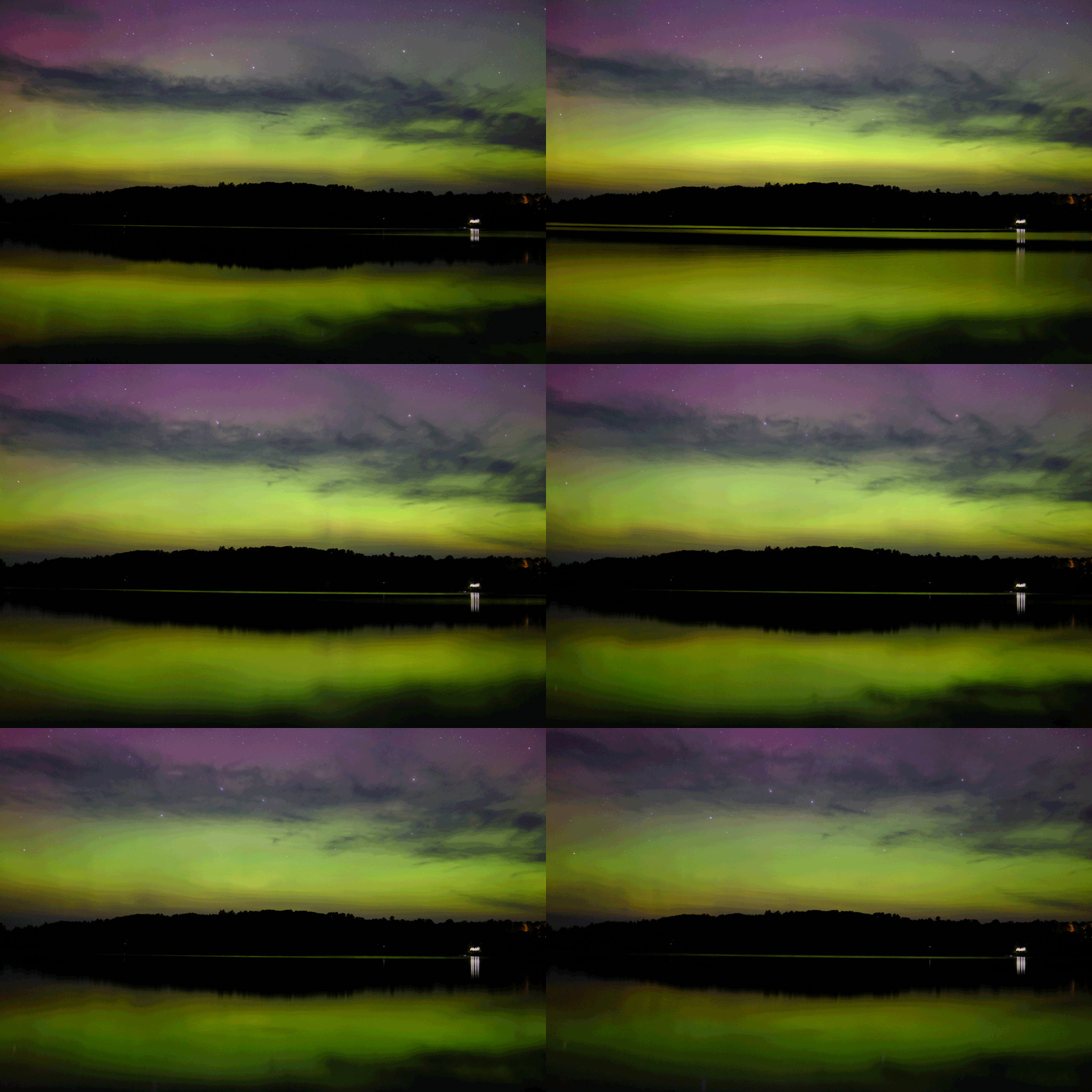
Experimenting with some long exposures with my Fuji X100S (and a stepladder and dishcloth as an improvised tripod) I was surprised to see that the vague light in the northern sky came out as brilliant colour when photographed at 1600 ISO with a 30″ exposure.

I ended up spending hours photographing the aurora. There will be high quality images soon (and animated GIF is a terribly low-quality format for something so beautiful), but I wanted to put something up right away that would show the movement of the lights.

You may need to click the thumbnail to see the animation:

Aurora Borealis from Paugh Lake, Ontario 1/3

Aurora Borealis from Paugh Lake, Ontario 2/3

Aurora Borealis from Paugh Lake, Ontario 3/3

Aside from reducing the resolution and converting them to GIF format, these images are straight from the camera, not manipulated with any sort of software.

Victor Frankenstein considers the consequences

Had I a right, for my own benefit, to inflict this curse upon everlasting generations? I had before been moved by the sophisms of the being I had created; I had been struck senseless by his fiendish threats: but now, for the first time, the wickedness of my promise burst upon me; I shuddered to think that future ages might curse me as their pest, whose selfishness had not hesitated to buy its own peace, at the price, perhaps, of the existence of the whole human race.

Shelley, Mary. 1818. Chapter 20.

Out in the Edgeworth–Kuiper belt

NASA’s New Horizons spacecraft has been returning some exciting data, after a long flight through the solar system:

This documentary provides illuminating background on the mission: The Year of Pluto.

It is much to be hoped that the New Horizons craft will be able to observe other Kuiper belt objects.