Young ice

This image from NASA is very compelling. It contrasts the average makeup of the Arctic icesheet between 1985 and 2000 with the situation this year, in terms of how old each section of ice is. Whereas the 1985 to 2000 average included a large are of ice six years or older, the entire region of multi-year ice (two years or older) is about the same size today. Between 1985 and 2000, most of the ice area was more than two years old. Now, most of it has only frozen since this past summer.

Given how cold this winter was – largely due to La Nina – this summer may be especially instructive. If we see an ice minimum similar to last year’s aberrant plummet, we will need to start worrying a great deal about the short-term viability of the icecap.

A thought experiment on free will

Rusty fence and snow

Consider the following: what we know about physics and chemistry suggests that matter and energy interact on the basis of two things – physical laws and random chance. The fact that iron oxidizes is the result of physical characteristics of energy and matter that we understand well. Similarly, our understanding of the random elements in quantum mechanics is critical to a number of optical and electronic technologies. Acknowledging that we don’t fully understand either the laws of physics or the processes of randomness, it seems plausible to say that those two factors account for all the physical interactions in the universe.

If this is true, we can imagine a hypothetical computer with the capacity to store information on the nature, position, and trajectory of every particle in a human body, as well as all the types of energy acting on them. This model would allow us to project the behaviour of that collection of molecules in the face of any stimulus, at least on the basis of a range of outcomes as determined by the random elements in physical laws. Our model human could thus be exposed to any kind of prompt – from being attacked by another simulated human to being tempted by some unguarded treasure to being betrayed by a loved one – and a range of responses could be projected, with probabilities attributed.

Now, if human beings really do consist of particles and energy governed in the manner described, the behaviour of the computer model would be in no sense different from that of an actual person. The trouble here, of course, is that the model person cannot be said to have any free will. It is just a complex machine that responds to inputs in relatively predictable ways. Where outputs are not predictable, it is because of random chance. Our model person is like a computer game where the enemy you encounter is determined by a random number generator; while the outcome for any input is not entirely predictable, the system is nonetheless completely devoid of ‘will’ in the sense that we generally understand it.

How can free will be fit into a materialist model? Is free will something that exists outside of the laws of physics? Or is there some mechanism through which a macro-level entity like a person can be said to affect the particle level interactions that define them fundamentally?

Regardless of the answer, the thought experiment raises serious questions about whether we are responsible for our actions.

[Update: 2:06pm] Tristan wrote a post in response to this.

Monbiot on British carbon capture plans

Bricks and vines

Of all the comprehensive plans I have seen to reduce greenhouse gas emissions from developed states, the one in George Monbiot’s Heat is the most ambitious. Whereas most people aim at stabilizing atmospheric GHG concentrations by 2100 or so, he thinks it must happen before 2030 is we are to avoid a mean temperature increase of more than 2°C and the very serious (potentially catastrophic) consequences such an increase would have. Part of Monbiot’s plan does involve continued use of fossil fuels, specifically the use of natural gas coupled with carbon capture and storage (CCS) for electricity generation.

While Monbiot stands behind the belief that CCS can work and can contribute to climate change mitigation efforts, he is increasingly critical of how the British government is planning to use the technology:

In principle, carbon capture and storage (CCS) could reduce emissions from power stations by 80% to 90%. While the whole process has not yet been demonstrated, the individual steps are all deployed commercially today: it looks feasible. The government has launched a competition for companies to build the first demonstration plant, which should be burying CO2 by 2014.

Unfortunately, despite Hutton’s repeated assurances, this has nothing to do with Kingsnorth or the other new coal plants he wants to approve. If Kingsnorth goes ahead, it will be operating by 2012, two years before the CCS experiment has even begun. The government says that the demonstration project will take “at least 15 years” to assess. It will take many more years for the technology to be retro-fitted to existing power stations, by which time it’s all over. On this schedule, carbon capture and storage, if it is deployed at all, will come too late to prevent runaway climate change.

He also suggests that using CO2 from power plants for enhanced oil recovery risks actually increasing emissions. On the one hand, that is because it will allow extra oil to be extracted from declining fields, which will subsequently emit CO2 when burned. On the other, he touches upon concerns that CCS using depleted oil and gas fields will not be safe or permanent enough to effectively and indefinitely sequester carbon.

As with nuclear power, the issue of timelines is critical. Even good technology, when installed at a plodding rate, could propel us into very serious danger. Even if it does prove possible to start slow and late and still make the transition to a low-carbon economy, it seems highly likely that the total costs of adjustment will be much higher: a crash-building program akin to the one undertaken by Russia after Germany turned against it during WWII, rather than an economically optimal trajectory towards a low-carbon global economy.

Cooperation tipping points?

Bike wheel in snow

All regular readers of this blog will be familiar with the idea that there are physical tipping points in the climate system: places where one additional unit of warming produces much more harm to people and natural ecosystems than the previous units did. Politically, it is worth considering the possibility that another kind of tipping point exists, namely one beyond which the willingness of various actors to cooperate on climate change alters dramatically on the basis of some critical increment of climate change effects.

It’s possible that the effect could be one of rallying – the world suddenly realizing the seriousness of the issue and thus taking immediate action. States previously obsessed with exactly who should pay how much and exactly what timeline should be followed might just buckle down and do what needs to be done. A fair number of people seem to think that only a pretty substantial disaster will make the threat of climate change sufficiently concrete for enough people for the hard work of stabilization to begin.

The other possibility (mentioned here) is that the world will pass from hesitation and avoidance of the issue directly into conflict, accusation, and counter-productive action. Severe climatic impacts could drive states and individuals to focus on their own short term internal and external security, rather than making serious efforts to address the root of the problem. This is a classical prisoner’s dilemma scenario and, unless it flips to a state of desperate cooperation once things got really bad, it could push the world across the physical thresholds that are so worrisome.

In any case, it is as necessary to be aware of the existence of hidden feedbacks within public sentiment and government planning as within ecosystems or patterns in air and water currents. Of course, that just adds additional uncertainty to a very threatening brew.

More evidence from the cryosphere

A new study of 100 glaciers has shown that ice loss in 2006 was unprecedented. Between 1980 and 1999, average rates of loss were 30cm per year. In 2006, 1.5 metres were lost.

Overall, the data is not encouraging:

During 1980-1999, average loss rates had been 0.3 metres per year. Since the turn of the millennium, this rate had increased to about half a metre per year.

The record annual loss during these two decades – 0.7 metres in 1998 – has now been exceeded by three out of the past six year (2003, 2004 and 2006).

On average, one metre water equivalent corresponds to 1.1 metres in ice thickness. That suggests a further shrinking in 2006 of 1.5 actual metres and since 1980 a total reduction in thickness of ice of just over 11.5 metres or almost 38 feet.

Glaciers play a critical role in the fresh water cycle. They help to conserve winter snowfall, contributing to river flow in summer. They also affect patterns of downwind precipitation, especially past the Himalayas.

In his infamous address to the White House Press Corps, Stephen Colbert joked about how “your grandchildren will have no idea what a glacier is.” If these trends persist, that might be an accurate prediction.

Space-related fatalities

I never appreciated just how hazardous spaceflight really was. Everyone knows about the Challenger, Columbia, and Apollo 13 disasters. Many people know about Apollo 1. I doubt anyone reading this is aware of all of these. Soyuz 23, for instance, crashed through the ice of Lake Tengiz and had the crew saved only through an elaborate underwater rescue. Apollo 12 was struck by lightning during launch and would have been destroyed if disabled computers in the crew compartment hadn’t had backups in the rocket itself.

Of the 439 people who have been strapped into a vehicle intended to eventually go into space, 22 (5%) have died as a result. American astronauts were statistically about four times as likely to die as their Soviet counterparts, though that is partly a result of how the large crew of the Space Shuttle means a catastrophic accident kills seven people. The Space Mirror Memorial in Florida commemorates Americans who have died in the space program; their cosmonaut contemporaries are buried in the Kremlin Wall Necropolis. No Russian has died in relation to space travel since the fall of the Soviet Union, so it is unclear how they would be memorialized now.

Evolution and Ben Stein

Rusty bike parts

It is always surprising when a seemingly intelligent person adopts a hopelessly indefensible position. This seems to be the case with Ben Stein’s new anti-evolution movie. It is still possible to argue that some kind of deity must have created the universe. What is not possible is to argue convincingly against the central elements of the theory of evolution: namely how mutation and selection drive change and how all life on earth is descended from a common ancestor. There is simply too much evidence for both claims, and it is too good:

  1. The fossil record shows overwhelming evidence for a branched tree of life, connecting existing organisms to ancient ones that preceded them.
  2. Comparative embryology provides good anatomical evidence of both evolution and common descent.
  3. Concrete examples of evolution on human timescales can be easily found. These include plant domestication, moths that darkened in response to coal soot, and antibiotic resistant bacteria.
  4. The geographic distribution of species provides evidence for speciation and adaptation to new biological niches.
  5. Both nucleic and mitochondrial DNA provide excellent evidence for both common descent and evolution through selection.
  6. Common aspects of biochemistry are demonstrative of both claims: especially those features which are arbitrary yet consistent among living things

I haven’t seen the film, and it probably argues something more sophisticated than “the world is 6,000 years old and every creature that has ever lived is alive now, in the exact form in which it was created.” Even so, it is depressing to see someone commonly associated with intelligence fuelling a false debate centred around ignorance.

There are certainly many incredible mysteries that remain in biology – including many of the details on how evolution functions and has proceeded. Similarly, a questioning attitude is essential to scientific advancement. Those things freely admitted, purporting to challenge things with so many strong and independent collections of evidence supporting them is much more likely to retard the advancement of human knowledge than it is to advance it. This is especially true when a contrived debate runs the risk of forcing sub-standard education on children.

Climate change ‘delayers’

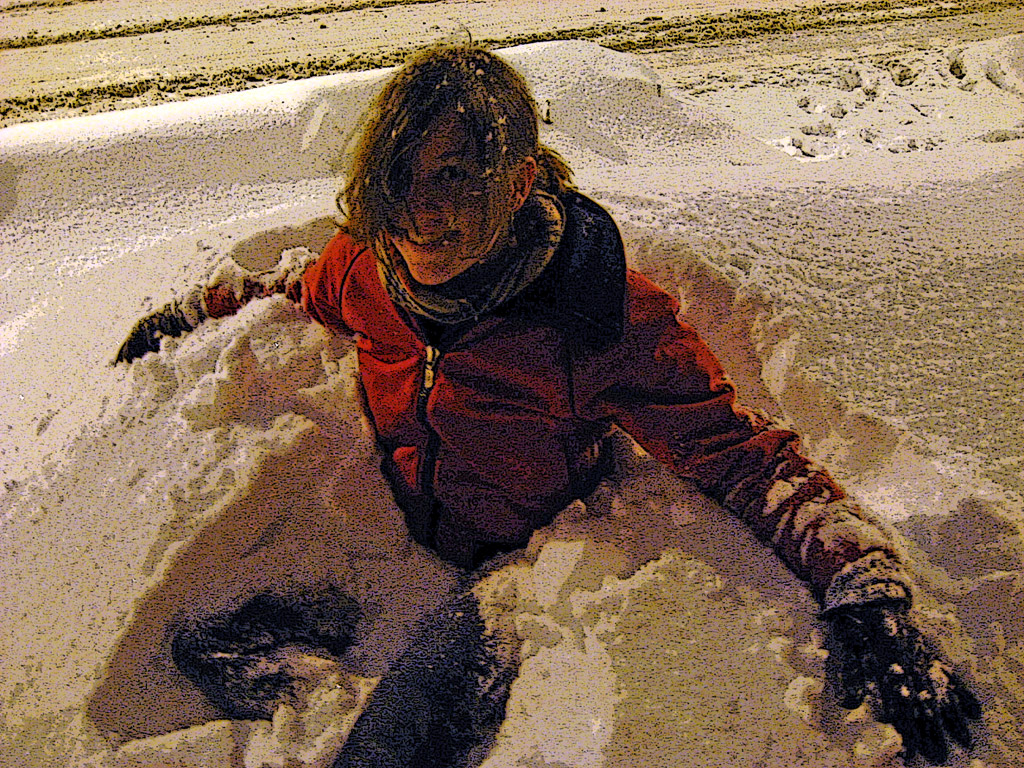
Emily Horn in the snow

There is a good post over at Grist on the proper nomenclature for what are generally called ‘climate skeptics’ or ‘climate deniers.’ It argues that calling them skeptics is inaccurate, since they don’t actually treat information with skepticism:

Skeptics can be convinced by the facts, but not the delayers [the author’s preferred term]. Skeptics (and real scientists) do not continue repeating arguments that have been discredited. Delayers do. Skeptics believe in science, in well-tested theories backed up by real-world observations, but delayers do not.

“Denier” is also problematic, both on its own and as a half-reference to Holocaust deniers. This is both because they don’t generally outright deny the existence of climate change and because their ‘denial’ concerns something ongoing, on which action must be taken, rather than something that has already passed.

The piece makes some good points about the state of the discussion:

By calling them “deniers” we are making the focus of our response the climate science; we are fighting on their turf, so they still win. In fact, the science has long since passed the realm in which the delayers try to debate it. The key question for humanity today is not whether human-caused global warming does or does not exist — it is not even whether human-caused global warming is a serious problem. It is already past a serious problem. The only serious question facing the human race now is whether we will act strongly enough and quickly enough to avert a catastrophe that is both beyond historical comparison and probably irreversible for centuries, if not millennia.

Despite the unambiguous nature of the science, that really doesn’t seem to be the understanding that is dominant within popular culture. It is not clear whether additional scientific evidence or reports would ever change that. As such, the kind of rhetorical arguments that this post is addressing have considerable importance.

In general, I see good reasons for using the term ‘delayer’ but, unless it catches on fairly widely, it will always be necessary to explain it. I plan to do so by linking back to this post.

Project BudBurst

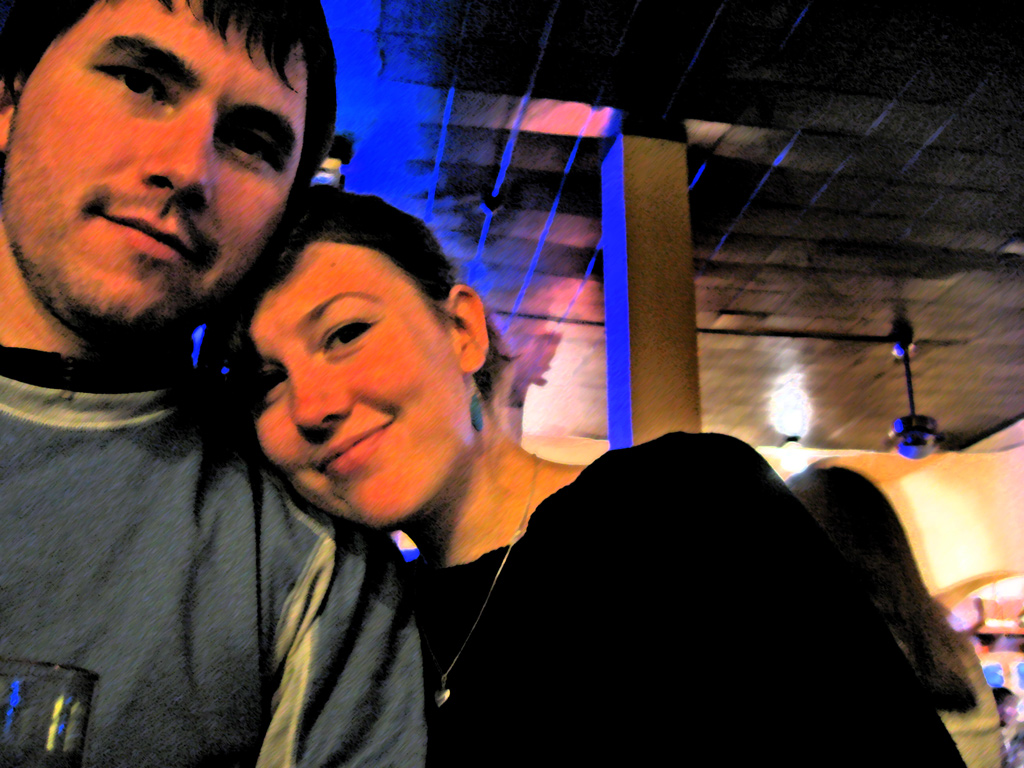
Emily Horn and Milan Ilnyckyj

Project BudBurst is an interesting initiative aiming to collect data on plant behaviour using scores of volunteers. The ‘citizen scientists’ are to record phenomena such as the “first bud burst, first leafing, first flower, and seed or fruit dispersal of a diversity of tree and flower species, including weeds and ornamentals.” All in all, the project is meant to provide useful data on climate change and the effect it is having on plant life.

To have much value, such a project would need to be maintained for many years. That’s the only way year-to-year random aberrations in weather can be isolated from genuine climatic trends. That said, it could be a valuable source of information on how plants are responding to changes in the global environment. Other studies have already shown that the ranges inhabited by plants and animals are shifting in response to changes in temperature and precipitation. What is most interesting is what happens when those gradual changes encounter an obstacle: when creatures moving upslope towards colder air find themselves at the top of the mountain, or when plants flowering earlier miss the time when the insects pollinating them are active.

At present, the project only covers the continental United States. It aims to track 30 native trees/shrubs, 24 native wildflowers, 3 common exotic weeds, 2 common exotic ornamentals, and all of the U.S.A. National Phenology Network calibration species. The Woodland Trust does similar work in the United Kingdom.

You are very safe

Glancing through news stands and television reports, a person is likely to see all manner of terrible hazards highlighted: from kidnapping to toxic chemicals leached from Nalgene bottles. It is worth remembering – in the face of this onslaught – that we are about the safest people who have ever lived. Hunger and infectious disease kill hardly any Canadians. Violence kills some, but fewer than in just about any society ever. And yet, too many people live in fear.

Maintaining perspective is vital. Let your children play in the park, even though one or two children in the whole country get kidnapped from there annually. Let them build treehouses, even though some tiny subset of Canada’s population contracts tetanus.

Refusing strengthens the significant possibility that they will live sedate and uninteresting lives.