New UNEP report: ‘In Dead Water’

This blog has documented a number of the most important threats facing fisheries and marine ecosystems, including over-exploitation, ocean acidification, harmful fish farming practices, invasive species, and climate change. A new report (PDF) put out by the United Nations Environment Program does a good job of summarizing all of these, as well as providing a good overall picture.

Major conclusions of the report make for sober reading:

  1. Half the World catch is caught in less than 10% of the ocean
  2. With climate change, more than 80% of the World’s coral reefs may die within decades
  3. Ocean acidification will also severely damage cold-water coral reefs and affect negatively other shell-forming organisms
  4. Coastal development is increasing rapidly and is projected to impact 91% of all inhabited coasts by 2050 and will contribute to more than 80% of all marine pollution
  5. Climate change may slow down ocean thermohaline circulation and continental shelf “flushing and cleaning” mechanisms crucial to coastal water quality and nutrient cycling and deep-water production in more than 75% of the World’s fishing grounds
  6. Increased development, coastal pollution and climate change impacts on ocean currents will accelerate the spreading of marine dead zones, many around or in primary fishing grounds
  7. Over-harvesting and bottom trawling are degrading fish habitats and threatening the entire productivity of ocean biodiversity hotspots, making them more vulnerable to climate change
  8. Primary fishing grounds are likely to become increasingly infested by invasive species, many introduced from ship ballast water
  9. The worst concentration of cumulative impacts of climate change with existing pressures of over-harvest, bottom trawling, invasive species, coastal development and pollution appear to be concentrated in 10–15% of the oceans concurrent with today’s most important fishing grounds
  10. A lack of good marine data, poor funding for ocean observations and an ‘out of sight – out of mind’ mentality may have led to greater environmental degradation in the sea than would have been allowed on land
  11. Substantial resources need to be allocated to reducing climate and non-climate pressures. Priority needs to be given to protecting substantial areas of the continental shelves. These initiatives are required to build resilience against climate change and to ensure that further collapses in fish stocks are avoided in coming decades

There is still some debate about which generation will experience the first reeling blows from climate change. It is increasingly clear that the young people of today will be alive to see the collapse of the world’s fisheries and coastal ocean ecosystems.
97-day West Antarctic expedition

Fire escape and red bricks

Not content with data from satellites, a group of British researchers made the trek to the remote Pine Island Glacier in order to gauge whether climate change is accelerating its flow into the sea. The team is only the second group of humans to ever visit the area, following a brief visit by American scientists in 1961.

The Pine Island Glacier comprises about 10% of the West Antarctic Ice Sheet which, along with Greenland, represents the largest plausible contributor to sea level rise. The total melting of this one glacier would raise global sea levels by 25cm. The melting of the entire region of West Antarctica where it is located would contribute 1.5m.

Experiments performed included an examination of the ice structure using towed RADAR and the use of small explosions and geophones to identify soft sediments that might be lubricating the flow of the glacier. GPS receivers have been left behind to perform additional precise tracking. Their central conclusion is a significant acceleration of the glacial flow, compared with the 1% flow rate that satellite measurements tracked during the 1990s:

“The measurements from last season seem to show an incredible acceleration, a rate of up to 7%. That is far greater than the accelerations they were getting excited about in the 1990s.”

Since air temperatures in Antarctica have not risen significantly (as predicted by all General Circulation Models), it is plausible that the acceleration is the result of warmer sea currents.

Some component of the melting could be the result of geothermal activity. If so, it would continue to some extent even after global greenhouse gas concentrations were stabilized and their full consequences have been manifest through the climate system. Of course, the lower that concentration, the greater the chance that West Antarctica’s glaciers will be able to endure.

Nicholas Stern video

Emily kindly sent me a link to the video of Sir Nicholas Stern’s presentation in the Examination Schools at Oxford in February of 2007. I was lucky enough to attend in person; I even got to speak with him at the exclusive reception afterwards. My notes are on the wiki. This is your chance to compare a verbatim record of the talk with my notes and thus determine my particular strengths and failings as a note taker.

The talk is well worth watching, not least because Stern is obviously very well informed and quite a capable speaker. His report is fully deserving of its status as the seminal discussion of the economics of climate change.

Garnaut Review interim report

The Stern Review – released in October 2006 by the British Government – is generally considered the most authoritative source on the economics of climate change. Among other things, it concludes that the cost of reducing global emissions is significantly less than the probable costs associated with letting climate change continue on its present course. Now, Australia has released a similar assessment, in the form of the Garnaut Climate Change Review.

Only the interim report is available so far, but it’s likely to make interesting reading for Canadians concerned about climate change. In many ways, the Canadian economy is more similar to that of Australia than it is to that of England. As such, this report may offer some especially useful insights.

P.S. I have some notes from a lecture Stern gave in Oxford.

Recovering encryption keys from RAM

Rusty icy truck

Most successful attacks against strong, well-designed encryption take the form of ‘side channel’ attacks: ones that aren’t based on breaking the strong cryptographic algorithm, but which are based or circumventing it or subverting it somehow. Common varieties include timing attacks, which examine the precise amounts of time cryptographic equipment or software takes to perform operations, and power monitoring attacks, which examine which parts of a piece of equipment are using energy when.

Researchers at Princeton have recently uncovered a potentially significant side-channel attack against whole-disk encryption systems like BitLocker (built into Windows Vista), FileVault (same for Mac OS X), and Truecrypt. The attack is based on analyzing the random access memory (RAM) of a computer system once it has been turned off. Despite the common perception that this clears the contents of the RAM, they have demonstrated that it is possible to use simple techniques and equipment to get a copy of what is inside: including the cryptographic keys upon which these programs depend:

We found that information in most computers’ RAMs will persist from several seconds to a minute even at room temperature. We also found a cheap and widely available product — “canned air” spray dusters — can be used to produce temperatures cold enough to make RAM contents last for a long time even when the memory chips are physically removed from the computer. The other components of our attack are easy to automate and require nothing more unusual than a laptop and an Ethernet cable, or a USB Flash drive. With only these supplies, someone could carry out our attacks against a target computer in a matter of minutes.

This is bad news for anyone relying on encryption to protect the contents of their laptop: whether they are a banker, a spy, a human rights campaigner in China, or a criminal. Other technologies exist to help foil whole-disk encryption systems when the attackers are lucky enough to find a computer that is turned on and logged in.

Researchers in the same organization have done some good work on electronic voting machines.

Stirling engines in space

During the course of several past discussions on energy efficiency, the issue of Stirling engines has arisen. These machines convert temperature gradients into usable kinetic energy which can be used to drive machinery or generate electricity. According to an article in this month’s Scientific American, they have found a new use. NASA is phasing out the radioisotope thermoelectric generators (RTGs) that have been used to power some space missions in favour of the older and non-radioactive technology.

RTGs work by using plutonium 238 decay to heat a thermocouple, which then produces usable current. The Stirling based system still uses plutonium decay for energy, but uses the heat more efficiently. The plutonium-Stirling combination is about 25% efficient at converting heat to electricity, compared to 6-7% for a conventional RTG. A prototype constructed by Lockheed Martin uses two Stirling engines to drive a generator and produce 100 watts of power. The unit that does so is about 1m long and 30cm wide, weighing 20kg – half as much as an RTG.

Extrapolating from space technology to more mundane uses is generally hazardous – for instance, satellites have solar panels with 35% efficiency, but they cost millions of dollars. That said, the technology does demonstrate that Stirling engines have a role to play in increasing efficiency in some circumstances.

Colour-shifting cephalopods

As discussed in comments previously, one of the coolest thing about octopodes and cuttlefish is their ability to camouflage themselves and otherwise control the pigmentation of their skin. An article from today’s New York Times discusses the phenomenon. The creatures certainly have some neat tricks:

Dr. Hanlon has watched octopuses perform what he calls the Moving Rock Trick. They assume the shape of a rock and move in plain sight across the sea floor. But they move no faster than the ripples of light around them, so they never seem to move.

The article also describes forms of visual deception used against other cuttlefish. Apparently, there are situations where a male cuttlefish “disguises its skin to look female, he can sneak up to the guarded female and mate. The sneaky male’s disguise may be so good that the other male may try to guard him as part of his harem.” An impressive and cunning trick, for any species.

Crystals for improved CO2 separation

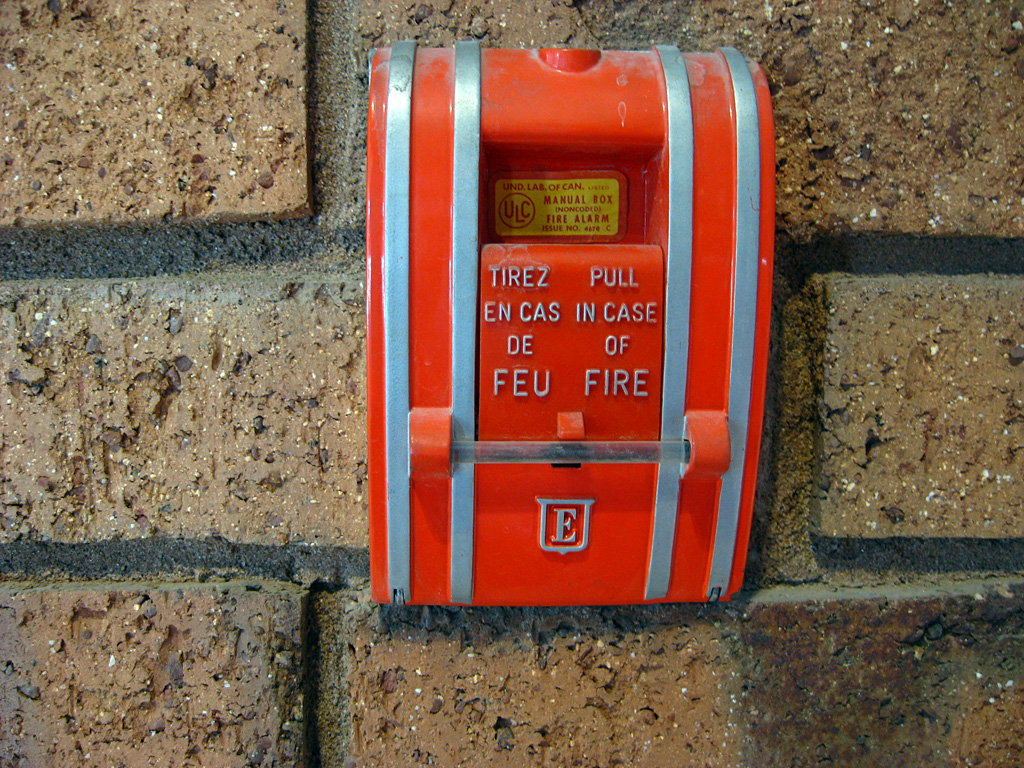
Fire alarm pull switch

One should always be cautious about noisy announcements regarding climate related technologies. The mainstream media is all-too-willing to repeat them without much investigation or consideration. That said, there is every likelihood that concern about climate change (and increasingly stringent regulations) will produce dramatic breakthroughs in climate relevant technologies. One area in which that could occur is in relation to carbon capture and storage. At present, this is quite an energy intensive process, largely because of the difficulty of separating CO2 from the other flue gasses being produced by a power plant or factory. Some new research suggests that zeolitic imidazolate frameworks could do this much more efficiently than the amine scrubbers currently being tested.

The authors suggest that these crystals could be and inexpensive and durable way to isolate CO2 for sequestration. Their central conclusions about the materials sound promising:

Members of a selection of these ZIFs (termed ZIF-68, ZIF-69, and ZIF-70) have high thermal stability (up to 390°C) and chemical stability in refluxing organic and aqueous media. Their frameworks have high porosity (with surface areas up to 1970 square meters per gram), and they exhibit unusual selectivity for CO2 capture from CO2/CO mixtures and extraordinary capacity for storing CO2: 1 liter of ZIF-69 can hold ~83 liters of CO2 at 273 kelvin under ambient pressure.

If so, they could help reduce the costs associated with installing and operating CCS equipment – a particular boon given the likelihood that coal use will remain a feature of many economies and some processes – like concrete manufacture – are extremely hard to decarbonize.

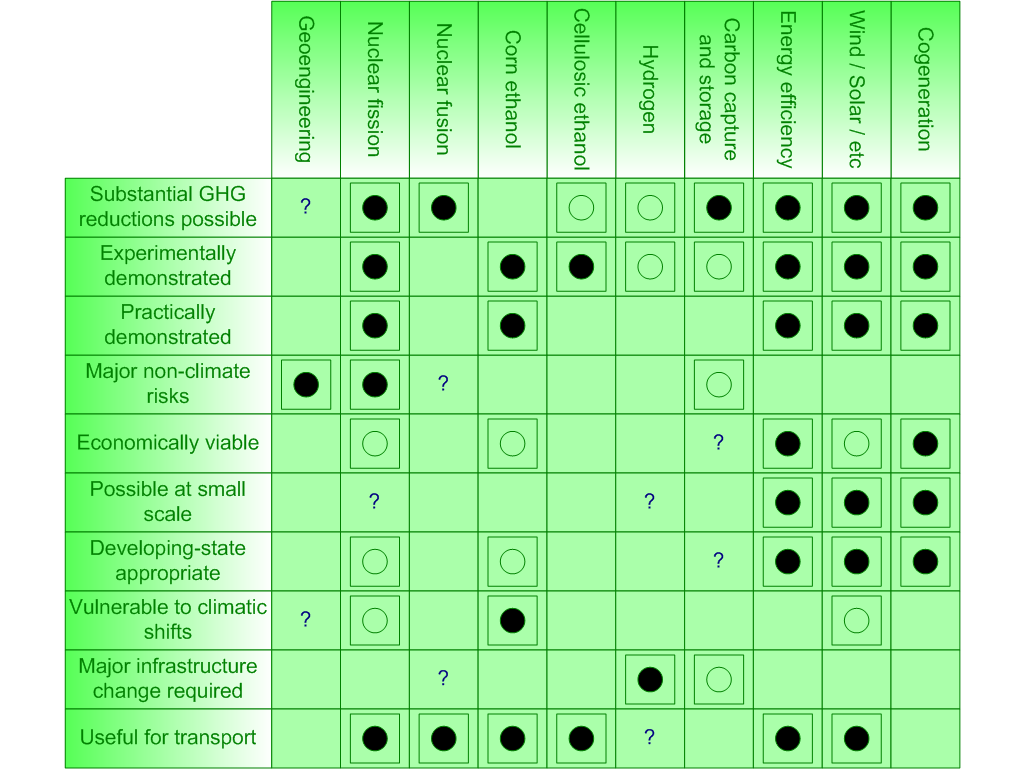
Technological options for mitigation

Climate change mitigation technologies

Black circles indicate a definite ‘yes,’ whereas hollow ones denote a partial ‘yes.’ For instance, it isn’t entirely clear whether nuclear fission can ever be economically viable in the absence of government subsidies. Empty squares denote a probable ‘no’ while question marks indicate situations too uncertain to render any judgment upon.

A few of these technologies are so speculative that it is hard to make a decision. That said, this is probably a relatively good summary of the state of the debate at the moment.

GHG stocks, flows, and climate change

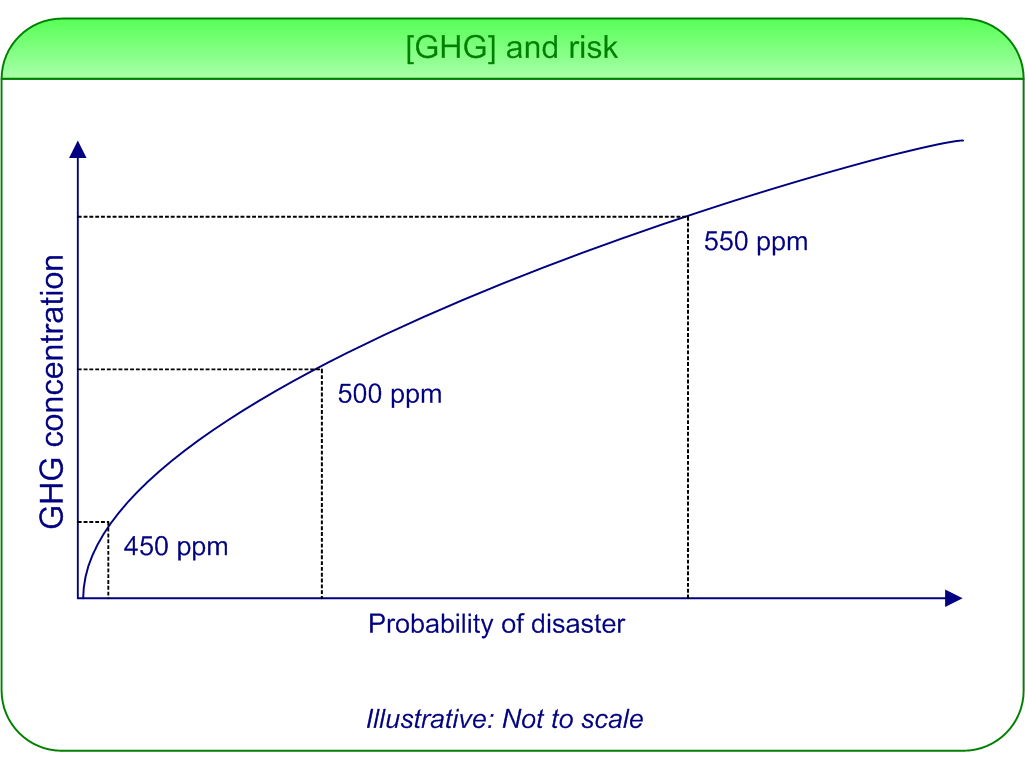
Risk of disaster and greenhouse gas concentration

[Update: 22 January 2009] Some of the information in the post below is inaccurate. Namely, it implies that some level of continuous emissions is compatible with climate stabilization. In fact, stabilizing climate required humanity to have zero net emissions in the long term. For more about this, see this post.

On this blog, I have frequently cited a figure of about 750kg of carbon dioxide per person per year as sustainable. This is just what you get when you divide the approximate level of sustainable emissions (about 5,000 megatonnes) by the number of people alive on Earth. If each person emitted that much, the net radiative forcing effect of anthropogenic emissions would be approximately zero. That means the sum of the concentrations of all greenhouse gasses, multiplied by their global warming potential, would be in balance with the capacity of the planet to absorb those gasses.

Of course, suddenly achieving the transition to 750kg each would be extremely painful. Thankfully, achieving it instantly is not necessary. Right now, the atmospheric concentration of carbon dioxide (the most important greenhouse gas) is about 383 ppm. That compares with 280 ppm at the time of the Industrial Revolution. Scientists disagree about how much that concentration can rise before extremely harmful effects start to manifest themselves. The highest number generally suggested by reasonable people is 550 ppm, a more mainstream figure is 450 ppm, and some people even argue that we have already emitted enough that very harmful effects are inevitable, once lags in the climate system are overcome. At present, unsustainable global emissions are increasing the global concentration of carbon dioxide by about 2 ppm a year.

Acknowledging the uncertainty, let’s take 450 ppm as a best guess. That means we have about 67 ppm of shoulder room left. It is vital to note that this isn’t shoulder room for total emissions to rise; in the long run, they absolutely must fall dramatically. It is shoulder room in which we can keep emitting above unsustainable levels without wrecking the planet. The situation is akin to being in a lifeboat in a hot, dry climate with a barrel of water and a solar still that produces a small amount of water per day. The 750kg each is the output from the still. The 67 ppm is approximately how much we have left in the barrel. The question now becomes how to divide it. Here are some possibilities:

  1. Continued unsustainable emissions in the developed world
  2. Continued and increasing unsustainable emissions in the developing world
  3. Additional security against abrupt or runaway change

We also have a choice about how to divide the use of barrel water across time. We might decide to drink lots of it in the early days, leaving less for later on. We might decide to save as much as we can. Of course, our capacity to do the latter is somewhat limited by the tragedy of the commons. It’s like there are a whole bunch of strangers in the lifeboat and any one can drink from the barrel without the others being able to stop them. You might end up with everyone trying to grab all they can early, even if saving most of the water for later would produce the best outcome for everyone.

Will we be able to find a way to moderate how much each person takes from the barrel? How much should we be willing to suffer in able to conserve some water for the future, or as a hedge against the possibility that 450 ppm is actually too high? These are among the toughest and most pressing questions in global climate change policymaking.