
First night in the woods with the Savage Industries bedroll (v2)

My friend Natalia made a suggestion that gave me a 24 hour respite from the misery of finding a room in Toronto, and we went back to the Hemlock forest near Catchacoma for an overnight camp.

One great thing about short visits to a place that has a brief and easy walk between where we parked and where we camped is that it allows for pretty quick and low-risk evaluation of gear for backpacking and camping. It’s feasible to bring two of something and try both, and not that bad if you only bring one version of something and it doesn’t work.

I have been so happy with my Savage Industries EDC ONE bag that even though I can’t say I ever had “buy a bedroll” on my to-do list, when I saw that they had made one I was curious about it. I have been very pleased with their stuff in the past and I know it sells out fast, so when they issued a second release I ordered one in time to have it to show off at this week’s bluegrass / hike planning evening.

Before leaving, it seemed like a bit of a questionable camping item when a lot of people live some version of the ultralight philosophy. Just the bedroll weighs 4 pounds, and it rolls up into a package bigger than my tent or sleeping bag.

The design justified itself in the field for sure. It has waterproof sailcloth on the outside and a good warranty, so I felt fine about putting it down on little sticks and stones that I would move away from the area under my thin-floored tent. The wool platform was great to rest on after the hike in, and to watch the clouds from. At night, it was a great venue for stargazing, and I expect it will be good for tent-free “cowboy camping” later in the season.
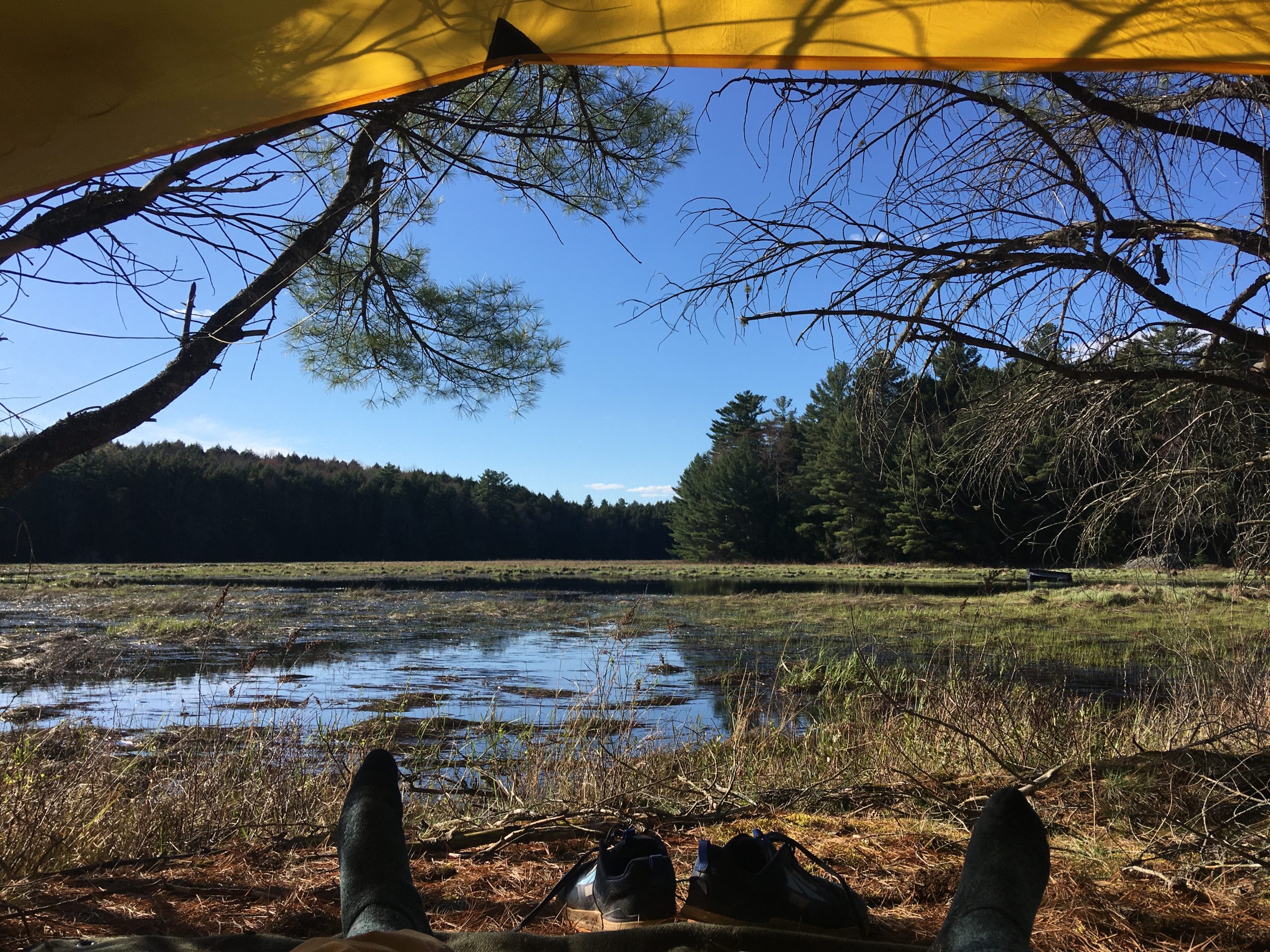
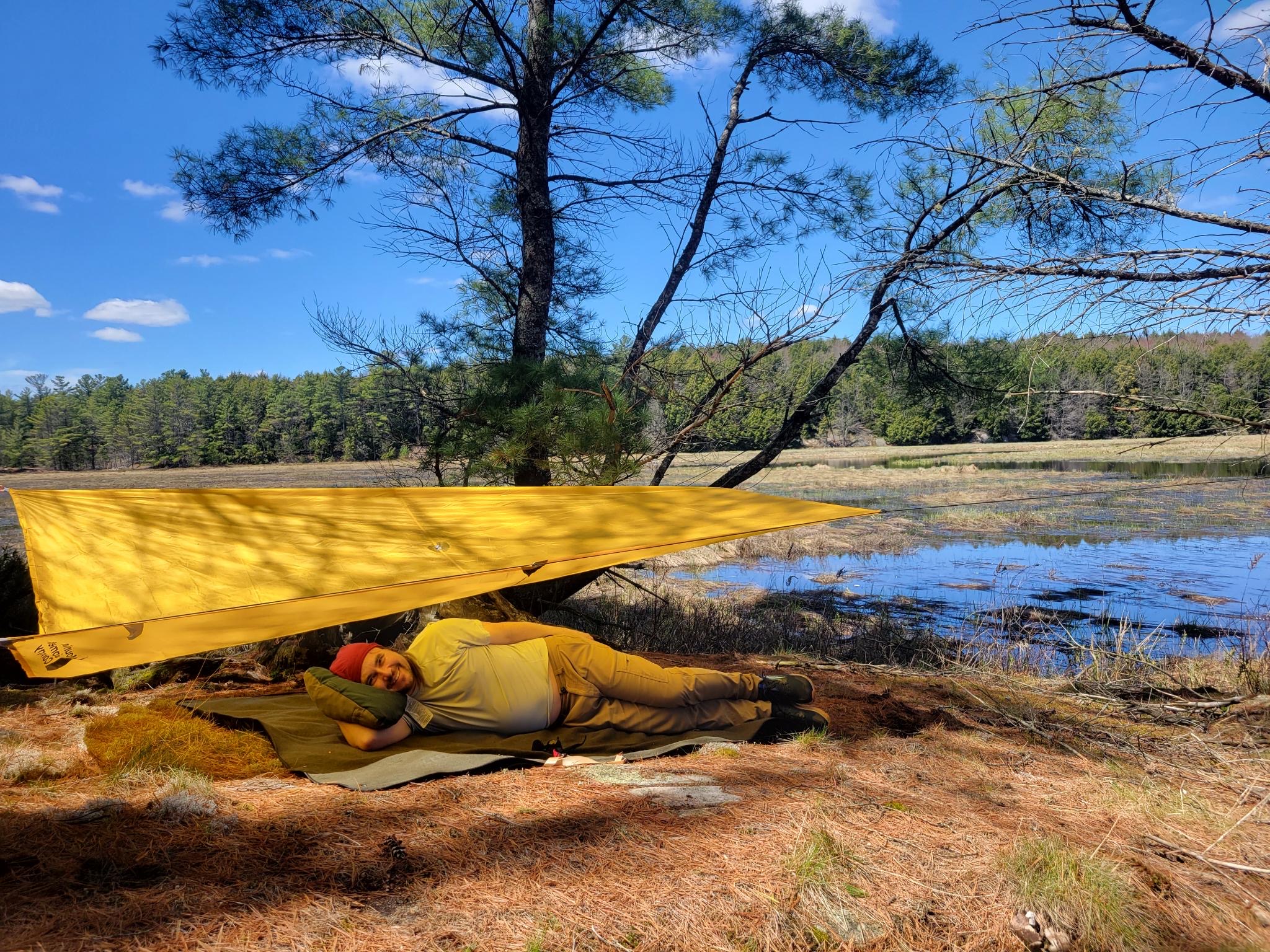
Back in my tent — where on the last trip I spent all night curled at the bottom of my sleeping bag and shivering for warmth — I followed Natalia’s advice to put the bedroll above and below my light sleeping bag. In that configuration, I was warm with my sleeping bag unzipped until after dawn, and then warm with the bag zipped and light clothes on after. Note, however, that we had -11 ˚C and -9 ˚C nights last time, compared with +5 this time. (Though last time, I also used a fleece sleeping bag liner which I never had to pack this time, and slept in all my clothes rather than light PJs.)

One more nice unanticipated feature emerged when we were breaking camp: the bedroll is large enough to use as a soft, dry, and debris-free place to roll up my tent. Being able to pack up a tent clean saves times and annoyance, reduces the odds of needing to unpack it later in the day to dry or clean it, and probably extends the life of the tent.

For the hike out, I even discovered that the integrated straps on the bedroll can be passed through two loops that were already there at the bottom of my pack. The bedroll still needs to be tied so that the middle doesn’t slide out of the roll, but the bedroll is nevertheless quite feasible to carry attached to the outside and bottom of a pack.
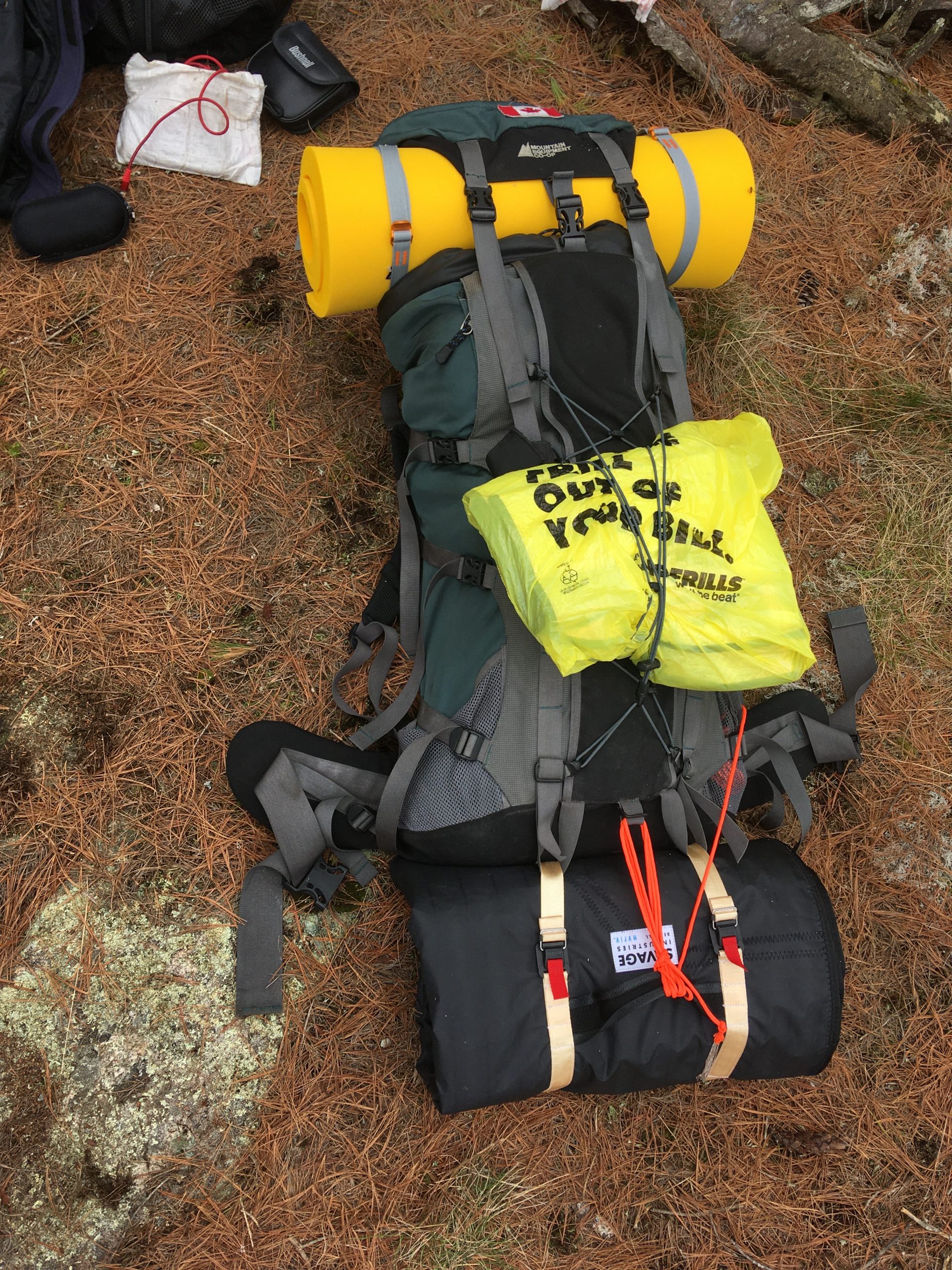
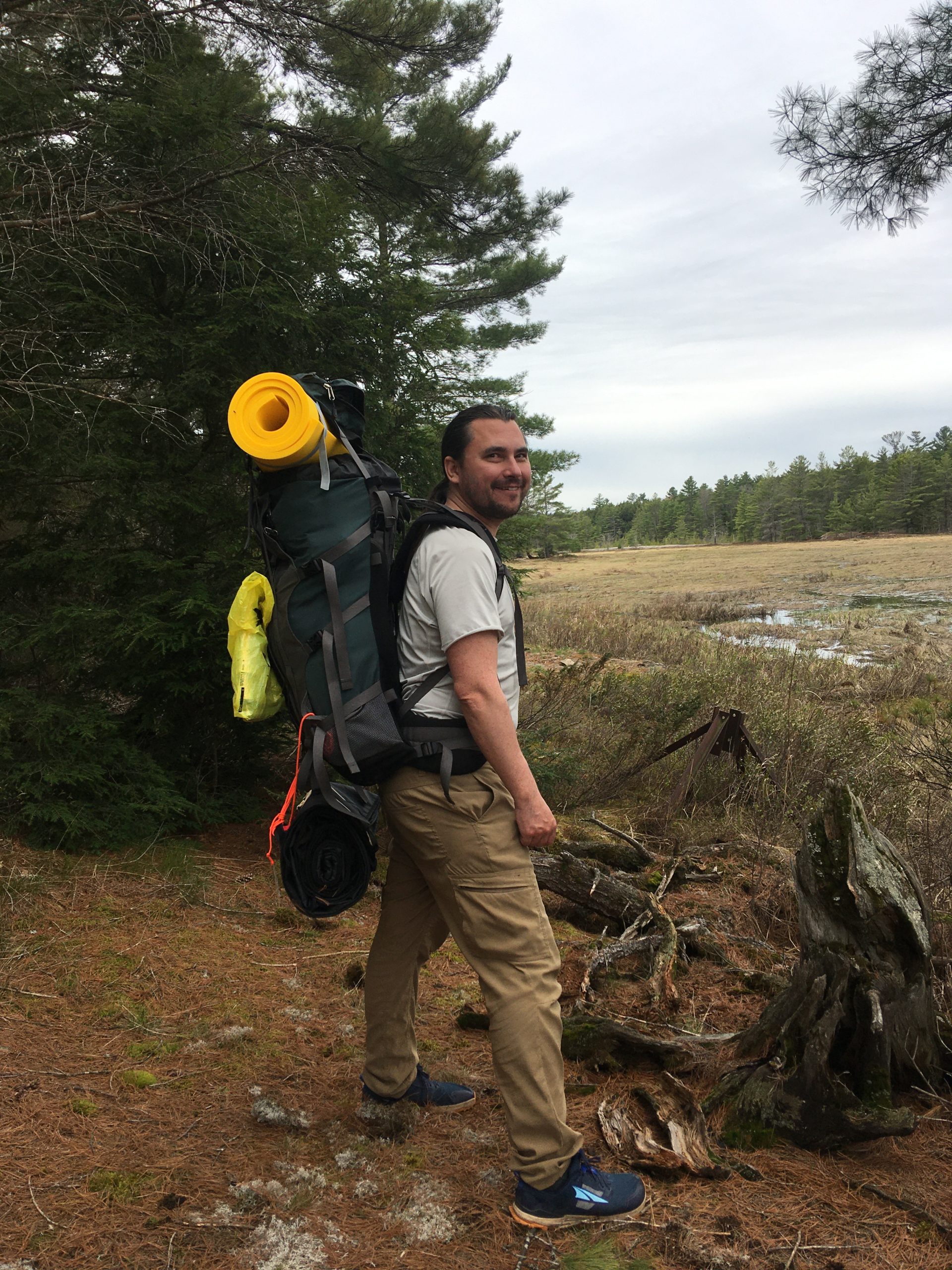
I probably would not carry it on a thru hike of thousands of kilometres, but it seems great for trips like this one plus picnics and Hive games in the park.

Review: Savage Industries / Mafia Bags EDC ONE

I’m a big fan of former Mythbusters host Adam Savage — his enthusiasm and curiosity, dedication to making the most impressive and beautiful things he can, and his entertaining thoughts and storytelling style.

Fairly shortly after learning that he had designed a shoulder bag for Every Day Carry (EDC), I ordered a Savage Industries EDC ONE in March 2020 for US$225. I have used it nearly every day since, and in my view it is superbly designed and functional both as an urban commuter shoulder bag and a bag for outdoor exploration and long-distance urban walking.

I got the model with the original concept of an all-white interior and exterior. The idea for the white interior is brilliant — “first order retrievability” where the absence of pockets and the ability to see everything in the brightly-lit interior means everything is easily found and nothing gets lost in a sub-pocket because it is not visible with the bag open. I have found this very effective. Inside I carry a Klein Tools 55470 Utility Bag in Orange/Black to hold my keychain and SAK as well as my wallet. Those are the only things that ever go there, and those are the only places those things go, so a momentary glimpse at the bag confirms that I have my wallet and keys. The Klein pouches are deigned to be tough enough to hold tools, so I don’t need to worry about the sharp edges of my keys cutting other things in the bag or the upcycled sailcloth of the EDC ONE itself.

Speaking of the sailcloth, both its toughness and its water resistance are excellent. I routinely carry books and electronics in the bag without fear that even heavy rain will get past the sailcloth and tough (but not indestructible, if you overfill the bag) main zipper. As I understand it, the all-white exterior is part of the concept for the bag too, and meant to develop a unique patina which is revealing about the specific uses each owner puts theirs to. I always wear mine over my right shoulder, because of my injured left shoulder, so I see a wear pattern and pattern of light staining that shows where it always rubs against my blue coat. The bag actually gets most worn of all in the perhaps-unexpected spot where the handle on the body-side attaches to the main body of the bag, since walking motion causes one piece to routinely rub against the other there.

In addition to the pouch for my wallet and keys, I carry a 9″ x 7.25″ Defy Bags (made in Canada, so no international taxes or customs chartes) Dyneema Composite Fabric (DCF) water-resistant pouch containing an Anker 20,000 mAh external battery which will cover my original iPhone SE for at least three days of heavy and data-intensive use, as well as make sure to start the phone reliably even at temperares around -20 ˚C. I have a less tough pouch for my Bose noise-cancelling over-ear headphones, for when I am not wearing them. I use a 4.5″ by 3.5″ Defy Bags DCF pouch as a micro first aid kit, with Aleve; antihistimines; diarrhea pills and Pepto Bismol tablets; a pair of non-latex gloves; and a few tiny adhesive sutures for serious cuts. In the one small wallet-sized internal pocket, I carry a Bic lighter, PaperMate Sharpwriter pencil, ballpoint pen, and Sharpie. I also have a vanilla and myrrh scented lip balm which I am using in an Andy Warhol-inspired memory experiment, to try to reinforce my recollection of approximately six-month periods by associating a distinctive lip balm odour uniquely with each.

I don’t have anything bad to say about this bag. The strap might seem a bit thin, but I have carried it a long way and sometimes with a lot of weight and it is solid. The bottom of the bag is sufficiently waterproof to let you fill the bag with water in the bath and pick it up, as well as to float quite tolerably if it ever tumbles out of a canoe (though the bag does have holes in the side to let air escape when it it closed and gets squashed down, so it won’t float forever). The handles are excellent for when it is heavily laden, and very comfortable and intuitive with the embedded dowels and magnets. The way the large zipper unzips to leave the bag standing open, ready to look inside, reinforces the functionality of the “first order visibility” from the white interior. The only trouble I have ever had was when I damaged the zipper by forcing it shut around too many groceries which were pushing up and keeping the lid open. The manufacturers at Mafia Bags in San Francisco graciously replaced the top panel and zipper for me for free, as part of the lifetime maintenance warrantee.

I have found the bag to be well-sized to carry my day-to-day needs, to pack away a layer or too for if/when the weather changes, and usually to pick up a supplementary batch of groceries on my way home from an exercise walk too.

Perhaps the strongest testimonial for the bag is this: if you see a photo of me taken outside since March 2020, this bag is probably over my shoulder or on the ground beside me. I have carried the bag on by far the greater part of 6,000+ km of pandemic exercise walks, so I can testify to its durability, suitability in adverse cold and rainy weather conditions, and general toughness and ability to exclude water.

(If you are Adam Savage Googling reviews of your gear, thanks for making such cool stuff with people who have a manifest commitment to quality construction and long-term customer support. I have the EDC ONE and EDC THREE, plus your pouch set and tape measure. I also have v2 of your bedroll currently in the hands of UPS.)

Three trips

Particularly during the dissertation writing phase, I have largely been confined to Toronto and the GTA for the last few years.

That made my recent trips to Ottawa, Guelph, and the Catchacoma forest all the more appreciated:

My urgent tasks are finding affordable housing and a job, but I am looking forward to an active spring and summer of wilderness and crown land camping.

First camp in an eon

Thanks to the prior exploration and get-up-and-go of my friend Natalia, I capped off the intense sequence from my brother Sasha’s visit through my mother’s departure with my first camping trip since pre-PhD.

This trip was meant in part as a gear shakedown for camping in the shoulder season. I can say definitively that the sleeping bag and fleece liner combo which I chose mostly to avoid sleeping in hostel-provided sheets was not comfortably warm at -11 ˚C and -9 ˚C during the coldest night hours, even with all my clothes on. My graduation gift tent did an admirable job of staying condensation-free, despite me curling up at the bottom of my sleeping bag to preserve my warm outbreaths.

We camped in and explored an area of crown land near the Catchacoma forest during a time of exceptional high water. A wetland area as seen in recent aerial images was mostly a large lake for us, with the outflow down a creek partly obstructed by an ATV bridge.

The trip was a remarkable and much-needed grit- and friendship-building experience. I can’t wait to get out again; taste simple food off the fire that tastes better than anything at home; wake to the bird chorus around dawn; and joke and talk with good friends while stomping through snowfall and hauling falling branches to the fire.

TO360 wayfinding consultation

Though I had noticed some of their signage (and, without knowing it, their printed Toronto cycling map has been a key planning tool for our urban hikes), I did not actually know about the city’s TO360 wayfinding project until I saw a post about it a few days ago.

They are currently working on the Long Branch area west of Humber Bay, and held a consultation yesterday at the local library.

The consultation was unlike anything I have done, and really cool. Some knowledgeable local residents turned up, and the TO360 people had printed maps the size of large dinner tables where people could correct errors, note things that ought to be included, and suggest places where they should include custom graphics for something like a building or monument rather than a generic labelled marker. It’s awesome to see a group with so much capability and official support working to map the city from a non-driving perspective.

As shown on p. 11 of the slides, the group is working through the whole GTA as they are funded by the city. It would be neat to explore new areas as they focus on them and contribute to forthcoming consultations. The results won’t just be used for map posts on the street and map posters in subway stations, but also future versions of the cycling map.