Seeing botanical possibility

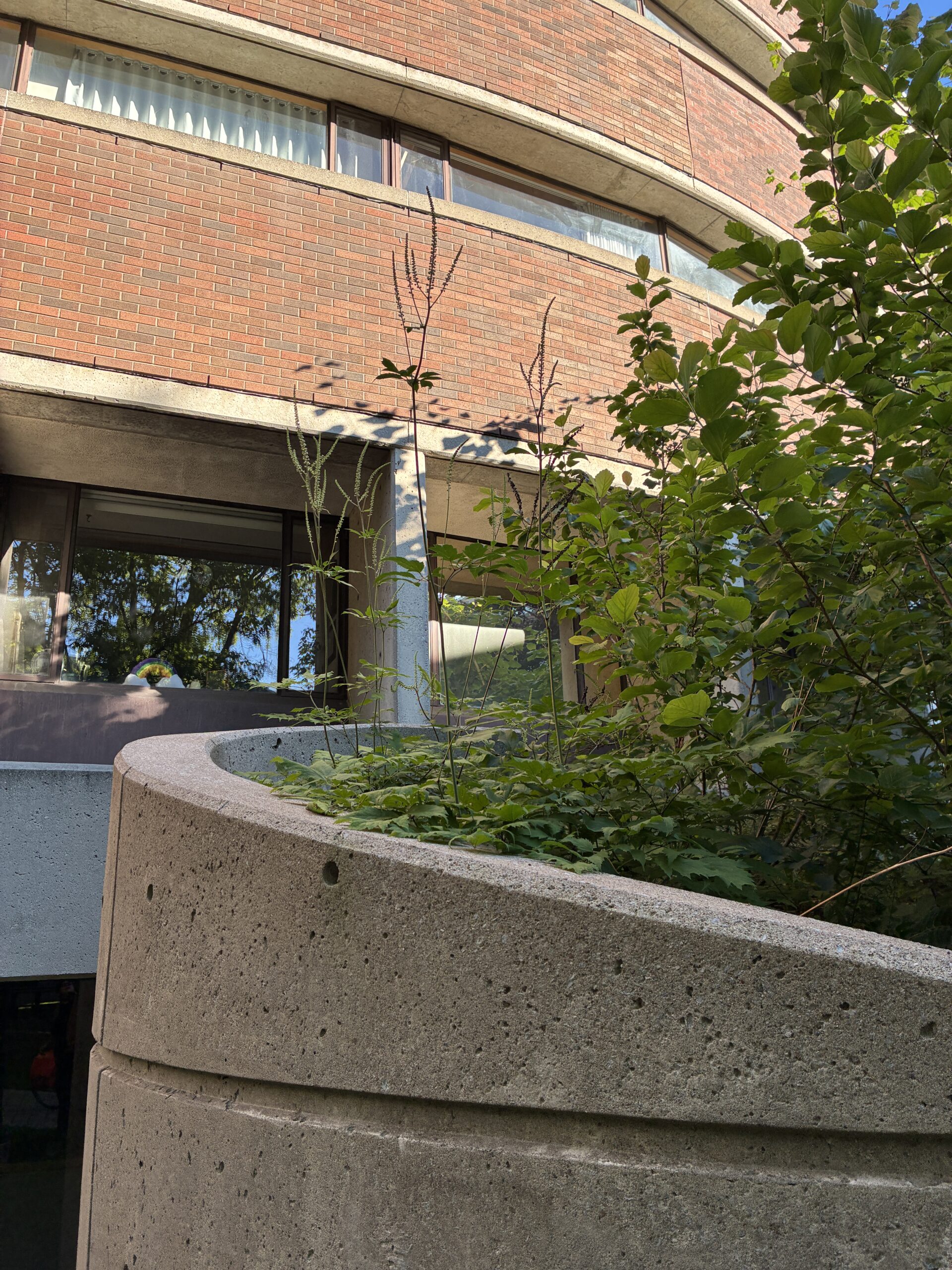
West of Bathurst, St. Clair’s retail strip comes alive, at first without a discernible character — a typical Toronto jumble — to eventually become Corso Italia. The neighbourhood to the north of this stretch has been called ‘the Woods,’ as its streets include Humewood, Pinewood, Wychwood, and Kenwood. Laura Reinsborough, founder of the urban fruit-gleaning organization Not Far From the Tree (NFFTT) and a former resident of this neighbourhood, saw these woods through her ‘fruit goggles’ — her group harvests thousands of pounds of fruit from private urban properties each season. Reinsborough got into the fruit-picking business by accident when she volunteered at the nearby Wychwood Barns farmers’ market and was asked to pick apples from the heritage orchard at nearby Spadina House, near Casa Loma. Back at the market, they were sold with a sign that read ‘This was biked here from 1.3 kilometres away — trying to put to shame the 100-kilometre diet.’

NFFTT’s fruit-picking activities have spread to other neighbourhoods — Reinsborough estimated that there are 1.5 million pounds of ‘edibles’ growing around Toronto that could be harvested. She had a theory that there is such good fruit growing around St. Clair because it’s up on the escarpment, just like the Niagara peninsula and its vineyards.

Micallef, Shawn. Stroll: Psychogeographic Walking Tours of Toronto. Updated Edition. Coach House Press, 2024. p. 182

Watching the snow fall

Winter has fallen decisively across Toronto. Right now it’s longjohns-and-a-toque weather inside my small apartment, with nothing but white to see at any distance outside the windows.

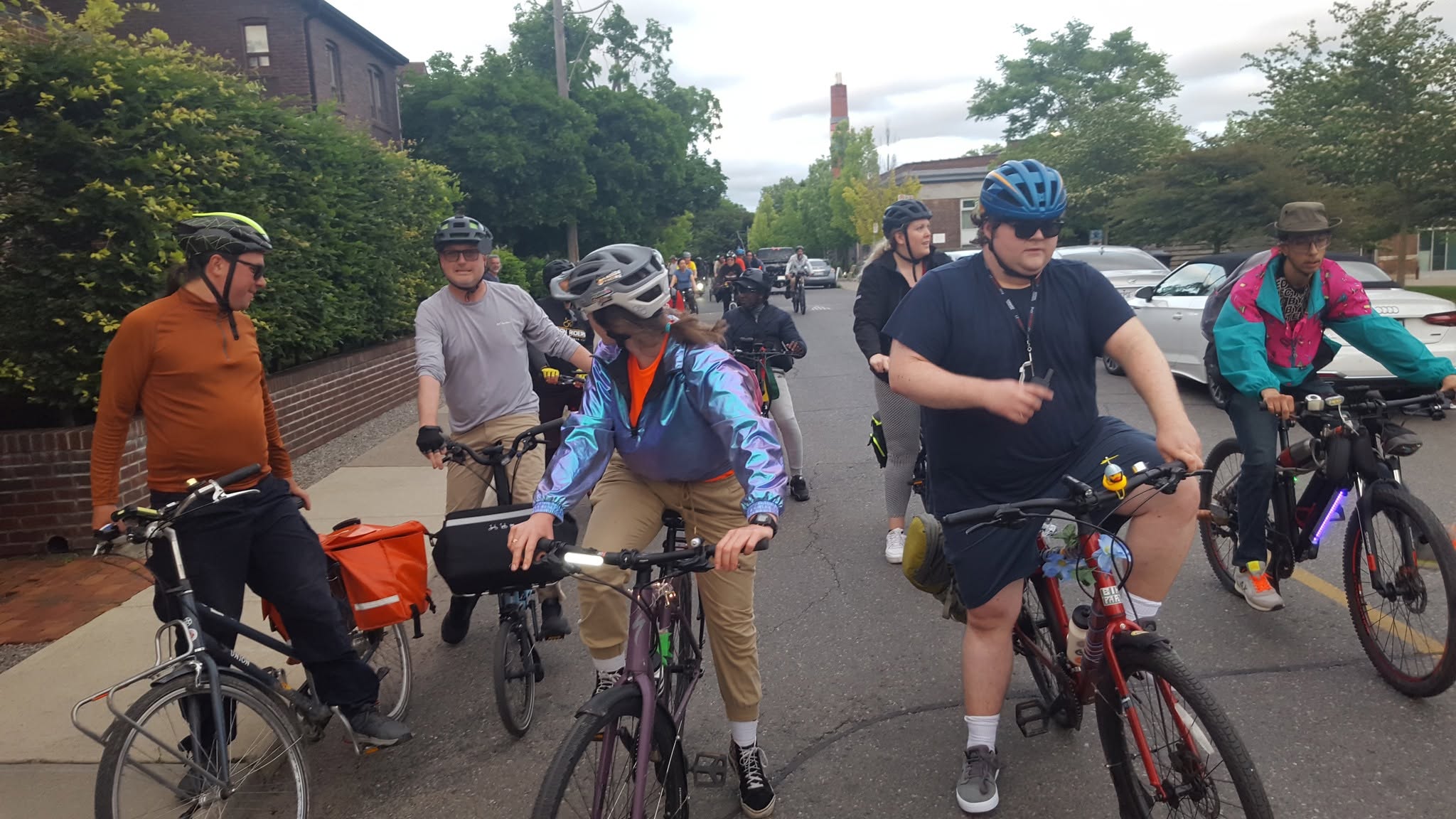
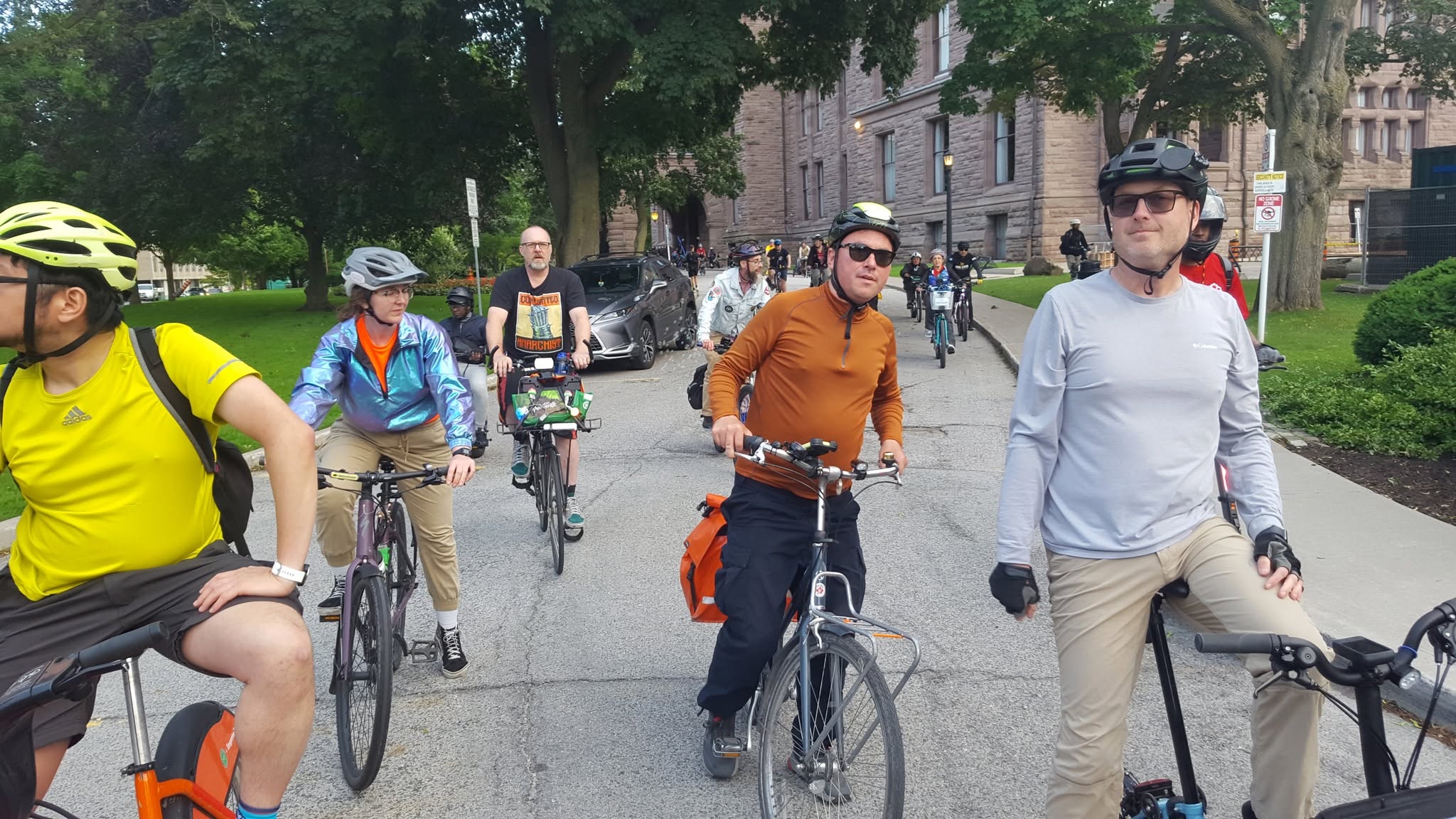
I brought my bike in for an annual tune-up, plus a shifter repair and replacement tires. I don’t expect much biking for several months, but it was good to get it into the shop during their less busy time. I’m getting an upgrade to Schwalbe Marathon Plus tires, which the staff say are good for puncture resistance, plus replacing the seat which is gradually eroding away with a more comfortable and better one.

I am looking forward enormously to the return of bicycling season. The city seems so much more open and endowed with possibility when it is possible to get anywhere without worrying about TTC delays or deep snow banks.

Love and a city’s possibilities

‘What does love have to do with it?’ asked the late Pier Giorgio Di Cicco in his 2007 book, Municipal Mind: Manifestos for the Creative City. He was Toronto’s second poet laureate, from 2004 to 2009, and the book is his legacy project from that time. Di Cicco had a passionate, sometimes combustible-seeming connection to Toronto. A practicing Catholic priest, he wore black leather jackets and turtlenecks, smoked cigarettes, and spoke with a fantastic gravelly voice. A cool priest even, cooler than I ever knew from thirteen years of Catholic school. ‘A town that is not in love with itself is irresponsible, and civilly apt for mistakes,’ he wrote. ‘A citizenry is incited to action by the eros of mutual care, by having a common object of love — their city. A town that is not in love with itself will cut corners; lose sight of the common good.’

Love is also something you would be hard-pressed to find in official city statutes, but ask yourself if you love Toronto or whichever city you live in. Often the answer is no: cities are frustrating, but how can we care about something we don’t also love? In a section of Municipal Mind called ‘Restoring the Soul to the City,’ Di Cicco tried to conjure a Toronto that could be — something we could aspire to. ‘Developers are generally not known for their philosophical bent, but for their market enthusiasm,’ he wrote. ‘But it was a developer who told me the truest thing about cities: Speaking of Florence, a place that revitalized a civilization by a standard of civic care and design excellence, my friend remarked, “You know, Florence was already there, before a building ever went up.”

Toronto is certainly not Florence, and those with little imagination will dismiss the poetry about a city as useless, but Di Cicco was encouraging us to dream up an ideal Toronto that could be something to strive for as this place continues to grow and change. It could be about the architecture, but it also could be the sidewalks, more equitable and affordable housing, lusher parks, or ample public washrooms. Is Toronto living up to the city we dream of? From Di Cicco’s point of view, these collective ideals and visions are what make Toronto beautiful, rather than the stuff already built. It’s possible to dream of a better Toronto even while loving the current one. Perhaps it’s the only way to dream.

Micallef, Shawn. Stroll: Psychogeographic Walking Tours of Toronto. Updated Edition. Coach House Press, 2024. p. 15

Contrast with: This uncivil city

Foreward to Stroll

A new, cool style of engaging and enjoying metropolitan realities has recently emerged in Toronto among certain young writers, artists, architects, and persons without portfolio. These people can be recognized by their careful gaze at things most others ignore: places off the tourist map of Toronto’s notable sights, the clutter of sidewalk signage and graffiti, the grain inscribed on the urban surface by the drift of populations and the cuts of fashion.

Their typical tactic is the stroll. The typical product of strolling is knowledge that cannot be acquired merely by studying maps, guidebooks, and statistics. Rather, it is a matter of the body, knowing the city by pacing off its streets and neighbourhoods, recovering the deep, enduring traces of our inhabitation by encountering directly the fabric of buildings and the legends we have built here during the last two centuries. Some of these strollers, including Shawn Micallef, have joined forces to make Spacing magazine. But Shawn has done more than that. He has recorded his strolls in EYE WEEKLY, and these meditations, in turn, have provided the raw material for the present book. The result you have in your hands is a new introduction to Toronto as it reveals itself to the patient walker, and an invitation to walk abroad on our own errands of discovery, uncovering the memories, codes, and messages hidden in the text that is our city.

Foreward from first edition, Toronto, 2010

John Bentley Mays, 1941–2016

Micallef, Shawn. Stroll: Psychogeographic Walking Tours of Toronto. Updated Edition. Coach House Press, 2024. p. 7

Ontario may remove rent control

Terrifying news: the Ontario government wants to make it easy for landlords to evict tenants at will.

It’s stuff like this that makes the future terrible to contemplate. The system is already horrendously abused by landlords. Housing stress has been one of the worst parts of my life ever since I moved here. Policy choices like these understandably make people afraid about whether they will be able to have a future at all.