
Student loans
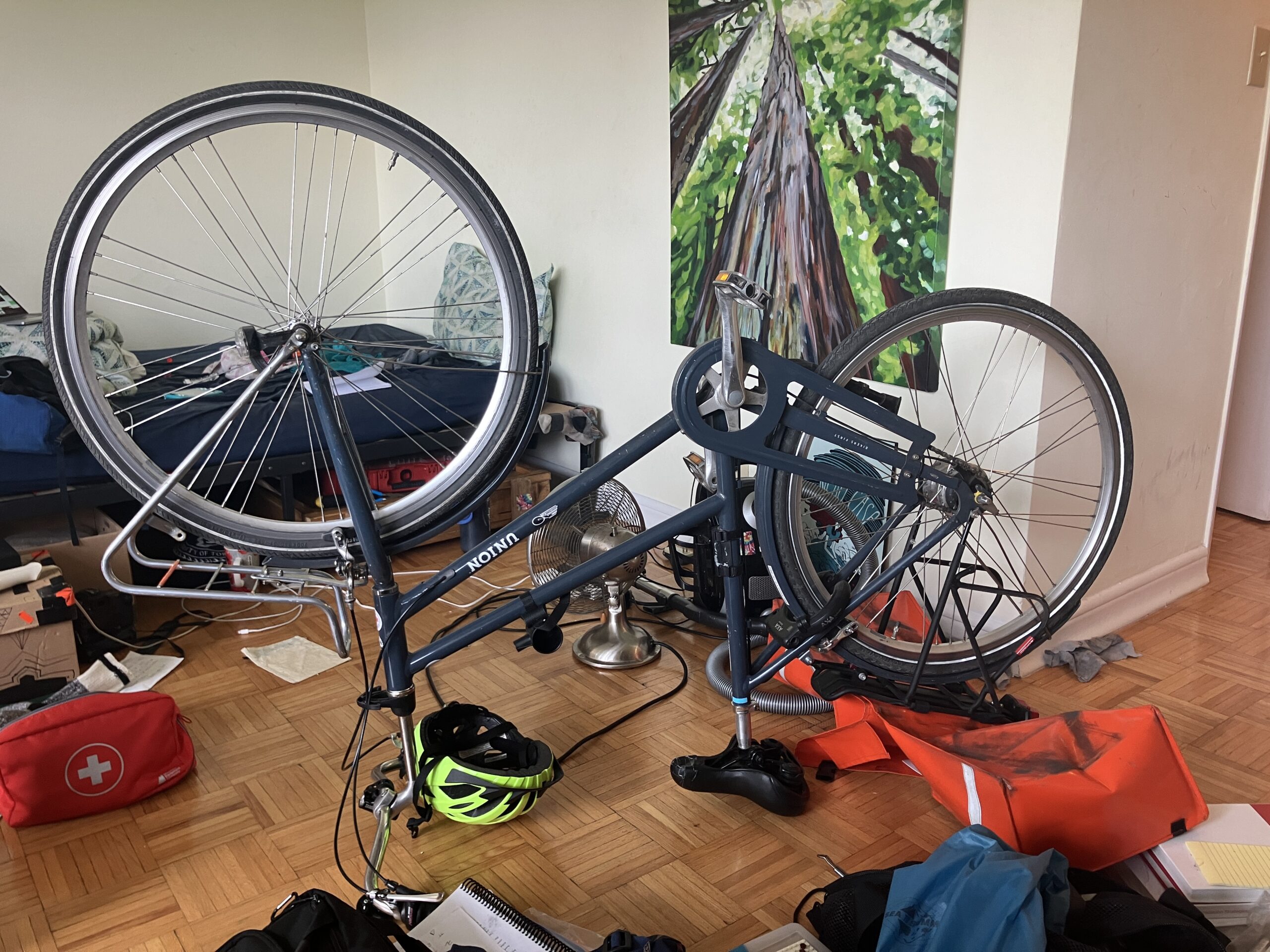
Seven months into post-PhD employment, I have paid my student loans down to $46,000 (8% paid).
It’s my second round of student loans. I borrowed $11,000 for my Oxford M.Phil between 2005 and 2007, and paid it off years before starting the PhD.
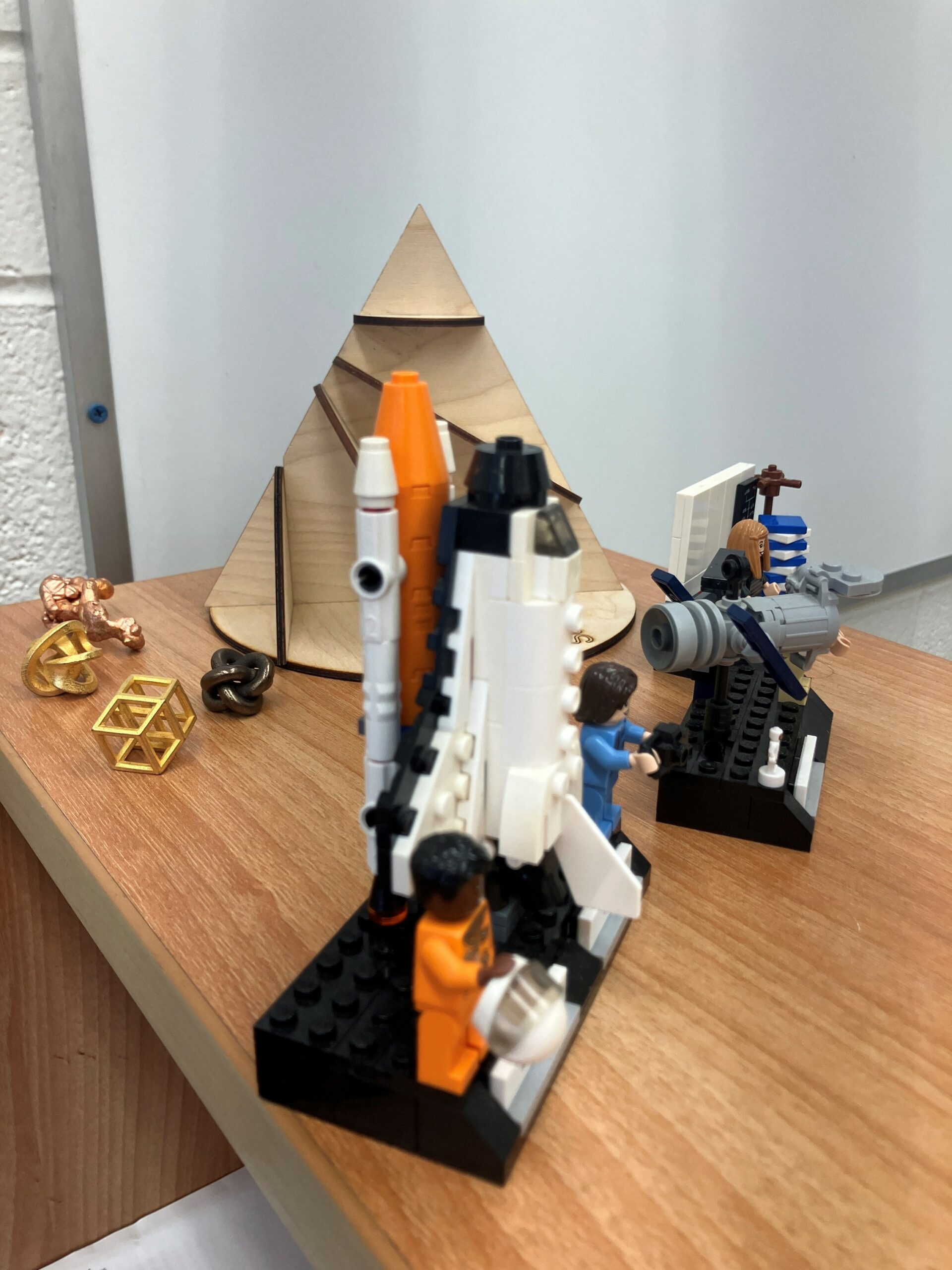
Women of NASA Lego; Bathsheba sculptures; and MathHappens Foundation conic sections model
Lonely, frustrated, angry, and despairing
Lately, I have been feeling dejected and wildly alienated from the rest of humanity. It seems like basically nobody wants to avoid catastrophic climate change. Among those who purport to care, the superficiality the commitment is quickly revealed when they prioritize other objectives ahead of avoiding climate disaster. Government agencies work to defend the status quo: at best, they pretend to take action in order to avoid doing anything that would really make a difference. At worst, governments are the armed wing of the fossil fuel industry itself. Every country with fossil fuel reserves is rushing to develop more production. Even climate change activists care more, in practice, for imposing their social and economic preferences on society than about abolishing fossil fuels.
At times over the last 18 years, working on climate change has felt like a lonely journey but at least one where eventually the world will come around. As each year goes by now, it seems more that humanity is content to fly our plane straight into the ground, while the passengers cheer as they set ever-higher speed records and the captain assures everyone over the intercom that our present course ensures a happy arrival at a welcoming destination.
Everyone is still developing fossil fuels
As my recent blackboard talk emphasized, climate stability means fossil fuel abolition. Arguments to the contrary are cynical mechanisms to keep the petro profits coming, regardless of the consequences for the climate.
Unfortunately, despite endless talk about ‘net zero’ and ‘ensuring’ climate stability, essentially everybody is still chasing fossil fuels:
- It’s easy to blame petrostates – but self-proclaimed ‘climate leaders’ like the US and UK are driving the crisis
- Revealed: wealthy western countries lead in global oil and gas expansion
- Guyana banks on future as a ‘new Qatar’ in high-stakes gamble over oil production
- ‘Will you stop exploring yours?’: Latin America forges ahead on new oil frontier
- Pristine forests and grinding poverty: why shouldn’t Brazil’s Amapá state embrace oil wealth?
Remember: it takes decades for the full effects of our greenhouse gas pollution to be fully manifest. That means much worse is still to come, even if we start making the right choices, and a nightmare looms if we persist with our current approaches.
Toronto’s Neon Ride
Toronto’s Neon Ride group bike ride is great fun. It leaves weekly from Nathan Philips Square, beside city hall, at 7:30pm on Thursdays. Their Facebook page is the best place to look for photos and updates.
After getting hooked again on cycling during my Vancouver visit during the summer, I got a Bikeshare Toronto pass in September and did most of the Neon Rides until I got a job in December and was too busy.
This animation shows the 9 rides I have done with them, including whatever I tacked on before and after the formal ride from Nathan Philips to Nathan Philips:
The ride is much reminiscent of Critical Mass at its best. There is an able crew that leads, corks streets when the mass is crossing, and sweeps at the back for stragglers. All the lights and boomboxes make it energetic and fun. Quite notably – and compared with Critical Mass – the fun and colour of the Neon Ride virtually always produces a positive reaction from passers-by. It’s also a large enough group that you can ride in the middle while giving little thought to cars. Much recommended.
There is also a fine community within the event. As it is assembling and at the frequent pit stops, I have had great conversations and enjoyed the feeling of community and group spirit.
20 days and 422 km on Dutch

Mobilizing structures in the UBC pro-Palestine encampment
Interesting from a social movement perspective:
The UBC encampment for Palestine has been going strong since April 29. Working as a horizontal organizational structure, the encampment is a leaderless, non-hierarchical space where everyone is equal. We have groups in charge of different tents related to the daily operation of the camp, including food, safety, supply, medicine, art, and library. General meetings are held as frequently as possible and are the only platform to decide the goals of the encampment. It is a process of direct democracy where everyone’s voice is heard and considered, with final decisions being made based on majority votes.
Everyone who shows up to this camp is intelligent, kind, and capable of doing great things, however, we are humans, and deep down, we all seek a sense of belonging. This whole encampment is like a community, and within it, each tent is part of the group. However, it did not always feel like a cohesive community. Before the camp reached this structure, it was run by multiple “invisible” hierarchies.
Initially, there were instances where outgoing white, cisgender, and conventionally-attractive men were automatically assumed to be smart, reliable, and worthy to make decisions, while non-conforming and marginalized individuals had to work harder to be acknowledged. I don’t think this was done purposely, but can be attributed to the mixture of pressure at the encampment and the unconscious biases ingrained in colonial ideologies. The constant struggle to have all our voices heard caused tension in the supposedly democratic structure, as well as relationship mistrust in the camp. This was not what I and a lot of comrades expected from this space, where solidarity with Palestinians against colonization demands democratic practice and decentralized decision-making.
As a young, gender-non-conforming person of color, my voice was often overshadowed in favour of white, cisgender campers. We took time to acknowledge and address these biases and hierarchical structures and we came up with alternative ways to ensure every voice was heard. I believe our camp is being managed in a more inclusive way, moving toward good causes, rather than replicating oppressive systems.
Personally, I think the progressive obsession with the identities of their messengers is counterproductive to effective political organizing. A person’s ideas are good or bad based on their content, not the demographic characteristics or group identity of the speaker. Viewing people as legitimate or illegitimate participants because of arbitrary features of their identity turns them from active thinking agents to mere group representatives. Also, this sort of privileging and de-privileging puts feelings of purity and moral superiority ahead of the question of whether the activism is having any broader societal effect.
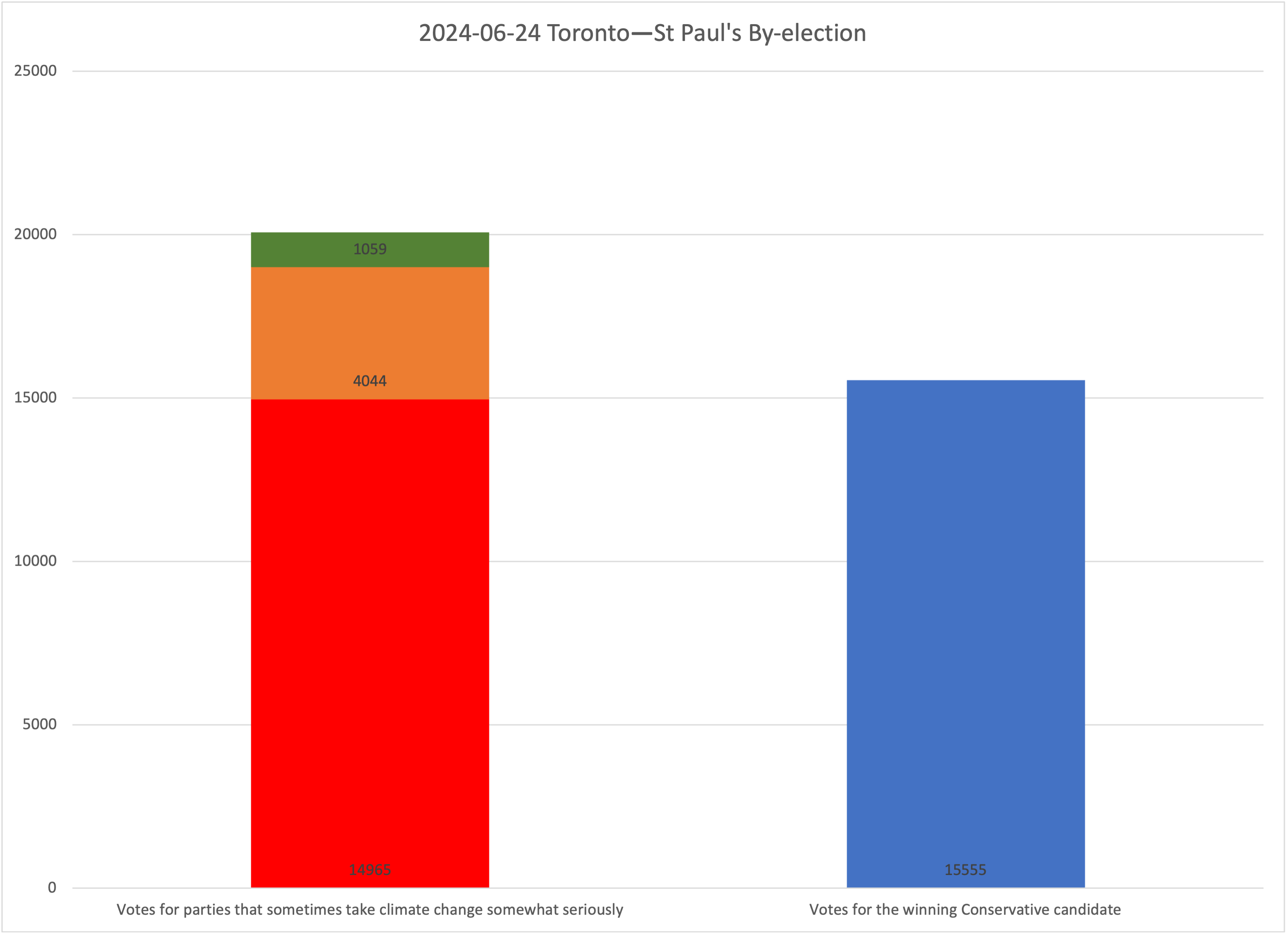
Toronto—St. Paul’s results
Cleese for the record
But in other areas I was becoming less diffident—or, in St. Peter’s parlance, less “wet.” Indeed, on one occassion, I actually got into a fight with a boy who was teasing me. There I was, lying on the floor, grappling with him, like a proper schoolboy; I even banged his head on the floor, at which point I thought, “Oh my God! If I start losing, he’ll do this to me,” and then, of course, started losing. Fortunately my form master, Mr. Howdle, arrived and broke the fight up. Funnily enough, it was about then that the bullying stopped. This first fight also proved to be my last. I had thought so, anyway, until I read in the Sunday Times recently that I had a fight with Terry Gilliam in the ’80s. I think this is unlikely: owing to the relatively rare occurrence of fisticuffs in the Cleese life it must be statistically probable that I would remember such uncommon events; they would tend to stand out sharply from the rather less pugilistic tone of the rest of my life. And I definitely don’t recall having a fight with Terry Gilliam. May I also point out that if I had, I would almost certainly have killed him. I think the only possible explanation for the Sunday Times article—if it was true—was that Terry attacked me, but that I failed to notice he was doing so. Terry is very short, due to his bandy legs, so when he scuttles around, he stays so close to the floor that it can be difficult to see what he is up to down there.
Cleese, John. So, Anyway… Penguin Random House, 2014. p. 43 (italics in original)