Rejecting solar in California

In another example of the renewable energy NIMBY phenomenon, various groups are opposing the 850 megawatt Calico solar farm under consideration in California.

I think the seriousness of climate change makes such opposition wrongheaded. Yes, there will be some negative environmental impacts associated with installing 34,000 solar dishes in the Mojave Desert. That being said, the negative impacts associated with failing to reform our enery system – and thus provoking catastrophic climate change – are far worse.

If we are willing to tolerate mountaintop removal mining and the oil sands, we should certainly be willing to see solar facilities installed in the most promising areas for them.

Weakening demographic transitions?

Shirt drying in the sun

It has long been common knowledge that there is a general correlation between rising income in states and falling fertility. While women in very poor states give birth to an average of around eight children, those in the richest places can only expect to give birth 1.5 times on average. Because individual wealth is generally rising around the world, it has been assumed that this transition will help to stabilize the global population sometime this century.

Research by Mikko Myrskyla, at the University of Pennsylvania, suggests that things may not be so clear-cut. While rising income does correlate with lower fertility in states with a low grade in the Human Development Index (HDI), the trend seems to reverse when scores rise above about 0.9, out of a possible 1.0. Back in the 1970s, no state scored higher than 0.89. Now, more than two dozen do.

The research suggests that wealthy states with high HDI scores will not see their populations peak and begin to contract, but rather that they will stabilize and level off. This has a number of implications. Firstly, it could mean that the long-anticipated pension and health crises associated with having fewer workers per retiree might be less severe than expected. Secondly, it could affect immigration patterns and policies. Many people have been assuming that immigration would be the only way for rich states to maintain their populations. If this proves untrue, it could have a significant political, social, and economic impact. Thirdly, stable populations with rising wealth and very high rates of per capita resource and energy usage (and waste production) could spell special trouble for the climate and the environment generally.

When it comes to global population, it is difficult to know what sort of policies would promote environmental sustainability. As I suggested before, reproductive abstinence in the rich world does seem like a plausible way to reduce the total biophysical impact of humanity. It seems fair to say that the probability of any social and economic arrangement being compatible with environmental sustainability rises as the global population falls. A world with three billion people seems fundamentally less likely to experience environmental catastrophe than one with the same political and economic systems but a population of nine billion. Preventing an excessively high population from developing is thus a way of hedging against very bad outcomes, while making it more likely that there will be sufficient resources and waste-absorption capabilities for all those alive to live decently. If Myrskyla’s research is correct, one mechanism for achieving that aim that was previously considered all-but-automatic may in fact not be.

Should we try to avoid collapse?

Over on George Monbiot’s site, he and Paul Kingsnorth are debating whether we should try to save industrial civilization.

One interesting quote from the discussion:

Strange as it seems, a de-fanged, steady-state version of the current settlement might offer the best prospect humankind has ever had of avoiding collapse. For the first time in our history we are well-informed about the extent and causes of our ecological crises, know what should be done to avert them and have the global means – if only the political will were present – of preventing them.

While there are plenty of environmentalists who assert that only a deep green approach that rejects all aspects of our current capitalist and integrated global society can succeed, there is the competing case that our current system is one that contains the possibility of sustainability, in a way that alternative systems do not.

Dark days for climate change policy

Kitchen utensils

These are depressing times for those seized with the seriousness of the climate change problem. When it comes to legislation to reduce greenhouse gas emissions, the signs from around the world are not encouraging.

On Wednesday, the Australian Senate rejected the Labour government’s cap-and-trade plan: the legislative consequence of Kevin Rudd’s victory and ratification of the Kyoto Protocol. This is despite how the plan included significant giveaways of permits for heavily affected industries, primarily Australia’s massive coal sector. In three months, the government can try re-introducing the plan. If it fails again, they can request an election and seek a renewed mandate. As I noted before, Australia’s hugely high per-capita emissions, major coal exports, and lack of effective legislative action are especially startling when you realize that Australia is probably the rich country with the most to lose from climate change. Their agricultural system is under enough strain from water scarcity already, not to mention when climate change increases temperatures, changes patterns of precipitation, boosts evaporation rates, and depletes summer snowcap.

International efforts are also looking shaky. Game theorists and foreign affairs commenters are projecting failure. India continues to play an obstructionist role. While it’s not impossible that the UNFCCC negotiations will eventually produce an improved successor to the Kyoto Protocol, it seems less and less likely that they will be able to do so at this year’s negotiations in Copenhagen.

Of course, things remain stalled in North America. The compromise (some say compromised) Waxman-Markey bill faces a tough fight in the US Senate. If it makes it through at all, there is a good chance that it will be in an even more distorted and less effective form, with more goodies for destructive but influential industries like coal and corn ethanol. Meanwhile, Canada’s cap-and-trade regulations remain in limbo, with details unannounced. Even if they do get announced and implemented, the plan is so weak and offers so many avenues for avoiding emission reductions that it is unlikely to have a significant effect for at least a few years. By allowing firms to invest in a technology fund (which gets recycled back to them) rather than reduce emissions or buy permits from those who do, the system strips a lot of the effectiveness out of a carbon price. Given the heavy slant of the technology fund towards carbon capture and storage (CCS) technology, this represents yet another big gamble that such systems will prove cheap, safe, and effective. If not, a lot of time will have been lost for implementing safer strategies like improving energy efficiency and deploying renewables.

Even with significant improvements over present efforts, the world is not on track to avoid catastrophic climate change. As Stephen Chu and others have highlighted, there are powerful positive feedback effects that will kick in after some degree of human-induced warming. If that happens, it will be too late to prevent further warming by reducing our emissions. To avoid such a catastrophic outcome, both strong domestic actions and international cooperation are required. So far, there is no sign that the world as a whole is taking the issue seriously enough for those to be plausible possibilities.


How Americans spend their time

The New York Times has cooked up a neat interactive graphic on how Americans spend their time. It is broken up by hour of the day and by characteristics like employment status, race, and level of education.

Everyone devotes a surpising amount of time to TV and movies, especially compared to socializing. It is also interesting to see that those with advanced degrees seem to spend the largest share of their time traveling, though the graphic doesn’t make clear whether this is intra-city commuting, vacation travel, or both.

I found the graphic via Sightline Daily. There are some interesting observations there, such as: ” Just so, only five percent of men over 15 say they spend any time walking on a given day. Yet for most of human existence, walking was the only form of transportation available to the large bulk of humanity.”

A notebook to track organizational bugs

As someone who has come under three different major bureaucracies in the past eight years (and many different sub-elements of each one), I find a suggestion from Dame Julia Cleverdon, the chair of trustees for the UK’s Teach First program, to be an interesting one. She suggests that people joining new organizations should:

“keep a notebook and write down everything that strikes them as crazy in the first few months—because a year in, those things will seem normal. And two years in, when they have gained in experience and confidence, they should get that notebook out and start changing those things.”

It’s an approach that neatly balances the fact that people new to organizations probably think about them most creatively, while recognizing that experience is necessary to be influential and to be able to anticipate the full consequences of reforms.

High-speed stock trading

I had no idea stock markets operated so quickly now:

High-frequency traders may execute 1,000 trades per second; exchanges can process trades in less than 500 microseconds (or millionths of a second).

In addition to showing off just how blazingly fast financial transactions have become, this also demonstrates just how much more precise and reliable some networking hardware is, when compared to consumer stuff.

For the sake of comparison, I sent four packets from my home computer to the server that runs this site. It took them an average of 92 milliseconds to make the journey: 184 times longer than the rate at which exchanges can apparently process trades. Indeed, the difference between the quickest and the slowest packet to return was itself six times longer than the total processing time.

Clearly, those on dial-up connections need not apply.

Preliminary review: smartphones and the Nokia E71

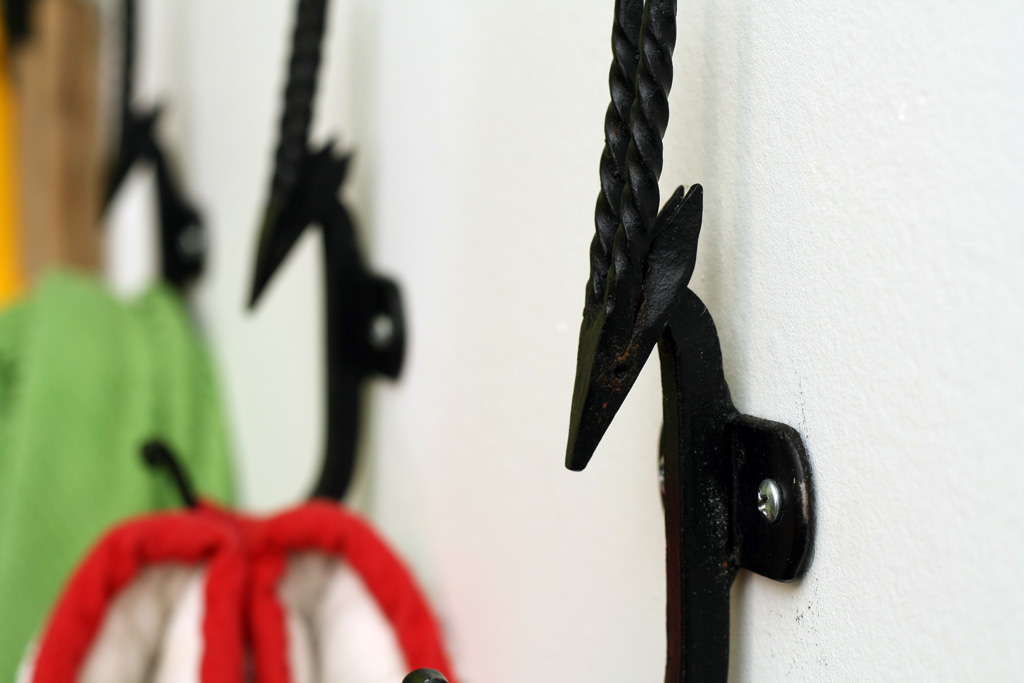
Kitchen hooks

Since the E71 is my first smartphone, I am inevitably responding to both the general medium and the specific device. So far, my experience has been mixed. The phone doesn’t do anything as well as a real computer does – obviously – nor as well as I was hoping when I purchased it. While usable, the keyboard is awkward. The OS is a bit finicky and annoying. The web browser lacks capability and fluidity of use, and even voice calls seem to be of a worse quality than on my cheap old Nokia 6275i.

All that being said, the E71 has the considerable advantage that it puts the internet into a form that fits in a pocket and can be accessed from anywhere. The email and messaging features are those I use and appreciate most, with web browsing and maps following next. The media features are very basic, and I never use them. Coupled with a bluetooth keyboard, the phone is extremely capable for email, texting, and instant messaging. Even without, you can maintain one conversation at a reasonable pace, without needing to strain yourself excessively. Another feature that is surprisingly good is the speakerphone, which can be used quite effectively while cooking or sitting at a desk. The battery life is also good: enough to cover about eight hours of very active internet use. The built-in email app is ok, but limited. Annoyingly, the installable GMail application is only a bit more capable. It cannot, for instance, apply labels to messages. As such, they clutter up my inbox instead of being slotted away into appropriate places. Managing multiple streams of emails is far less intuitive with this interface than with GMail’s excellent online version (not fully usable with the E71 browser). Thankfully, Microsoft’s Mail for Exchange application allows perfect syncing of contacts and calendar items between GMail and the native Nokia apps. Never mind the oddity of using Microsoft software to help Nokia hardware and Google software work well together.

My specific complaints about the E71 include:

  • Annoyingly often, you need to tell the phone to connect to the internet, then using what protocol. For me, the answer is always ‘yes’ and the network is WiFi if available, GPRS otherwise. I dearly wish I could just lock those choices into the whole OS, rather than being forced to enter them literally every five minutes of use.
  • The keyboard is annoyingly small, though that comes part and parcel with a device smaller than an iPhone.
  • Copying and pasting requires an acrobatic manoeuvre: pressing three keys simultaneously, releasing, and then pressing three more.
  • The web browser doesn’t work with a lot of the menus at the back end of WordPress and can be very finicky about posting comments. It also has a viewpoint that lurches around violently as new portions of pages get loaded: super annoying if you are filling in a number of fields.
  • Even with a WordPress-specific app, the phone is not adequate for posting to the blog. For instance, it cannot interact with the WordPress media library, so as to include images in posts.
  • The device won’t download the full content of even small text-only emails. Each time you open one, it goes to a ‘retrieving’ screen that lasts 5-20 seconds.
  • Unlocking the keypad requires pressing two small keys in order. A dedicated lock switch would be better.
  • The camera is rotten, and the video recording is even worse.
  • Bluetooth connections go idle after an absurdly short period of time: maybe 60 seconds. There is no option to alter this.
  • There is no way to use the built-in read LED as a flashlight, as you can on the 6275i.
  • It lacks the super-useful automatic calling card dialler from the 6275i.
  • The voice quality isn’t great. If often sounds a bit like a VoIP phone without enough bandwidth.
  • Both applications and the whole OS crash pretty often, even when you are running programs one at a time. Sometimes, the only way to resolve it is to turn off the device and turn it back on.
  • For some reason, my unlocked E71 can only find a handful of applications in Nokia’s ‘Download!’ area.

Given how well reviewed the E71 is among smartphones, I can only guess that others have even bigger problems. I will admit to wondering whether the iPhone would have been a better choice. For web browsing and media, I would say ‘certainly yes’ since the demo iPhones I have tried are enormously better than the Nokia in both regards. In terms of messaging – which is my number one use – I still think that even a cramped physical keyboard is better than no keyboard at all.

At this stage, about two weeks in, I am less impressed than I expected to be with both smartphones and the E71. That said, it is a useful thing to have when computers are not readily available, and I may grow more accustomed to it as more time passes. One thing I mean to try but haven’t yet is tethering it with my G4 iBook.

Consequences of fear and unchecked state power

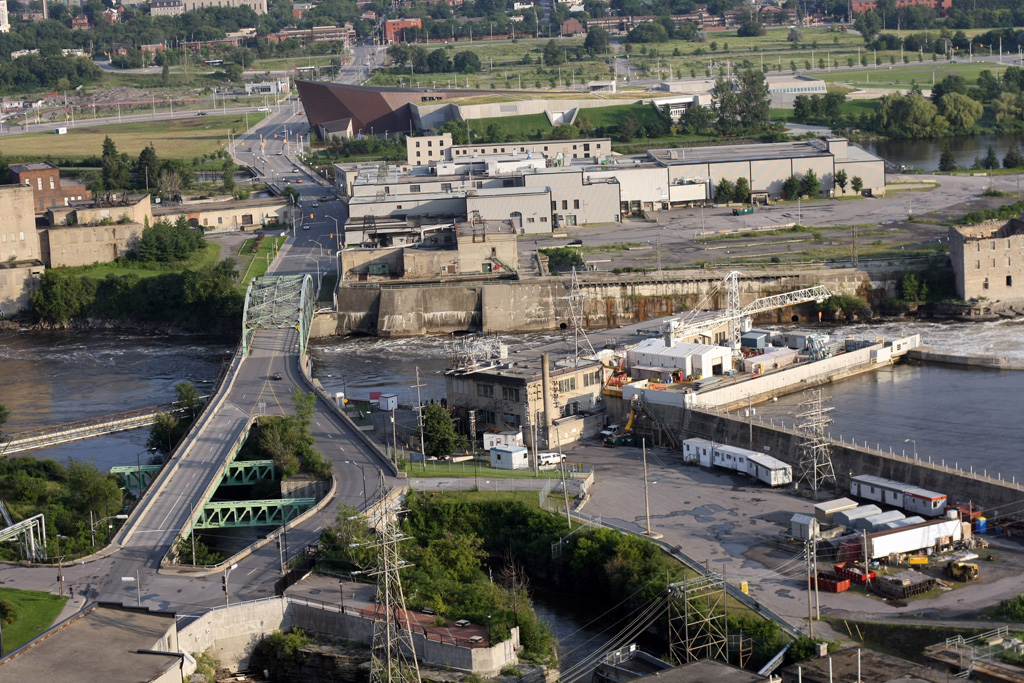
LeBreton Flats

A recent editorial on America’s sex crime laws is a nice demonstration of how the protection of the individual from the unjust application of power by the state is one of the most important kinds of human security. Pursuing criminal charges against teenagers who have sex with other teenagers – and even those who send explicit images of themselves to one another – is a lunatic way for the state to apply the law. Rather than protecting anyone, such a petty act of over-enforcement can seriously wreck the lives of those the law was intended to protect: especially when they end up on life-long public sex offender registries that do not specify what led to their initial arrest. All this becomes even more dangerous as the state gets more and more power to observe the lives of its citizens, shrinking the extent of formally private spheres (such as correspondence) where it would not previously have been watching.

It certainly bears remembering that the state is a beast that walks with a heavy, and sometimes clumsy, step. That’s something that must be borne in mind especially when the population is especially afraid of a nebulous threat, such as sex criminals or terrorists. Failing to appreciate that the application of state power can cause profound harm, as well as protection, to human security is what produces injustices like torture, Guantanamo Bay, the internment of those of Japanese descent during the Second World War, and so forth. When people are afraid, they care little about the rights of those they fear; equally damagingly, they show little appreciation for how harsh new approaches undermine the very systems they are established with the intention of protecting. Set upon the wrong course, the state is a far more dangerous entity than any terrorist organization.

Finally, there is the well-reasoned furour about the RCMP performing its own criminal investigations on officers. In any large organization, most people will act to preserve the interests of the group – even at the expense of committing injustices against outsiders. They will naturally give the benefit of the doubt to their colleagues, and they will also share loyalty with those risking their lives for the same purposes. To have any credibility, investigations into such organizations must be conducted by outsiders with independence and a strong mandate to investigate and expose wrongdoing.