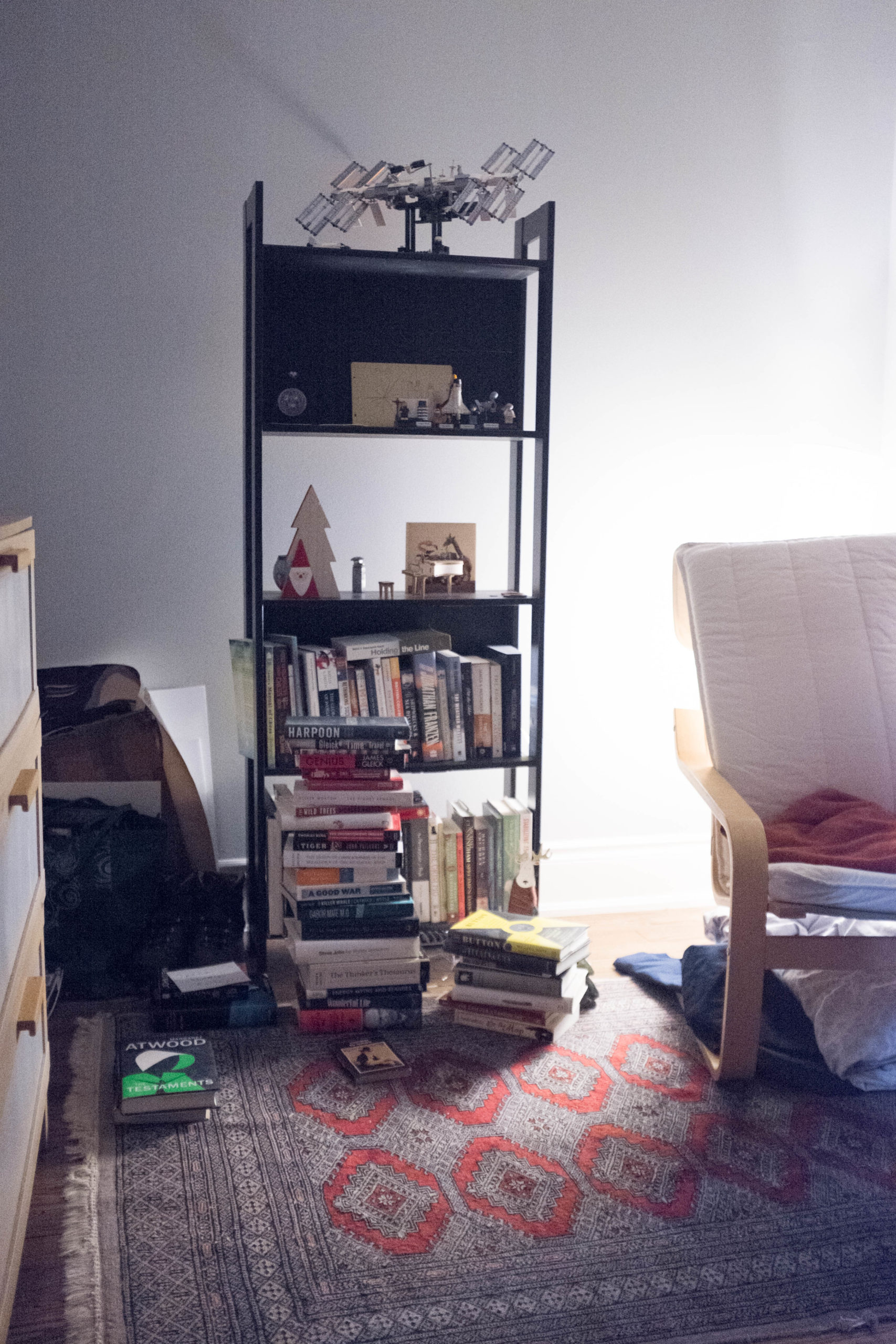
Books in progress
COVID-19 in spring 2022
As Toronto, Canada, and the rest of the world are dismantling their public health protection measures (masks are now mostly voluntary in Ontario) it seems like people’s frustration has gotten ahead of the reality that there will be further waves and variants, in part because of unequitable and insufficient vaccine distriubution globally and also partly because of the voluntarily unvaccinated who keep the virus circulating.
Based on conversations with friends and media from there the situation in China is drastically different. Tower blocks get routinely locked down by people in masks and full-body protective suits. Expatriots are afraid that they will test positive and be forced into an isolation facility.
Even if people would accept them, I wouldn’t say the Chinese tactics are necessary or attractive to emulate. Based on the reporting I have seen, their motives are more political than public spirited: declining to use more effective foreign vaccines out of nationalism, and insisting on “COVID zero” as an attempt to demonstrate the superirity of Chinese authoritarianism over chaotic democratic politics.
It’s obvious but worth repeating that the virus is unaffected by our emotions of exhaustion, frustration, and wanting the epidemic to be over. Measures including vaccine mandates and masking have always been justifiable mechanisms to slow the spread of disease and protect those with compromised immune systems and who cannot be vaccinated for legitimate medical reasons.
As so often, I wish people had a bit more fellow-feeling and less entitlement around what they should be able to do and to refuse. Politicians and members of the public desperate for ‘normality’ are delaying it by their intransience.
Between all the global forces at work today — from climate change and nuclear proliferation to loss of public trust in all institutions — I can’t help worrying that we’ll never see pre-COVID “normal” again. We may all be bound up in a developing crisis of profound global instability, where systems disrupted from the old normal trend into a new equilibrium instead of back to what we’ve grown to consider normal. Five or ten years from now, we might marvel about how normal and stable the pandemic times were.
Related:
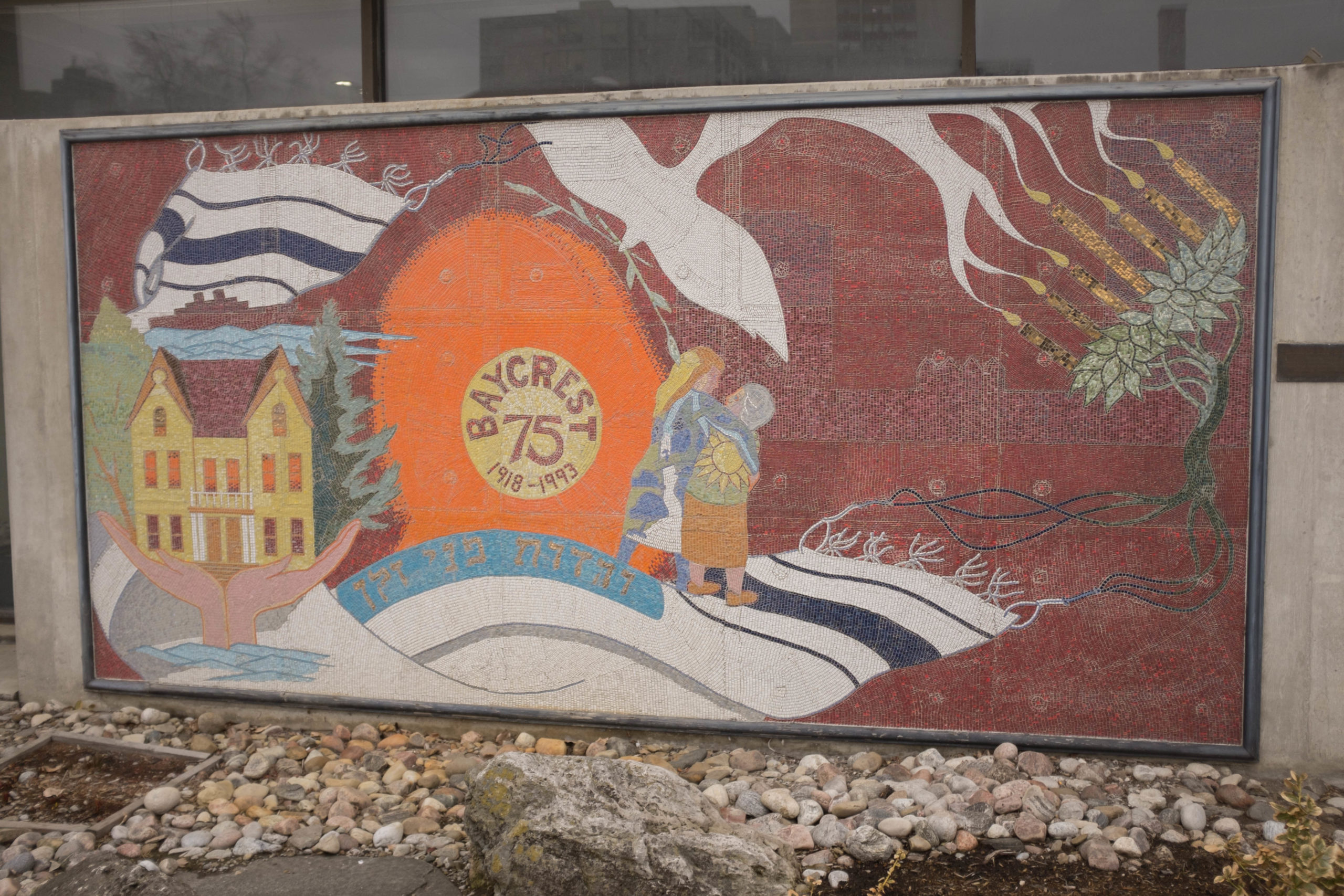
Baycrest 75: 1918-1993
Canadian trains worse for the climate than flying?
I last flew in 2007, avoiding the practice since because of its unsustainability and the damage it does to the climate.
Nonetheless, my objection is to the unsustainable fossil fuel use and not to flying per se. I just think flying makes people travel more frequently and farther than they would otherwise be willing to go, and thus the damage from flying comes when people come to feel entitled to it and build lifestyles that depend on it.
Over the years I have seen a lot of inconsistent numbers on CO2 emissions from flying versus the train or other options. Today, the CBC posted some figures from Ryan Katz-Rosene, “a University of Ottawa professor who studies sustainable transportation”:
Taking VIA’s “Canadian” service from Toronto to Vancouver would generate 724 to 4,287 kilograms of CO2 per person. In comparison, an economy flight between those two cities would generate 464 to 767 kilograms of CO2 per person.
VIA’s “Ocean” service between Montreal and Halifax generates 218 to 1,292 kilograms of CO2 per person, compared to 152 to 482 kilograms of CO2 per person for an economy flight.
Katz-Rosene published the findings in the journal The Canadian Geographer and wrote about them on the University of Ottawa website in 2020. He tried to confirm the numbers with VIA, but they did not confirm or deny the figures, despite multiple conversations with him.
…
Katz-Rosene blames “diesel-guzzling locomotives hauling fairly empty trains” — including sleeping and dining cars — on those lines.
English’s study found that just adding a snack car can increase a train’s greenhouse gas emissions intensity by 19 per cent, and that increasing seating density was one of the easiest ways to cut emissions and energy use.
Back in 2009, my friend Matt did some calculations of his own to estimate Toronto to Vancouver flights as around 330 kg of CO2 each way in an 80% full 767 or A320.

I have known all through the PhD that I would need to do at least one last trip to Vancouver, to clear things out of storage at my parents’ house and ship everything I want to keep back to Toronto. With my brother getting married in August, the plan is now to combine those purposes into one trip, along with seeing the old sights and friends who are still in town. Enduring a four day train voyage each way was broadly unappealing even before COVID, but now I would expect it to be a vexing mixture between feeling constrained by public health protection rules and feeling frustrated and worried about other passengers not following them. Four days in a rolling box, sharing the air with people who I can’t control, is not my idea of a nice break from work or great scenic way to see the country. If the climate impact is worse than flying, there seems no reason to do it.
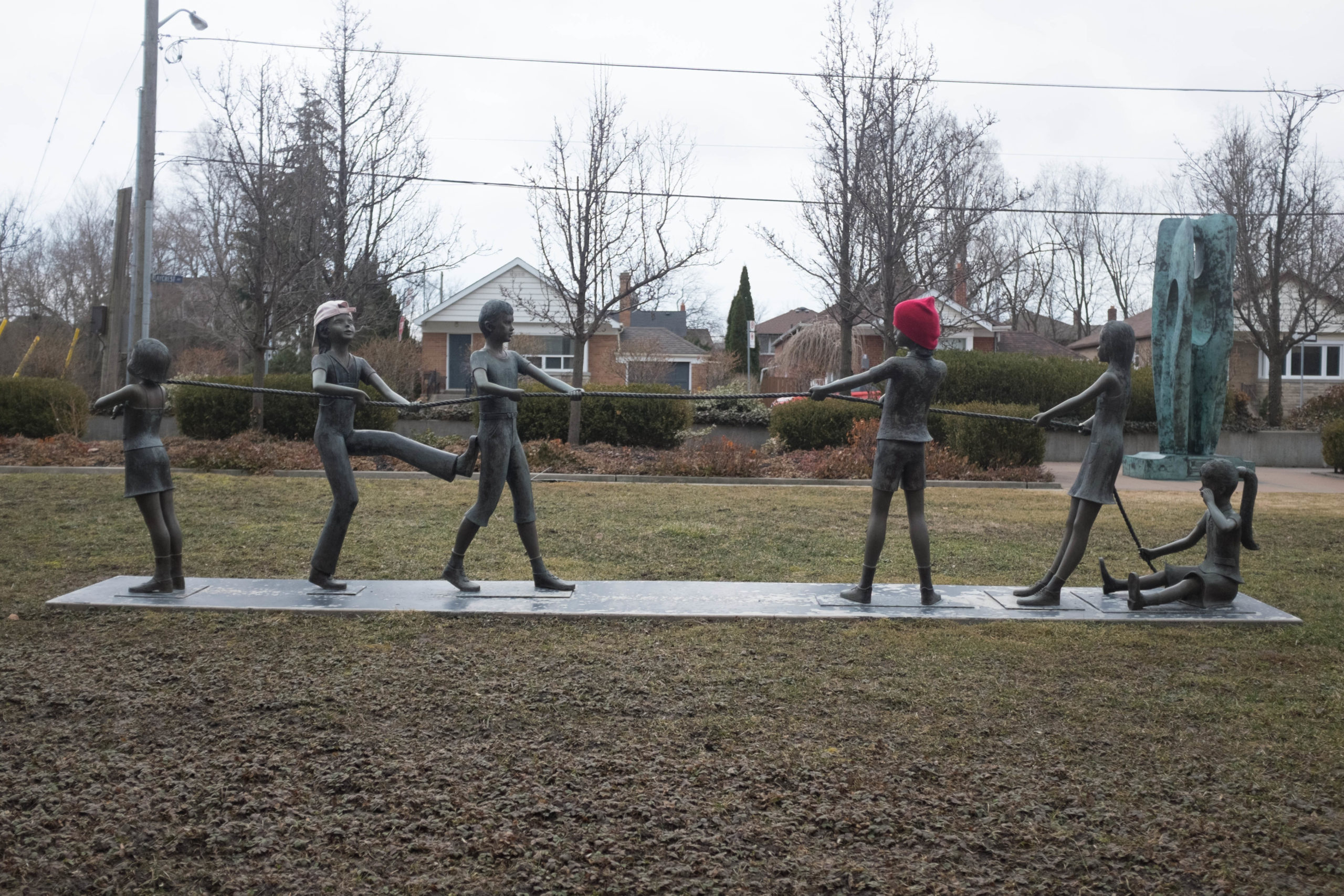
Tug-of-war sculpture
Open thread: 2022 Liberal-NDP consent and supply agreement
The Trudeau Liberals have made a supply and confidence agreement with Jagmeet Singh’s NDP.
According to the CBC, the climate-related elements are:
“A commitment to phasing out federal government support for the fossil fuel sector — including funding from Crown corporations — starting in 2022.
A commitment to finding new ‘ways to further accelerate the trajectory’ to a net zero economy by 2050.
A ‘Clean Jobs Training Centre’ to support retraining for energy workers as Canada moves away from fossil fuels.
Pretty weak sauce, I’d say, when we’re beginning to experience a potentially civilization-ending calamity, but that’s the state of Canadian politics today.
Growing campus fossil fuel divestment bibliography
As I have been writing drafts of my PhD dissertation, I am working in Microsoft Word for the sake of interoperability with committee members, with the intention of submitting the dissertation in LaTeX format after the defence. My footnotes are just unique identifiers to sources listed in my developing public bibliography.
In it’s way it must be one of the most comprehensive cross-indexings of academic and journalistic writing on fossil fuel divestment campaigns at universities and related matters.
It’s the sort of document it’s fascinating to imagine looking at as some sort of human-computer hybrid or hyperintelligent AI which could take it all in and cross-reference with no restrictions on the number of items it can hold in memory and compare at the same time.
The bibliography is also a valuable document because of how link rot is making many of the sources unavailable as websites are taken down and reorganized. Because of all the specialized information I have been able to collect about the movement, I have been able to find Wayback Machine archives for dozens of sources that are no longer accessible at their original locations or the URLs cited in other documents.
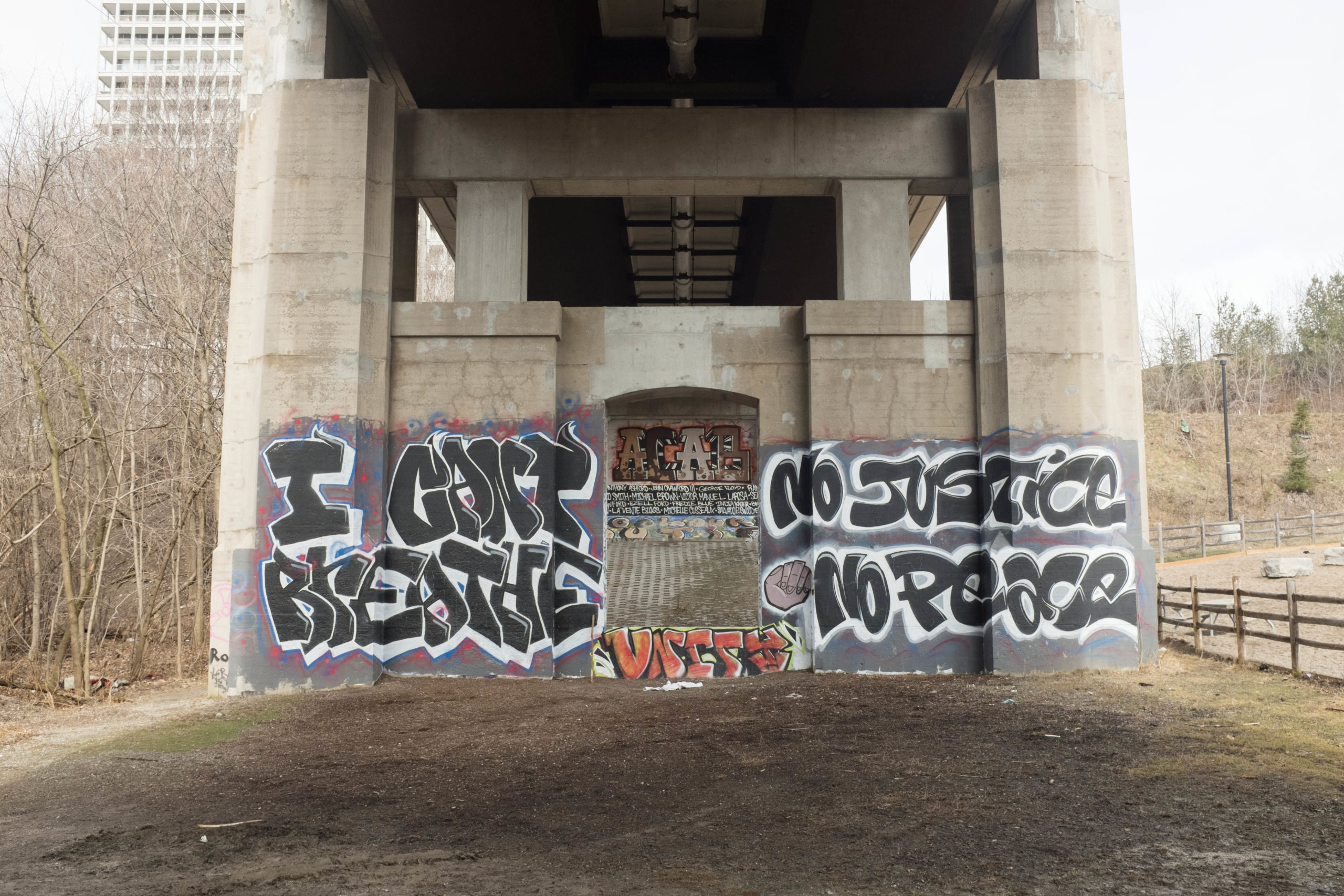
“I CAN’T BREATHE / NO JUSTICE NO PEACE”
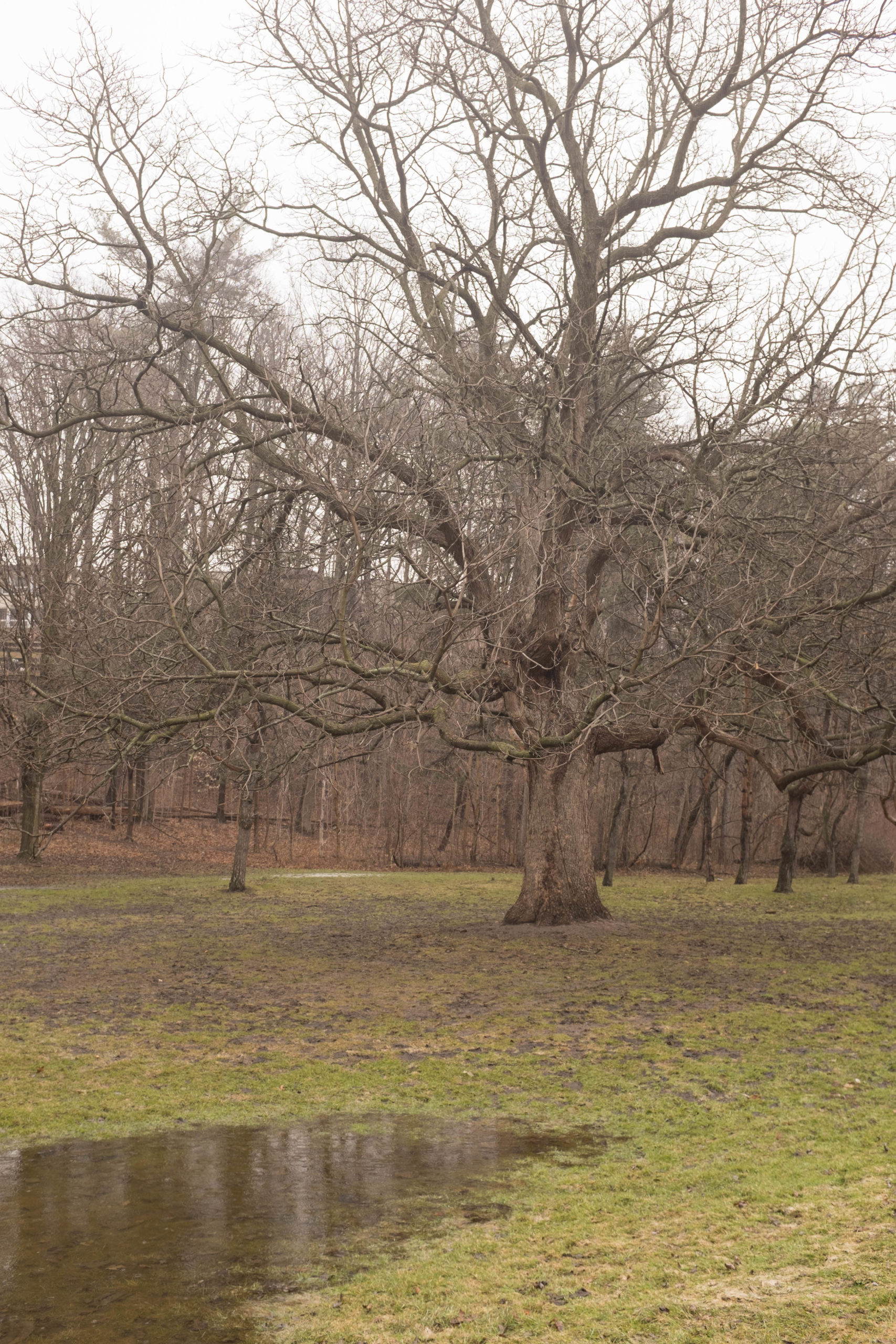
Tree and puddle